
QR Code Loyalty for Restaurants: Enroll Guests in Seconds


QR code loyalty turns a simple scan into instant enrollment, letting guests join a rewards program in seconds instead of filling out forms or downloading apps. We’ve watched this shift play out across restaurants, cafes, and hotels, and the pattern holds: platforms like MyDigiMenu that pair digital menus with loyalty capture profiles the moment a guest scans, and the EY Loyalty Market Study confirms that ease of use is what actually drives adoption.
TL;DR:
Use dynamic QR codes because they let you change destinations without reprinting; connect signups to a CRM that records contact details, visit times, and reward balances.
Pilot in one location or daypart for one or two weeks, then track enrollment, repeat visits, redemption, and time to first reward before expanding.
Use a branded HTTPS landing page, avoid unnecessary redirects, and collect only a contact method and visit history to reduce risk and limit data exposure.
Keep signup to one field and offer an attainable first reward within one or two visits; staff prompts outperform passive signage alone.
Table of Contents
How QR code loyalty programs actually work
A QR loyalty flow starts with a scan and ends with a reward, but the middle matters most. When a guest scans a code at the table or counter, they’re routed to a signup page that typically offers a few paths: a one-field phone or email entry, a social login, or a saved wallet pass that auto-populates return visits. Each option trades speed against the richness of the guest data you collect.

Once someone signs up, that scan event writes to their profile. A second scan, say at checkout or on a receipt, updates their point balance or stamp count. The code itself matters here: dynamic QR codes point to a URL that can be edited after printing, while static codes are locked forever. For loyalty programs, dynamic codes are the only practical choice because they let you swap campaigns, fix broken links, or redirect to a new landing page without reprinting a single table tent.
Rewards sync back to a CRM, which is what turns a scan into a usable guest record rather than a one-off transaction. A basic integration needs to capture at minimum a contact method, a visit timestamp, and a running point or stamp total.
Operationally, QR loyalty fits naturally into existing hospitality touchpoints:
Table tents and receipts work well for sit-down restaurants where guests have a few idle minutes.
Counter displays suit quick-service spots where the scan happens during order placement or pickup.
Takeaway bags and delivery inserts extend the loyalty loop to off-premise orders that would otherwise go untracked.
The mechanics are simple on the surface, but the signup friction and CRM connection behind them determine whether the program actually gets used.
Common reward models and practical examples for hospitality
Choosing a reward structure is less about picking a trend and more about matching the model to your visit frequency and margin. A coffee shop with daily regulars needs a different incentive than a hotel restaurant where guests might visit once per stay.
Stamp or punch cards reward visit frequency with a simple digital counter, such as a free pastry after eight stamps; they work best for low-cost, high-frequency items because the math stays easy for guests to track mentally.
Points systems let you tune earning rates to margin, for example one point per dollar spent with 100 points redeemable for $10 off; this model suits businesses with varied order sizes since it rewards spend rather than visit count alone.
Spend-based cashback credits a percentage of each purchase back as account credit, which works well for bars and restaurants with higher average tickets where a flat stamp doesn’t reflect the actual spend gap between guests.
Sign-up bonuses and early milestones give new members a small reward just for joining, like a free drink on enrollment, which shortens the gap between signup and first perceived value.
A stamp card tends to outperform points for very small transactions because guests can see progress instantly, while points systems scale better once average order values climb past the ten to fifteen dollar range.
Step-by-step setup checklist for restaurants and cafes
Launching a QR loyalty program is a sequence of small, specific decisions rather than one big technical lift. We recommend working through it in this order.
Generate and configure your QR codes. Build dynamic codes tied to unique signup tokens or short URLs rather than static links, so you can update the destination or troubleshoot without reprinting materials. Our QR code menu setup guide walks through the technical side of generating and testing codes before launch.
Design and place in-store signage. Table tents, counter cards, and receipt footers all work, but placement affects scan rates more than design polish does. Our QR code menu placement guide covers where codes get noticed versus ignored, and our QR menu etiquette guide addresses accessibility so guests who can’t or won’t scan still get a fair path to ordering and joining.
Train staff on the ask. A short, consistent script at the point of order, something like “scan this to join our rewards program and get a free item today”, outperforms passive signage alone because staff prompts convert hesitant guests.
Set up POS and CRM integration. Before launch, confirm which fields your system captures: contact method, visit date, spend amount, and reward status at minimum. Decide how offline visits (phone orders, walk-ins without a scan) get reconciled into the same guest profile so your data doesn’t fragment.
Pilot before a full rollout. Run the program in one location or one daypart for a week or two, treating it as a usability test with a small incentive attached.
A practical launch checklist looks like this:
Confirm QR codes resolve to a mobile-optimized signup page in under three seconds.
Test the full flow yourself: scan, sign up, earn a point, redeem a reward.
Brief every shift on the staff script before go-live.
Set a measurement window (two to four weeks) to track enrollment and repeat-visit rates.
Pro Tip: Run your pilot during a slower shift first, so staff can troubleshoot the scan-to-signup flow without the pressure of a full dining room.
Best practices to increase enrollment and long-term engagement
Getting guests to scan is only half the job. Keeping them engaged after that first signup depends on how little friction you add and how quickly you deliver something worth coming back for.
Start with signup itself. A single-field form, phone number only, or a social login option will convert far more guests than a multi-field form asking for name, email, birthday, and preferences up front. The EY Loyalty Market Study found that ease of use, not discount size, is the strongest predictor of whether someone adopts a loyalty program at all.
Shorten time-to-first-reward. Pairing a signup bonus with a first-visit stamp gets a new member to their first tangible win within one or two visits instead of five or six, which keeps the program top of mind.
Other tactics worth testing:
Segment your list by visit frequency and send targeted offers to lapsed guests rather than blasting everyone the same message.
Offer experiential perks, like early access to a seasonal menu or priority seating, alongside standard discounts.
Track four core metrics: enrollment rate, redemption rate, repeat-visit lift, and time-to-first-reward.
Revisit your reward thresholds quarterly based on actual redemption data rather than guessing at the right number.
Ease of use, not discount depth, drives adoption. The EY Loyalty Market Study (2025) also found that customers increasingly favor experiential and personalized rewards over default discounting, which supports building at least one non-monetary perk into your program design.
Security and privacy: how to avoid QR scams and keep guest data safe
QR codes carry a real trust risk if guests can’t tell your code from a tampered one. The FTC has warned that scammers hide malicious links behind QR codes to steal personal information, which means the landing page experience matters as much as the scan itself.
A few safeguards keep your program trustworthy:
Route every code to a branded, HTTPS-only landing page so guests recognize the destination before entering any information.
Avoid unnecessary redirects between the scan and the signup form, since each hop is a chance for confusion or a spoofed page.
Collect only what you need to run the program, typically a contact method and visit history, and state plainly how that data will be used.
Give staff a simple way to confirm a code’s authenticity if a guest asks, such as referencing the receipt or table number tied to that code.
Our QR menu security guide covers these practices in more depth for owners setting up their first program.
How a digital menu platform implements this checklist
Mapping the checklist above to actual software is where most of the setup time disappears. A platform built for hospitality bundles QR menus, digital stamp cards, CRM capture, and campaign tools into one dashboard rather than stitching together separate signup forms, point trackers, and email tools.
A typical workflow looks like this: a guest scans the table QR code, completes a minimal signup through social login, and their profile is created automatically. Their first stamp posts the moment their order closes in the POS, and an automated welcome campaign fires within minutes, setting up the next visit before they’ve left the building.
Relevant capabilities worth knowing about:
QR menus with built-in scan tracking, detailed on our QR menu product page
Digital stamp cards and loyalty modules tied to guest profiles
CRM and targeted campaign tools for post-signup follow-up
POS and reservation integration, including the Restaurant Reservations Module, for a single guest record across touchpoints
Checklist step | MyDigiMenu capability |
Dynamic QR generation | QR Menu product with scan-linked signup |
Reward tracking | Digital stamp cards and loyalty modules |
CRM and campaigns | Built-in CRM with targeted marketing tools |
POS and reservation sync | Integrations plus the Restaurant Reservations Module |
Our QR code menu benefits guide goes further into how these pieces combine to lift both operational efficiency and guest engagement.
Customer communication strategies post-enrollment
Signing someone up is the easy part. Keeping them engaged depends on what happens in their inbox and phone over the following weeks. A welcome message sent immediately after signup, confirming their first stamp or point balance, sets the tone and gives guests a reason to check back.
From there, a mix of channels tends to work better than relying on one. Email suits longer-form updates like seasonal menu launches or milestone rewards nearing completion, while SMS or push notifications work for time-sensitive nudges, a flash offer on a slow Tuesday, or a reminder that a reward is about to expire.
Segmentation matters here too. A guest who visits weekly doesn’t need the same message as one who hasn’t returned in two months; the first gets insider previews, the second gets a reactivation offer. Automating these triggers off visit data, rather than sending the same blast to everyone, keeps messages relevant instead of feeling like noise.
Our guest feedback guide outlines how a short, well-timed feedback request after enrollment can double as another communication touchpoint, giving you both a data point and a reason to reach out again.
Measuring customer lifetime value impact
QR loyalty data gives you a cleaner picture of lifetime value than cash transactions alone, because every scan ties a purchase back to a specific guest profile. That link lets you calculate average visit frequency, average spend per visit, and how both change after enrollment compared to before.
The most useful comparison is a before-and-after view: track a guest’s spend and visit cadence for the weeks leading up to signup, then compare it against the weeks following their first reward. A rising visit frequency after enrollment is a direct signal that the program is extending the relationship, not just subsidizing visits that would have happened anyway.
Time-to-first-reward plays a role in this calculation too. Guests who reach a meaningful reward quickly tend to establish a repeat pattern sooner, which compounds into a higher lifetime value over months rather than weeks. Tracking this metric alongside redemption rate gives a fuller picture than enrollment numbers alone, which can look strong even when engagement afterward is weak.
Our restaurant loyalty strategies guide breaks down how to connect these metrics to actual repeat-visit behavior rather than treating signups as the finish line.
Examples of successful QR code loyalty programs
Across hospitality, the sectors that get the most out of QR loyalty share one trait: a visit pattern frequent enough for a stamp or point system to feel achievable within a reasonable window.
Quick-service cafes tend to favor stamp cards tied to a single high-margin item, since a daily or near-daily customer can fill a card in under two weeks, keeping the reward loop tight and visible. Full-service restaurants often lean toward points systems instead, since average tickets vary more and a flat per-visit stamp undervalues a guest who orders for a table of six.
Bars benefit from spend-based cashback models that reward tab size directly, which tends to suit an environment where order value swings widely night to night. Hotels face a different challenge entirely: guests often stay only a few nights, so a loyalty program tied to the on-site restaurant or bar needs to deliver value fast, often through a sign-up bonus applied on the first order rather than a points threshold that assumes repeat stays.
In each case, the common thread is matching the reward model to actual visit frequency rather than defaulting to whatever structure is easiest to set up.
What this means for operators ready to pilot
The easiest win in QR loyalty isn’t a clever reward design, it’s removing every unnecessary step between a scan and a guest’s first stamp. We’d rather see a business launch a plain, one-field signup with an achievable first reward than a polished program nobody finishes joining. Pilot it in one outlet, track time-to-first-reward, and let that single number tell you whether to expand.
— Abhi
Ready to put QR loyalty on your menu
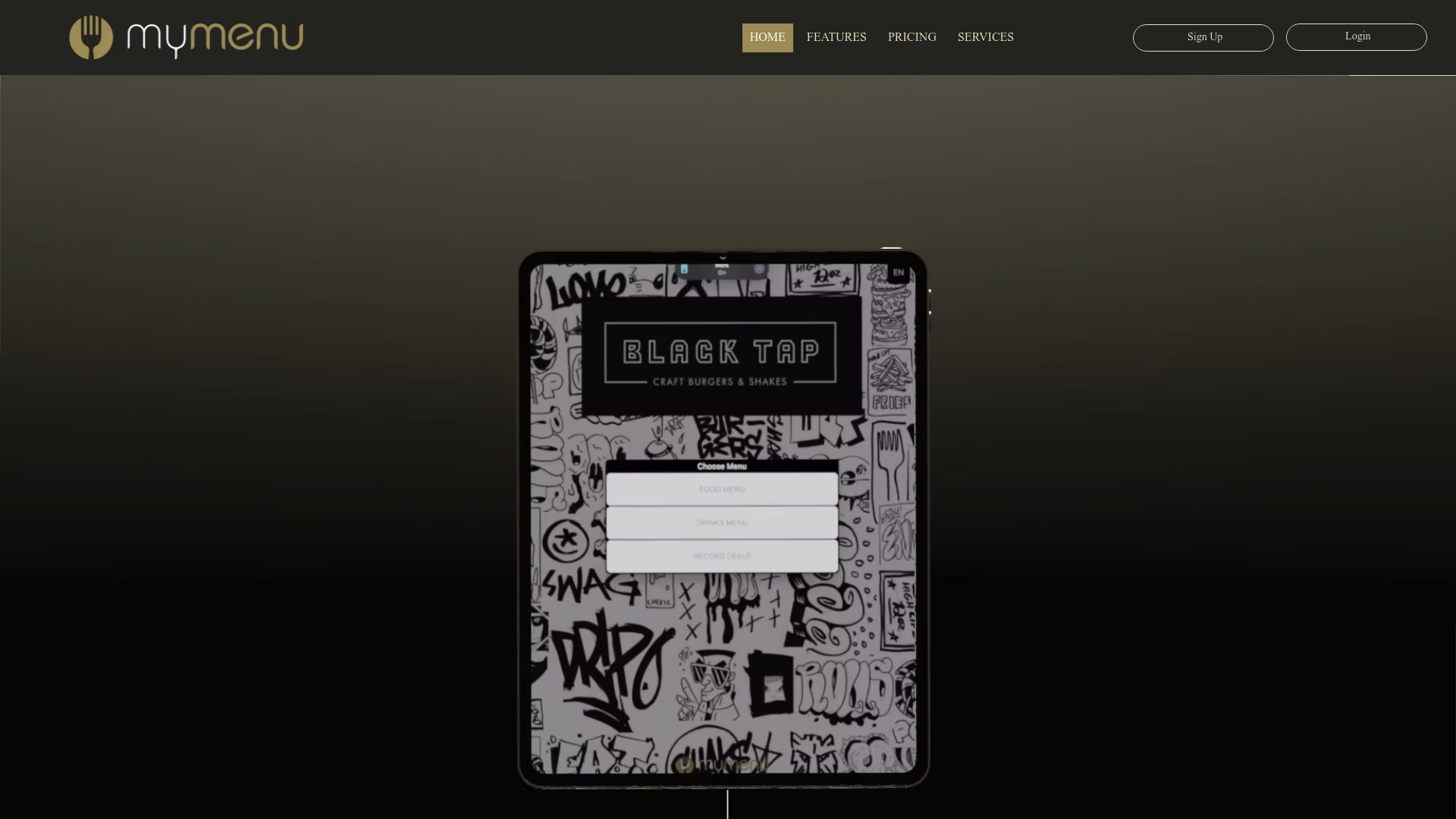
Running a loyalty program alongside a digital menu means guest data, orders, and rewards all live in one place instead of three disconnected tools. The QR Menu and loyalty modules handle the signup, the stamp, and the campaign trigger with a single scan, without asking guests to download anything first.
If you’re weighing the setup, here’s where to start:
Browse current plans, starting with the entry-level plan and going up through higher tiers designed for larger operations.
Review the QR Menu page to see how scan-based ordering and loyalty work together.
Check the Restaurant Reservations Module at $189 per month if you want reservations tied to the same guest profile.
A one-time setup fee applies when you get started, and assistance can be provided to choose the plan that fits your location count and feature needs.
FAQ
What is a QR code loyalty program?
A QR code loyalty program lets guests join a rewards system by scanning a code instead of filling out a paper form or downloading an app. The scan links to a signup page that creates a profile, then tracks future visits, points, or stamps tied to that same code or a follow-up scan.
Does customer loyalty still exist?
Yes, loyalty programs remain active and valuable, but how customers engage with them has shifted toward faster, lower-friction formats. The EY Loyalty Market Study found that ease of use and experiential rewards now drive adoption and retention more than traditional discount-heavy programs.
Can someone get your information from a QR code?
A QR code itself only directs a scanner to a web address, but a malicious code can route that link to a page designed to steal personal information. The FTC warns that scammers hide harmful links behind QR codes, so scanning only codes from a trusted, branded source reduces that risk.
What is the best free loyalty app?
There’s no single free app that fits every hospitality business, since the right choice depends on whether you need CRM integration, POS syncing, or multi-location support. Platforms like MyDigiMenu include loyalty and digital stamp cards as part of a broader paid menu and ordering system, which suits operators who want loyalty connected to their existing guest data rather than running as a standalone tool.
Sources
Recommended
This is a fantastic discussion on QR code loyalty! I wonder how integrating gamification elements could enhance user engagement even further, making the loyalty experience more fun for guests. ragdoll playground What do you think?
If you've ever seen a little chicken hopping endlessly forward while cars and trains zoom past, that's Crossy Road.