
Restaurant Survey Questions: Ask at Payment, Act Within a Week


Run a short survey of five to eight questions covering overall visit, food, service, atmosphere, and one open-ended item, triggered at payment or through a QR code within fifteen to thirty minutes of the meal ending. This timing captures fresher, more honest impressions than a delayed email ever will. Below, we give you copy-ready questions by category, plus the operational playbook (timing, ownership, thresholds) that turns answers into real changes within a week.
TL;DR:
Label both ends of a five point scale, keep its direction consistent throughout, and pretest questions with diners to catch confusing wording before launch.
Assign every question a named owner and threshold; cleanliness below 4 and service speed below 3.5 should trigger action, with service issues addressed within 72 hours.
Review open text weekly for recurring themes and compare changes with the prior four week average, rather than reacting to one bad day.
Research links sanitation, menu clarity, and dining room layout to satisfaction and return intent, while background music had far less influence.
Table of Contents
Why guest feedback matters for restaurants
Every table that leaves without saying a word is a missed chance to fix something small before it becomes the reason a guest never comes back. Feedback, collected consistently, links directly to measurable outcomes: which dishes to keep, which staff behaviors to coach, and which parts of the dining room need attention. Without that signal, owners are left guessing at why reservations dipped last month or why a regular stopped showing up.
Peer-reviewed research backs up what many restaurant operators sense intuitively. A field study on restaurant atmospherics found that sanitation, menu clarity, and spatial layout had significant positive effects on satisfaction and behavioral intentions, while background music mattered far less than operators often assume. That means your survey should weight cleanliness and menu comprehension questions heavily, not just overall star ratings.
One figure worth building a program around: restaurant atmospherics and service performance significantly affect satisfaction and return intent, according to the same study, which means the environment guests sit in is doing as much work as the food on their plate.
Here’s the warning most survey guides skip: collecting data without assigning ownership wastes the effort entirely. A low score on “was your table clean” means nothing if no one on your team is responsible for reading it, deciding whether it crosses a threshold, and fixing it by a deadline. Every question you ask should map to a specific person who can act on a bad answer. If you can’t name that person, drop the question. For more on connecting feedback to day-to-day operations, see our guide to feedback collection in dining.
When and how to send surveys for the best response rates
Timing changes what guests tell you. A survey triggered at the payment moment, while the meal is still fresh, captures more specific and more actionable feedback than one that lands in an inbox two days later when the details have blurred. Background sources on hospitality feedback programs consistently point to this same pattern: the sooner you ask, the more useful the answer.
Distribution method matters just as much as timing. Academic research comparing survey channels in hospitality found that face-to-face and drop-and-collect paper surveys produced the highest average response rates, around seventy percent, while email-only distribution lagged well behind at roughly thirty percent. Online distribution through a website or a QR-triggered form tends to outperform plain email, which is one reason a QR code on the receipt or table tent has become the practical middle ground for restaurants that can’t staff a clipboard at every table.
Pick your channel based on the moment and the guest:
QR code on the receipt or table, scanned at checkout, for the freshest and highest-completion responses.
SMS fifteen to thirty minutes post-meal, for guests who gave a phone number at booking or through a loyalty program.
Email follow-up within 24 hours, reserved for longer in-depth surveys rather than quick pulse checks.
Short face-to-face verbal check, useful in smaller or counter-service settings where a server can ask one question directly.
A few tactics reliably boost response rates. Keeping the survey to one screen, identifying the sender clearly as the restaurant rather than a generic survey platform, and asking while the experience is still fresh all compound to produce more responses and more honest ones. If you’re testing timing variations, our 30-day post-visit text pilot guide walks through comparing triggers side by side.
Survey design basics: length, question types, and pretesting
The sweet spot for a restaurant survey is five to eight questions: enough to cover the categories that matter, short enough that guests actually finish it. Mix numeric rating scales with exactly one open-ended question. The scales give you trackable numbers over time; the open text gives you the specific story behind a bad score, the detail a 2-star rating alone can never explain.
When choosing scale types, consistency and clear labeling matter more than which scale you pick. A 5-point scale with endpoints clearly labeled (“1 = Poor, 5 = Excellent”) avoids the ambiguity that creeps in when guests aren’t sure whether “3” means neutral or mildly disappointing. Avoid mixing scale directions within the same survey, since a guest who rates food on a 1-to-5 scale and then sees a 1-to-10 scale for service is more likely to answer carelessly.
Draft eight to ten candidate questions grouped by category before cutting down to your final set.
Pretest the draft with a small group, real diners if possible, and watch for confusion or hesitation on any item.
Cut any question where a low score wouldn’t trigger a specific, known action.
Finalize five to eight questions and assign an owner to each before launch.
This pretest step isn’t academic polish, it’s what separates a survey that produces action from one that produces a pile of numbers nobody reads. Research on upscale restaurant surveys describes a process of literature review, expert review, and a pretest with real diners before full deployment, refining wording until questions measure what they’re meant to measure. A smaller version of that same discipline, even just five test runs with staff or regulars, catches confusing wording before it skews a month of data.
Pro Tip: If a question’s answer wouldn’t change what you do tomorrow, cut it rather than adding it “just to see.”
Ready-to-use survey questions by category

Here is a copy-ready bank organized by the areas that matter most to a dining experience. Pull five to eight questions total for your quick survey, mixing categories rather than loading up on just one.
Overall visit
How would you rate your overall experience today? (1 to 5 scale, mandatory)
How likely are you to return within the next month? (1 to 5 scale, mandatory, owner: general manager, action if average falls below 3.5)
How likely are you to recommend us to a friend? (1 to 5 scale, optional)
What’s one thing we could have done better today? (open text, mandatory)
Food
How would you rate the taste and quality of your food? (1 to 5 scale, mandatory, owner: head chef)
Was your food served at the right temperature? (yes/no, optional)
How would you rate portion size for the price? (1 to 5 scale, optional)
Did the menu descriptions match what arrived at your table? (yes/no, mandatory, ties to menu clarity findings on atmospherics)
Which dish did you enjoy most tonight? (open text, optional)
Service
How would you rate the friendliness of your server? (1 to 5 scale, mandatory, owner: floor manager)
How would you rate the speed of service? (1 to 5 scale, mandatory, action if average falls below 3.5 within 72 hours)
Did staff handle any issues you raised promptly? (yes/no, optional)
Were you greeted within a reasonable time of arriving? (1 to 5 scale, optional)
Ambiance and cleanliness
How would you rate the cleanliness of the dining area? (1 to 5 scale, mandatory, owner: floor manager, action if average falls below 4)
How comfortable was the noise level for conversation? (1 to 5 scale, optional)
How would you rate the overall atmosphere and décor? (1 to 5 scale, optional)
Reservations
How easy was it to book your reservation? (1 to 5 scale, optional)
Was your table ready at the reserved time? (yes/no, mandatory, owner: host staff)
Did you receive a confirmation or reminder before your visit? (yes/no, optional)
Takeout and delivery
How would you rate the accuracy of your order? (1 to 5 scale, mandatory, owner: kitchen lead)
Did your order arrive within the estimated time? (yes/no, mandatory, action if “no” rate exceeds 10 percent weekly)
How was the food quality after transport? (1 to 5 scale, optional)
Online ordering
How easy was it to place your order online? (1 to 5 scale, mandatory, owner: digital operations)
Did you encounter any technical issues while ordering? (yes/no, optional)
Was menu information (prices, photos, descriptions) clear and accurate? (yes/no, mandatory)
Loyalty and repeat visits
Are you a member of our loyalty or rewards program? (yes/no, optional)
What would make you choose us over another restaurant next time? (open text, optional)
For a quick five-question survey at payment or via QR, pick: overall rating, likelihood to return, food quality, service speed, and the open-ended “what could we improve” question. For a longer eight-question version sent by email a day later, add cleanliness, menu accuracy, and the recommendation likelihood question on top of that same core five.
Mark overall rating, likelihood to return, and the open text field as always mandatory, regardless of survey length.
Make category-specific items (takeout accuracy, reservation timing) conditional, shown only to guests who used that service.
Review open text responses weekly as a batch, tagging recurring themes rather than reading each one in isolation.
How to analyze responses and turn feedback into action
A survey only earns its keep once someone is reading the results and deciding what changes. Three metrics deserve a permanent spot on your weekly dashboard: average overall rating, likelihood-to-return score, and the top two or three recurring themes pulled from open-text answers. Tracking these over time, rather than reacting to any single bad review, shows you whether a dip is a trend or just one unlucky night.
Build an action framework around every question that matters:
Owner: name the specific role, floor manager, head chef, or digital operations lead, responsible for that metric.
Threshold: set a numeric trigger, such as an average rating below 3.5 out of 5 or a “no” rate above 10 percent on order accuracy.
Deadline: require a response within a fixed window, commonly 72 hours for service issues.
Closure check: confirm the fix happened and log whether the metric improved the following week.
Pro Tip: Treat a crossed threshold like a ticket, not a suggestion: it gets a name, a date, and a follow-up check, or it doesn’t count as handled.
Reporting cadence matters more than reporting sophistication. A short weekly huddle where the floor manager reads out the week’s average scores and the top open-text theme does more for morale and improvement than a monthly slide deck nobody opens. When you roll out a change, such as adjusting a dish’s seasoning after repeated complaints, compare the following week’s relevant score against the prior four-week average rather than against a single day. Small, trackable tests like this keep the whole program honest and prevent one loud complaint from triggering a kitchen overhaul it didn’t need. Our guide to retention tactics covers how to connect these weekly reviews to longer-term guest relationships.
How Mydigimenu collects and uses QR-menu feedback to close the loop
We build short feedback widgets directly into the QR menu experience, so a guest can rate their visit and leave a comment in the same flow they used to order, without downloading an app or hunting for a separate link. Because the prompt appears right at the point of payment or immediately after, the responses tend to be fresher and more specific than anything collected by a delayed email, matching the pattern we described above for timing.
Beyond collection, we tie that feedback to the rest of the guest’s profile. A guest who scans a QR code, orders, and leaves feedback can be matched to their reservation history and loyalty activity through our CRM integration, so a repeated low score from the same guest surfaces as a pattern rather than a one-off complaint.
Feature | What it does for your feedback program |
QR-triggered feedback widget | Captures responses within minutes of the meal, while details are fresh |
Guest profile and CRM capture | Links survey answers to a guest’s visit and loyalty history |
Reservation integration | Connects table-booking data to post-visit survey responses |
Analytics dashboard | Tracks average ratings and themes over time for weekly review |
For a pilot, start with a three-question QR set at checkout for two weeks, assign one manager to review results every Monday, and expand to the full question bank once the workflow feels routine. Our guide to QR code feedback walks through setting up that first short survey.
A launch checklist for a survey program that actually produces change
Pick one goal before you write a single question, whether that’s catching service slowdowns or improving menu accuracy. Choose five to eight questions from the categories that matter most to that goal, pick one trigger (QR at payment works best for most dining rooms), and assign a named owner and a numeric threshold to each question before you launch. Set a standing weekly review, even fifteen minutes, where someone reads the open-text answers out loud.
Start smaller than feels necessary. A three-question pilot that runs for two weeks and actually gets reviewed beats an eight-question survey that launches once and gets ignored. The single habit that separates restaurants where feedback changes anything from restaurants where it doesn’t is closing the loop: telling staff what guests said, and when it’s appropriate, letting a guest know their complaint led to a fix.
— Abhi
Mydigimenu: a simple way to collect QR-triggered feedback and act on it
We designed our QR Menu so that ordering and feedback live in the same scan, which means guests leave a rating or a comment without ever opening a separate app or form. That shortens the gap between a bad experience and your team hearing about it, and it captures a guest’s contact details at the same time, so a low score can trigger a direct follow-up rather than disappearing into an anonymous spreadsheet.
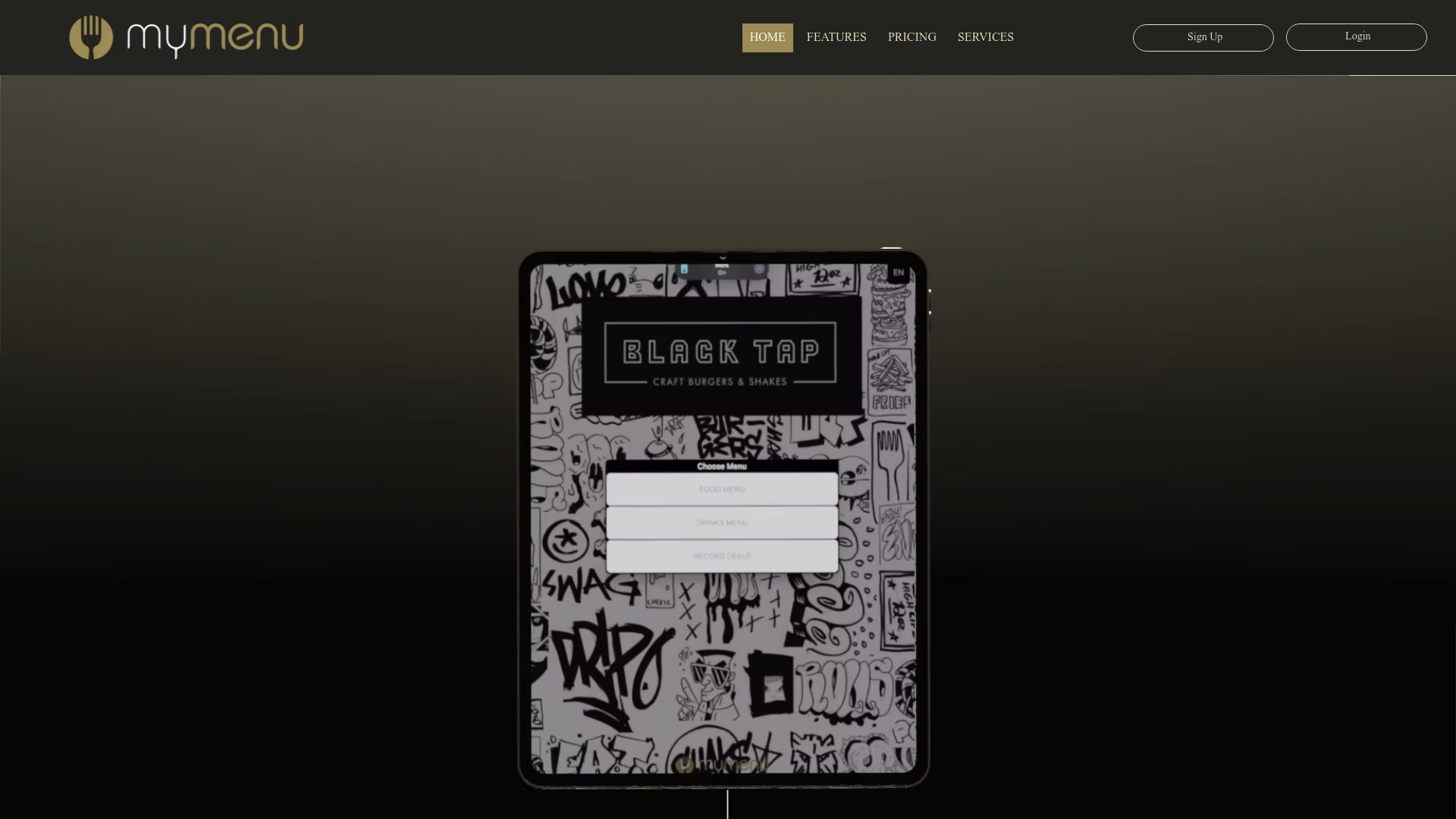
A practical place to start: run a 30-day pilot with a three-question QR feedback set at checkout, covering overall rating, one service question, and an open text field, then review results weekly before expanding to the full question bank. You can see how the QR Menu fits your current setup, and check current pricing details on our pricing page to find the tier that matches your dining room.
FAQ
What are good survey questions about food?
Strong food questions ask about taste and quality, portion size relative to price, whether the dish was served at the correct temperature, and whether the menu description matched what arrived. Pair one or two rating-scale questions with an open-ended “which dish did you enjoy most” to surface specific dishes worth promoting or revisiting.
What questions are asked in a restaurant satisfaction survey?
A typical satisfaction survey covers overall experience rating, likelihood to return, service speed and friendliness, food quality, and cleanliness, usually using a 1 to 5 scale plus one open-ended comment field. Keeping the set to five to eight questions, as outlined in hospitality survey research, tends to produce higher completion rates than longer forms.
How many questions should a restaurant survey have?
Five to eight questions is the practical range for a post-visit survey, mixing rating scales with one open-ended item. Shorter surveys of three to five questions work well for quick QR pilots at checkout, while the longer end suits an email follow-up sent within a day of the visit.
When is the best time to send a restaurant survey?
The best time is at payment or within fifteen to thirty minutes after the meal ends, while details are still fresh in the guest’s mind. Research on hospitality distribution methods shows that immediate, in-person, or QR-triggered formats tend to outperform delayed email on both response rate and answer quality.
How do I get more guests to complete a feedback survey?
Keep the survey short, identify your restaurant clearly as the sender, and let guests know in advance, even with one line on the receipt, that feedback will take under a minute. Mixing a QR option with occasional face-to-face or SMS requests, rather than relying on email alone, also tends to lift completion rates in hospitality settings.
Sources
Recommended
Comments