
Chatbots and Live Chat: Hospitality’s QR Handoff in 90 Days


Use chatbots for high-volume, structured tasks; use live chat for complex, empathic interactions; use both when your support operation needs scale and judgment at the same time. Chatbots cut response times and staffing costs on repetitive requests, while live chat protects satisfaction scores on the conversations that carry risk or emotion. The right mix, not a single winner, is what actually moves your KPIs.
TL;DR:
Automate reservation confirmations, loyalty balances, and order status only when bots connect to live systems; route exceptions, disputes, refunds, and safety complaints to agents.
Every bot should offer a visible route to a person and transfer order details, issue summaries, and prior replies so customers do not repeat themselves.
A Gartner survey found that 87% of customers say companies using generative AI for service must provide human access, so keep escalation available.
Start a pilot lasting 90 days with reservation confirmations and FAQs; track containment, resolution time, and whether agents receive full handoff context.
Table of Contents
What Chatbots and Live Chat Actually Do
A chatbot is software that handles a conversation automatically, following rules, a trained AI model, or a blend of both, without a human typing the replies. Live chat, by contrast, connects a customer directly with a human agent in real time through a messaging window. The distinction matters because it determines what each channel can realistically promise a guest or customer.
Chatbots generally fall into three categories:
Rule-based bots follow decision trees and work well for narrow, predictable requests like hours of operation or order status.
AI or LLM-based bots interpret open-ended language and can hold more natural conversations, though they still need guardrails.
Hybrid bots combine scripted flows for known tasks with AI-driven understanding for everything else, which is where most mature deployments land.
Once you know which type you are evaluating, the real planning work happens across six decision dimensions: response time, availability, complexity handling, personalization and empathy, scalability, and cost. Each one points toward a different channel, and architecture plus staffing decisions set the real ceiling on what either option can deliver. A rule-based bot cannot be patched into handling a nuanced complaint, and a four-person live chat team cannot hold five hundred concurrent sessions no matter how well trained they are.
Dimension-by-Dimension: Which Channel Wins Where
Mapping each dimension to a channel keeps the decision concrete instead of theoretical. According to Freshworks’ comparison of live chat and chatbots, chatbots deliver continuous availability and standardized answers through workflow automation, while live chat depends on staffed agent capacity and is better suited to situations that require empathy, judgment, negotiation, or investigation.
Response time: Chatbots reply instantly around the clock; live chat response time depends on queue depth and staffing, typically ranging from seconds to several minutes during peak hours.
Availability: Chatbots run 24/7 without added labor cost; live chat coverage is bound by shift schedules unless you pay for extended or overnight staffing.
Complexity handling: Live chat wins decisively here, since agents can investigate accounts, negotiate exceptions, and read between the lines of what a frustrated guest actually needs.
Personalization and empathy: Human agents read tone and adjust; bots can personalize with data (name, order history) but struggle with genuine emotional nuance.
Scalability: Chatbots scale to handle many simultaneous conversations at near-zero marginal cost, while live chat scales only by adding agents.
Cost structure: Chatbots carry licensing and setup costs that stay flat regardless of volume; live chat costs rise with headcount and conversation volume.
Most support leaders underestimate how much customers still want a human safety net. A Gartner survey found that a strong majority of customers say companies using generative AI for customer service must still provide access to a human agent, and many customers now expect AI to complete actions like booking or ordering rather than just answer FAQs. That expectation should shape how you configure both channels, not just which one you pick.
When you evaluate a vendor or configuration, look for a few practical signals: does the platform preserve full conversation context when it hands a session to a human, does it support authenticated actions like modifying a reservation rather than only describing how to do it, and can agents see the bot’s prior exchange without asking the customer to repeat themselves. Tasks like checking a loyalty balance, confirming a reservation, or answering a menu question belong on the bot side. Tasks like resolving a billing dispute, handling a food safety complaint, or negotiating a refund belong with a person.

Matching Support Scenarios to the Right Channel
Most support volume breaks down into a handful of recurring scenario types, and each one has a clear best-fit channel or combination.
Reservation confirmations and modifications: Route to a chatbot first; it can confirm details instantly and hand off only if the guest needs a change outside the standard rules.
Loyalty point balances and simple account questions: Keep these fully automated; there is no empathy requirement and volume tends to be high.
Order status and delivery timing: Automate with a bot connected to your order system so answers are accurate in real time, not just templated.
Refund requests and billing disputes: Route directly to live chat; these carry financial and emotional stakes that need human judgment.
Complex complaints involving quality, safety, or a bad experience: Always escalate to a human, ideally with the bot having already gathered order number, location, and a summary of the issue.
A well-designed hybrid flow follows a simple pattern: the bot collects structured data such as a reservation ID or order number, verifies identity when needed, and then escalates to a live agent with that context already attached, so the guest never has to repeat themselves.
Pro Tip: Start your pilot with the two or three highest-volume, lowest-complexity request types, since that is where automation pays off fastest and risks the least.
Three pilot ideas worth testing: automate reservation confirmations and measure containment rate after 30 days; automate loyalty balance checks and track time-to-resolution against your current average; and automate menu or hours questions while tracking escalation rate to confirm the bot is not quietly failing on edge cases.
Budgeting for Timelines, Staffing, and Measurable Results
A rule-based chatbot for a narrow set of tasks can typically launch in a few weeks once you have mapped your top intents. An AI-driven bot with integrations into reservations, POS, or loyalty systems takes longer, since conversation design and testing against real guest phrasing takes real time. Live chat, by comparison, can launch almost immediately with the right staffing, but the ongoing cost is recurring labor rather than a one-time build.
Cost drivers worth budgeting for include:
Licensing fees for the chatbot platform or live chat software, usually billed monthly or per agent seat.
Conversation design and maintenance, the ongoing work of writing, testing, and refining bot flows as new questions surface.
Integrations with POS, reservation, or CRM systems, which determine whether the bot can take real action instead of just answering questions.
Agent headcount and training, which scales directly with live chat volume and coverage hours.
For KPIs, track containment rate alongside escalation quality, not containment alone. As the Gartner survey on GenAI and human access notes, a composite view that includes whether the human agent received full context, how many times the customer repeated themselves, customer effort score, and follow-up contact rate gives a far more honest picture than a containment-only metric. Time-to-resolution and CSAT should be tracked separately for bot-only and escalated conversations, since blending them hides where the real friction lives.
A Practitioner Checklist for Getting the Handoff Right
Getting chatbot and live chat working together comes down to a short set of operational habits rather than a long technology project.
Design intents around actions, not just answers: a bot that can modify a reservation is worth more than one that only explains your cancellation policy.
Capture transfer metadata every time: order number, guest name, issue summary, and prior bot replies should travel with the handoff automatically.
Monitor on a weekly cadence early on: review transcripts for the first month to catch where the bot misreads intent before it becomes a pattern.
Confirm action completion, not just response delivery: a bot that says “your reservation is updated” needs to have actually updated it.
How you frame automation to guests matters as much as how it functions. Research published in Frontiers in Psychology found that personification and socially oriented communication increase perceived social presence and satisfaction, but disguising the fact that a guest is talking to a bot erodes trust. Give your bot a clear identity, and always make the path to a human visible rather than buried.
Separate research in the Journal of Consumer Research found that customers often rate bot-provided service less favorably than identical service from a human, largely because they assume the business is cutting costs. That effect weakens when the bot’s benefit to the customer is explicit, such as an instant reservation confirmation or a faster order than a phone call would allow.
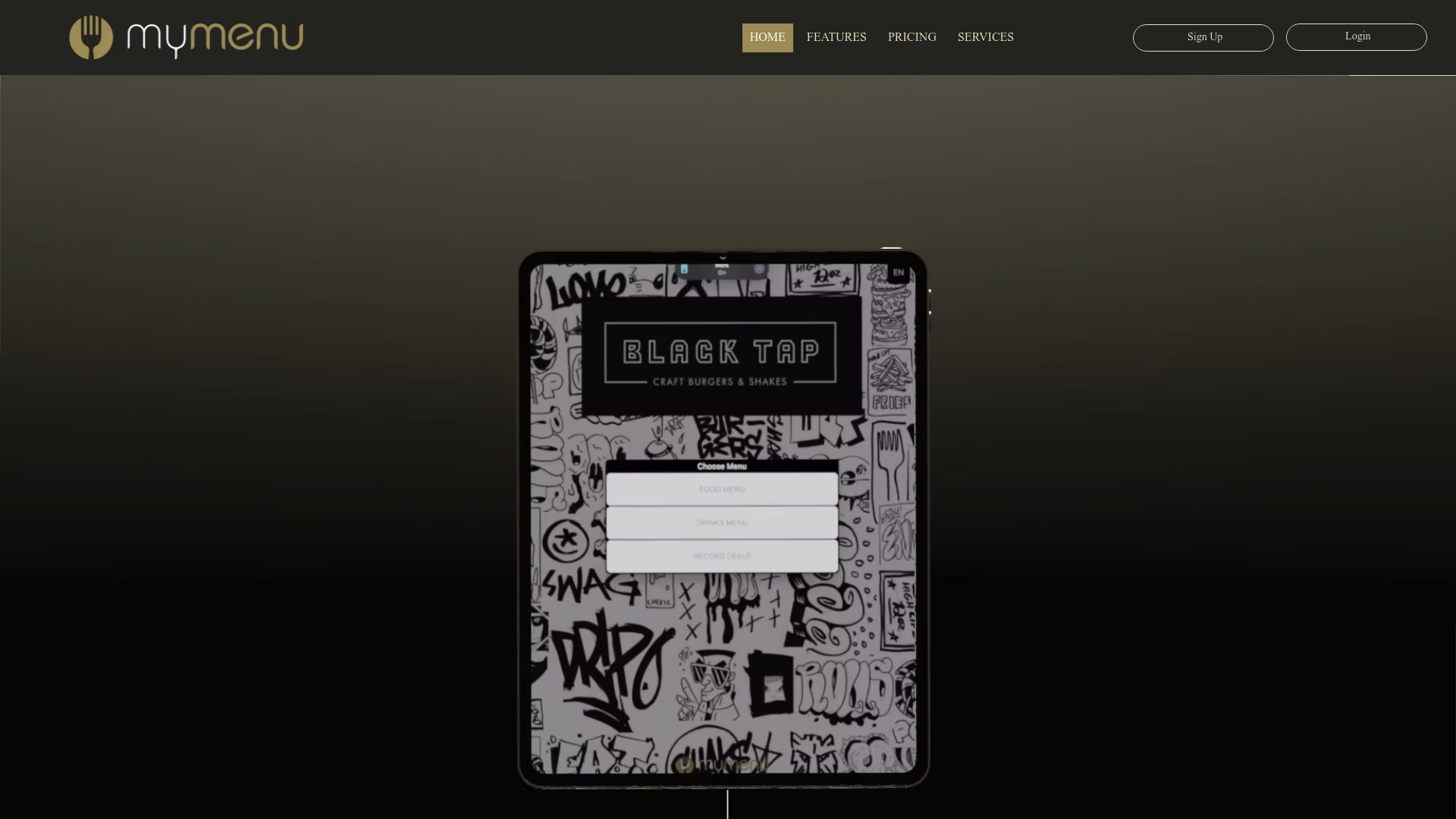
In a dine-in setting, a practical version of this flow looks like: a guest scans a QR Menu at the table, asks the embedded chat a question about an allergen or a wait time, and if the question goes beyond what the bot can resolve, the conversation hands off to a staff member or the Restaurant Reservations Module with the guest’s table number and question already attached. For more patterns like this, our breakdown of restaurant chatbot ideas that save staff time covers several more.
Pro Tip: Keep a visible “talk to a person” option on every bot screen; it costs nothing and measurably reduces the perception that automation exists only to cut costs.
What We Would Actually Build in the First 90 Days
If we were starting from zero, we would pilot a hybrid flow on reservation confirmations and one or two FAQ categories, since that combination touches high volume without touching the complaints or refunds that need a human. Keep the scope narrow on purpose: a 90-day pilot that tries to automate everything at once rarely produces clean data.
Three KPIs are worth watching over that window: containment rate on the piloted intents (aim for steady improvement week over week rather than a fixed target out of the gate), time-to-resolution compared against your pre-pilot baseline, and escalation quality, meaning whether agents report getting full context on handoffs. Treat the first 90 days as a measurement exercise, not a victory lap, and adjust the bot’s scripts based on where real guest phrasing diverges from what you designed for.
— Abhi
Bringing Bot-and-Human Handoffs to Your Hospitality Operation
Everything in this playbook, from action-completing bots to clean handoff metadata, is exactly what our platform is built to support, as outlined in the hotel coffee supplier blueprint for optimizing guest moments in hospitality. A QR Menu or Tablet Menu gives guests a chat-enabled entry point at the table, our Restaurant Reservations Module lets a bot confirm or modify a booking directly instead of just describing the policy, and guest profile data carries forward so your staff never starts a handoff blind. For hotels, The Hotel App extends the same pattern to room service and concierge requests.
Plan | Monthly price | Best fit |
FAQ
What is the difference between webchat and a chatbot?
Webchat is the messaging window itself, the interface where a conversation happens on your website or app. A chatbot is the software that can power that window, automatically generating replies, while the same webchat window can just as easily connect a customer to a live human agent instead.
What is the difference between a chatbot and a chat agent?
A chatbot is automated software that follows rules or an AI model to answer without a person involved, while a chat agent is a human employee typing real-time responses. Chatbots excel at high-volume, structured requests, and live chat with a human agent is stronger for situations requiring empathy, judgment, or investigation.
What are the four types of chatbots?
Definitions vary across vendors, but a common grouping includes rule-based bots that follow decision trees, AI or LLM-based bots that interpret open-ended language, hybrid bots that combine both approaches, and voice-based bots that handle spoken rather than typed input. Most hospitality and customer-service deployments rely on rule-based, AI-based, or hybrid bots.
Is live chat or a chatbot better for customer service?
Neither wins outright; chatbots are better for high-volume, repetitive requests and round-the-clock availability, while live chat performs better on complex or emotionally sensitive issues. Most support operations get the best results from a hybrid setup where a bot handles the first layer and hands off to a human when the conversation needs judgment.
How much does a hospitality chat and ordering platform cost?
Pricing depends on the features and locations you need. Our plans start at $39 per month for the StartUp Menu, with a one-time $99 setup fee, scaling up through tiers that add reservations, loyalty, and CRM features.
Sources
Recommended
Great point! Automation is useful for repetitive tasks, but human interaction still matters when conversations get complicated. FNF also shows how the right combination can make a big impact.
From https://www.forbes.com/councils/forbesbusinesscouncil/2026/07/15/what-2026-online-review-trends-reveal-about-consumer-buying-decisions/ The 2026 online review trends are truly fascinating and highlight how much consumers value authentic experiences. It's incredible to see how detailed reviews are shaping buying decisions, making shoppers feel more confident and informed. The emphasis on user-generated content has created a vibrant community where real experiences shine through, allowing potential buyers to connect with products on a personal level. I love how these trends encourage brands to prioritize customer satisfaction, leading to better products and services overall. It's an exciting time for consumers, as we can now make choices based on genuine feedback and shared experiences!