
Avoid ADA Gaps and Lost Guests With QR Menu Etiquette for Restaurants


QR menu etiquette means presenting a clearly labeled code at every table or stand while always offering a printed menu and staff assistance alongside it, and making sure the linked page works on a screen reader and loads fast on any phone. Under ADA web guidance, effective communication with guests who cannot use the digital version is not optional. Skipping that step quietly erodes the warmth and trust that keep guests coming back.
TL;DR:
QR codes should be placed at eye level on visible surfaces like table tents or host stands, paired with short instructions and a clear URL.
The linked menu page must load within a few seconds, use large fonts, and support multiple languages, with testing on various devices.
Codes need strong contrast and appropriate sizing to ensure quick scans, with printed labels and alt text supporting accessibility.
Staff should offer assistance, promote printed menus to hesitant guests, and be trained on Wi-Fi and accessibility needs, with consistent messaging.
Digital menus must comply with ADA standards by providing accessible content and alternative options, as guest experience directly influences loyalty.
Table of Contents
Practical QR menu presentation best practices
Good QR menu etiquette starts with placement: the code should sit where a guest naturally looks, not where it is easiest to tape. Table tents and small stands work better than taped-down check presenters, and a host stand copy helps guests browse before they sit down. Staff should offer the code rather than leave it as the only option on the table, especially at the start of service.
Labeling matters just as much as placement. A short instruction like “Scan to view our menu, no app needed” next to a readable short URL sets expectations instantly and removes the guesswork that makes guests hesitate.
Place codes at eye level on table tents, host stands, and check presenters, never buried in a folder.
Pair every code with a short URL and one line of plain instruction text.
Keep the landing page to one clear action: view the menu, with no pop-ups or account prompts before it loads.
Offer a printed menu by default to any guest who pauses, squints, or asks a question about the code.
The landing page itself should load in a couple of seconds, use large readable fonts, and include a language toggle for international guests. Avoid stacking promotions or loyalty sign-ups ahead of the actual menu content.
Pro Tip: Test your QR landing page on a three-year-old phone with a weak signal. If it struggles there, it will struggle for a meaningful share of your guests.
Signage and printing specs for reliable scanning
A code that scans perfectly on a design mockup can fail completely once it is shrunk onto a laminated card. Size and contrast decide whether a guest scans on the first try or gives up and flags down a server.
Use a square QR code size large enough to be easily scanned up close on table tents, and bigger sizes for wall or host-stand signage viewed from further away, ensuring good visibility and scan reliability.
Keep strong contrast between the code and its background, dark modules on a light field scan most reliably, which lines up with Section508 guidance on QR code accessibility.
Add alt text to any digital copy of the code so screen readers can announce its purpose.
Print a short descriptive label and backup URL directly beneath the code on every template, whether it is a table tent, check insert, or host-stand card.
Lamination can create glare that confuses a camera, so test printed samples under your actual dining-room lighting before running a full batch. A print-ready guide with templates for each format saves a round of trial and error.
Staff procedures for offering and assisting with QR menus
Staff behavior is what turns a QR code from a cold instruction into a hospitable option. The goal is to offer, never impose, and to make help available without singling anyone out.
When greeting a table, say something like: “You can scan here for our menu, or I’m happy to bring you a printed one, whichever you prefer.”
Proactively bring a printed menu to guests who seem older, are celebrating a special occasion, or hesitate for even a few seconds after the offer.
If a guest struggles to scan, offer to read the highlights aloud or hand over a tablet with the menu already open rather than hovering while they fumble.
Train every server on Wi-Fi details, why the menu is digital, and a quick line on privacy (“the code just opens our menu page, nothing else”).
Escalate any accessibility request, such as a guest who needs a screen reader or large print, to a manager who can log it and follow up.
A quick daily huddle covering these points keeps the whole floor consistent, which matters more than any single script.
Accessibility and legal requirements behind QR menus
Restaurants, cafes, bars, and hotels are public accommodations under Title III of the ADA, and that status does not pause when the menu moves to a phone screen. ADA web guidance makes clear that if a QR code leads to a webpage, that page itself must be accessible, and the business still has to provide auxiliary aids, like a physical menu or staff assistance, for guests who cannot use the digital version.
One of the clearest standards operators can follow comes from Section508 QR code guidance, which treats QR codes as information and communication technology requiring equivalent alternatives.
Confirm the linked menu page works with a screen reader and has real heading structure, not just styled text.
Support keyboard navigation and text resizing for guests using assistive devices.
Add alt text to every QR code image used online or in print.
Keep a visible short URL and a printed alternative next to every code, with no exceptions.
Operationally, a simple “Need help?” prompt on the landing page and a log of accessibility requests let a manager spot patterns, a repeatedly broken link or a recurring complaint, and fix them before they become a pattern of exclusion.
How QR menus affect guest experience and loyalty
QR menus can quietly chip away at guest loyalty when they add friction instead of removing it. A peer-reviewed comparison of QR code and traditional menus found that digital menus can lower customer loyalty when guests perceive them as inconvenient, whether that means endless scrolling, slow load times, or less interaction with staff.
The fix is not to abandon QR menus, it is to design around the friction points.
Keep the menu structure short, with quick-jump links to drinks, specials, or desserts instead of one long scroll.
Make printed menus visibly available, not hidden behind a request, for guests who simply prefer paper.
Encourage servers to stay engaged, describing a special or checking in, rather than retreating once the code is scanned.
Track simple signals, like how often guests ask for a printed menu, to see where digital alone is falling short.
Fine dining and tasting-menu formats tend to lean more heavily on printed menus by default, since the format itself depends on a higher degree of staff interaction.
Pro Tip: If more than a handful of tables a night ask for a printed menu, treat that as a signal to redesign the landing page, not just a one-off preference.
Testing, maintenance, and security checklist
A QR menu that worked perfectly at launch can quietly break within weeks, a faded print, an expired link, or a redirect nobody approved. Regular testing catches these before a guest does.
Scan every active code monthly on at least two different phones and browsers, including one on a slower connection.
Confirm the link uses HTTPS, never triggers an automatic download or text message, and shows a clear call to action before any payment step, consistent with Section508 guidance against auto-triggering actions.
Check printed codes for fading or lamination glare, and replace any that fail a quick scan test.
Keep a simple log of outages, broken links, and accessibility requests so recurring issues get fixed rather than repeated.
A documented QR menu setup process makes this checklist easy to hand off to new staff, and a security-focused review helps confirm nothing on the link behaves unexpectedly.
Guest etiquette when using QR menus
Guests have their own small role to play in making QR menus work smoothly, and a little signage can set the tone without feeling preachy. Waiting a beat before scanning, rather than photographing the code and leaving immediately, gives a server the chance to offer help or confirm the table is ready to order.
Device hygiene matters more than guests usually think about. A phone that has been resting on a table or passed between hands at a bar carries more than fingerprints, and a quick wipe before and after dining is a reasonable habit restaurants can gently suggest through signage near hand-sanitizer stations.
Privacy is the other quiet concern. Guests scanning a code are often unsure whether it collects location data, contacts, or payment details before they have even seen the menu. A short line of signage, “This code only opens our menu, nothing is shared,” addresses that hesitation directly and mirrors the transparency Section508 guidance recommends for QR implementations generally. When a table is shared among strangers, such as at a communal bar seat, a brief verbal note from staff that each guest can scan their own code avoids any awkwardness over sharing a single phone.
Communicating QR menu usage to guests
The way a restaurant talks about its QR menu shapes how guests feel about using it. Signage wording should be short, warm, and specific: “Scan here for our menu” works better than instructions that sound like a terms-of-service notice.
Verbal cues from staff carry even more weight than printed text. A host who says “Feel free to scan the code on the table, or I can grab you a printed menu” frames the digital option as a convenience rather than a requirement, which changes how guests receive it.
Consistency across touchpoints reinforces the message. If the website, reservation confirmation, and in-room signage all describe the QR menu the same simple way, guests arrive already comfortable with it instead of discovering it cold at the table. A design guide built around accessible, mobile-first layouts makes that landing page match the plain-language promise on the sign, which matters more than any clever wording ever could.

Handling guest concerns or resistance to QR menus
Some guests will push back on QR menus, and the response that works best is patience, not persuasion. A guest who says “I don’t do the scanning thing” does not need an explanation of why digital menus are efficient, they need a printed menu, offered without hesitation or a sigh.
Older guests and those uncomfortable with smartphones are the most common source of resistance, but so are guests who simply had a bad experience elsewhere, a broken link, a confusing landing page, or a server who seemed annoyed by the request. Training staff to treat every request for paper as normal, not as a complaint, prevents a small preference from turning into a bad review.
It also helps to frame the printed option as always available rather than as a fallback. A line on the host stand sign, “Printed menus available on request,” tells every guest up front that the choice is real, not a grudging accommodation. ADA effective communication guidance reinforces this directly: reading a menu aloud or handing over a physical copy allows a guest to make an informed choice about what to order, and that principle holds for anyone who finds a screen harder to use, not only guests with a documented disability.

Cultural variations in QR menu reception
QR menu comfort varies widely depending on where guests are dining and what they are used to. In markets where contactless payment and digital ordering became common early, guests often expect a QR code and may find a paper-only menu oddly old-fashioned. In markets where dining out is tied closely to personal service and conversation, an unexplained QR code can feel impersonal or even like the restaurant is cutting corners.
Age and travel habits shape this just as much as geography. A business traveler used to scanning codes at every stop will move through a QR menu without a second thought, while a guest celebrating a family occasion may want the tactile ritual of a printed menu passed hand to hand. Guest-facing coverage of digital hospitality services notes that convenience and comfort with technology shape how travelers judge these touches, often more than the technology itself.
The safest approach is to treat the printed menu as a universal default option rather than a regional exception, and let staff read the table, a quiet request for paper is worth honoring instantly, regardless of what demographic assumption might predict.
Publisher perspective: balancing hospitality and efficiency with QR menus
QR menus genuinely save money and update faster than print ever could, but the technology does not get to decide what good hospitality looks like. The operators who get this right treat digital as the default convenience and paper, plus a trained server, as the guaranteed fallback. Build that hybrid into every shift, not just the opening week, and the etiquette takes care of itself.
— Abhi
How Mydigimenu supports correct QR menu etiquette
The platform is built around a hybrid approach: mobile-first menu layouts that load quickly, alongside print-ready QR assets for table tents, check inserts, and host stands. Guest feedback capture helps managers identify friction points early, and multilingual support aims to keep landing pages usable for international guests.
Mobile-optimized menu pages designed to load fast and read clearly on any phone.
Print-ready QR code templates sized and labeled for table tents, host stands, and check presenters.
Multilingual and multi-currency menu support for international guests.
Guest feedback tools that surface friction points early.
Plans start with the StartUp Menu at $39 per month, and operators who want a dedicated turnkey setup can look at the QR Menu product page for the specific assets and features included.
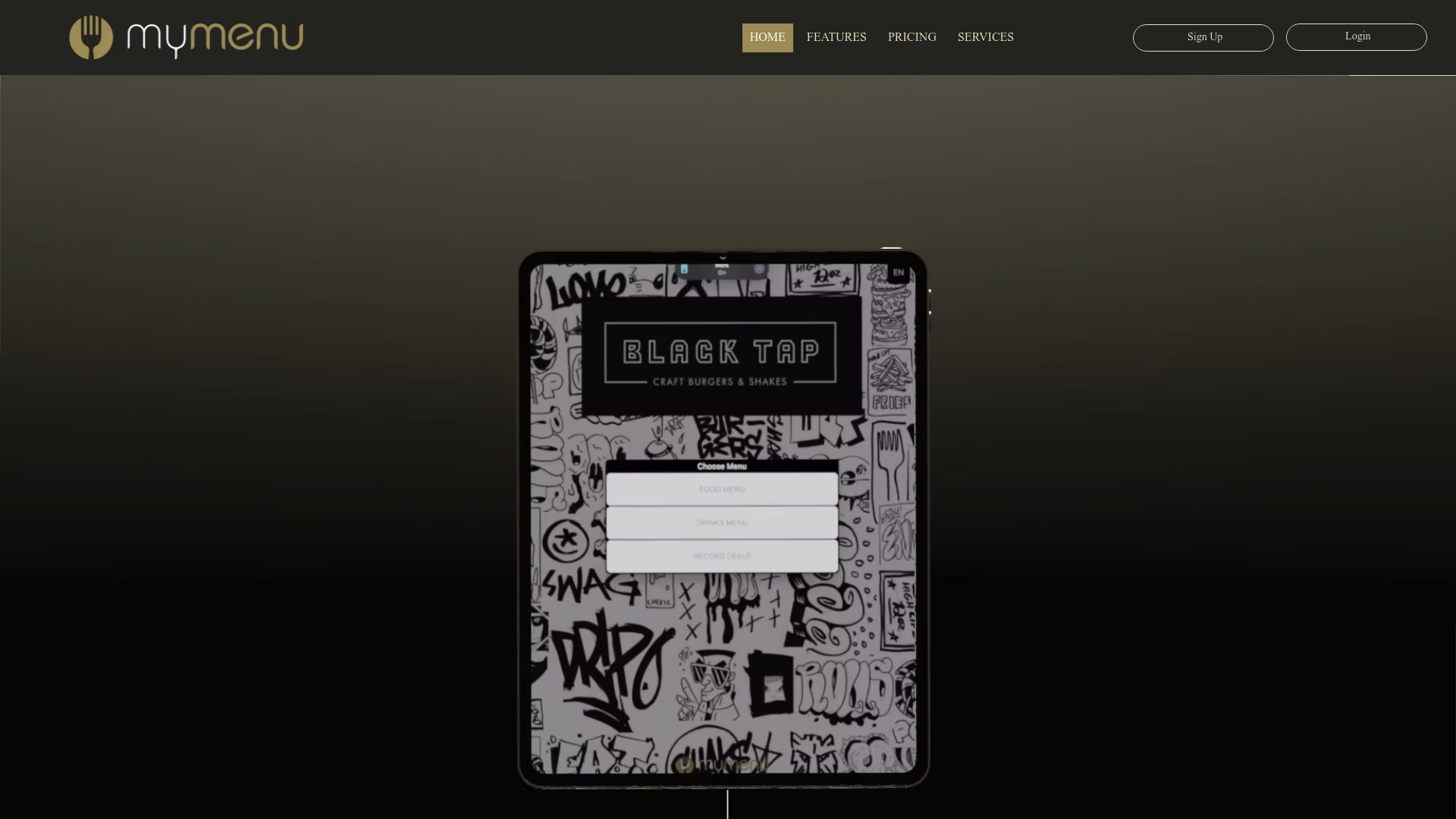
Check the pricing page to compare plans and find the setup that fits your dining room.
FAQ
What is the most important rule of QR menu etiquette?
Always pair a clearly labeled QR code with a printed menu option and staff ready to help, since ADA guidance requires effective communication for guests who cannot use the digital version. The digital menu should be a convenience added on top of service, never a replacement for it.
Are restaurants legally required to offer a printed menu alongside a QR code?
Restaurants are public accommodations under Title III of the ADA and must provide effective communication, which ADA effective communication guidance ties to offering auxiliary aids like a physical menu or staff assistance when a guest cannot use the digital format. A QR-only menu with no fallback can leave a business out of compliance.
Can QR menus hurt customer loyalty?
Yes, peer-reviewed research found that QR code menus can lower customer loyalty compared to traditional menus when guests find them inconvenient, such as slow scrolling or reduced interaction with staff. Offering a printed option and keeping staff engaged helps prevent that effect.
How big should a QR code be on a table tent versus a wall sign?
A table tent code works well at a minimum size suitable for close viewing, while wall or host-stand signage needs a larger size to scan from a few feet away. High contrast between the code and its background, as recommended in Section508 guidance, matters as much as size.
Does Mydigimenu offer print-ready QR code templates?
Yes, Mydigimenu provides print-ready QR assets sized for table tents, check inserts, and host stands as part of its QR Menu offering. Plans including this feature start at $39 per month with the StartUp Menu tier.
Sources
Recommended
Comments