
The Role of Feedback Collection in Dining: 2026 Guide


TL;DR:
Proactive feedback collection in restaurants boosts revenue, retention, and service quality through structured processes.
In-the-moment feedback channels and clear ownership ensure insights are acted on and guest loyalty is strengthened.
Feedback collection in dining is the systematic process of gathering and acting on customer input to improve restaurant performance and guest experience. Restaurants that treat this process as a core business function, rather than a reactive reputation tool, gain a measurable edge. Proactive feedback strategies correlate with a 30% increase in customer satisfaction and 20% higher retention. Platforms like Ovation and Feedal have demonstrated that structured feedback programs drive revenue growth, reduce waste, and sharpen service quality. This guide gives restaurant and hospitality management professionals a clear framework for turning guest input into real operational results.
What is the role of feedback collection in dining operations?
Feedback collection in dining is the practice of capturing guest opinions at every touchpoint, from the first bite to the final bill, and routing those insights to the people who can act on them. The industry term for this end-to-end process is customer feedback management, and it covers collection, analysis, action, and closing the loop with the guest. Most restaurants collect feedback in some form. Far fewer complete all four stages consistently.
The business case is direct. Restaurants that actively incorporate customer feedback can see annual revenue and satisfaction increases of up to 20%. That figure reflects a shift in how leading operators think about feedback. It is not a complaint box. It is a data stream that reveals which menu items underperform, which servers need coaching, and which operational bottlenecks frustrate guests before they ever leave a review online.
The importance of dining feedback also shows up in staff performance. When management shares specific guest input with kitchen and floor teams, service quality improves faster than any training manual can deliver. Feedback gives staff a mirror, not a memo.
How does feedback improve menu offerings and dining experience?
Customer feedback in restaurants is the fastest path to menu accuracy. A dish that looks great on paper but generates consistent complaints about portion size or seasoning will quietly drain repeat visits. Feedback surfaces that pattern before it becomes a revenue problem.

The timing of feedback collection matters as much as the method. In-the-moment feedback, captured while the guest is still at the table, produces the most accurate and emotionally honest data. Retrospective feedback collected via email surveys 24 hours later tends to reflect mood more than meal quality. Restaurants that capture both get a fuller picture.
Feedback channels that consistently deliver useful menu data include:
Table-side digital surveys via QR codes or tablets, which capture real-time reactions to specific dishes
Post-visit SMS surveys, which work well for delivery and takeout orders
Online review monitoring on Google, Yelp, and TripAdvisor, which surfaces patterns across hundreds of guests
Server interaction notes logged in a POS system after each table turn
Each channel captures a different slice of the guest experience. Using only one leaves blind spots.
Pro Tip: Tag every piece of feedback with contextual data: party size, table location, time of service, and day of week. Capturing contextual data like this is what separates a pattern from an isolated incident, and patterns are what drive real menu decisions.
Feedback-driven menu refinements also reduce food waste. When a restaurant learns that a specific garnish is consistently left on the plate, removing it cuts cost without affecting satisfaction. That is the kind of operational efficiency that compounds over time.
What feedback collection methods are most effective in 2026?
The gap between traditional paper comment cards and modern feedback tools is now significant. Interaction analytics are adopted by 53.2% of organizations as of mid-2026, preferred over traditional surveys for their ability to capture conversational context. That adoption rate signals a clear industry direction: restaurants are moving toward real-time, contextual feedback rather than periodic, structured questionnaires.
Method | Strengths | Best use case |
QR code surveys | Instant, low friction, high response rate | Table-side, in-the-moment capture |
SMS surveys | High open rates, works post-visit | Delivery, takeout, follow-up |
Interaction analytics | Captures tone and context, not just ratings | Staff performance, service flow |
Review monitoring tools | Aggregates public sentiment at scale | Reputation and SEO management |
POS-integrated feedback | Ties feedback to specific orders and servers | Operational accountability |
Conversational AI feedback tools represent the newest layer. Instead of asking guests to rate their meal on a five-point scale, these tools ask open-ended questions and analyze the language used in responses. The result is richer data with less survey fatigue.
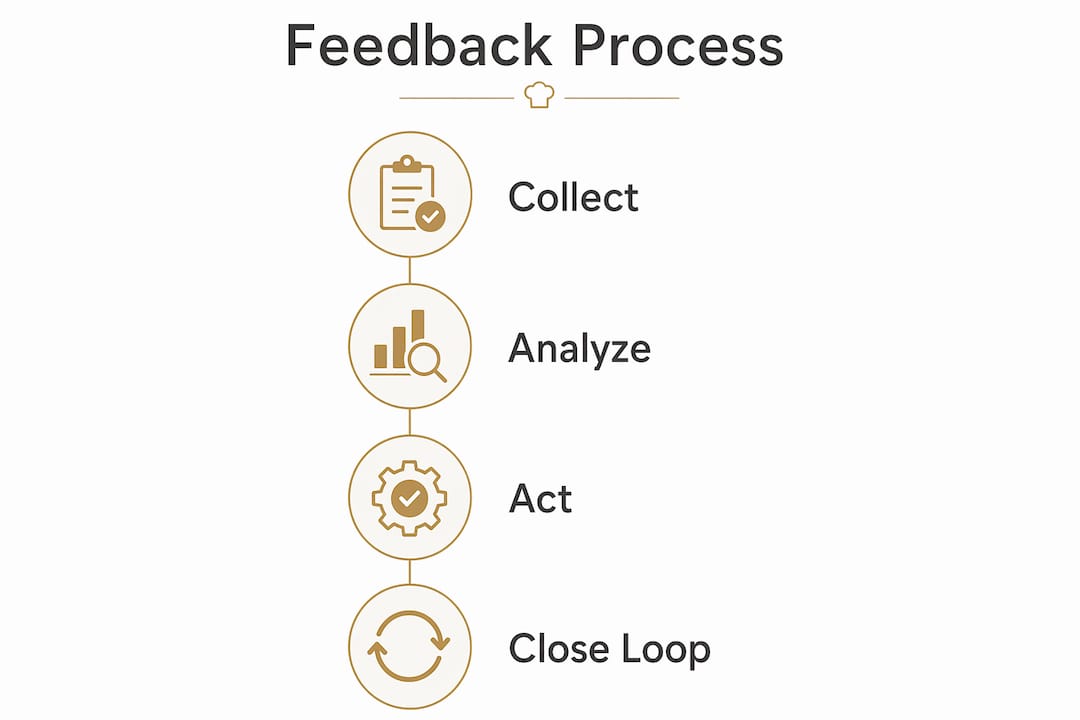
A structured feedback loop consists of four stages: collect, analyze, act, and close the loop. Skipping the final stage, where the restaurant communicates back to the guest that their input led to a change, reduces future engagement. Guests who see their feedback acted on are more likely to return and more likely to leave public reviews.
Pro Tip: Connect your feedback tools to your POS system. When a negative rating is tied to a specific server, shift, or menu item, your management team can respond with precision rather than guesswork. This is how customer engagement in hospitality moves from reactive to intentional.
How can restaurants act on feedback to drive measurable results?
Collecting feedback without a clear ownership structure is the most common failure in restaurant feedback programs. Effective feedback management requires accountability for action and systematic routing of feedback to the teams who can respond. Without that structure, insights pile up unread and guests feel ignored.
A practical ownership model for restaurant feedback looks like this:
Assign a feedback owner per shift. This person reviews incoming ratings and flags anything below a set threshold before the next service begins.
Route negative feedback automatically. Set up alerts so that any rating below three stars triggers a notification to the floor manager within the hour.
Create a weekly feedback review. The general manager and head chef review patterns together, not individual complaints, and identify one menu or service change to test.
Close the loop with the guest. For guests who left contact details, send a personal follow-up within 48 hours acknowledging their input and noting what changed.
Share wins with the team. Post standout positive feedback in the staff area or team messaging channel before each service.
“Sharing positive feedback with your team is not just morale management. It embeds feedback into the culture of the restaurant, making every staff member a participant in the improvement process.” — Ovation, as cited in Fast Casual
Sharing standout positive feedback in team communications boosts staff morale and builds a service culture where improvement feels rewarding rather than punitive. Staff who see feedback as a tool for recognition, not just criticism, engage with it differently.
The revenue impact of this approach is real. Restaurants applying proactive feedback strategies report 20% higher retention, and retention is where restaurant profitability lives. Acquiring a new guest costs far more than keeping an existing one.
What role does feedback play in digital visibility and loyalty?
Feedback collection is a direct input to local search rankings. Digital feedback efforts improve local search rankings through fresh user-generated content and engagement signals. Google’s local algorithm rewards restaurants that generate consistent, recent reviews and that respond to them. A restaurant that actively manages its feedback loop is, in effect, running a continuous local SEO program.
The loyalty dimension is equally concrete. Guests who receive a personal response to their feedback are more likely to return than those who receive no acknowledgment. That response does not need to be elaborate. A brief, specific reply that references the guest’s actual comment signals that the restaurant listened. That signal builds trust faster than any loyalty points program.
Feedback also serves as a private channel for managing negative experiences before they go public. Restaurants that capture dissatisfied guests through table-side or post-visit surveys can address the issue directly, reducing the likelihood of a damaging public review. This is not reputation suppression. It is good service delivered after the meal.
Key ways feedback collection builds guest loyalty and digital presence:
Responding to reviews on Google and TripAdvisor signals active management to both guests and search algorithms
Personalized follow-up messages after a negative experience convert dissatisfied guests into loyal ones at a measurable rate
User-generated content from reviews and survey responses adds fresh, keyword-rich text to your digital footprint
Consistent engagement with feedback through response and improvement boosts SEO and local search rankings over time
High-satisfaction feedback is as valuable as complaints. Positive feedback offers opportunities to deepen guest loyalty rather than simply serve as praise. A guest who raves about a specific dish is telling you what to feature, what to protect, and what to build your identity around.
Key Takeaways
Restaurants that treat feedback as business intelligence, not reputation defense, consistently outperform those that collect data without a clear system for acting on it and closing the loop with guests.
Point | Details |
Feedback drives measurable revenue | Proactive feedback strategies correlate with up to 20% higher retention and revenue growth. |
Timing and context matter | In-the-moment feedback via QR codes or tablets produces more accurate data than post-visit surveys alone. |
Ownership prevents failure | Assign a feedback owner per shift and route negative ratings automatically to avoid insights going unread. |
Closing the loop builds loyalty | Guests who see their feedback acknowledged are more likely to return and leave public reviews. |
Feedback fuels local SEO | Fresh user-generated content from reviews and surveys directly improves local search rankings. |
Feedback as a strategic asset, not a fire drill
Most restaurant managers I have worked with treat feedback the same way they treat a grease fire: react fast, contain the damage, move on. That instinct is understandable. A bad review on a Friday night feels urgent. But it is exactly the wrong frame.
The restaurants that consistently improve are the ones that read a string of three-star reviews and ask, “What is our system producing?” not “Who made this mistake?” Treating feedback as business intelligence rather than reputation defense is the mindset shift that separates operators who grow from those who just survive.
I have seen feedback programs fail for one reason more than any other: nobody owns the “act” and “close the loop” stages. The data gets collected, maybe even analyzed, and then it sits in a spreadsheet while the team moves on to the next service. Successful feedback loops require clear ownership for those final two stages. Without it, the whole program is theater.
The other thing I would push back on is the idea that negative feedback is the only feedback worth acting on. A guest who tells you the lamb chops were the best they have ever had is giving you a gift. That dish belongs on your signature menu, in your marketing, and in your staff training as a benchmark. Positive feedback is a map to your best self as a restaurant. Use it.
— Abhi
How Mydigimenu turns feedback into a live business tool
Mydigimenu is built for exactly this kind of feedback-driven operation. The platform’s restaurant digital tablet menu and QR menu system put feedback collection at the point of experience, not hours after the guest has left. Integrated guest profile capture, CRM connectivity, and interaction analytics support all four stages of the feedback lifecycle: collect, analyze, act, and close the loop.
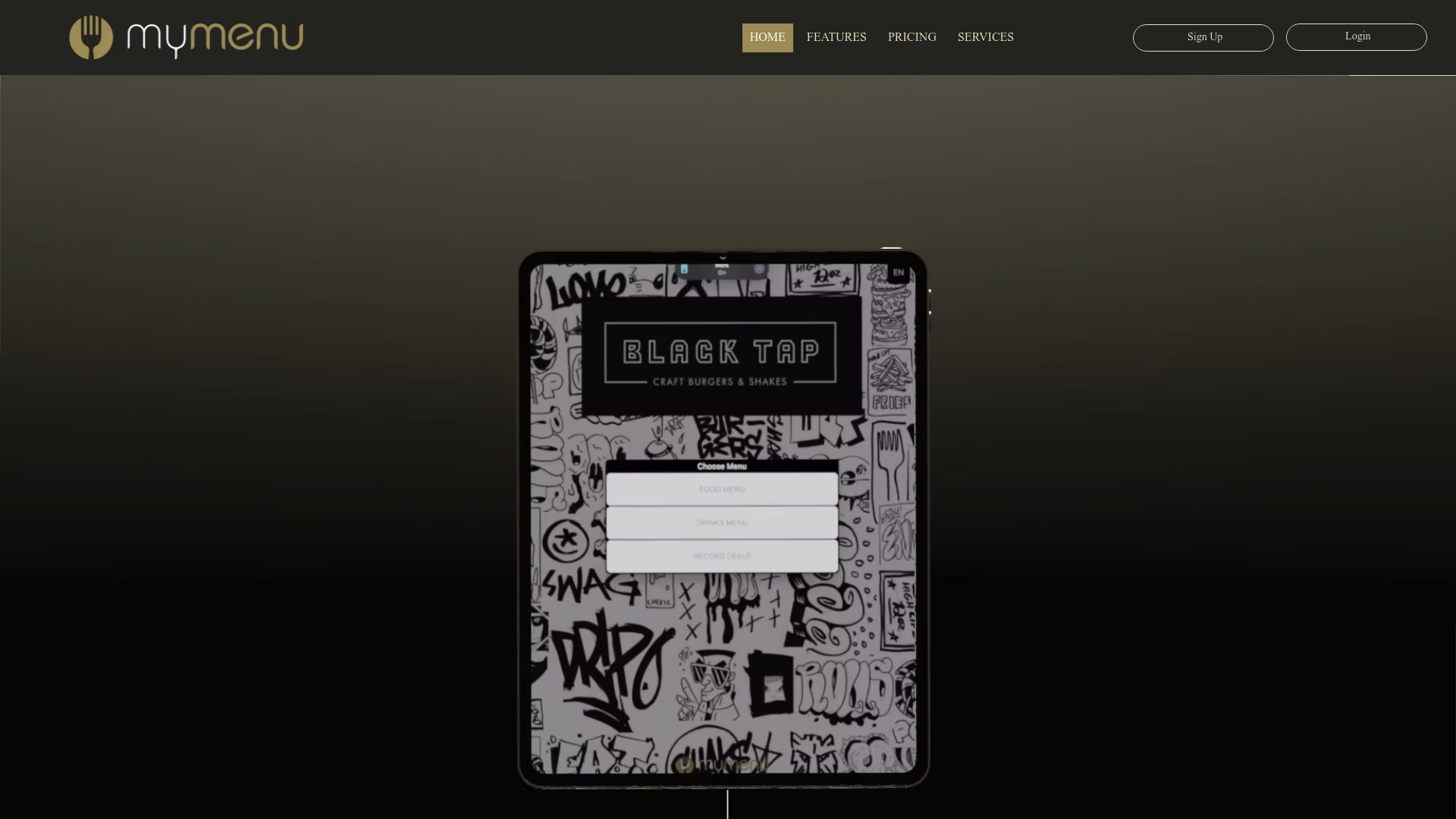
Mydigimenu’s tools connect feedback data directly to menu performance, loyalty programs, and targeted follow-up campaigns. Restaurants using the platform can capture in-the-moment ratings, monitor patterns across locations, and respond to guests through a single interface. Explore plans built for restaurant operations and see how a digital-first feedback approach can turn every guest interaction into a growth signal.
FAQ
What is feedback collection in dining?
Feedback collection in dining is the process of systematically gathering guest opinions through surveys, reviews, and interaction data to improve restaurant performance. The goal is to complete a full feedback loop: collect, analyze, act, and close the loop with the guest.
How does customer feedback improve restaurant operations?
Customer feedback identifies underperforming menu items, service gaps, and operational bottlenecks before they affect revenue. Restaurants applying proactive feedback strategies report up to 20% higher customer retention.
What are the most effective ways to collect dining feedback?
QR code surveys, SMS follow-ups, POS-integrated ratings, and online review monitoring are the most effective channels in 2026. Interaction analytics, adopted by 53.2% of organizations, add conversational context that star ratings alone cannot capture.
How does feedback collection affect online visibility?
Active feedback management generates fresh user-generated content that improves local search rankings on Google and other platforms. Responding to reviews signals to search algorithms that the restaurant is actively managed and guest-focused.
Why do restaurant feedback programs fail?
Most feedback programs fail because no one owns the action and follow-up stages. Collecting data without routing it to accountable team members and closing the loop with guests produces no measurable improvement.
Recommended
Comments