
Reduce Clinic Wait Times With Same-Day Scheduling


The fastest, highest-impact way to reduce patient wait times is to combine open (same-day) scheduling with workflow mapping and simple capacity-matching analytics. AHRQ guidance and systematic reviews back this combination. Start with quick wins, pilot one or two changes, measure arrival-to-provider time and backlog days, then scale what works.
TL;DR:
AHRQ reports some primary care clinics cut routine waits from 45–55 days to 1–2 days; open access suits practices with steady demand and stable provider panels.
During rollout, expect extra work to clear the backlog, stop routine bookings beyond a target date, and arrange cross coverage for surge days.
Several studies reported waiting list reductions of 44%–98% with protected appointment models; track arrival to provider time, third next available appointment, and backlog size.
Map actual workflows with frontline staff, remove duplicate steps and handoffs, then test each change in a PDSA cycle before rollout.
Use arrivals by day and hour to shift staffing and appointment types around peaks, while protecting urgent slots and addressing bottlenecks beyond the clinic.
Table of Contents
Quick wins your practice can try this week
You do not need a new building or a new budget to make waits shorter. You need a few habits that remove small delays before they snowball into a long wait in the waiting room.
Set clear start-of-day expectations so providers and staff begin on time, and add short buffer slots to stop one long visit from becoming an overtime cascade.
Send automated text or phone reminders and run a brief pre-visit triage call to help address no-shows and late check-ins.
Shorten intake forms and move nonessential questions to a post-visit workflow so registration takes less time and feels less like a clipboard marathon.
Assign a nonclinical team member as a patient partner or greeter who escorts and briefs patients, so no one sits wondering what happens next.
Each of these changes costs little and teaches your team to look at the day as a flow, not a stack of appointments. That mindset prepares you for the bigger moves below.
Pro Tip: Pick the one delay your front desk complains about most and fix it first; early, visible wins make every later change easier to sell to staff.
How open access scheduling works and when it fits
Open access, also called advanced access, flips the usual booking habit. Instead of filling the calendar weeks ahead with routine visits, you reserve a share of capacity for same-day demand and book patients when they call.
The evidence is strong. AHRQ reports that some primary care clinics cut routine waits from 45–55 days to 1–2 days. A systematic review and meta-analysis found that protected appointment models are associated with moderate to large drops in waiting time and waiting-list size across outpatient and community services.
If you decide to roll it out, plan for the transition:
Expect an initial surge as you clear the backlog, and budget for extra work to do it.
Set a clear target date and stop booking long-term routine visits past that date until the backlog is handled.
Apply “max packing,” filling each day’s slots as fully as safe care allows, so you do not carry work forward.
Write a contingency plan for surge days, such as cross-cover or extended hours, before you need it.
Open access fits best when you have steady demand, a stable provider panel and a team willing to hold the line on the target date.
Map and redesign workflows to expose bottlenecks
Most delays hide in steps nobody has ever drawn on paper. Workflow mapping makes them visible, and AHRQ’s workflow analysis resource notes that it often uncovers duplicative documentation and redundant steps you can remove without hurting quality.
Follow this sequence:
Draw the process as people think it works, then as it really works, using direct observation and a swimlane map that shows who does what.
Compare that reality map with an ideal version, as laid out in AHRQ’s workflow mapping curriculum, and mark the gaps.
Look for the usual culprits: repeated data entry, extra handoffs and registration steps that vary by who is at the desk.
Involve frontline staff in redesign, reassign tasks, and update job descriptions and policies to match.
Test each change on a small scale with a PDSA cycle before you adopt it everywhere.
Pro Tip: Observe the process yourself; what you see at the front desk may differ from what you were told.
Match capacity to demand with analytics and staffing alignment
A schedule that ignores demand patterns can make busy days harder to manage. You can start with nothing fancier than a spreadsheet of arrivals by day and hour, then staff to that curve.
The Institute for Healthcare Improvement describes how applying system-wide flow principles and analytics lets facilities handle higher volumes in the same number of beds or operating rooms by shortening cycle times. Smaller practices can borrow the logic:
Pull a few months of arrivals and forecast the busy and quiet windows by day and time.
Redistribute appointment types so long visits do not stack up in your peak hours.
Block and protect slots for urgent needs, and cross-cover predictable surges instead of hoping they pass.
Look upstream and downstream: when discharges lag or procedure scheduling clogs, fixing the clinic alone will not clear the line.
The goal is a day that behaves predictably, so your team spends its energy on patients instead of firefighting.
Emergency department and urgent care tactics that shave hours
Emergency teams have shown that flow gains often come from process, not construction. At Cambridge Health Alliance, simplified registration and a Rapid Assessment Unit reduced door-to-provider time and length of stay, using existing personnel and no major capital spend.
Three tactics carry over to most urgent settings:
Collect only the essentials at the door and finish the full record after the first clinical assessment, so a clinician sees the patient sooner.
Combine triage and express care at the point of entry in a rapid assessment unit, treating low-acuity patients without sending them through the acute ED.
Reassign nonclinical staff as patient partners and clarify nursing, physician assistant and physician roles to cut redundant checks.
Small structural moves like these can build on one another, and you can pilot them before committing.
Measure wait times and monitor progress
You cannot shorten what you do not measure. Pick a small set of metrics and keep them visible.
Arrival-to-provider time and total cycle time for each visit.
Third-next-available appointment, a quick read on true access.
Waiting-list size and time to first appointment.
Review them in a short daily huddle and plot results on run charts or control charts, which show whether a change is real or just noise. Protect against gaming: favor process measures and patient-centered outcomes over a single target that people can nudge without helping anyone.
The evidence shows what is possible when you track these well. Several studies in one systematic review reported waiting-list size reductions of 44%–98% with protected appointment models, alongside gains in productivity and patient satisfaction.
Communicate with patients while they wait
Operational fixes take time, and patients feel every minute meanwhile. Honest communication shrinks the perceived wait.
Share estimated wait times and send text updates, with a plain reason when something runs late.
Offer comfort and information: clear signage, triage updates, Wi-Fi and a little distraction material.
Use a short service recovery script when waits run long, and collect feedback so you learn what stung.
People forgive a delay they understand far faster than one they have to guess about.
Implementation plan: start small and sustain gains
Resist the urge to change everything at once. AHRQ advises matching the strategy to your capacity and starting small.
Choose one or two high-impact changes, such as same-day slots plus simplified registration.
Run a pilot with a named owner and a baseline measurement.
Use PDSA cycles to test, adjust and re-test, with frontline staff in the room.
Set a target date to clear any backlog, as in the open access rollout.
Lock in the gains with daily huddles, clear ownership for flow and updated job descriptions.
Pro Tip: Write the pilot’s success measure on a whiteboard before day one, so nobody argues about whether it worked.
Technology solutions that cut the line
Software cannot fix a broken process, but once your workflow is mapped it can remove the manual steps that create queues. Digital menus, contactless ordering and self-service kiosks all move a repetitive task off a staff member and onto the guest’s own phone or screen.
This is where our world meets yours. In hospitality, a QR code menu lets people browse and order without waiting for a server to bring a printed menu. We explain the setup in our QR code menu guide, and the same logic applies to patient check-in: forms completed on a phone before arrival mean fewer minutes at the desk.
Self-service stations work the same way. A kiosk or tablet that captures name, reason for visit and preferences frees your greeter to help the patient who needs a person. We cover the operational side in our QR menu benefits article.
When you evaluate any tool, ask three questions. Does it remove a step or just move it? Can patients use it without downloading an app? And does it connect to the systems you already run? Choose the answer that shortens the line, not the one with the longest feature list.

The role of digital ordering platforms in minimizing waits
A digital ordering platform sits between the request and the fulfillment. In a restaurant it takes the order from the guest’s phone, sends it to the kitchen and tracks it to the table, so no one stands holding a pen waiting for a decision.
The lesson for a clinic is about flow, not food. Every order-to-fulfillment chain has stages, and waits pile up at the handoffs. A platform that routes the request instantly, shows its status and records the timing gives you the same visibility that a good run chart gives your schedule.

Our approach to this is covered in our mobile menu ordering operations post, which walks through ordering workflows and order-to-fulfillment timing. Managers in any service setting can borrow the thinking: define each stage, time it and look for the stage where requests sit longest.
Practical benefits tend to be consistent across settings. Requests arrive complete, so fewer clarifying questions slow the line. Staff see a single queue instead of scattered notes. And peaks become manageable because the system absorbs a rush of requests at once, instead of a single person absorbing them one by one.
How engagement features affect wait reduction
Features like pre-ordering and loyalty programs look like marketing, yet they shape arrival patterns, and arrival patterns drive waits.
Pre-ordering moves work out of the peak. When guests submit a request before they arrive, the team prepares in advance and the front-of-house moment shrinks to a handoff. A clinic version is pre-visit intake and triage: the work happens before the patient is standing at the desk.
Loyalty programs and digital stamp cards nudge behavior in a gentler way. Incentives for off-peak visits can move some demand out of the crunch hour and into quieter windows. Over time that smooths the very peaks your analytics identify.
Guest profile capture adds a quieter gain. When a returning guest’s details and preferences are already on file, there is nothing to ask and nothing to retype. In a practice, the equivalent is a record that is complete before the visit starts.
None of this replaces sound scheduling. It supports it by making demand more predictable, which is the whole point of matching capacity to need.
Reservation management systems that optimize arrivals
Walk-in surges are the enemy of a smooth day, and reservations are the oldest tool for taming them. A reservation system spreads arrivals across the clock, so your team meets a steady stream instead of a wave.
The healthcare parallel is protected, appointment-based booking. The systematic review of protected appointment strategies ties them to meaningful waiting time reductions, and the same discipline applies in any service business: assign a time, protect it and manage exceptions deliberately.
Integration is what makes a reservation tool pay off. When bookings sync with your table or room status, and with the ordering and check-in tools around them, you see the real picture of who is arriving, when and how long they will stay. We built our Restaurant Reservations Module around that idea for hospitality teams.
Three habits help any team using a reservation system. Confirm bookings by text to cut no-shows. Leave a small share of slots open for walk-ins and urgent needs. And review the gap between booked time and actual time each week, since that gap is where hidden waits live.
Real-time data and analytics for peak periods
Historical averages tell you what usually happens. Real-time data tells you what is happening right now, and the combination lets you act before a queue forms.
Queueing analysis gives the theory. Queueing models offer probabilistic estimates of queue length and waiting time, and they let you test scheduling alternatives and capacity choices before you change the floor. Design choices matter: research on queueing system design shows that single-server and multiple-server setups can behave very differently for waiting time.
In practice, a live dashboard turns this into action:
Watch current arrivals against your forecast and call in cross-cover when the gap widens.
Track order or visit status so you can see which stage is backing up.
Compare each day with its own history, so a quiet Tuesday does not hide a developing problem.
The aim is early warning. A manager who sees the line forming at 10:40 can move a person at 10:45. A manager who learns about it from the patients is already behind.
Staff training and adoption for technology-driven gains
A tool that your team ignores reduces nothing. Adoption is a people problem, and it responds to the same methods as any workflow change.
Start with the frontline. Involve the people who will use the system in choosing and configuring it, as AHRQ’s workflow mapping guidance recommends for any redesign. Staff who helped shape a change defend it.
Then train in short, practical bursts rather than one long session:
Walk through the three tasks each role will do daily, on real scenarios.
Name a champion on every shift who can answer questions in the moment.
Run the new tool alongside the old process for a short pilot, then retire the old one on a set date.
Update job descriptions so the new steps are part of the job, not an extra.
Finally, close the loop. Review the same metrics you used to justify the change, share early wins in the huddle and fix friction fast. When people see the line get shorter, the habit sticks.
Author perspective: flow is a form of respect
We tend to treat waiting as a nuisance, but a long wait tells patients their time does not matter. The Institute for Healthcare Improvement makes the point plainly: so-called flow failures are disrespectful to patients, and data-driven, patient-centered redesign improves both throughput and staff experience. Leaders should measure, trust their teams and celebrate early wins. Pick a change and run a PDSA cycle on it.
— Abhi
Mydigimenu: the digital layer for faster service
If you run a restaurant, cafe, bar or hotel and the lessons above sound familiar, we built our platform for exactly this problem. With us, guests browse and order from a QR code or tablet menu with no app download.
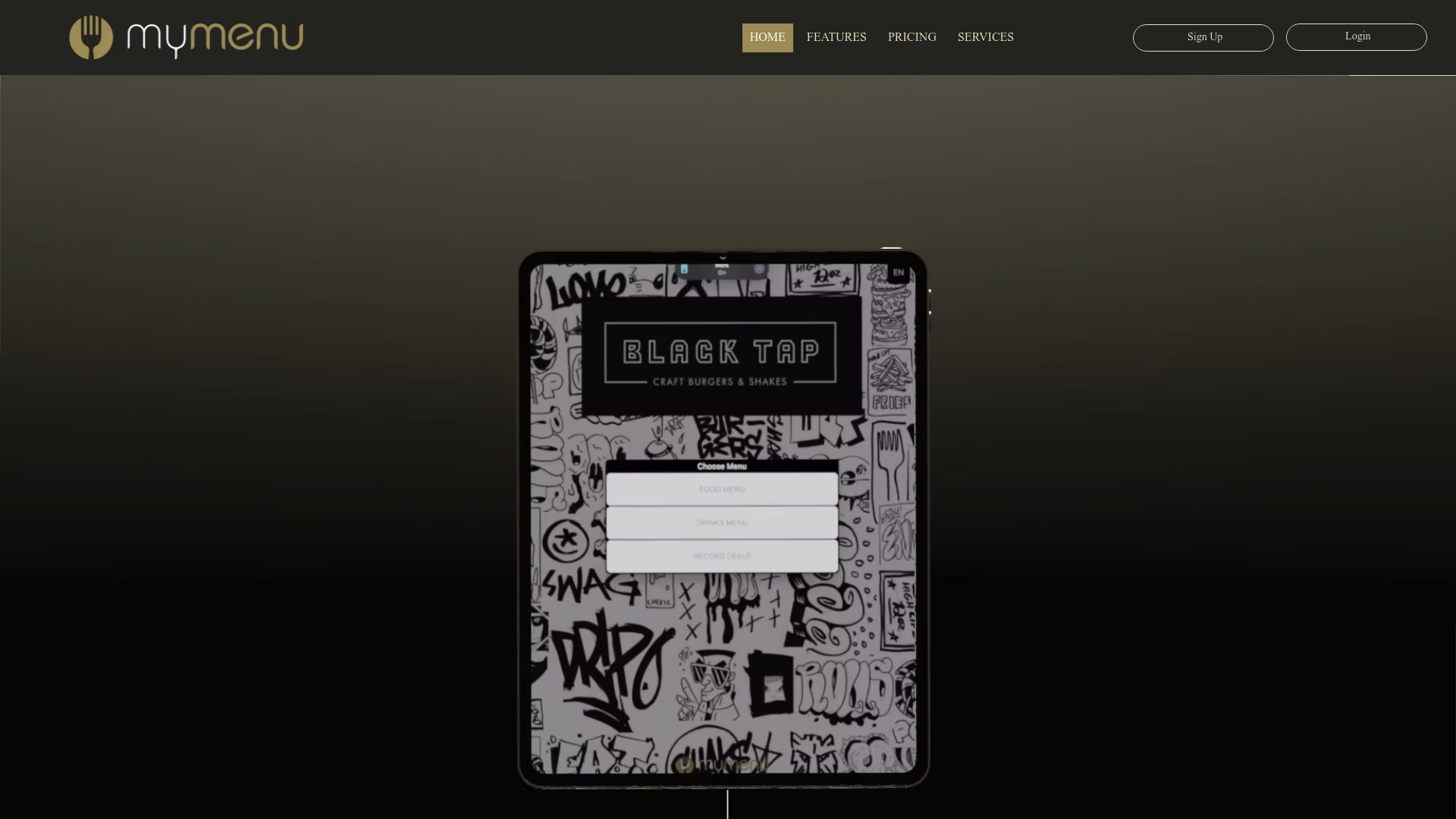
Our plans run from the StartUp Menu at 39 USD per month, with the Setup Fee at 99 USD one-off, as listed on our pricing page. You also get reservation management, loyalty stamp cards, guest feedback and integration with your POS and delivery partners, all in one place. Our team can walk you through which plan fits your volume. See our plans and get started today.
FAQ
How do you manage a waiting list?
Protect appointment slots, set a target date and clear the backlog in a focused push. A systematic review links protected appointment strategies to meaningful reductions in waiting-list size. Then match booking to demand so the list does not rebuild.
How long is the average ER wait time in Canada?
Published averages vary by hospital, province and year, and the sources we reviewed do not give a single reliable national figure. Check your provincial health authority for current local data. Locally, track your own arrival-to-provider time, which is the number you can actually change.
How do you measure waiting time?
Time each stage of the visit, from arrival to first contact with a provider to departure. Add the third-next-available appointment and waiting-list size for scheduled care. Plot the results on run charts and review them in a daily huddle.
How long is too long to wait at a doctor’s appointment?
There is no single universal threshold. Patients tolerate a wait far better when you tell them how long it will be and why. Set a practice standard, track it and treat any visit that exceeds it as a signal to investigate.
Sources
Comments