
Why Validate Restaurant Concepts Digitally Before Launch
- Abhi Bose
- 3 hours ago
- 8 min read

TL;DR:
Digital validation tests restaurant concepts using online surveys, virtual tastings, and market data before investment. It reduces failure risk by identifying operational, financial, and market-fit issues early through structured, ongoing testing. This process improves negotiation power, enhances menu success, and guides data-driven decision-making.
Digital validation is the process of testing a restaurant concept through online tools and real market data before committing capital to a lease or build-out. Restaurants that skip this step face brutal odds. Restaurants in poor locations fail at rates exceeding 80% within three years, largely because owners never stress-tested their assumptions. Understanding why validate restaurant concepts digitally is not just a planning exercise. It is the single most effective way to protect your investment and confirm that your concept actually fits the market you are entering.
Why validate restaurant concepts digitally before you sign anything
Digital restaurant validation is the structured practice of using online surveys, virtual tastings, demographic analysis, and financial modeling to confirm a concept’s viability before any money hits a contractor’s account. The industry term for this broader process is concept feasibility testing, and digital tools have made it faster, cheaper, and more accurate than traditional focus groups ever were.

The core argument is simple. Poor location and unvalidated concepts drive the majority of early restaurant failures. That statistic means most closures were predictable and preventable with the right data gathered at the right time. Digital validation gives you that data before you are locked into a five-year lease.
Concept testing also reveals something most owners underestimate: food quality alone does not determine success. Market alignment, price sensitivity, neighborhood demographics, and operational fit all shape whether a concept survives its first year. A digital stress test surfaces all of these variables simultaneously, not one at a time after you have already opened.
Pro Tip: A data-backed feasibility study does more than inform your decisions. Feasibility studies strengthen landlord negotiations by proving lower tenant risk, giving you real leverage for rent abatement and tenant improvement allowances.
What are the key methods for validating restaurant ideas online?
The most effective digital validation frameworks test three things: whether diners would choose your concept over their current habits, whether they would return, and whether the menu can actually be executed at scale. The Assembled methodology, used widely in competitive food and beverage markets, structures this around occasion, switch, and repeat testing.
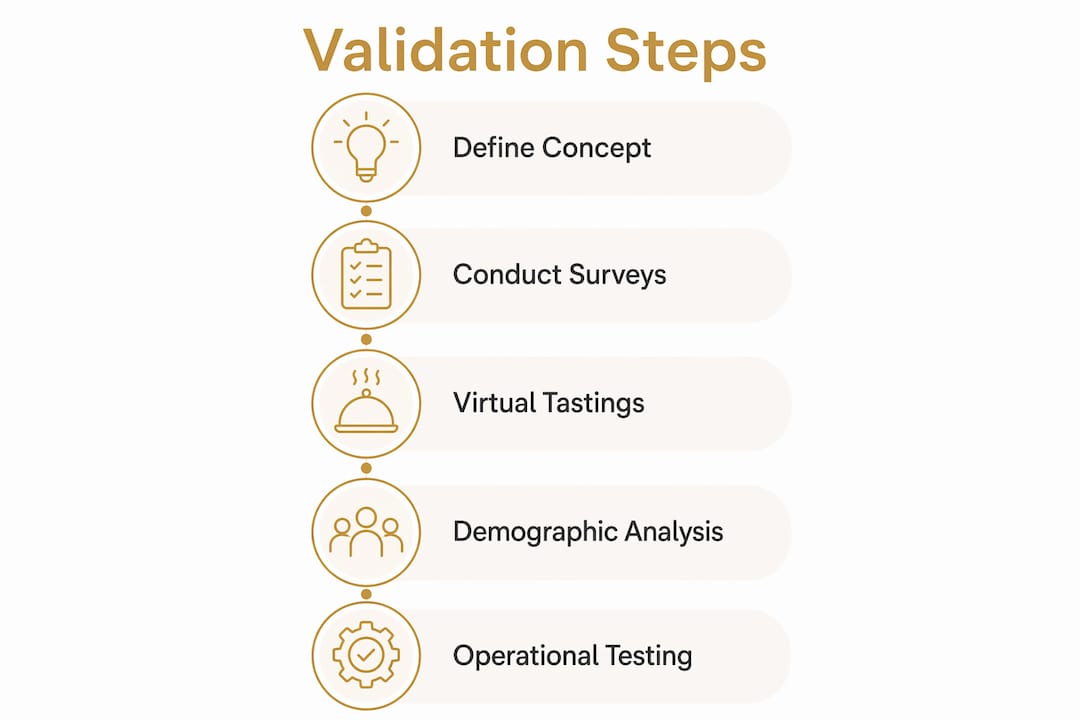
Here is how the main methods compare:
Validation method | Strengths | Limitations |
Traditional focus groups | Rich qualitative feedback | Expensive, slow, prone to social pressure |
Digital surveys and forced-choice tests | Fast, scalable, honest data | Requires careful question design |
Virtual tastings with avatars | Tests dish appeal and operational feasibility together | Newer method, requires digital infrastructure |
Demographic and competitive analysis | Grounds concept in real market data | Does not test emotional or sensory response |
Politeness bias causes consumers to give falsely positive feedback in open-ended settings. Diners default to non-committal phrases rather than honest criticism. Forced-choice digital tests solve this by making respondents pick between your concept and a realistic alternative, which reveals true purchase intent.
Virtual tastings take this further. Virtual tastings prevent forecasting failures by testing a dish’s appeal and operational feasibility before a full menu launch. A dish might score well on flavor but fail when testers realize it requires 14 minutes of prep during a Friday dinner rush.
Pro Tip: Feedback from friends and family is rarely predictive. Recruit strangers who match your target spending profile and run blinded tests where they choose between competing concepts, not just rate yours in isolation.
The key measure in any concept test is not approval ratings. The real measure is what diners would trade to eat your concept. That trade-off question separates genuine demand from polite enthusiasm.
How can digital validation uncover operational and financial pitfalls early?
Financial benchmarks give digital validation its teeth. Healthy restaurant operations maintain occupancy costs between 6–10% of sales and prime costs below 60–65%. Those numbers are not aspirational targets. They are the floor below which most restaurants become unprofitable regardless of how good the food is.
Digital validation lets you model these benchmarks against your projected sales before you spend a dollar on construction. You can run sensitivity analyses that ask: what happens if opening-month sales are 30% below forecast? If prime costs hit 68%? If rent runs at 12% of sales? Most owners never ask these questions until they are already losing money.
Operational constraints must be simulated alongside consumer preference in digital tests. A menu item that tests brilliantly with consumers can destroy kitchen throughput during peak service. Digital kitchen workflow simulations expose labor load, timing conflicts, and equipment bottlenecks before they become real problems. This is where many menu failures originate: not from bad recipes, but from forecasting errors rather than culinary issues.
Infrastructure readiness matters too. A concept built around fresh, made-to-order bowls needs a kitchen with specific prep space, refrigeration capacity, and a labor pool trained for speed. Digital validation maps your concept’s operational requirements against the actual conditions of your target location, revealing gaps you can fix before they cost you.
Pro Tip: Continuous digital validation after launch prevents costly untested menu changes. Successful operators test new dishes and pricing digitally before adding them to the live menu, treating validation as an ongoing practice rather than a one-time pre-launch task.
What practical steps can a restaurant owner take to implement digital validation?
Structured digital validation follows a clear sequence. Rushing it or skipping steps is where most owners lose the benefit.
Set a realistic timeline. Spend 3–6 months on structured concept research and digital testing before signing a lease. This is not excessive caution. It is the minimum time needed to gather meaningful data across multiple test rounds.
Recruit the right participants. Pull testers from your actual target market, matched by age, income, dining frequency, and neighborhood. Avoid friends, family, and colleagues. Their feedback feels supportive but rarely predicts real purchase behavior.
Design forced-choice surveys. Ask respondents to choose between your concept and a realistic competitor, not just rate your concept alone. This structure eliminates politeness bias and reveals whether your concept creates genuine switching motivation.
Run virtual tastings for your core menu. Test your top 8–12 dishes for consumer appeal and operational feasibility simultaneously. Flag any item that scores well on taste but fails on execution time or ingredient complexity.
Model your financials against real benchmarks. Use occupancy and prime cost benchmarks to stress-test your projected sales at multiple scenarios. Build a version where sales come in 20% below your base case and confirm the business still survives.
Analyze local demographics and competition. Map spending patterns, foot traffic data, and existing restaurant density in your target area. A concept that works brilliantly in one neighborhood can fail in another two miles away. Understanding how to digitalize restaurant operations from the start gives you a structural advantage when interpreting this data.
Iterate before committing. Use your test results to refine the concept, then run a second round of digital testing on the revised version. Only commit to a lease or build-out after at least two rounds of data-informed iteration.
Platforms like Mydigimenu support this process by giving operators a live digital menu environment where menu design and guest engagement can be tested and refined before a physical launch. Understanding how customer feedback drives revenue growth is a natural extension of this validation mindset.
Key Takeaways
Digital validation of restaurant concepts is the most cost-effective way to reduce failure risk, confirm market fit, and negotiate better lease terms before committing capital.
Point | Details |
Validate before signing | Run digital tests for 3–6 months before committing to a lease or build-out. |
Use forced-choice tests | Eliminate politeness bias by making respondents choose between competing concepts. |
Model financial benchmarks | Keep occupancy costs at 6–10% and prime costs below 60–65% in your projections. |
Test operational feasibility | Simulate kitchen workflow alongside consumer preference to catch execution failures early. |
Validate continuously | Test new dishes and pricing digitally after launch to maintain market fit over time. |
The uncomfortable truth about restaurant validation I’ve seen ignored too often
I have watched talented chefs and passionate entrepreneurs open restaurants with genuine conviction and close them within 18 months. The food was often excellent. The problem was almost always the same: they validated with the wrong people, in the wrong format, at the wrong stage.
The most common mistake I see is treating validation as a confidence-building exercise rather than a truth-seeking one. Owners recruit people who like them, ask questions designed to get agreement, and then interpret the results as market research. That is not validation. That is expensive reassurance.
The second mistake is treating validation as a pre-launch checkbox rather than a continuous practice. Markets shift. Neighborhoods change. A concept that fits perfectly in year one can drift out of alignment by year three if the operator stops listening. Digital tools make ongoing testing cheap and fast. There is no excuse for running a concept on assumptions that are two years old.
What I have found actually works is building a culture of honest data inside the business from day one. That means anonymous feedback channels, regular digital surveys of actual guests, and a willingness to kill a menu item that the numbers say is not working, even if the chef loves it. Emotion is a terrible business partner. Data is a much more reliable one.
The operators who use digital validation well treat it as a competitive advantage, not a burden. They enter negotiations with landlords armed with feasibility studies. They launch menus that have already been tested for operational fit. They iterate faster than competitors because they know what their guests actually want, not what they politely said they wanted.
— Abhi
How Mydigimenu supports your concept validation process
Restaurant owners who take digital validation seriously need tools that match that commitment. Mydigimenu gives operators a live digital menu environment built for the hospitality industry, with features designed to test, refine, and present concepts to real guests before and after launch.
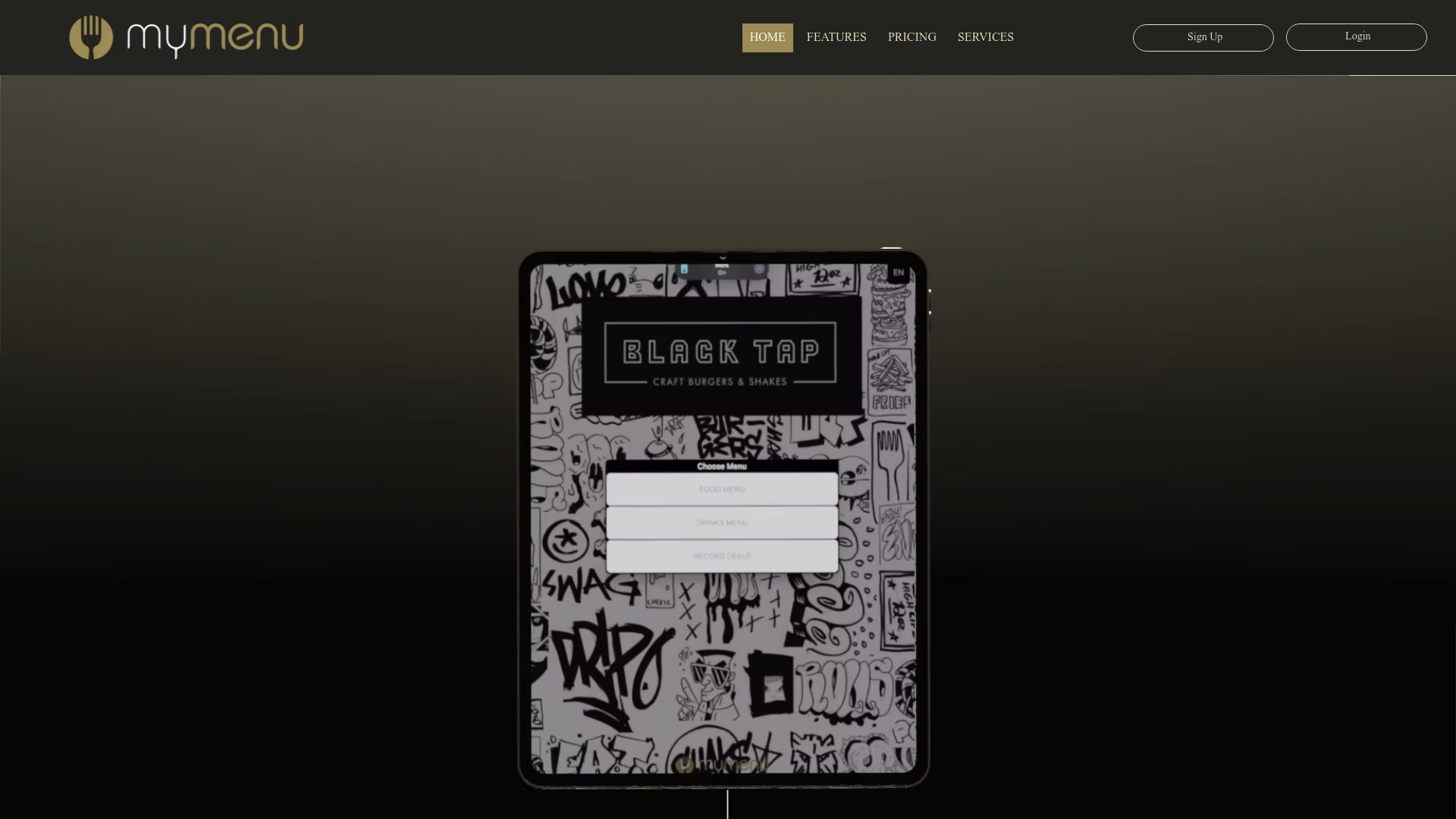
From QR code menus that capture real guest interaction data to tablet-based ordering systems that reveal which items guests actually choose, Mydigimenu turns your menu into a live testing ground. The platform’s guest feedback tools and CRM integration mean every service period generates data you can act on. Explore Mydigimenu’s digital menu plans to find the right fit for your concept, or get started with a restaurant digital tablet menu that works from day one.
FAQ
What is digital restaurant validation?
Digital restaurant validation is the process of testing a restaurant concept using online surveys, virtual tastings, financial modeling, and demographic analysis before launch. The goal is to confirm market fit and operational feasibility before committing capital.
Why do restaurants fail without concept testing?
Restaurants in poor locations or with unvalidated concepts fail at rates exceeding 80% within three years. Skipping validation means owners commit to leases and build-outs based on assumptions rather than real market data.
How long should digital validation take?
Industry guidance recommends spending 3–6 months on structured concept research and digital testing before signing a lease. Shorter timelines rarely produce enough data for confident decision-making.
What is politeness bias and why does it matter?
Politeness bias occurs when diners give falsely positive feedback rather than honest criticism. Forced-choice digital tests eliminate this by requiring respondents to choose between your concept and a real alternative, revealing genuine purchase intent.
Can digital validation continue after a restaurant opens?
Continuous digital validation after launch is a best practice for successful operators. Testing new dishes and pricing changes digitally before adding them to the live menu prevents costly failures caused by unchecked menu additions.
Recommended