
How to Streamline Food Service Operations in 2026
- Abhi Bose
- 4 hours ago
- 8 min read
TL;DR:
Integrating systems, standardizing workflows, and applying data improve food service efficiency and reduce waste. Automation tools like POS, inventory, and scheduling platforms boost margins and help managers make faster, data-driven decisions. A phased implementation and discipline are key to achieving sustainable operational improvements.
Streamlining food service operations is the process of removing manual inefficiencies by integrating systems, standardizing processes, and applying data-driven insights to maximize operational efficiency and reduce waste. Restaurants using multi-system automation platforms report 23% higher EBITDA margins than those running disconnected solutions. That gap is not a coincidence. It reflects what happens when POS systems, inventory tracking, staff scheduling, and kitchen management share a single data layer. This guide walks food service operators and managers through the tools, workflows, and best practices that produce measurable results in 2026.
How to streamline food service operations: the essential tools
The right technology stack is the foundation of efficient food service management. Without it, managers spend their shifts reacting to problems instead of preventing them. The good news is that the core tools are well established, and their impact is well documented.
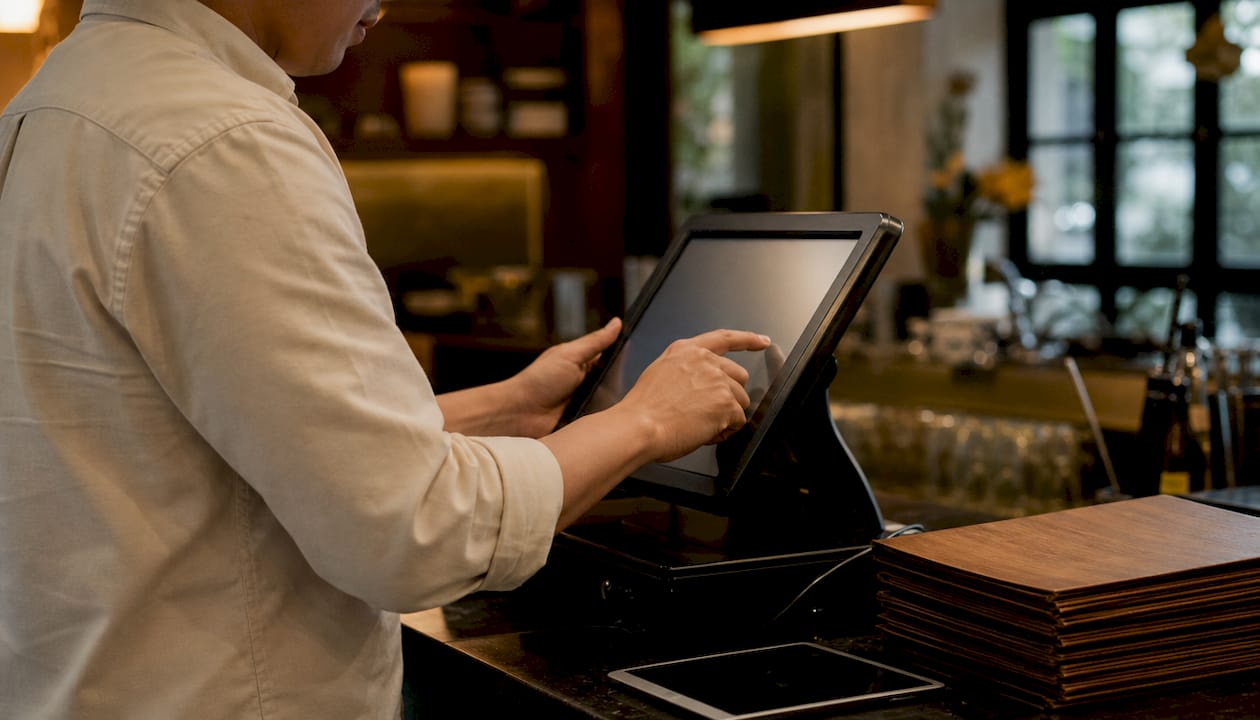
Point of Sale (POS) integration sits at the center of every high-performing operation. A modern POS does more than process payments. It feeds real-time sales data to inventory, labor, and reporting systems, giving managers a live picture of what is happening across every station and shift.
Inventory automation is where the financial gains become most visible. Inventory automation reduces food waste by 15–25% and cuts food costs by 3.2 percentage points within the first quarter. That is a direct hit to one of the largest cost lines in any food service budget.
Staff scheduling automation solves a different but equally costly problem. Scheduling automation reduces manager time spent on scheduling by 80% and lowers overtime costs by 18–22%. Those hours go back to floor management, training, and guest experience.
Kitchen Display Systems (KDS) replace paper tickets with digital order routing. They track station fulfillment times, flag delays, and give expo staff the visibility they need to control ticket flow. The data a KDS generates is also the raw material for ongoing kitchen diagnostics.
AI-powered analytics dashboards pull all of this together. Integrating POS, accounting, inventory, and scheduling data into a single AI-powered platform creates a single source of truth for proactive decision-making. Managers stop guessing and start acting on facts.
Tool category | Primary function | Key operational benefit |
POS integration | Sales and payment processing | Real-time data across all back-office systems |
Inventory automation | Stock tracking and ordering | 15–25% waste reduction, lower food cost |
Scheduling automation | Labor planning and shift management | 80% less scheduling time, lower overtime |
Kitchen Display System | Order routing and station management | Faster ticket times, fewer errors |
AI analytics dashboard | Unified reporting and forecasting | Proactive management, faster decisions |
Pro Tip: Start your tech evaluation by mapping where your managers spend the most manual time each week. The tool that eliminates that friction delivers the fastest return.
How can food service operations optimize workflow and processes?
Technology alone does not fix a broken workflow. The process design underneath the tools determines whether speed and consistency actually improve. The most effective operators treat the kitchen as a process-oriented system, not just a collection of stations.
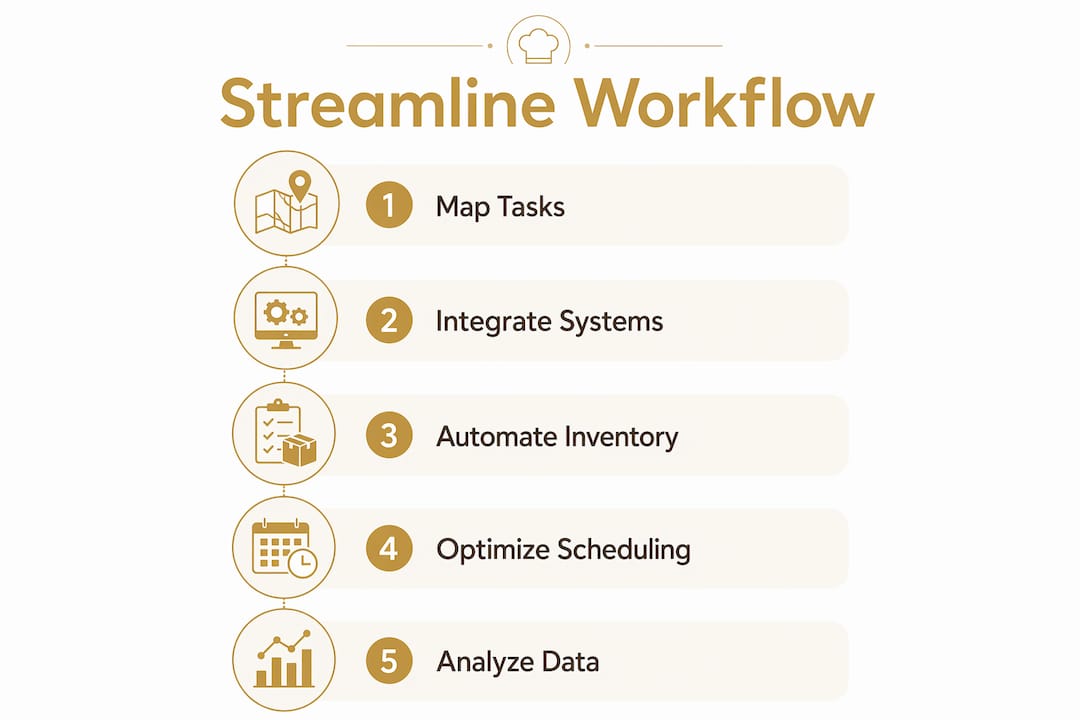
Map your order flow end to end. Draw the path of every order from guest request to plate delivery. Mark every handoff point and every moment where a person waits, re-enters data, or makes a judgment call without clear guidance. Those moments are your friction points.
Separate stations by bottleneck, not just by function. Most kitchens group stations by food type. High-performing kitchens group them by throughput capacity. If your grill station consistently backs up during peak hours, the fix is not speed. It is load balancing across adjacent stations.
Assign a dedicated expo role during peak service. The expo position controls the final handoff between kitchen and floor. Without a dedicated person managing that gate, ticket times inflate and errors multiply. Order aggregation automation reduces kitchen errors by 40% and accelerates average ticket times by 28%, but only when the expo role reinforces what the system flags.
Use KDS data for weekly workflow diagnostics. Pull station fulfillment times every week. Look for stations where the 90th percentile ticket time is more than 20% above the median. That gap reveals a structural bottleneck, not just a bad shift.
Set peak-hour operating rules. Define which menu items are available during high-volume periods. Limiting complexity during rush hours reduces cognitive load on kitchen staff and cuts remake rates. This is one of the fastest wins available without any technology investment.
Standardize your menu design. Every item on your menu should share components with at least two other items. Cross-utilization reduces prep complexity, lowers inventory requirements, and speeds up line execution. A well-designed menu is an operational tool, not just a marketing document.
Pro Tip: Run a timed observation of your kitchen during a Friday dinner rush. Watch the expo station specifically. If tickets are stacking there, your bottleneck is coordination, not cooking speed.
What best practices ensure effective integration of food service systems?
Connecting your tools is only half the work. The other half is building the operational discipline that makes those connections produce consistent results. Disconnected systems force managers to juggle spreadsheets and manual entry, which kills proactive management before it starts.
The best practices that separate high-performing operations from average ones come down to a few non-negotiable habits:
Link recipe costing to live purchasing data. Every recipe should have a theoretical cost that updates automatically when supplier prices change. Without that link, food cost variance reports are always backward-looking and always late.
Schedule based on sales forecasts, not last week’s template. Historical templates ignore weather, local events, and seasonal shifts. Forecast-based scheduling keeps labor cost aligned with actual revenue, not assumed revenue.
Automate accounts payable and invoice workflows. Manual invoice processing creates errors and delays that compound across a multi-unit operation. Automation here is not glamorous, but it is one of the highest-ROI changes a back-office team can make.
Give every manager real-time financial visibility. A manager who cannot see labor cost as a percentage of sales during a shift cannot make good staffing decisions during that shift. Real-time dashboards close that gap.
Run monthly operational audits. Pick one area each month: food cost, labor efficiency, ticket times, or waste. Audit it against your SOP benchmarks. Document what you find and assign a corrective action with a deadline.
Avoid standalone tools that do not integrate. A scheduling app that does not talk to your POS, or an inventory tool that does not connect to your purchasing system, creates data silos. Streamlining requires friction removal through SOPs and integrated technology, not just individual software upgrades.
The restaurant digitization checklist approach works well here. Treat integration as a project with milestones, not a one-time purchase decision.
How does data-driven decision making improve food service performance?
Reactive management is the most expensive habit in food service. When managers respond to problems after they appear, the cost is already locked in. Data-driven management shifts that dynamic by surfacing problems before they become losses.
The key metrics every food service operation should track are food cost variance, labor efficiency ratio, ticket times by station, and remake rates. Data-driven management using KPIs like ticket times and labor hours uncovers bottlenecks invisible to casual observation. A manager walking the floor sees a busy kitchen. A dashboard shows which station is running 35% slower than its target and why.
Detailed kitchen flow metrics, such as 90th percentile ticket times and station-specific fulfillment rates, enable effective bottleneck diagnostics and throughput improvement. These numbers tell you where to focus training, where to adjust station layout, and where to add or reduce prep capacity.
Metric | What it measures | Why it matters |
Food cost variance | Actual vs. theoretical food cost | Flags waste, theft, or portioning errors |
Labor efficiency ratio | Labor cost as % of revenue | Keeps staffing aligned with sales volume |
90th percentile ticket time | Slowest 10% of ticket completions | Reveals structural bottlenecks by station |
Remake rate | Orders remade due to errors | Measures quality consistency and training gaps |
Pro Tip: Review your 90th percentile ticket times before your weekly manager meeting, not after. Decisions made with fresh data produce faster corrections.
Centralized dashboards that pull from POS, KDS, and scheduling systems give managers the ability to act within the same shift where a problem appears. That speed of response is what separates operations that maintain margins from those that erode them. For operators looking to connect their digital guest experience to these metrics, AI-driven hospitality tools offer an additional layer of visibility into how guest behavior affects operational demand.
Key Takeaways
Improving food service efficiency requires integrating POS, inventory, scheduling, and kitchen systems into one connected operation, supported by SOPs and real-time data.
Point | Details |
Integration drives margin | Restaurants using connected automation platforms report 23% higher EBITDA margins than those using standalone tools. |
Inventory automation pays fast | Automating inventory reduces food waste by 15–25% and cuts food costs by 3.2 percentage points within the first quarter. |
Scheduling automation saves time and money | Automated scheduling cuts manager scheduling time by 80% and lowers overtime costs by 18–22%. |
KDS data reveals hidden bottlenecks | Station-specific fulfillment metrics expose structural delays that floor observation alone cannot detect. |
Phased implementation works best | Starting with your weakest operational pillar and building from there produces sustainable, measurable improvement. |
The discipline behind the dashboard: a perspective from the field
Technology gets most of the credit when a restaurant operation turns around. The real driver is almost always process discipline, and the technology just makes that discipline visible and scalable.
The operators I respect most do not buy software to fix a culture problem. They build clear SOPs first, then find tools that enforce those SOPs at scale. When 87% of restaurants implementing automation reallocate labor to higher-value tasks rather than cutting headcount, that tells you something important. Automation works best when it frees your best people to do what only humans can do: read a room, handle a difficult guest, mentor a new line cook.
The phased implementation approach is not just a project management preference. It is a change management strategy. Operators who try to overhaul POS, inventory, scheduling, and kitchen systems simultaneously almost always stall. Those who fix one pillar at a time, measure the result, and build confidence before moving to the next one tend to finish the transformation and sustain it.
The uncomfortable truth is that most food service operations already have enough data to make better decisions. They just do not have the systems to surface it or the habits to act on it. The gap between a good operation and a great one is rarely a missing tool. It is a missing discipline. Technology closes that gap faster, but only if the discipline is already there to meet it.
— Abhi
How Mydigimenu supports efficient food service operations
Operational efficiency does not stop at the kitchen door. The guest-facing side of your operation carries just as much weight, and that is where Mydigimenu delivers real impact.
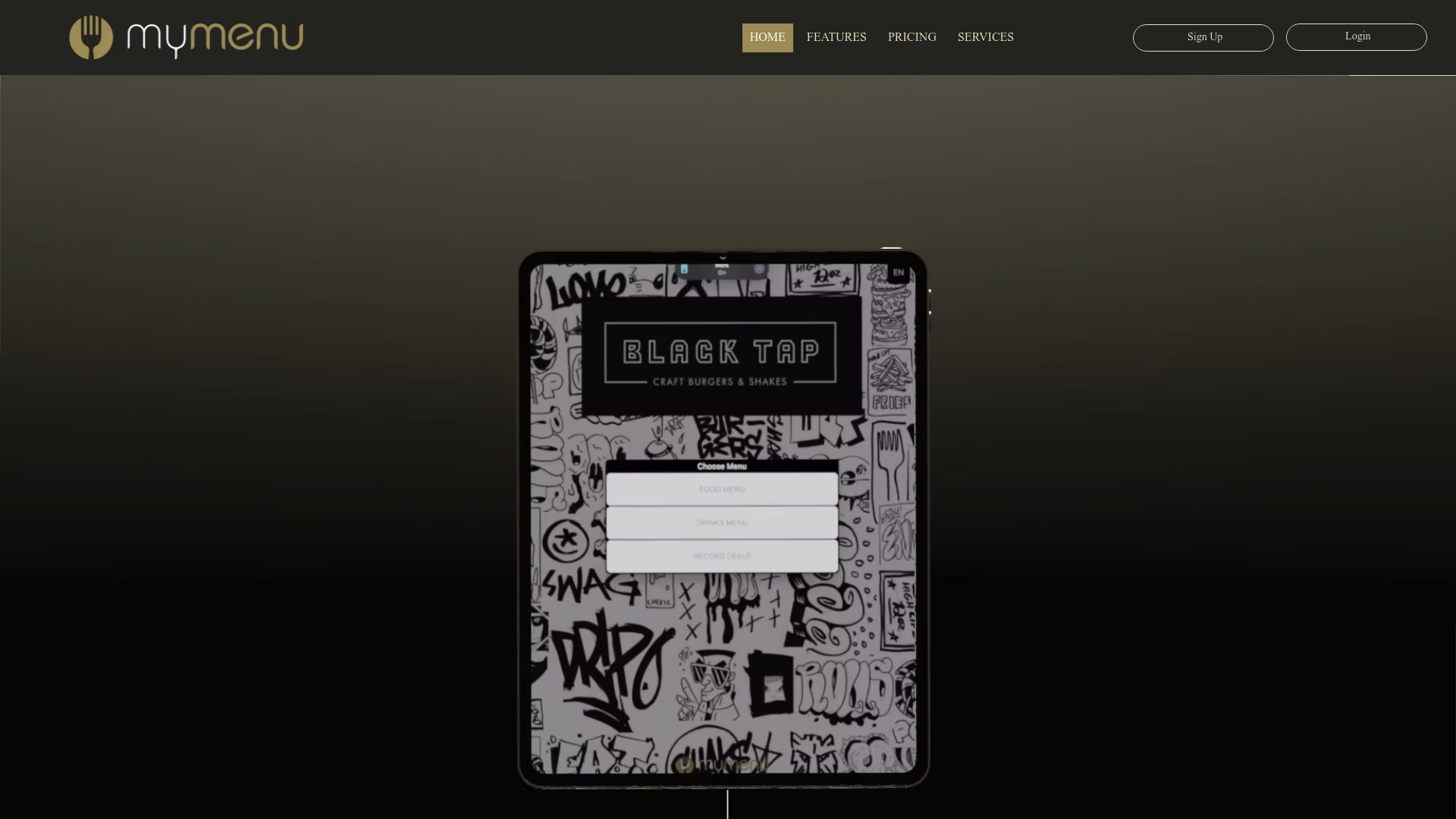
Mydigimenu’s digital tablet and iPad menus reduce order errors, speed up table turns, and free your floor staff to focus on hospitality rather than order-taking. The platform’s QR code menus require no app download, integrate with POS and delivery platforms, and support multiple languages and currencies for international operations. Whether you run a single café or a multi-unit group, Mydigimenu’s pricing plans are built to fit your scale. A more connected guest experience is one of the fastest ways to reinforce the operational gains you build behind the scenes.
FAQ
What does it mean to streamline food service operations?
Streamlining food service operations means removing manual friction by integrating systems like POS, inventory, and scheduling, standardizing processes through SOPs, and using data to make faster, better decisions.
What is the biggest financial benefit of food service automation?
Restaurants using integrated automation platforms report 23% higher EBITDA margins than those using disconnected tools, with inventory automation alone cutting food costs by 3.2 percentage points within the first quarter.
How does a Kitchen Display System improve kitchen productivity?
A KDS routes orders digitally to the correct station, tracks fulfillment times, and flags delays in real time, enabling managers to identify bottlenecks and reduce ticket times through data rather than guesswork.
How can managers use data to improve food service efficiency?
Tracking KPIs like food cost variance, labor efficiency ratio, and 90th percentile ticket times gives managers the information they need to act within the same shift where a problem appears, rather than discovering it days later.
What is the best way to start improving restaurant workflow?
A phased approach that focuses on one operational pillar at a time, starting with your weakest area, produces the most sustainable results and avoids the disruption of trying to change everything at once.
Recommended