
Why Automate Hospitality Operations: A 2026 Guide
- Abhi Bose
- Jul 4
- 8 min read


TL;DR:
Automating hospitality tasks improves efficiency by reducing routine workload and increasing consistency. It allows staff to focus on personalized guest interactions, enhancing overall guest experience without decreasing warmth. Proper automation starts with back-office processes and strategic task categorization for the best results.
Automating hospitality operations is defined as replacing manual, rule-based tasks with technology-driven processes that run faster, more consistently, and at lower cost. Hotel staff currently spend 40–50% of their working hours on routine tasks that a well-configured system can handle without human input. That figure represents thousands of hours lost each year to work that adds no warmth to a guest’s stay. The good news is that automation does not strip hospitality of its soul. When applied correctly, it gives your team the time and mental space to deliver the kind of attentive, personal service that no algorithm can replicate. Platforms like Mydigimenu are already helping restaurants, cafes, and hotels put this principle into practice.
Why automate hospitality operations? The core case
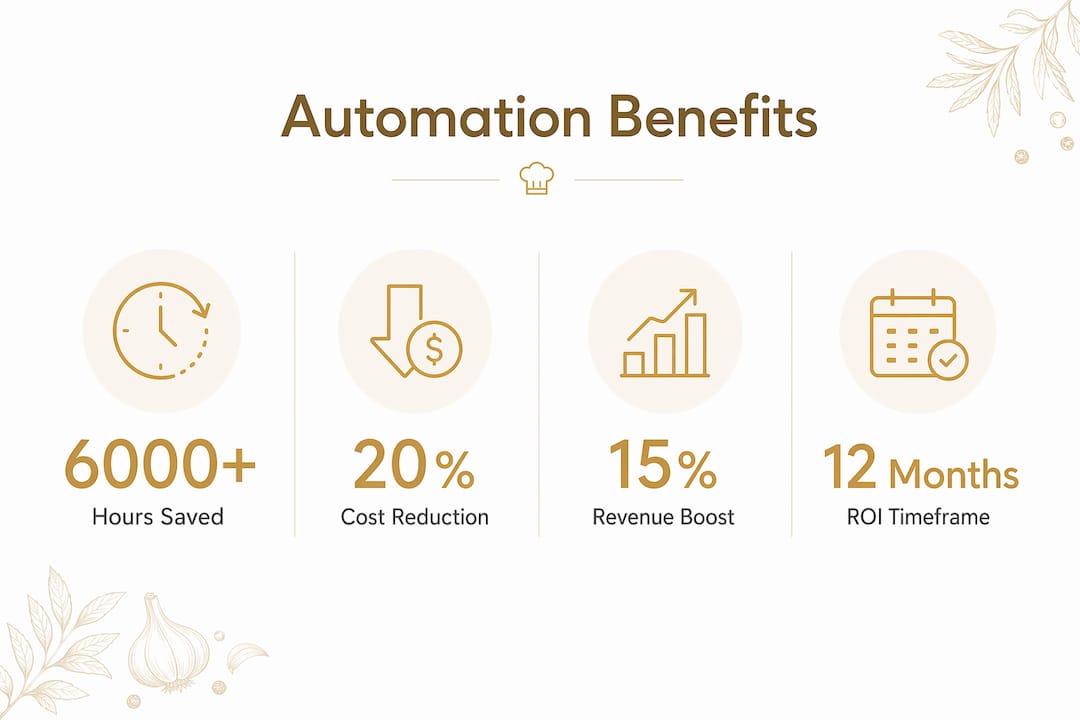
The clearest reason to automate is time. A 100-room property can save over 6,000 hours annually by automating routine tasks. That is the equivalent of three full-time employees redirected toward guest-facing work. Daily manual workloads that once consumed 8–10 hours can drop to 2–3 hours with the right systems in place, producing a 150–650% return on investment annually. Those numbers are not projections. They come from properties that have already made the shift.
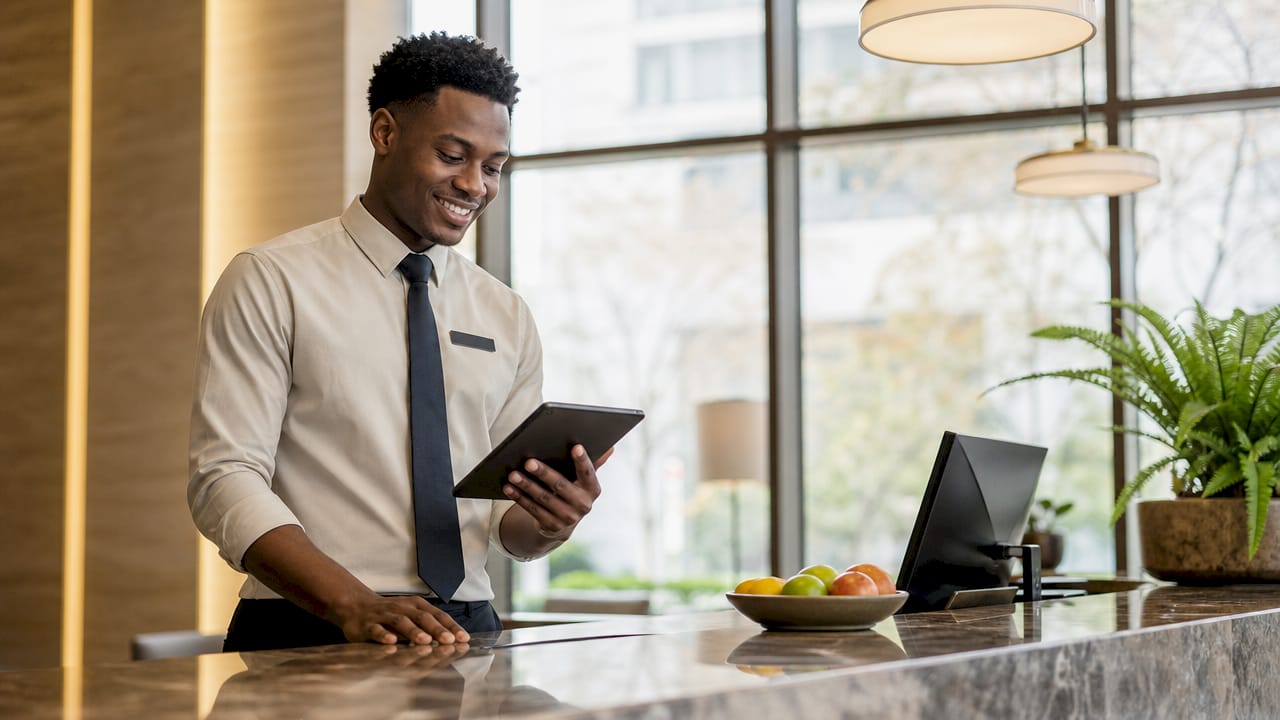
The second reason is consistency. Manual processes break down under pressure: a busy Friday check-in, a sold-out weekend, a staff member calling in sick. Automated workflows do not. They execute the same task the same way every time, which means fewer errors, fewer complaints, and a more predictable operation for your team to manage.
What operational tasks are best suited for automation?
Not every task deserves a technology solution. The highest-impact candidates share one trait: they are repetitive, rule-based, and time-consuming without requiring human judgment.
The strongest candidates for immediate automation include:
Dynamic pricing updates: Prices adjust automatically based on occupancy levels and market conditions, removing hours of manual rate management.
Inventory synchronization: Stock levels update across all channels in real time, eliminating double-bookings and out-of-stock surprises.
Housekeeping coordination: Room status updates trigger automatically at checkout, reducing lag time between departures and readiness.
Guest communication: Pre-arrival messages, check-in instructions, and post-stay follow-ups send on schedule without staff involvement.
Reporting and analytics: Nightly reports, revenue summaries, and occupancy dashboards generate automatically, ready for your morning review.
Task category | Automation suitability | Primary benefit |
Dynamic pricing | Immediate | Revenue maximization |
Inventory management | Immediate | Accuracy across channels |
Guest messaging | Immediate | Consistency and speed |
Housekeeping dispatch | Immediate | Faster room turnaround |
Complaint resolution | Human-in-the-loop | Empathy required |
VIP guest handling | Never automate | Relationship-driven |
Pro Tip: Start with back-office automation before touching guest-facing workflows. Cleaner data and faster internal processes create the foundation that makes guest-facing automation actually work.
For a practical look at automating food ordering workflows, Mydigimenu’s workflow guide covers which restaurant and hotel tasks yield the fastest results.
How does automation enhance guest experience without losing the human touch?
The most persistent fear among hospitality managers is that automation will make their property feel cold. The evidence points in the opposite direction. AI chatbots now handle 65–75% of frequently asked guest questions, reducing front desk wait times by 70%. That frees your team to focus on the moments that actually matter: a guest who is upset, a family celebrating an anniversary, a traveler who needs a local recommendation that goes beyond what any app can offer.
The key is knowing where to draw the line. Industry research identifies three categories of tasks:
Automate immediately: Tasks driven by logic and data, such as pricing, scheduling, and confirmations.
Human-in-the-loop: Context-dependent situations where technology assists but a person decides, such as handling a complaint or adjusting a special request.
Never automate: Empathetic interactions that define your brand, including grief support, conflict resolution, and personalized guest recognition.
“The real value in hospitality automation is redrawing the line between machine and human work. Freeing staff from routine tasks lets them focus on empathy and problem-solving, which is what guests actually remember.” The Warmth Behind the Technology, Hospitality Net
This shift mirrors what happened in banking after ATMs arrived. Tellers did not disappear. Their role upgraded toward higher-value work, and customer satisfaction improved. Hospitality is following the same arc.
Pro Tip: Train your team on what automation handles so they stop spending mental energy on routine tasks. Staff who trust the system focus better on guests.
Proactive AI tools take this further. Sentiment analysis technology alerts staff to potential problems before a guest complains, producing a 95% improvement in response consistency. That is not automation replacing empathy. That is automation making empathy possible at scale.
What are the measurable financial benefits of hospitality automation?
The financial case for automation is no longer theoretical. A 150-room boutique hotel that implemented AI-driven automation reported $280,000 in annual cost reductions alongside a 23% increase in guest satisfaction scores. The same property recorded a 4.2% higher average daily rate and 45% fewer guest complaints. Each of those outcomes compounds: fewer complaints mean fewer refunds, higher ADR means stronger revenue per available room, and higher satisfaction scores drive repeat bookings.
Here is how the numbers compare before and after automation:
KPI | Before automation | After automation |
Daily manual workload | 8–10 hours | 2–3 hours |
Guest complaint volume | Baseline | 45% reduction |
Average daily rate | Baseline | +4.2% |
Annual cost savings | None | Up to $280,000 |
Guest satisfaction score | Baseline | +23% |
The financial gains follow a clear sequence:
Reduce labor hours on routine tasks. Staff time shifts from administrative work to guest interaction, improving service quality without adding headcount.
Improve pricing accuracy. Dynamic pricing captures revenue that manual rate management routinely leaves on the table.
Lower complaint costs. Proactive communication and faster resolution reduce the operational cost of service recovery.
Increase repeat business. Higher satisfaction scores translate directly into loyalty, which costs far less to maintain than acquiring new guests.
For a broader view of where the industry is heading, the digital hospitality trends for 2026 resource covers the financial and operational shifts shaping the next generation of hotel and restaurant management.
How to implement automation thoughtfully in your property
Effective implementation follows a deliberate sequence. Rushing to automate guest-facing touchpoints before your back-office systems are solid is the most common mistake operators make.
Audit your current workflows. Map every recurring task your team performs daily. Identify which tasks are purely rule-based and which require judgment or empathy.
Start with back-office processes. The most effective automation strategy begins with inventory, scheduling, and reporting. These systems generate clean data that makes every subsequent automation more reliable.
Categorize tasks by automation type. Use the three-tier framework: automate immediately, human-in-the-loop, and never automate. Apply it consistently across departments.
Integrate your platforms. Automation only works when your systems talk to each other. A digital menu platform like Mydigimenu connects ordering, reservations, and guest feedback into a single flow, removing the manual handoffs that slow service down. Explore reservation management integration to see how connected systems reduce coordination overhead.
Train your team before launch. Change management is not optional. Staff who understand why a system exists adopt it faster and use it better.
Scale iteratively. Run each automation for 30 days before adding the next. Measure the impact, fix what breaks, and build confidence before expanding scope.
Pro Tip: Assign one team member as the automation lead for each department. That person becomes the internal expert, troubleshooter, and advocate, which dramatically speeds up adoption.
The goal is not to automate everything. Prioritizing tasks by logic, context, and empathy requirements produces better outcomes than blanket automation. Properties that take this measured approach report faster ROI and fewer staff culture problems than those that move too quickly.
Key Takeaways
Automating hospitality operations delivers the strongest results when back-office processes come first, tasks are categorized by logic and empathy requirements, and technology is integrated across ordering, reservations, and guest communication.
Point | Details |
Start with back-office tasks | Inventory, pricing, and scheduling automation build the data foundation for everything else. |
Use the three-tier task framework | Categorize every task as automate immediately, human-in-the-loop, or never automate. |
Expect measurable financial returns | Properties report up to $280,000 in annual savings and 23% higher guest satisfaction post-automation. |
Preserve the human layer | Empathetic interactions, complaint resolution, and VIP service should never be automated. |
Integrate platforms for full impact | Connected systems like Mydigimenu eliminate manual handoffs and create a consistent guest experience. |
The line I keep coming back to
After watching dozens of properties attempt automation, the ones that struggle share one pattern: they automate to cut costs first and think about guests second. The properties that thrive flip that order. They ask, “What does my team spend time on that a guest never actually sees or benefits from?” Then they automate exactly that, and nothing more.
The ATM analogy from Hospitality Net is the most honest framing I have encountered. Bank tellers did not vanish. They became relationship managers, loan advisors, and problem-solvers. The same transition is available to every hospitality team right now. The risk is not that automation will make your property feel robotic. The risk is that you will automate the wrong things and strip out the human moments that guests pay a premium to experience.
The operators I respect most treat automation as a staffing decision, not a technology decision. They ask what their best people should be doing with their time, then build systems to protect that time. That reframe changes everything about how you choose what to automate, how fast you move, and how you measure success.
The future of hospitality is not less human. It is more deliberately human, because the routine work that used to crowd out genuine connection will finally have somewhere else to go.
— Abhi
How Mydigimenu supports your automation goals
Mydigimenu is a digital menu and guest engagement platform built for restaurants, cafes, bars, and hotels that want to put automation to work without sacrificing the warmth that defines great hospitality.
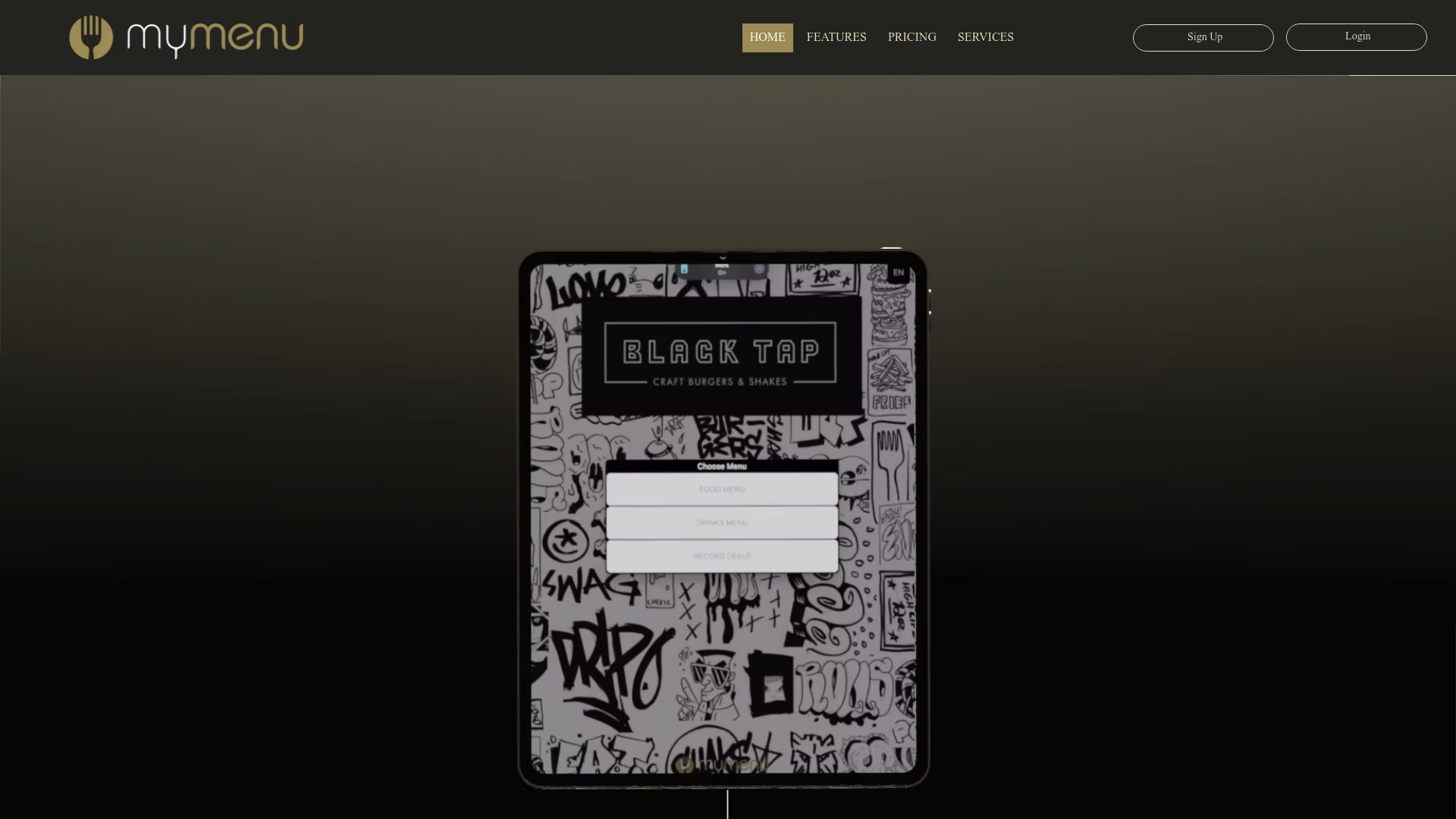
The platform covers QR code menus, tablet ordering, contactless payments, reservation management, loyalty programs, and CRM integration, all in one connected system. Guests order faster, staff spend less time on manual coordination, and operators get real-time data on what is selling and what is not. Mydigimenu supports multiple languages and currencies, making it a practical fit for international properties. Browse the digital menu options or check plans and pricing to find the right fit for your operation.
FAQ
Why automate hospitality operations instead of hiring more staff?
Automation handles rule-based, repetitive tasks at a fraction of the cost of additional headcount, freeing existing staff to focus on guest-facing work that directly drives satisfaction and loyalty.
What hotel tasks should never be automated?
Empathetic interactions such as complaint resolution, grief support, and personalized VIP recognition should never be automated, as these moments define a property’s brand and require genuine human judgment.
How quickly can a hotel see ROI from automation?
Properties that start with back-office automation typically see measurable returns within the first year, with some reporting a 150–650% annual ROI after reducing daily manual workloads from 8–10 hours to 2–3 hours.
Does automating restaurant processes hurt the dining experience?
Automating back-end processes like order routing, inventory updates, and payment handling speeds up service without removing the personal interaction guests value, particularly when staff use the time saved to engage more attentively at the table.
How does Mydigimenu fit into a hospitality automation plan?
Mydigimenu connects digital ordering, reservations, guest feedback, and loyalty programs into one platform, removing the manual handoffs between departments that slow service and create errors.
Recommended
Comments