
Bar Menu Engineering Principles: 9 Proven Tactics

TL;DR:
Bar menu engineering uses data and psychology to maximize profitability in drink menus. Placing high-margin, popular items in visible sections and limiting choices improves sales and guest satisfaction. Regular updates and smart staff training ensure ongoing menu effectiveness.
Bar menu engineering principles are the strategic methods operators use to design, price, and organize drink menus that maximize profitability and customer satisfaction. The formal industry term is menu engineering, first developed by professors Michael Kasavana and Donald Smith at Michigan State University in 1982. Applied to bars, it combines contribution margin analysis, sales frequency data, and behavioral psychology to turn your drink list into a revenue engine. Menu engineering techniques can increase per-check revenue by 10–15%, potentially adding $75,000 annually for a bar doing $500,000 in sales. That number alone makes the case for treating your menu as a management tool, not just a list of drinks.
1. Apply bar menu engineering principles with the Kasavana-Smith matrix
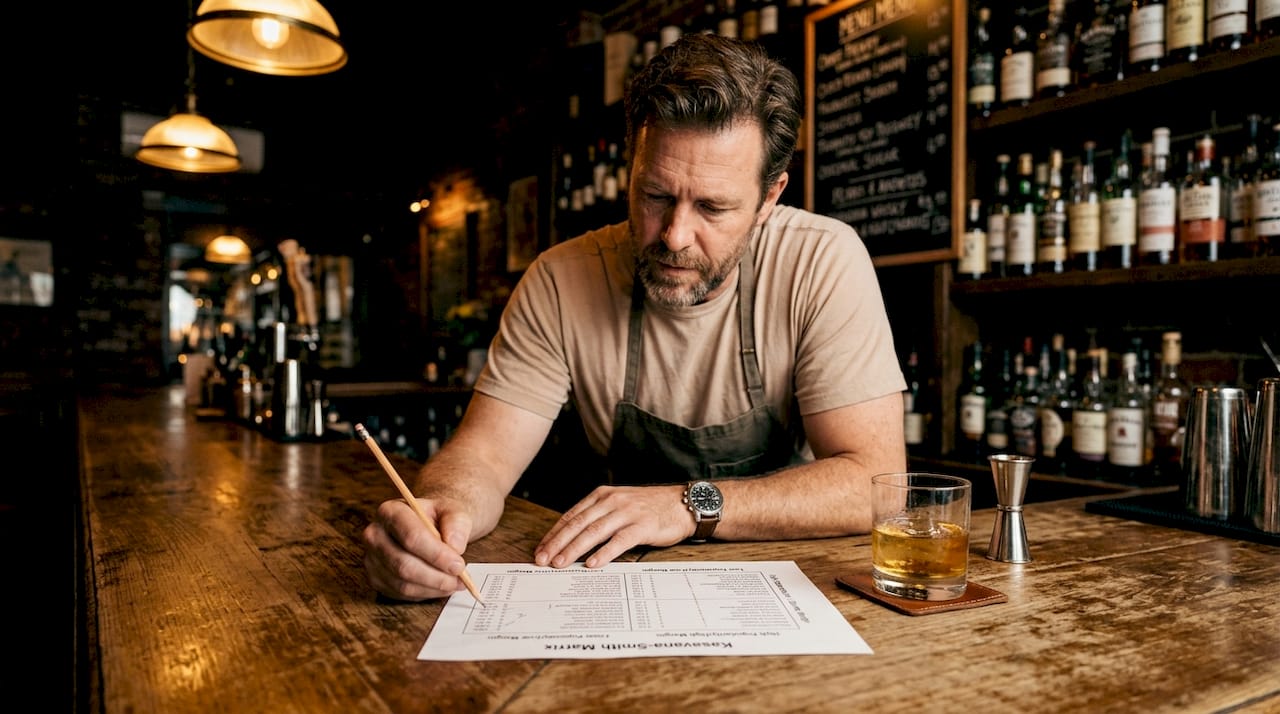
The Kasavana-Smith matrix is the analytical backbone of every effective bar menu. It classifies every drink into one of four quadrants based on two variables: contribution margin (profitability) and sales frequency (popularity).
The four categories are:
Stars: High profitability, high popularity. These are your best performers. Protect their placement and never discount them.
Plowhorses: High popularity, low profitability. Guests love them, but they don’t make you much money. Re-price them slightly or reduce portion costs.
Puzzles: High profitability, low popularity. Great margin, but guests aren’t ordering them. Reposition them on the menu or retrain staff to recommend them.
Dogs: Low profitability, low popularity. Cut them unless they serve a specific brand or dietary purpose.
Setting the thresholds correctly is what separates useful analysis from guesswork. Pour cost targets sit between 20–25%, with gross profit margins around 75–80%. The popularity threshold uses a simple average: divide 100% by the number of items. With 20 drinks, any item selling below 5% of total orders falls below the popularity line.
Pro Tip: Calculate contribution margin per drink, not just percentage margin. A $4 profit on a $6 beer beats a 40% margin on a $10 cocktail that costs $6 to make.
Accurate analysis requires item-level cost data including garnishes, mixers, and ice. Without that granularity, the matrix produces theoretical results that don’t hold up in practice.
2. Use the golden triangle for high-visibility placement
Menu layout directly controls what guests order. The golden triangle describes the natural reading path of the eye across a menu: center first, then top right, then top left. Those three zones receive the most attention and should hold your Stars and high-margin Puzzles.
On a bi-fold menu, the center panel is prime real estate. On a tri-fold, the right panel gets the most initial attention. Placing your most profitable cocktails in these zones improves sales by up to 30%. That is not a small lift. It requires no price change, no new recipe, and no additional staff training.
Primacy and recency bias also apply within each section. Guests remember the first and last items they read. Place a Star at the top of a section and a second strong performer at the bottom. Bury your Plowhorses in the middle where they still get ordered but don’t dominate the guest’s attention.
3. Limit sections to 5–7 items to prevent decision fatigue
Decision fatigue is real and measurable. Menus with 5–7 items per section produce faster ordering and higher guest satisfaction. When guests face 15 cocktail options in a single category, they default to familiar choices or ask the server to decide. Neither outcome serves your revenue goals.
Cutting items feels counterintuitive. Operators often believe more options signal value. The opposite is true. A focused menu signals confidence in your craft and makes every item feel intentional. It also reduces prep complexity and waste.
Group drinks by experience or mood rather than by spirit type. The Savoy’s American Bar organizes its menu around how drinks are expected to feel, prioritizing sensory clarity over ingredient lists. Guests who understand what an experience will feel like order faster and with more confidence. For bars exploring this approach, signature cocktail organization by mood offers a practical framework worth studying.
4. Write descriptive, sensory language for every item
Generic item names leave money on the table. “Gin and Tonic” tells a guest nothing about why they should order yours. “Crisp London Dry gin, hand-cut citrus, and house-made tonic over hand-chipped ice” creates an experience before the drink arrives.
Descriptive, sensory menu language boosts item sales by 27%. That figure comes from controlled menu studies and holds across categories from cocktails to mocktails. The mechanism is simple: vivid language activates anticipation, and anticipation drives ordering decisions.
Keep descriptions concise. Two to three lines per item is the ceiling. Beyond that, guests skim and the effect diminishes. Focus on texture, origin, and occasion. “Smoky,” “bright,” “warming,” and “refreshing” are sensory triggers that work. Ingredient lists without context do not.
Pro Tip: Test two versions of the same item description with your staff before printing. The version that gets servers excited is usually the one guests respond to.
5. Remove currency symbols and price columns
Price presentation shapes how guests feel about spending. Displaying prices as “14” instead of “$14.00” reduces the pain of paying and increases average spend by about 8%. The psychological mechanism is called “pain of paying,” and it activates more strongly when currency symbols are visible.
Vertical price columns are equally damaging. When prices align in a column on the right side of the menu, guests scan the column first and order by price rather than by preference. Integrate the price into the item description or place it immediately after the item name with no visual separation from the text.
For a deeper look at how pricing formats affect guest behavior, the research on behavioral economics in hospitality is consistent: format matters as much as the number itself.
6. Anchor with one premium cocktail
Anchoring is one of the most powerful and underused tools in cocktail menu optimization. Placing one premium cocktail near the top of your menu creates a contrast effect. Every other drink looks reasonably priced by comparison, and mid-tier items sell faster without any price change.
The anchor does not need to sell in high volume. Its job is to shift perception. A $28 craft cocktail with a compelling story makes your $16 house cocktails feel like a bargain. That contrast effect lifts sales of your mid-priced Stars without touching their price point.
This tactic works because guests use the first price they see as a reference point. A premium anchor increases the perceived value of lower-priced items and lifts sales indirectly. Position it prominently, describe it richly, and let it do its work.
7. Use white space to signal quality
White space is not wasted space. Menus that crowd items together signal volume and low price. Menus with generous spacing signal quality and craft. The visual breathing room around an item tells the guest it deserves attention.
High-end bars use white space the same way luxury retail uses it: to slow the eye and create focus. When a cocktail sits alone in a well-spaced section with a short, evocative description, it reads as a destination drink rather than a filler option. That perception shift affects ordering behavior without changing a single ingredient or price.
Apply white space selectively. Your Stars and premium anchors benefit most. Dense sections of lower-margin items can stay compact. The contrast between the two zones reinforces the hierarchy you want guests to follow.
8. Train staff to sell the right items
Menu engineering fails at the table if servers don’t know which items to recommend. Staff are the last mile of your menu strategy. A well-placed Puzzle that servers never mention stays a Puzzle. A Star that servers describe with genuine enthusiasm sells itself.
Brief your team on the current quadrant status of key items every time you update the menu. Tell them which items have the best margin, which are new, and which need a push. Give them two or three sentences of sensory language for each item you want them to promote. Rehearsed enthusiasm sounds natural; unprepared servers default to “it’s good.”
Menu upselling strategies that align with your engineering framework multiply the effect of every design decision you make. Staff who understand the “why” behind item placement sell with more conviction.
9. Review and adjust every 4–6 weeks
Menu engineering is not a one-time project. Successful operators review their quadrant placements every 4–6 weeks and treat borderline items based on sales momentum, not static thresholds.
A structured review cycle looks like this:
Pull item-level sales data from your POS system for the review period.
Recalculate contribution margins using current ingredient costs.
Replot every item on the Kasavana-Smith matrix.
Identify items that have moved quadrants since the last review.
Adjust placement, description, or pricing for movers.
Flag borderline items and track their trajectory for one more cycle before cutting.
Introduce one or two seasonal or limited-time items to test new Stars.
Allow a 90-day runway period before drawing conclusions from a new menu. Early data reflects novelty, not true preference. Operators who cut items after two weeks of slow sales often eliminate future Stars before they find their audience.
Pro Tip: Seasonal limited-time offers create urgency that lifts sales of adjacent items. A “summer only” cocktail placed next to a Star pulls attention to the section and increases orders of both.
Key Takeaways
Bar menu engineering principles work because they combine data-driven profitability analysis with behavioral psychology to guide guests toward your highest-margin drinks.
Point | Details |
Use the Kasavana-Smith matrix | Classify every drink by contribution margin and sales frequency to identify Stars, Plowhorses, Puzzles, and Dogs. |
Place Stars in the golden triangle | High-visibility zones (center, top right, top left) increase sales of featured items by up to 30%. |
Limit sections to 5–7 items | Fewer choices reduce decision fatigue and produce faster ordering and higher satisfaction. |
Remove currency symbols | Dropping the “$” and decimals reduces the pain of paying and lifts average spend by about 8%. |
Review every 4–6 weeks | Regular POS-driven reviews keep quadrant placements accurate and menus profitable over time. |
What I’ve learned from watching operators get this wrong
Most bar operators I’ve seen struggle with menu engineering make the same mistake: they treat it as a design project rather than a financial one. They spend hours choosing fonts and photography, then place their lowest-margin drinks in the golden triangle because those drinks “look good.” The menu looks polished. The margins don’t improve.
The second most common failure is skipping the data. The Kasavana-Smith matrix is only as good as the numbers you feed it. Operators who estimate recipe costs or pull monthly sales totals instead of item-level data end up with a matrix that reflects their assumptions, not reality. I’ve watched bars cut a Puzzle that was trending upward because the snapshot data made it look like a Dog.
The operators who get this right share one habit: they treat their menu like a living document. They update it when ingredient costs shift, when a new spirit trend emerges, and when a seasonal item outperforms expectations. They don’t wait for a slow quarter to ask why. The bar menu design process works best when it runs on a calendar, not a crisis.
The psychological principles are real and they work. But they only amplify a solid financial foundation. Get the numbers right first. Then let the design do its job.
— Abhi
How Mydigimenu makes menu engineering practical
Applying these principles manually across a printed menu is slow and expensive. Every price adjustment, item swap, or seasonal addition means a reprint. Mydigimenu changes that equation entirely.
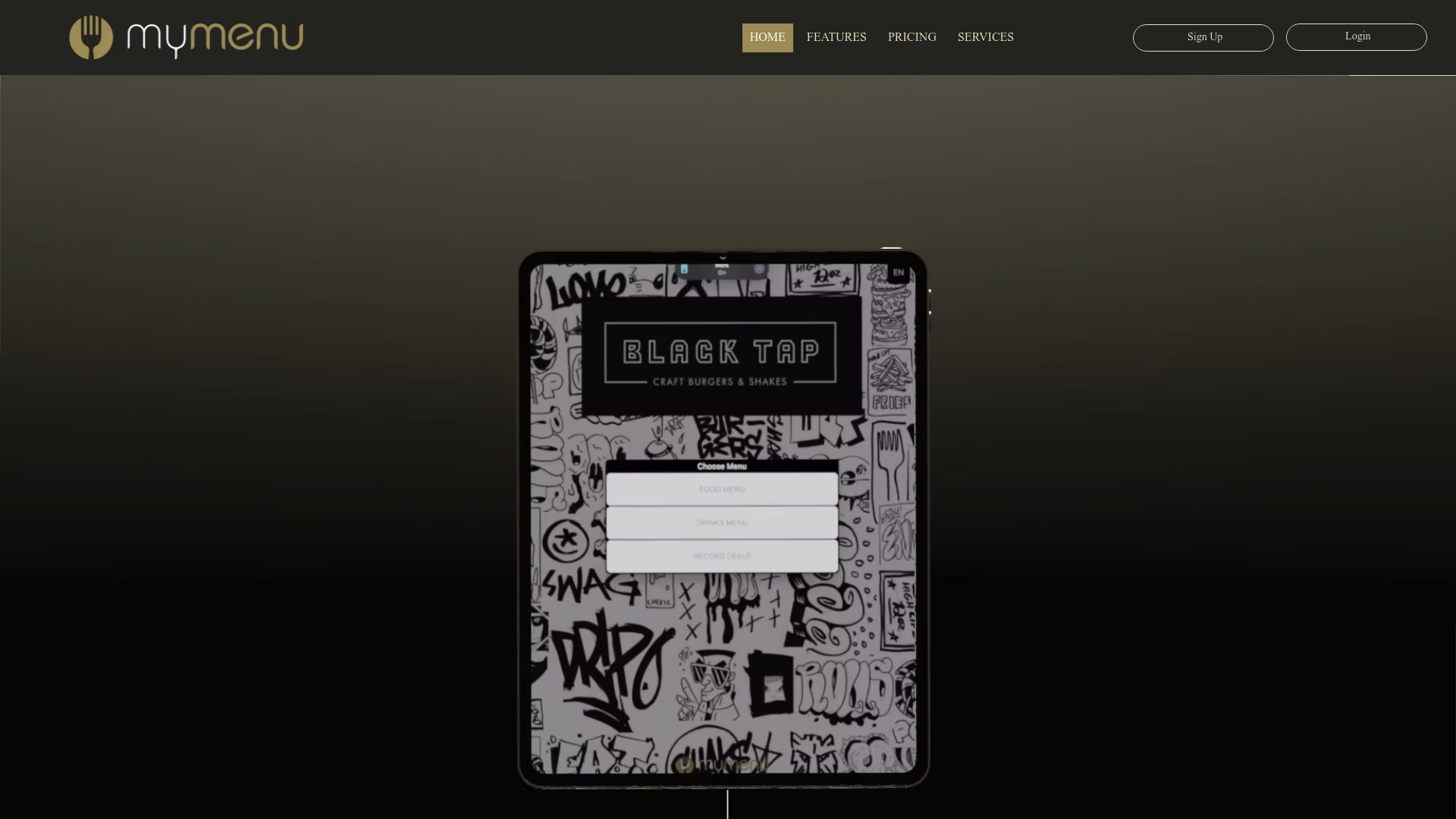
With Mydigimenu’s digital bar menu platform, operators update item placement, descriptions, and pricing in real time without reprinting a single page. The platform supports rich visual layouts, customizable sections, and QR code delivery so guests access the latest version every time they scan. For bars running frequent seasonal rotations or testing new anchors, a QR menu makes agile menu management genuinely practical. Mydigimenu also integrates with POS systems, giving operators the sales data they need to run accurate Kasavana-Smith reviews on schedule.
FAQ
What are bar menu engineering principles?
Bar menu engineering principles are the methods operators use to classify, price, and position drinks based on profitability and popularity. The core framework is the Kasavana-Smith matrix, which groups items into Stars, Plowhorses, Puzzles, and Dogs.
How often should a bar update its menu?
Operators should review and adjust their menus every 4–6 weeks using current POS sales data and updated recipe costs. A 90-day runway period is recommended before drawing conclusions from a newly launched menu.
Does removing currency symbols really increase sales?
Removing currency symbols and decimals from menu prices reduces the psychological pain of paying and increases average spend by about 8%. The effect is consistent across hospitality settings where the format has been tested.
How many items should a bar menu section have?
Each section should contain 5–7 items. Menus with more options per section trigger decision fatigue, which slows ordering and reduces guest satisfaction.
What is a premium anchor on a bar menu?
A premium anchor is a single high-priced cocktail placed prominently on the menu to create a contrast effect. It makes mid-priced drinks feel more reasonable and lifts their sales without requiring any direct price change.
Recommended
Comments