
What Is Menu Upselling? Strategies That Drive Revenue

TL;DR:
Menu upselling guides guests toward higher-value items, enhancing their experience and increasing revenue through suggestive selling. Digital tools like kiosks and menus amplify this effect by providing pressure-free, personalized prompts based on guest behavior. When combined with proper timing and sincere recommendations, upselling becomes a natural hospitality skill that benefits both guests and operators.
Menu upselling is the deliberate practice of guiding guests toward higher-value dishes, add-ons, or upgrades that enrich their dining experience and grow average check size. In hospitality, this technique goes by the industry term suggestive selling, and the two phrases describe the same core behavior: a server, kiosk, or digital menu prompts a guest to spend slightly more than they originally planned. The difference between a good upsell and a pushy one comes down to framing. When done right, upselling feels like a personal recommendation from someone who genuinely knows the menu. When done wrong, it feels like a transaction. This article breaks down the strategies, psychology, and digital tools that separate the two.
What is menu upselling and why does it matter?
Menu upselling is defined as any intentional effort to increase a guest’s order value by recommending premium items, add-ons, or upgrades at the point of ordering. The practice sits at the intersection of hospitality and revenue management, making it one of the most cost-effective tools available to restaurant operators. No additional marketing spend. No new customers required. Just a smarter conversation with the guest already seated at your table.
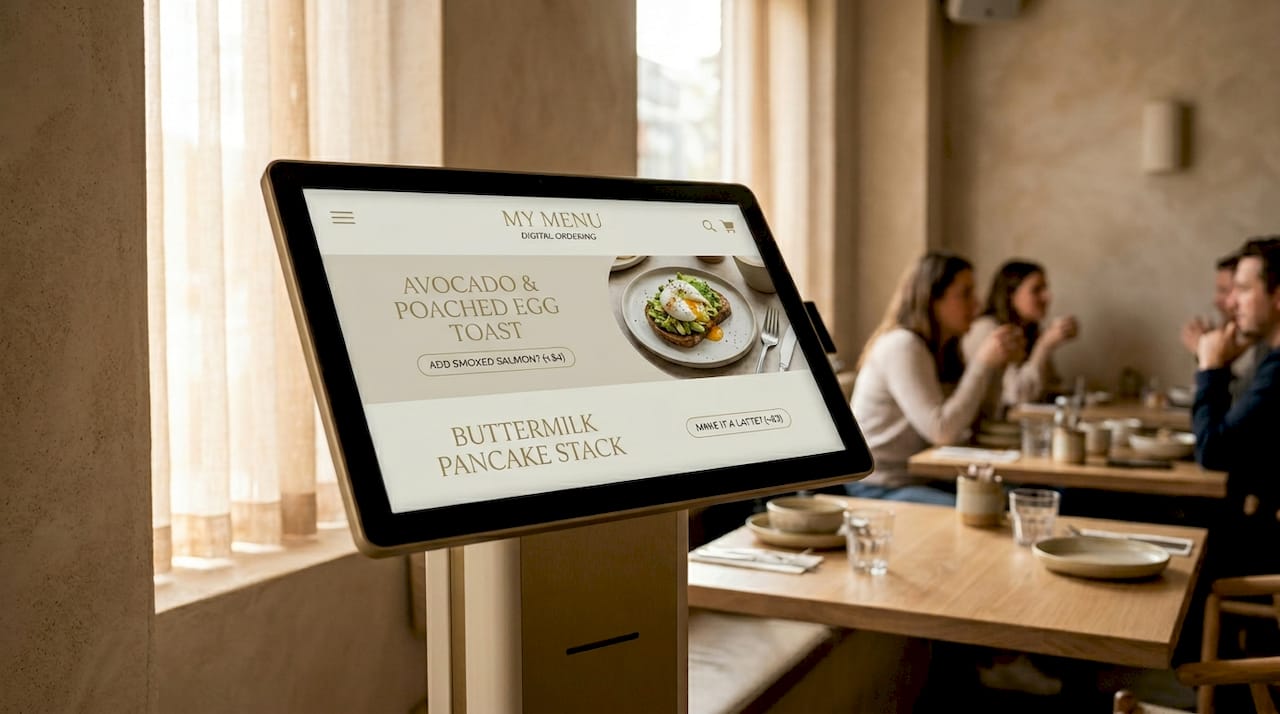
The financial impact is real and measurable. Self-service kiosks alone can increase average order value by 20 to 30%, which means a table averaging $40 per person could regularly hit $48 to $52 with the right prompts in place. That lift compounds across hundreds of covers per week. For a 100-seat restaurant running two turns per night, even a modest $3 increase per guest adds up to tens of thousands of dollars annually.
Beyond revenue, effective suggestive selling shapes the guest experience. A server who recommends the house-made burrata before the pasta course is not just selling an appetizer. They are curating a meal. That distinction matters deeply to guests, and it is why upselling as service improves both tips and repeat visit rates.
What menu upselling strategies work best in restaurants?
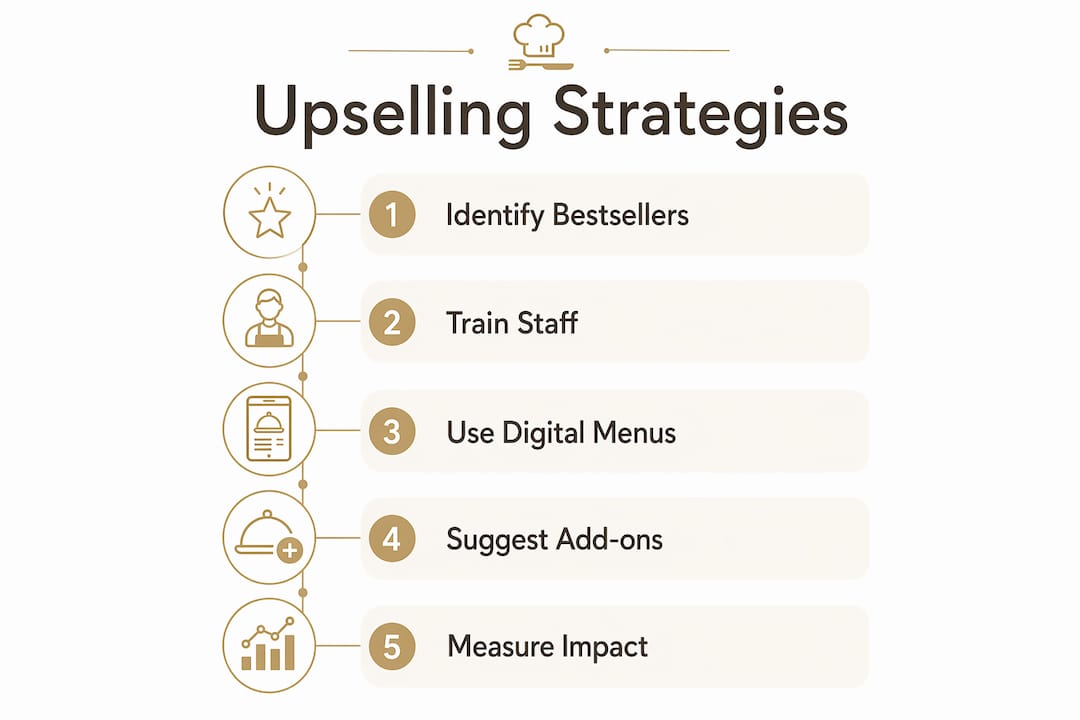
The most effective upselling strategies share one trait: they feel natural rather than scripted. Here are the techniques with the strongest track record across full-service and fast-casual environments.
Named-item prompts outperform generic questions. Asking “Can I start you with our wood-fired shrimp skewers?” converts at a higher rate than “Would you like an appetizer?” Specific named-item prompts trigger genuine interest because they give the guest something concrete to picture.
Menu engineering spotlights high-margin items. The four-quadrant framework used by operators categorizes dishes as Stars (high popularity, high margin), Plows (high popularity, low margin), Puzzles (low popularity, high margin), and Dogs (low popularity, low margin). Promoting Stars and repositioning Puzzles through placement, box callouts, and photography can produce a 10 to 23% profit lift without changing a single recipe.
Prix fixe menus reduce decision fatigue. Structured multi-course menus produce a 12 to 22% lift in average check size compared to à la carte ordering. Guests spend more when the path is clear and the value feels obvious.
Descriptive copy and photography drive desire. “Slow-braised short rib with truffle jus and roasted root vegetables” outsells “beef short rib” every time. Sensory language activates appetite before the server says a word.
Staff training reframes upselling as hospitality. When servers understand that a well-timed recommendation improves the guest’s night, resistance drops. The mindset shift from “selling” to “guiding” is the foundation of every successful upselling program.
Pro Tip: Build a short “best of” list for each server shift. Three to five dishes the kitchen is proud of that night. When staff recommend from genuine enthusiasm, guests feel it.
How do digital tools like kiosks and digital menus enhance upselling?
Digital ordering technology has transformed suggestive selling from a skill-dependent activity into a system-driven one. The results are striking across both quick-service and full-service formats.
Digital tool | Upselling mechanism | Measured impact |
Self-service kiosks | Automated add-on prompts at checkout | 20 to 30% AOV increase |
Digital menu boards | Rotating promotions and limited-time offers | Up to 35% reduction in perceived wait time |
QR and tablet menus | Visual item spotlights and combo suggestions | Higher impulse purchase rates |
Data-driven kiosks | Personalized prompts based on order history | Improved conversion on premium items |
The psychology behind kiosk upselling is worth understanding. Guests ordering at a screen feel no social pressure. There is no server watching, no line forming behind them, no awkwardness about saying no. That pressure-free environment makes guests more willing to explore upgrades. 86% of restaurants report sales increases after implementing digital kiosks and signage, which confirms the pattern holds across formats and price points.
Digital menus also solve the update problem. A printed menu locks your promotions in place for months. A digital menu lets you push a new featured cocktail, a seasonal dessert, or a limited-time pairing in minutes. That agility means your upselling prompts stay fresh and relevant rather than stale. Operators using digital food signage report that rotating visual content keeps guests engaged longer and drives point-of-sale impulse purchases through well-timed limited-time offers.
The data layer is where digital tools pull ahead of human-only upselling. A kiosk or tablet menu can track which add-ons convert, which pairings get ignored, and which price points cause hesitation. That feedback loop lets operators refine their prompts continuously, something no amount of server training can replicate at scale.
What psychological principles make menu upselling effective?
Understanding why guests say yes to an upsell is as important as knowing what to offer. Three principles consistently explain successful suggestive selling outcomes.
The one-notch rule. Upselling works best when it extends the guest’s purchase experience by a single tier, not a dramatic price jump. Recommending a $14 cocktail to someone ordering a $12 house wine is a natural step. Recommending a $45 bottle to that same guest feels like a push. The gap between the current choice and the upsell determines whether the guest feels guided or pressured.
Decoy pricing anchors perception. Placing a very high-priced item on the menu, say a $95 wagyu steak in a mid-range steakhouse, makes the $58 ribeye look like excellent value. Decoy pricing lifts average check sizes by 8 to 14% by shifting the guest’s reference point upward. The expensive item rarely sells. It does not need to. Its job is to reframe everything around it.
Reading the room matters more than any script. A guest leaning back, relaxed, and asking questions is open to suggestions. A guest checking their watch and scanning for the server is not. Training staff to read body language and adjust their approach accordingly is what separates operators with strong upselling cultures from those running rote scripts.
Pro Tip: Track both average order value and overall conversion rate together. A poorly placed upsell prompt can raise AOV while hurting total revenue by causing guests to abandon the order. A/B test placements before rolling out changes across all tables or screens.
How to implement upselling techniques without hurting guest experience
The most common failure mode in restaurant upselling is not a bad technique. It is a bad moment. Timing and sincerity determine whether a recommendation lands as helpful or intrusive.
Match the upsell to the guest’s pace. A couple lingering over cocktails is ready to hear about the tasting menu. A business lunch table ordering quickly needs efficient service, not an extended pitch on the cheese course.
Build genuine menu knowledge into onboarding. Servers who have tasted the dishes they recommend are measurably more persuasive. Operators who run regular staff tastings report higher upselling confidence and more authentic guest interactions.
Avoid the double upsell. Recommending an appetizer, a premium entrée, a wine pairing, and a dessert in the same interaction overwhelms guests. Pick one or two moments per meal where a suggestion adds real value.
Reward the behavior you want. Staff incentive programs tied to upselling metrics, whether through recognition, bonuses, or friendly competition, sustain the habit over time. Without reinforcement, even well-trained teams revert to passive order-taking.
Let the menu do some of the work. A well-designed restaurant menu layout that highlights Stars, uses evocative photography, and places high-margin items in the visual sweet spot reduces the burden on servers and creates upselling moments before a word is spoken.
The goal is always a guest who leaves feeling their experience was worth every dollar. That outcome and strong revenue performance are not in tension. They are the same goal, approached from different angles.
Key takeaways
Menu upselling, practiced as genuine suggestive selling, consistently grows average check size while improving guest satisfaction when grounded in timing, psychology, and the right tools.
Point | Details |
Define it correctly | Menu upselling is suggestive selling: guiding guests toward higher-value items that improve their experience. |
Use menu engineering | Promoting Stars and repositioning Puzzles can lift profit by 10 to 23% without changing recipes. |
Deploy digital tools | Kiosks and digital menus increase average order value by 20 to 30% through pressure-free prompts. |
Apply the one-notch rule | Effective upsells extend the purchase by one tier only; large price jumps reduce conversion. |
Train for sincerity | Staff who recommend from genuine knowledge earn higher tips and build stronger guest loyalty. |
Why upselling is really a hospitality skill, not a sales skill
Abhi’s perspective:
After years of watching restaurants implement upselling programs, the pattern that separates thriving operations from struggling ones is almost never the technique. It is the framing. Operators who brief their teams with “we need to increase check averages” get mechanical, unconvincing upsells. Operators who brief their teams with “we want every guest to discover something they love tonight” get natural, confident recommendations that guests actually appreciate.
The resistance I see most often from front-of-house staff comes from a fear of seeming pushy. That fear is legitimate, and it disappears the moment servers experience a guest genuinely delighted by a recommendation they would not have made on their own. One good outcome reframes the entire practice.
What I find genuinely exciting about 2026 is the convergence of behavioral data and digital menus. Platforms that track which visual prompts convert, which pairings resonate, and which price points cause hesitation are turning upselling from an art into a discipline. The operators who will lead in the next few years are the ones building that feedback loop now, not waiting until the technology feels obvious. The benefits of digital menu adoption are already well-documented. The operators acting on that data today are building a durable competitive advantage.
— Abhi
How Mydigimenu turns every menu interaction into an upselling opportunity
Mydigimenu was built for exactly this challenge. Its digital tablet and iPad menus present mouthwatering food photography, video content, and smart item spotlights that guide guests toward premium choices without a word from the server. Promotions update in real time, so your featured pairing or limited-time dessert is always front and center. The platform’s QR menu gives guests a pressure-free browsing experience that consistently lifts order values, while CRM integration lets you personalize suggestions based on past visits.
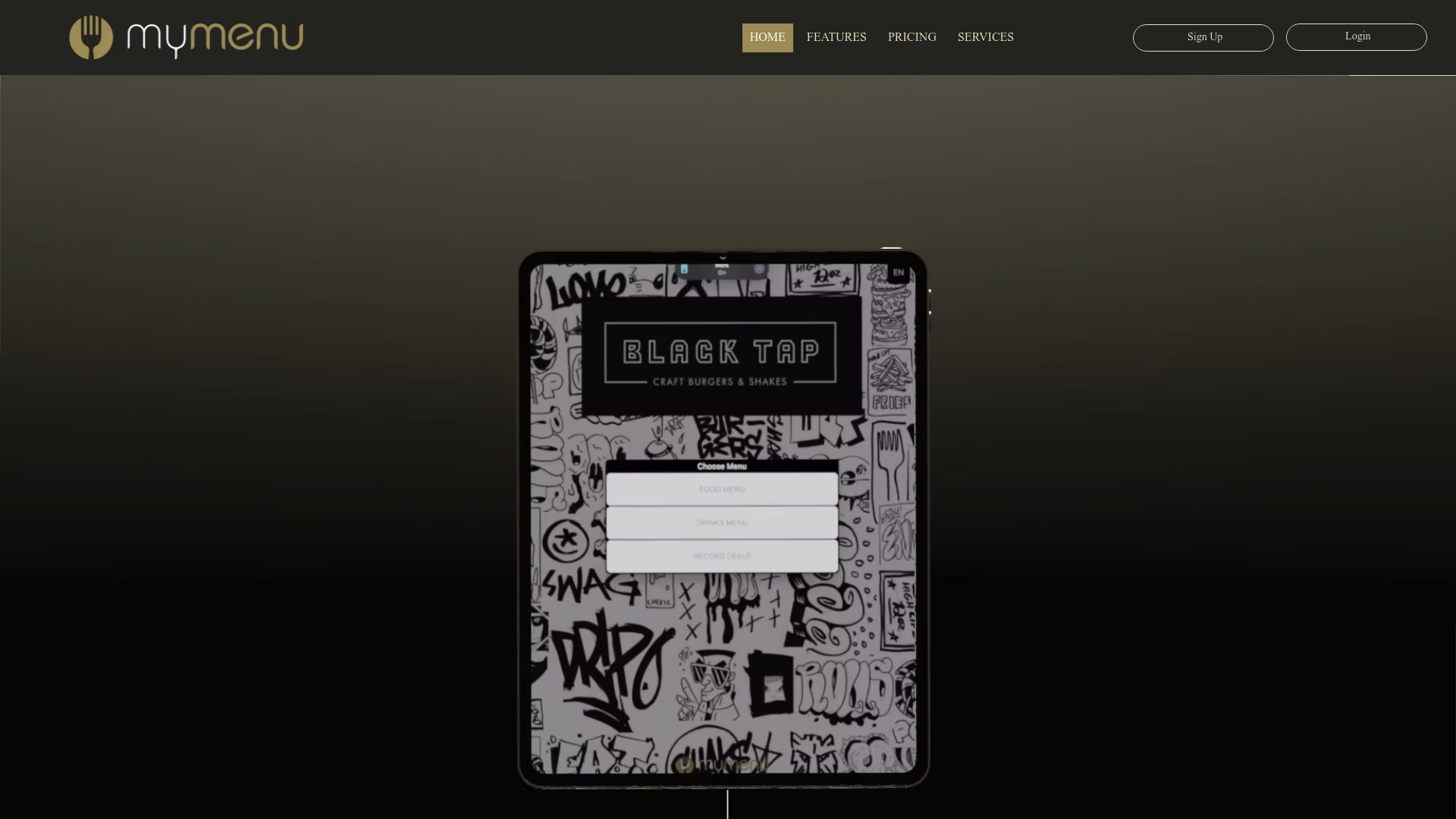
Whether you run a single café or a multi-location hotel group, Mydigimenu gives your team the tools to turn every menu interaction into a moment that delights guests and grows revenue. Explore the platform and see what a well-designed digital menu can do for your average check size.
FAQ
What is the difference between upselling and cross-selling in restaurants?
Upselling encourages guests to choose a higher-value version of what they already want, such as upgrading to a premium cut. Cross-selling suggests complementary additions, like recommending a wine pairing with an entrée.
How much can menu upselling increase restaurant revenue?
Self-service kiosks and digital menus increase average order value by 20 to 30%, and prix fixe menu structures produce a 12 to 22% lift in average check size compared to standard à la carte ordering.
What are the best examples of menu upselling in practice?
Common examples include recommending a signature appetizer by name, suggesting a premium spirit upgrade in a cocktail, offering a cheese course before dessert, and using decoy pricing to make mid-range items appear more attractive.
Does upselling hurt the guest experience if done poorly?
Yes. Poorly timed or aggressive upselling reduces guest satisfaction and can lower overall conversion rates even when average order value rises. Timing, sincerity, and reading guest cues are what keep upselling from feeling transactional.
How do digital menus support upselling without staff involvement?
Digital menus and kiosks use visual spotlights, automated add-on prompts, and rotating promotional content to guide guests toward premium items in a pressure-free environment, which is why 86% of restaurants report sales growth after adopting them.
Recommended
Comments