
What Is Globalized Restaurant Tech in 2026


TL;DR:
Globalized restaurant technology unifies POS, inventory, loyalty, and scheduling into an interconnected platform across multiple locations. It offers measurable financial benefits, including higher EBITDA margins, cost reductions, and improved operational efficiency. Successful adoption depends on deliberate planning, standardized workflows, and viewing technology as essential infrastructure for scalable growth.
Restaurant technology has never been more consequential — or more misunderstood. Most operators still think of “restaurant tech” as a POS system sitting on a counter or an app that takes orders. But what is globalized restaurant tech, really? It is an interconnected ecosystem where point-of-sale, kitchen display systems, inventory, loyalty, and scheduling operate as a single living organism across dozens or hundreds of locations, often spanning multiple countries and currencies. For multi-unit leaders and decision-makers, grasping this shift is not optional anymore. It is the difference between operating with clarity and drowning in disconnected data.
Table of Contents
Key takeaways
Point | Details |
Unified ecosystem, not isolated tools | Globalized restaurant tech links POS, KDS, inventory, and loyalty into one connected platform. |
Measurable financial upside | Operators using multi-system automation report 23% higher EBITDA margins versus fragmented setups. |
Market growth is accelerating fast | The global restaurant POS market is projected to reach $9.95 billion by 2035 from $5.95 billion in 2026. |
Frankenstack is a liability | Fragmented tech stacks create sync failures and retraining costs that compound as you scale. |
Implementation requires deliberate planning | Change management, workflow standardization, and cost modeling are as critical as the technology itself. |
What is globalized restaurant tech and how it works
Think of a mid-size restaurant group operating 40 locations across three countries. Each morning, the corporate team wants to know which sites are over-staffed, which menu items are moving in each city, and whether food costs are creeping past threshold in any single kitchen. With siloed tools, that picture takes days to assemble. With globalized restaurant tech, it is live.
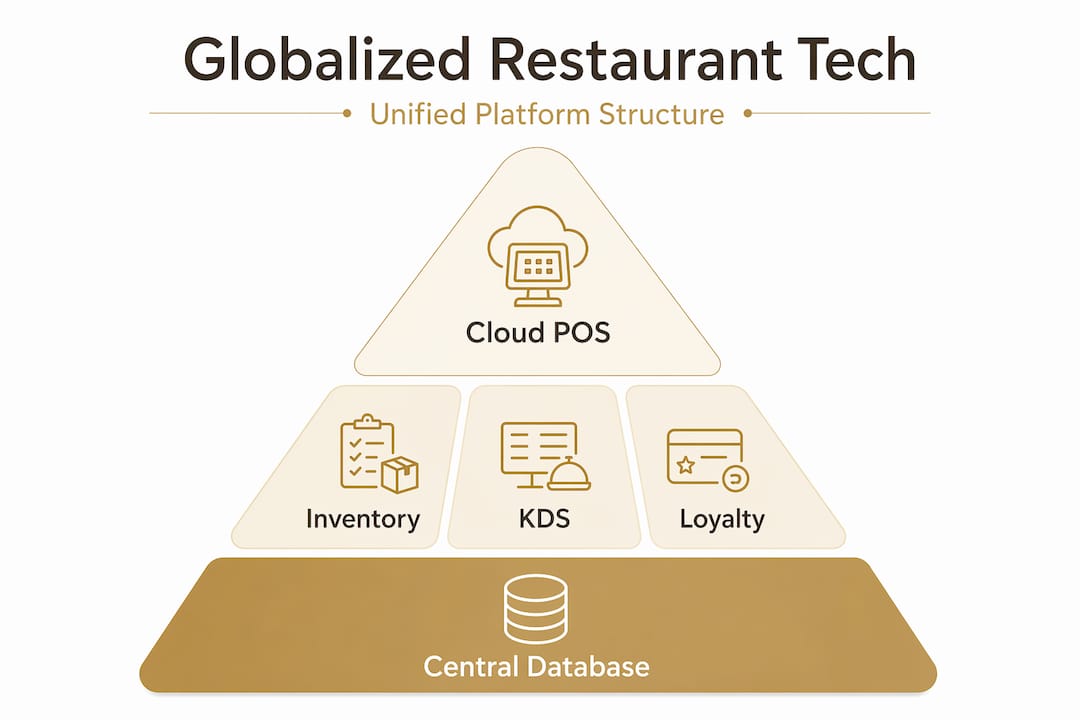
Globalized restaurant technology refers to cloud-native, centrally managed platforms that unify the core operational layers of a restaurant business into one shared architecture. The key components working in concert are:
Point-of-sale (POS): Captures every transaction and feeds real-time revenue data to the central dashboard
Kitchen Display System (KDS): Routes orders from any channel to the right prep station without paper tickets
Inventory management: Tracks ingredient usage and triggers reorder alerts automatically
Employee scheduling: Aligns labor to forecasted demand across locations
Loyalty and CRM: Recognizes guests across every channel and location, building unified guest profiles
Online ordering integration: Connects third-party delivery and first-party digital ordering into the same data stream
What makes this globalized rather than merely digital is the multi-unit, multi-currency, multi-language architecture underneath. When a menu price changes at corporate, it propagates instantly to every location. When a guest earns loyalty points at one site, they can redeem them at another city entirely. Unified systems prevent manual reconciliation and ensure configuration consistency that no manual process can replicate.
Enterprise deployments of this scale do carry real cost. Cloud-based restaurant technology platforms typically run $200 to $500 or more per terminal monthly, depending on the breadth of modules included. That figure shifts the conversation from “Is this affordable?” to “What is my return at scale?” And the numbers, examined honestly, answer that question clearly.
Component | Function | Multi-unit benefit |
Cloud POS | Processes and stores all transaction data centrally | Real-time visibility across every location |
KDS | Sends prep instructions to kitchen stations | Standardized ticket flow reduces errors at scale |
Inventory automation | Tracks usage and triggers supplier orders | Cuts food waste 15 to 25% |
Loyalty platform | Unifies guest data across channels and locations | Drives repeat visits and targeted campaigns |
Scheduling engine | Matches staffing to AI-forecasted demand | Saves managers 80% of rescheduling time |
The real benefits driving adoption
Operators do not spend $200 to $500 per terminal monthly on sentiment. They spend it because the financial case for globalized restaurant tech is becoming hard to ignore.
Labor shortages remain the defining pressure across the industry. Automation addresses this directly. Labor cost reductions of 4 to 7 percentage points are achievable when scheduling, ordering, and kitchen routing operate automatically. That is not marginal improvement. For a group doing $50 million in annual revenue, shaving five points off labor cost is $2.5 million in recovered margin.
Beyond labor, the benefits stack up across several dimensions:
Inventory efficiency: Automated tracking cuts food waste by 15 to 25%, turning what was once a chronic leak into a controlled variable
Error reduction: Integrated KDS systems reduce kitchen errors by up to 40%, which directly improves table turn and guest satisfaction scores
EBITDA expansion: Multi-system automation users consistently report 23% higher EBITDA margins compared to operators running disconnected point solutions
Customer engagement: Unified loyalty programs recognize guests across locations, building the kind of emotional connection that drives repeat visits rather than discount-chasing
Strategic partnerships within the tech ecosystem are also compressing timelines for growth. Platforms like Deliverect and Thanx working together have shown the ability to grow an engaged guest base 5x while cutting discount burn by more than 80%. That combination, more guests paying full price more often, represents one of the most powerful economic levers in food service.
Pro Tip: Before evaluating platforms, map your current cost of errors, food waste, and scheduling inefficiencies. The numbers you uncover will calibrate your ROI expectations and make vendor conversations far more productive. Check out these restaurant efficiency strategies to build your baseline.
Market trends shaping the next decade
The global restaurant POS market tells a telling story. Projected to grow from $5.95 billion in 2026 to $9.95 billion by 2035, the sector is expanding at a pace that reflects deep structural demand, not speculative enthusiasm. Sixty-four percent of restaurants are already investing in cloud-based POS for centralized management, and 61% have integrated POS with online ordering. These are not early-adopter numbers. These are mainstream shifts.
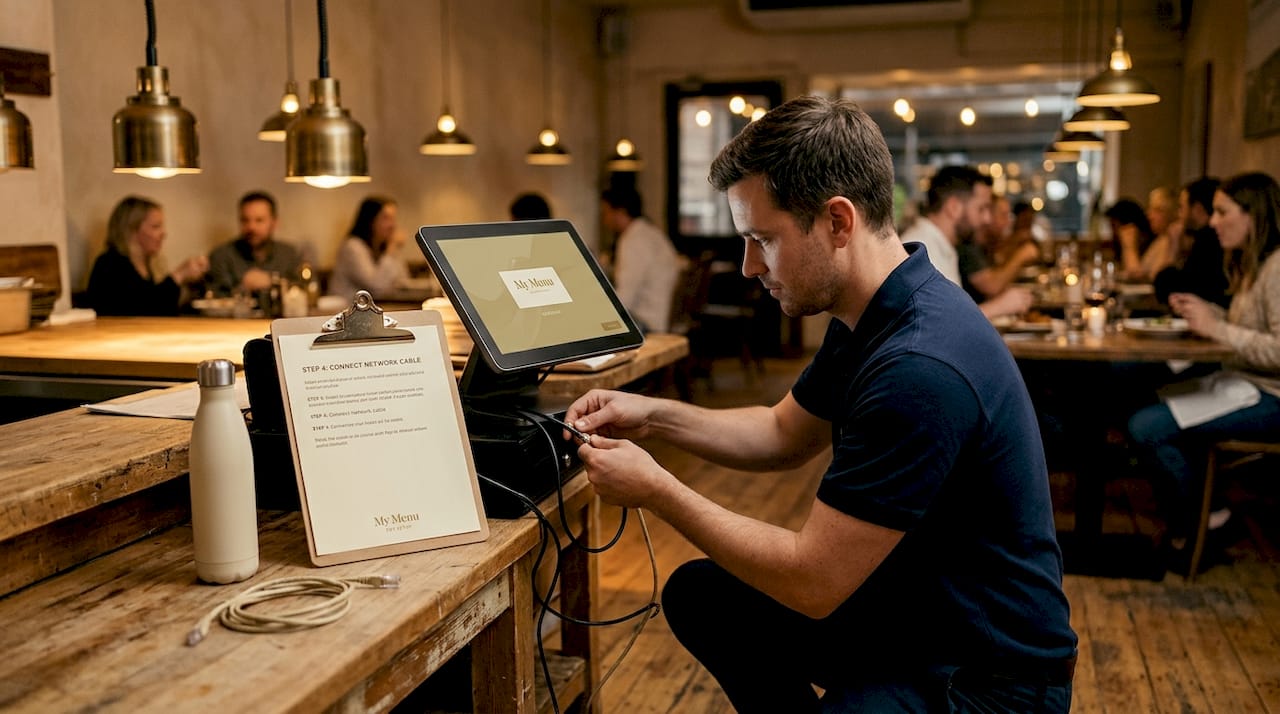
The architectural story underneath that growth is equally significant. The restaurant industry spent years building what practitioners now call the “Frankenstack.” A Frankenstack is a collection of best-of-breed tools, each excellent in isolation, connected by a web of APIs and middleware that introduces latency, sync failures, and maintenance overhead at every seam. The integration tax from Frankenstack setups compounds with every new location added. What works for five units becomes a liability at fifty.
The counter-movement is toward native, full-stack platforms where POS, KDS, inventory, and loyalty share a single database. No middleware. No sync lag. Full-stack platforms enable 30 to 40% IT overhead reduction and dramatically faster onboarding when a new location opens.
Artificial intelligence is sharpening the edge further. AI-driven predictive tools are moving from experiment to core infrastructure in progressive restaurant groups. Demand forecasting, dynamic scheduling, and personalized menu recommendations are already live in enterprise deployments. The operators building these capabilities now are establishing a competitive advantage that will be genuinely difficult to replicate in three years.
Pro Tip: When evaluating platforms, ask vendors specifically how many API calls are required for a menu price update to reach all locations. Native platforms answer “zero.” Middleware-dependent ones cannot.
The contactless dining trends shaping 2026 reflect exactly this trajectory: guests expect digital-first experiences, and the restaurants meeting that expectation are building loyalty at a pace that analog operations simply cannot match.
Practical challenges in implementing global tech
Understanding the benefits is straightforward. Living through implementation is where many groups stumble. Honest planning requires acknowledging what actually gets complicated.
The most significant barrier is not cost. It is change management. Staff who have worked with one system for three years do not automatically embrace a replacement, regardless of how much better it performs. KDS standardization and consistent workflows reduce this friction considerably, because standardized routing means any staff member can transition between locations with minimal retraining. But that standardization must be designed intentionally, not assumed.
Other practical considerations that decision-makers should model before signing:
Migration costs: Moving historical transaction data, loyalty profiles, and menu configurations from legacy systems carries a real price tag that vendors often understate in initial proposals
Configuration consistency: The value of a unified platform evaporates if individual locations customize their own workflows. Corporate governance over configuration is non-negotiable for scalability
Vendor lock-in: Native ecosystems reduce integration tax but increase dependence on a single provider. Evaluate the vendor’s financial stability and roadmap as rigorously as their feature list
Training timeline: Budget realistically for a 60 to 90 day adoption curve per location, including parallel operation periods where both systems run simultaneously
The digitization checklist Mydigimenu has assembled lays out this process clearly, covering everything from workflow auditing to staff onboarding milestones.
The honest framework for evaluation is this: compare the total cost of your current fragmented stack, including IT overhead, error losses, and manual reconciliation labor, against the total cost of a unified platform. Most operators who do this math honestly find the unified platform pays for itself within 18 to 24 months.
My perspective on getting this right
I have watched restaurant groups spend six figures on technology that never delivered its promised return. Not because the technology was poor, but because the organization treated the purchase as a project rather than a competency shift.
The operators who get the most from globalized restaurant tech treat it the way great kitchen managers treat mise en place. Every system, every workflow, every data point has a place and a purpose. When something is out of order, the whole operation feels it. Technology as an operational core competency is not a philosophy. It is a practice.
What I have learned watching both successes and failures is this: the groups that thrive are the ones that standardize ruthlessly before they scale. They resist the temptation to let individual locations customize their own workflows. They train corporate oversight teams to read operational dashboards the same way a chef reads a ticket rail. The technology becomes invisible because it works.
The groups that struggle are the ones chasing features. They buy the platform with the longest list and then spend 18 months trying to integrate it with five other tools they are not ready to retire. The future of this industry, and I am genuinely excited about where it is going, belongs to operators who see technology as infrastructure, not decoration.
— Abhi
How Mydigimenu helps you get there
The promise of globalized restaurant tech is only as good as the tools you put in your guests’ hands. Mydigimenu is built for exactly this moment.
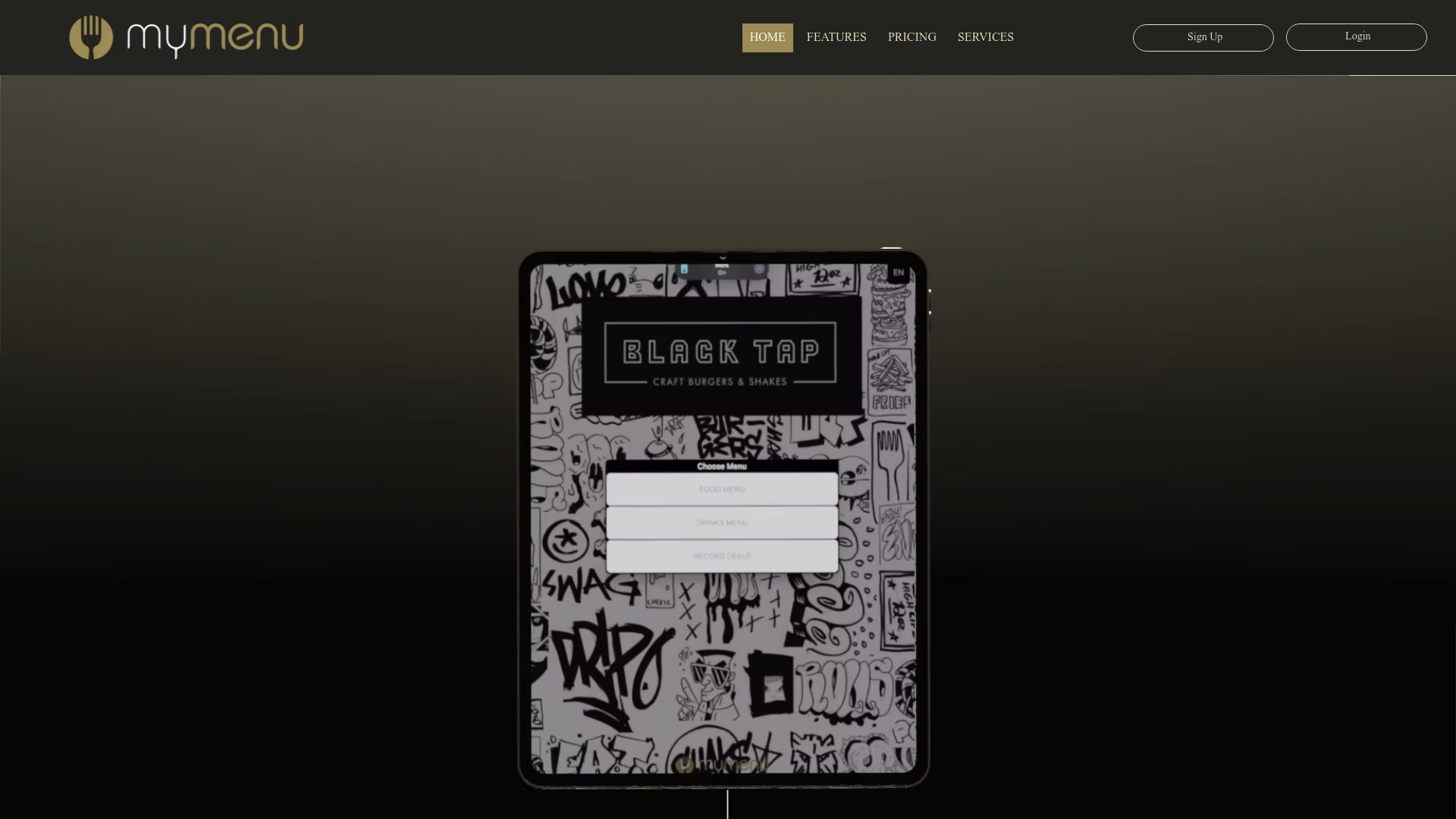
Mydigimenu’s digital menu and tablet ordering platform connects directly to your POS and delivery integrations, giving your operation a cloud-managed menu layer that updates instantly across every location. Prices change at corporate, guests see it immediately. Mydigimenu also supports multiple languages and currencies, making it purpose-built for the international restaurant groups this article speaks to. Whether you want to deploy QR code menus for contactless ordering or full tablet experiences that showcase mouthwatering food visuals, Mydigimenu scales with your operation. Explore plans and pricing to find the configuration that fits your footprint.
FAQ
What is globalized restaurant tech?
Globalized restaurant tech is a cloud-native, centrally managed technology ecosystem that unifies POS, KDS, inventory, loyalty, and scheduling across multiple restaurant locations and countries. It differs from standalone tools by enabling real-time data sharing and operational control at enterprise scale.
How does restaurant tech automation reduce costs?
Automation cuts labor costs by 4 to 7 percentage points and reduces food waste by 15 to 25% through smarter scheduling and inventory tracking. Restaurants using integrated systems also report up to 40% fewer kitchen errors, which reduces waste and improves table turn.
What is a Frankenstack in restaurant technology?
A Frankenstack is a fragmented collection of best-of-breed restaurant tools connected by APIs and middleware rather than a shared database. It introduces sync failures, latency, and growing IT overhead that makes scaling to multiple locations increasingly difficult and expensive.
How large is the global restaurant technology market?
The global restaurant POS market is projected to grow from $5.95 billion in 2026 to $9.95 billion by 2035, driven by cloud adoption and the demand for centralized multi-unit management across international operations.
What should restaurants evaluate before adopting unified tech?
Restaurants should model the full cost of their current fragmented stack, including IT overhead and manual reconciliation labor, and compare it against unified platform pricing. Change management, configuration governance, and vendor financial stability are as critical to evaluate as feature sets.
Recommended
Comments