
Top 5 nento.com Alternatives 2026
- Abhi Bose
- May 21
- 13 min read


Selecting restaurant digital menu software that unifies ordering, payments, and kitchen operations without locking you to high commissions or inflexible workflows too often means trading off either brand control or budget predictability. Competing solutions frequently require separate apps for table service and delivery or bury essential integrations and customizations behind premium contracts. This comparison details monthly cost structures, menu interactivity, and POS integration across five restaurant digital menu platforms so you can pick the right fit for your venue’s priorities and technical resources.
Table of Contents
My Menu
At a Glance
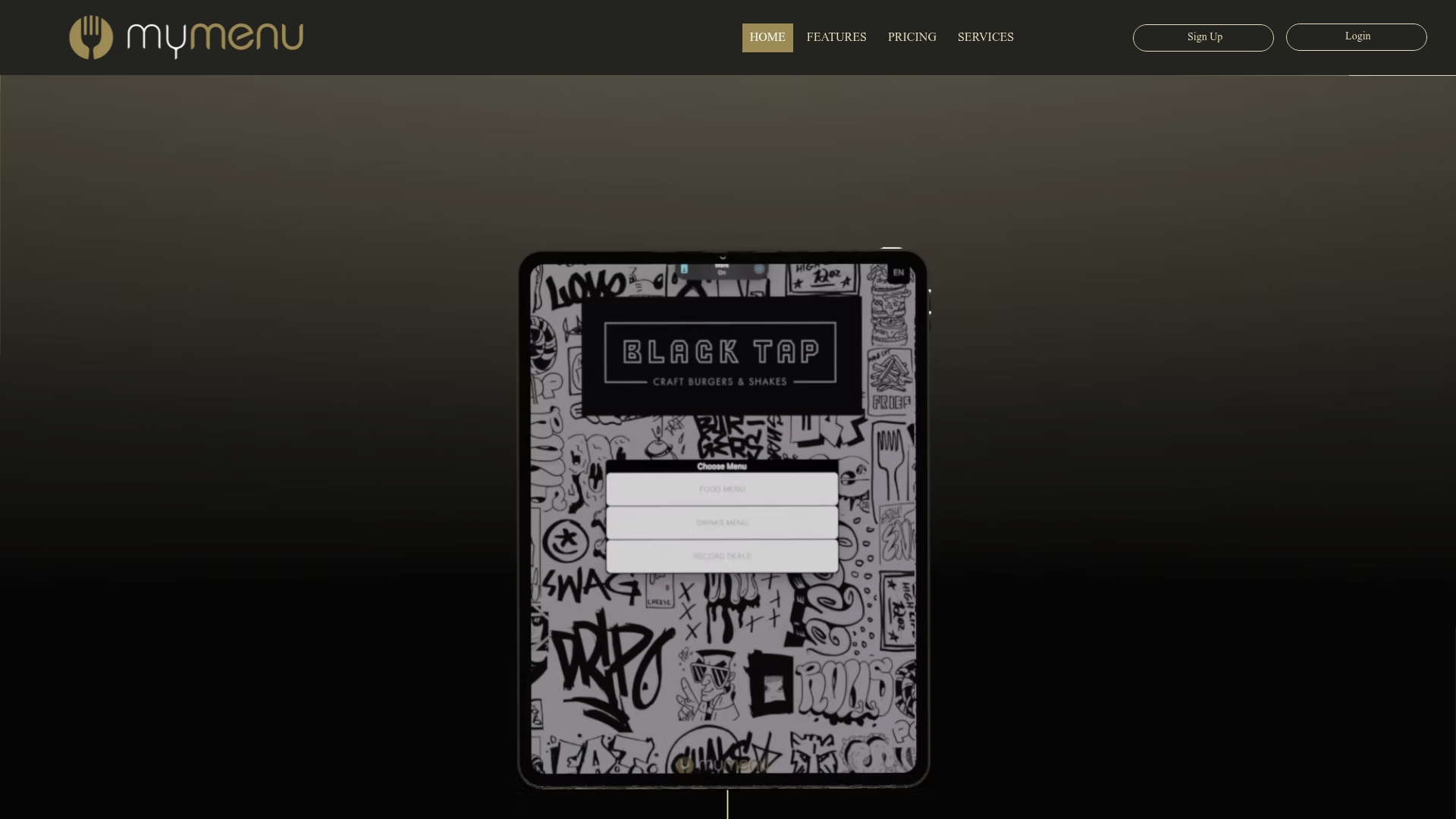
Zero commission on direct online orders when you connect the platform to your POS via My Menu Connect PRO. The product also autoplays high-quality food videos on menu pages to surface dishes visually and encourage add-ons without extra staff effort.
Core Features
QR code-based menus that customers open without downloading an app.
Order and pay at table plus online ordering for pickup and delivery.
Reservation and table management integrated into the same admin panel.
Customizable menu layouts with support for multiple languages and currencies.
Autoplaying food videos and rich media to illustrate dishes and portioning.
Key Differentiator
Autoplaying high-quality food videos on menu pages is the single most visible feature. That media-first approach turns menu pages into short visual tastings and reduces the need for waiter-driven descriptions in higher-turn environments.
Pros
Multilanguage and multicurrency support helps chains and tourist-area venues present consistent menus across locations and guest segments.
Contactless ordering, QR access, and in-menu payments reduce paper use and speed table turnover in busy shifts.
Flexible menu layouts let you prioritize specials, modifiers, or allergy information without rewriting the whole menu.
POS systems integration centralizes orders so kitchen workflows do not change and reporting stays consolidated.
High-quality food video presentation raises perceived value of dishes and supports visual upsell during ordering.
Cons
Feature set and integrations may require technical setup; very small venues with no IT support could find onboarding time consuming.
Notable Integrations
POS systems
Online delivery portals
Who It’s For
Restaurant owners, hotel F&B managers, cafe operators, and multi-location teams who want one platform to handle menus, reservations, and direct online ordering. It fits teams that can allocate a modest implementation window to map POS and delivery connections.
Unique Value Proposition
Autoplaying food video on the menu page changes the sales motion. Instead of relying on server recommendations, visually compelling clips can increase average check by encouraging add-ons and premium items while guests browse on their phones.
Real World Use Case
A mid-size restaurant replaces printed menus with QR access, enables table payment, and pushes daily specials as short videos. The kitchen receives orders through the integrated POS flow and staff spend less time on menu explanations, which reduces wait times and improves guest throughput.
Pricing
The vendor lists plans starting at approximately $39/month with discounts for annual billing. Final cost varies by features chosen and number of locations, so request a plan breakdown for multi-site deployments.
Website: https://mydigimenu.com
Flipdish
At a Glance
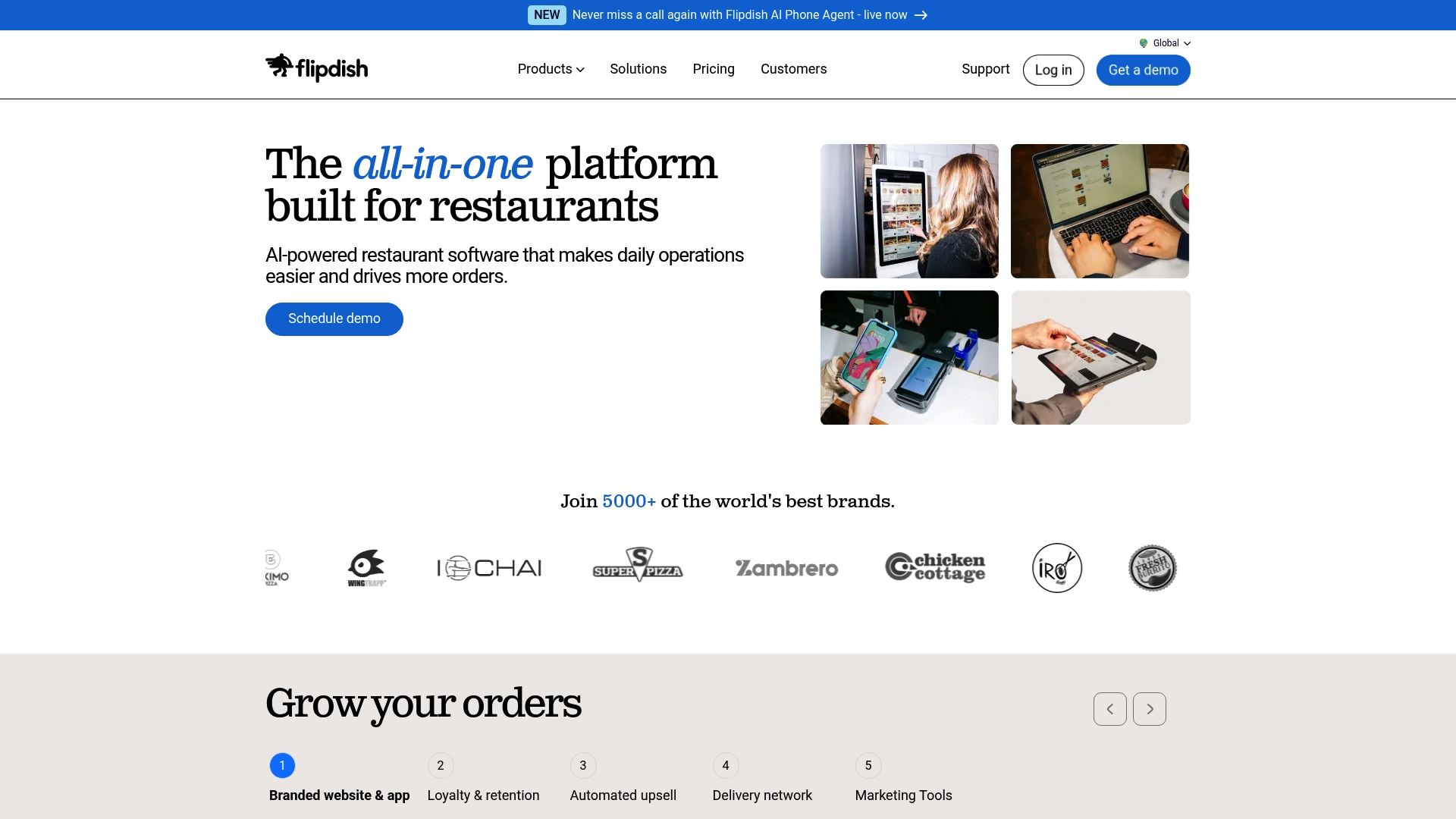
The vendor reports Flipdish is trusted by more than 5,000 brands globally, which signals a product built to scale from single-site restaurants to multiunit chains. That scale shows up in combined ordering, POS, delivery, and marketing tools under one roof.
Core Features
Flipdish bundles an all-in-one restaurant management system with online ordering websites and mobile apps, an on-premise Point of Sale including handhelds and kiosks, and kitchen display systems for order accuracy.
It also offers AI-driven features such as an AI Phone Agent, demand forecasting, staff scheduling, marketplace sync for multi-platform management, loyalty and marketing tools, and real-time sales analytics.
Key Differentiator
Flipdish centers its pitch on an integrated stack plus dedicated AI call handling. The inclusion of an AI Phone Agent alongside POS, delivery integrations, and marketing tools is rare and reduces the number of vendors you manage when you want phone orders, app orders, and in-store transactions to behave as one system.
Pros
User experience and site templates are frequently praised by customers, which helps independent restaurants launch a modern online presence quickly.
Onboarding and support teams are described as proactive, easing rollout for multiunit operators and single-site owners alike.
POS, kiosk, and handheld functionality work together, so counter staff and delivery drivers see consistent order data and modifiers.
Delivery integrations and marketplace syncing scale from local delivery partners to larger services, which helps keep third-party commission work organized.
AI-driven analytics provide demand forecasts and menu optimization signals that managers can act on before busy shifts.
Cons
Some customers report inconsistent account management, which creates variation in the quality of follow-up and relationship handling.
Marketing and referral payout processes have been flagged as difficult to manage by certain operators, adding administrative overhead.
Support delays, particularly around managerial follow-up, reduce responsiveness when issues affect operations.
A subset of customers report billing discrepancies that required escalations to resolve.
When It May Not Fit
If you need a single vendor with guaranteed response SLAs for enterprise support, Flipdish may feel uneven because of the reported support and account management gaps. If your operation requires billing practices audited to tight standards, those reported issues suggest extra vigilance during onboarding.
Notable Integrations
Uber Direct
Stuart
Google Business
Social media platforms for ordering links and promos
Common payment processors for card and wallet transactions
These integrations support mixed delivery strategies and marketing reach without inventing connections.
Who It’s For
Restaurants of all sizes that want one platform to handle online ordering, in-restaurant POS, delivery routing, and customer marketing. Chains that need scale and independents that want a modern site both fit the profile.
Real World Use Case
A mid-sized chain deploys Flipdish for branded apps, integrated POS, and marketplace sync. The chain uses the AI demand forecasts to adjust staffing across locations and routes delivery through preferred partners to reduce late orders.
Dedicated onboarding and customer success teams assist configuration and launch.
Pricing
The product data lists pricing as Not applicable and informational only. That suggests pricing varies by deployment size and features selected, so request a tailored quote during sales conversations.
Website: https://flipdish.com
ChowNow
At a Glance
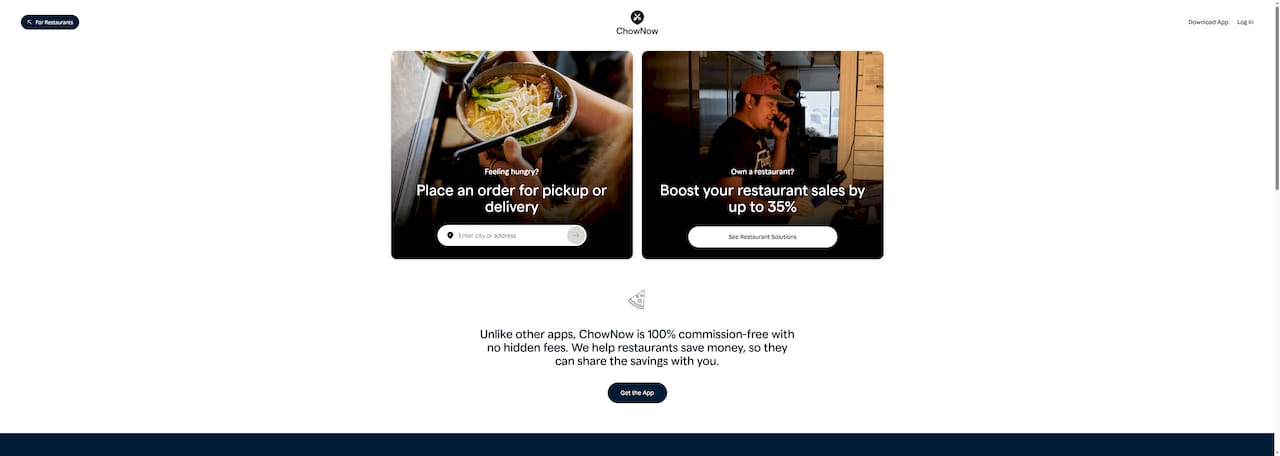
ChowNow promotes a 100% commission-free ordering model aimed at independent restaurants, putting branded apps and direct customer relationships front and center. User reviews in the product data raise recurring concerns about delivery coordination, support responsiveness, and billing clarity.
Core Features
ChowNow offers a branded online ordering app restaurants can embed on their site and mobile menu pages that accept pickup and delivery orders. The platform includes promotion across popular websites to drive discovery and a set of marketing tools to tailor online presence and messaging.
Menu management is straightforward and staff training is typically quick according to vendor materials. The suite focuses on order capture and promotion rather than deep enterprise workflow features.
Key Differentiator
The defining claim is commission-free order processing that keeps customer payments with the restaurant rather than routing them through a marketplace. That positioning narrows the target: ChowNow emphasizes ownership of customer data and branded ordering rather than acting as a broad third-party marketplace.
This narrower focus makes ChowNow a different choice than multi-feature platforms that bundle loyalty, extensive analytics, and international currency support.
Pros
Easy branded ordering. The white-label storefront and app let you sell under your name rather than a marketplace name, which helps repeat business and brand recall.
Simple menu edits. You can push updates, specials, and modifiers quickly without IT involvement, so kitchen and front‑of‑house stay aligned.
Staff friendly interface. The vendor positions the UI as straightforward for rush hours and training new hires.
Promotion reach. The platform advertises promotional placements on popular sites to increase visibility beyond your local walk‑in traffic.
Cons
Delivery coordination issues appear in multiple user reports, which can cause late or misrouted deliveries and harm customer satisfaction.
Order accuracy and food quality complaints are reported, often tied to the third‑party drivers or execution at pickup.
Customer support responsiveness is inconsistent in user feedback, creating delays when problems need quick resolution.
Some restaurants report unexpected fee increases and difficulty obtaining full refunds for certain service problems.
When It May Not Fit
If you rely on an integrated dispatch network and flawless delivery routing, ChowNow may not meet your needs because of the delivery coordination limits cited in user feedback. If 24/7, fast-response support is mission critical, the reported responsiveness issues make this a risky pick for high-volume operations.
If transparent, itemized billing and predictable fee schedules are mandatory for your accounting, the vendor reports and user complaints about pricing changes could be a deal breaker.
Who It’s For
Independent and small to medium restaurants that prioritize owning the customer relationship and avoiding per-order commissions. Ideal for operators who already manage delivery logistics or who prefer to direct customers to a branded ordering experience rather than sell through a marketplace.
Real World Use Case
A neighborhood bistro adds ChowNow to accept pickup and branded online orders from its website to reduce marketplace fees. The team trains servers in two hours and sees simpler menu updates. The tradeoff is extra work managing delivery partners and occasional customer service escalations tied to fulfillment.
Pricing
The product data lists pricing as informational only and does not provide standard public rates. Restaurants should contact ChowNow directly for setup, monthly, and transaction fee details and to confirm any promotional costs referenced in vendor materials.
Website: https://chownow.com
Yo!Yumm
At a Glance
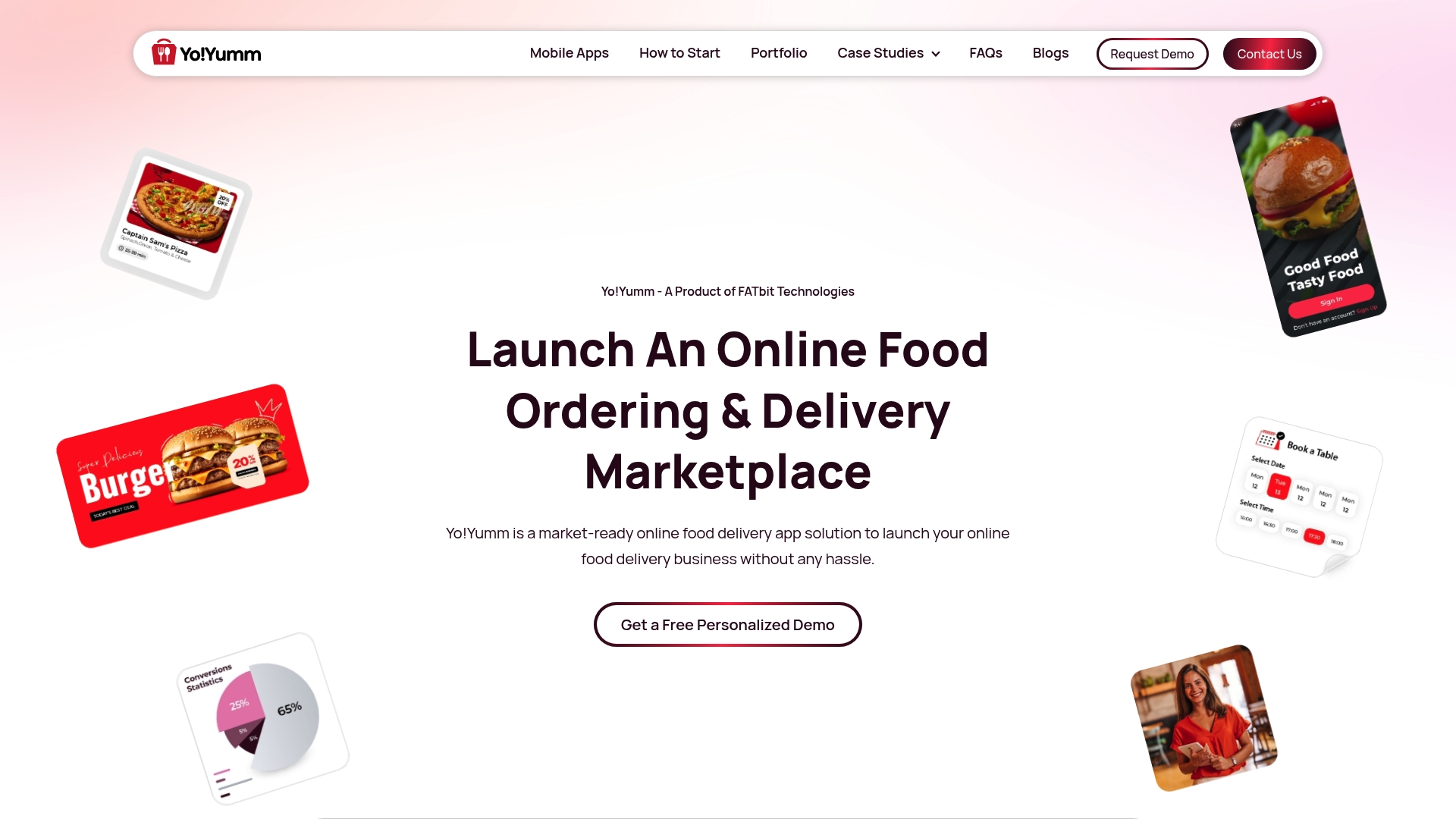
The vendor advertises lifetime ownership with fully customizable source code and a lifetime license, a rare licensing model for food delivery marketplaces. Yo!Yumm packages varied marketplace models and a full web and mobile app suite so you can launch branded platforms quickly.
Core Features
Complete web and mobile apps suite for food ordering and delivery covering iOS and Android native apps and a responsive web storefront.
Multiple marketplace models including order only, order and delivery, reservation, BOPIS, and scheduled delivery to match operational needs.
Industry niches support for bakery, pizza, seafood, meal kits, healthy foods, and other verticals that need custom flows.
Extensive customization options for design, analytics, architecture, and operational features to adapt workflows.
Multi-role management with admin, restaurant, customer, and delivery staff views for order, delivery, payment, review, and analytics tracking.
Key Differentiator
That lifetime ownership claim above changes how you budget technology long term because you are buying a codebase rather than a recurring SaaS seat. The architecture is designed for high scalability and deep customization, so teams that want to own roadmap and ops can extend the product rather than work around a black box.
Pros
White-label saleability lets you launch a brand with your own name and visuals instead of linking to a marketplace brand.
The vendor lists a lifetime license option that removes recurring platform fees and transfers long term control to buyers.
Scalable architecture supports multi-city rollouts and complex order flows which helps when you add restaurants and delivery zones.
Security and role segregation are built into the platform so customer, restaurant, and delivery data remain separate for operations and reporting.
Feature-rich native apps speed customer adoption because the experience matches app store expectations rather than a web wrapper.
Cons
Independent user reviews are sparse which makes it hard to triangulate real world reliability or support responsiveness from third-party sources.
The product data does not include standardised SLAs or uptime guarantees, so operational commitments will require contract negotiation.
Pricing details are not published which means initial vendor conversations are required to learn total cost and upgrade paths.
Who It’s For
Entrepreneurs and businesses that want to build and own a branded food delivery marketplace rather than rent a SaaS storefront. Best for teams with development or technical partners who can maintain a purchased codebase and customize features for niche verticals.
Real World Use Case
The vendor reports Food Pluses in Nigeria used Yo!Yumm to build a multi-restaurant platform with real-time location tracking and multi-city delivery. In practice that meant integrating restaurant menus, route tracking for riders, and city-specific delivery rules while keeping a single branded app for customers.
Pricing
Pricing is not specified in public materials and appears to follow an enterprise or custom model. Expect a quoted price that covers licensing, initial customization, mobile app white-labeling, and optional implementation services rather than a simple per-seat subscription.
Website: https://yoyumm.com
Toast POS
Quick snapshot
Extensive integration options paired with a restaurant-first, highly intuitive interface define Toast POS. The product targets full-service venues that want a single system for payments, floor management, and analytics rather than a separate digital menu or marketing stack.
Main capabilities
Point-of-sale transaction processing with table and order management for front-of-house staff.
Mobile access and management so managers and servers can take orders and check sales from tablets or phones.
Advanced reporting and analytics tools that break down sales by item, shift, and server.
Order routing and kitchen display integration for faster ticket flow.
Standout advantage
Toast POS leans on the breadth of its integration stack and a user interface built specifically for restaurant workflows. That combination shortens staff training and reduces friction when connecting payment processors, kitchen displays, and payroll tools. Compared with Mydigimenu, Toast focuses more on POS hardware and back-office tying together than on interactive digital menus and guest marketing.
Strengths
Highly intuitive interface reduces training time for new hires and seasonal staff, which helps service speed on busy nights.
Covers the core restaurant lifecycle: ordering, table tracking, payments, and reporting in one place.
The mobile app gives managers real-time visibility of sales and voids without standing at a terminal.
Advanced reporting surfaces item-level margins and shift-level trends that support menu decisions.
Wide third-party integrations simplify adding kitchen displays or payment providers when needed.
Limitations
Customer support is reported as inconsistent and sometimes unhelpful, which raises risk during peak problems.
Several users report hidden costs and surprise charges buried in contracts and add-ons.
Hardware durability problems and communication bugs have been reported, affecting uptime on busy nights.
Payroll and some system integrations can be difficult to synchronize without extra setup work.
Where it might miss the mark
If you prioritize a content-rich digital menu or guest engagement features over POS and hardware consolidation, Toast may not be the best match. Likewise, operations that require ironclad, contract-free pricing or a hands-on white glove support experience may find the reported support and billing issues frustrating.
Best suited for
Mid-sized to large restaurants and hospitality venues that need an integrated POS, robust floor and order management, and detailed sales analytics. Teams that plan to connect multiple back-office systems and invest in on-site hardware will find the feature set aligned to their needs.
Real deployment example
A mid-sized restaurant deploys Toast POS to replace separate terminals and spreadsheets. Servers move to tablet ordering, kitchen tickets print automatically, and managers review daily sales reports on the mobile app. Over a month the staff reports fewer ticket errors and faster table turns.
Cost structure
Not applicable — informational only. Pricing details are not provided in the product data and typically require contacting the vendor for a quote based on hardware and service choices.
Website: https://pos.toasttab.com
Comparative Analysis
When evaluating restaurant digital menu software, considering the options’ distinct qualities and potential tradeoffs becomes essential. Each platform in this comparison caters to varying operational needs, providing specialized functions while presenting unique limitations. Below is a comparison of these platforms, emphasizing concrete differences to help inform decision-making.
Feature Customization and Scalability
Yo!Yumm stands out in terms of customization and scalability due to its lifetime license model and a fully customizable source code. This feature permits businesses to adapt workflows and customize system functionalities without recurring software costs. However, the lack of standard SLAs and limited independent reviews highlights potential risks for businesses seeking guaranteed support.
Conversely, My Menu offers integrated menu presentation with multimedia support, such as autoplaying food videos. While ideal for visually enhancing the customer ordering experience, smaller venues without sufficient IT resources might face challenges during implementation.
Operational Integration
Flipdish integrates multiple tools, including AI-driven analytics and an AI Phone Agent, streamlining tasks such as demand forecasting, order synchronization, and marketing. This kind of functionality eases scaling for multi-location operators but can introduce complexity in on-the-ground support quality.
Meanwhile, ChowNow focuses on enabling branded online ordering while maintaining ownership of customer data, appealing to businesses avoiding third-party commissions. However, delivery coordination issues and inconsistent customer service limit its appeal to operations requiring high reliability.
Best Fit Scenarios
My Menu: Best suited for venues that value rich media presentation and integrated menu management to enhance guest engagement.
Yo!Yumm: Ideal for teams with technical expertise aiming for high customization and reduced operating costs.
Flipdish: Recommended for restaurant groups managing multiple locations who benefit from all-in-one solutions with predictive analytic tools.
ChowNow: Advantageous for businesses aiming to maintain direct customer relationships and retain branding in digital orders.
Our Pick
For businesses prioritizing customer engagement through visually rich, interactive menus, My Menu remains a highly competitive choice. Still, operations requiring substantial support responsiveness or intense configurability might explore alternatives like Flipdish or Yo!Yumm.
Restaurant Digital Menu Software Comparison
Evaluate these restaurant digital menu software options based on core features, differentiators, suitability, pricing, and limitations to identify the best platform for your business needs.
Product | Core Feature | Key Differentiator | Best For | Pricing | Notable Limitation |
Mydigimenu | QR code menus with integrated videos | Autoplaying high-quality food videos | Restaurants using visual-based upselling | Starting at $39/month | Onboarding may require technical setup. |
Flipdish | All-in-one restaurant management | AI Phone Agent for demand forecasting | Multi-sized restaurants | Not disclosed | Reported support and billing inconsistencies. |
ChowNow | Branded online ordering apps | Commission-free order processing | Small to medium independent restaurants | Not disclosed | Delivery coordination issues and fee inconsistencies. |
Yo!Yumm | Customizable branded marketplace | Lifetime licensing for long-term ownership | Businesses wanting full platform control | Not disclosed | Sparse independent reliability reviews. |
Toast POS | Integrated POS with advanced reporting | Robust floor and order management | Mid to large restaurants needing interconnectivity | Not disclosed | Reports of contract and hardware issues. |
Discover a Powerful Alternative to Nento.com with Mydigimenu
If you are exploring nento.com alternatives to find a digital menu platform that truly empowers your restaurant or café, Mydigimenu offers a tailored solution designed to solve key challenges like complex ordering processes and limited guest engagement. With features such as QR code-based menus requiring no app download, high-quality food videos that increase customer add-ons, and multi-language and multi-currency support, you can create an engaging and contactless dining experience.
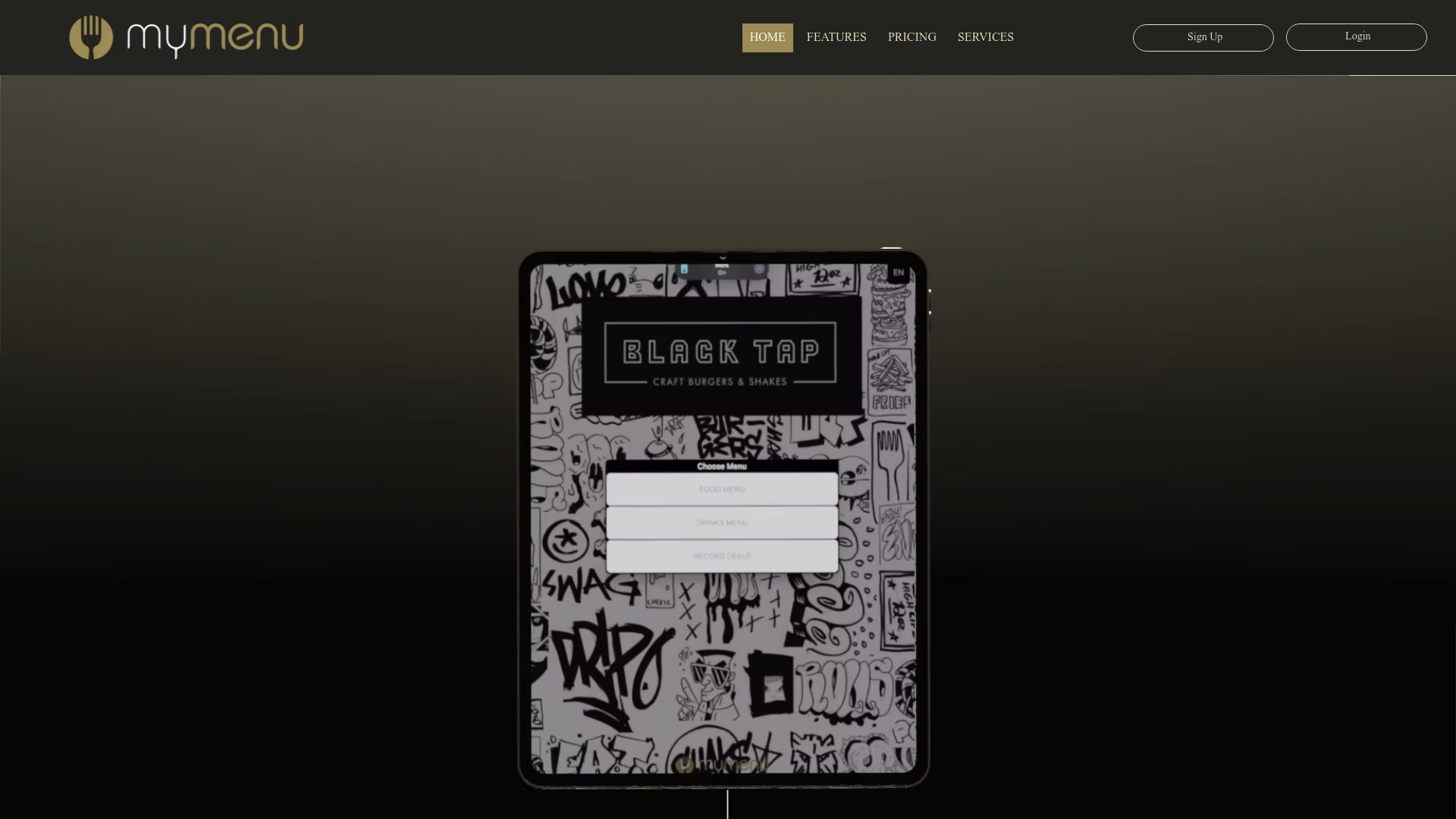
Experience how Mydigimenu can help you take control of your menu management and online orders while integrating smoothly with existing POS systems. Visit Mydigimenu now to explore how our video-enhanced digital menus and reservation management tools drive sales and guest loyalty. Book a demo and see your menu transform with vivid video presentations that encourage more spending and shorten wait times.
Frequently Asked Questions
How does Mydigimenu’s QR code feature improve customer ordering experience?
Mydigimenu offers QR code-based menus that customers can access without downloading an app, simplifying the ordering process. This feature enhances customer convenience, especially in busy settings where quick access is beneficial. Consider implementing Mydigimenu to speed up table turnover and improve guest satisfaction.
What is the difference between Mydigimenu and Flipdish regarding feature integration?
Flipdish is known for its integrated stack that includes dedicated AI call handling along with POS, which reduces the number of vendors needed for managing orders. In contrast, Mydigimenu focuses on digital menu management with autoplaying food videos to engage customers visually. Use Mydigimenu for a media-rich experience that draws attention to promotional dishes while streamlining menu management.
Which platform is better for multilingual support: Mydigimenu or ChowNow?
Mydigimenu supports multilanguage and multicurrency options, making it an ideal choice for chains and tourist areas needing consistent menus across varied demographics. ChowNow primarily targets independent restaurants with a focus on branded ordering but lacks the same level of language support. Choose Mydigimenu if you require extensive multilingual capabilities in your digital menu software.
Can I use Mydigimenu if I have a very small venue without IT support?
Mydigimenu may not be the best fit for very small venues without IT support since integrations and features may require some technical setup. However, its contactless ordering and simplicity can still benefit smaller establishments willing to invest time into onboarding. Evaluate your venue’s capacity to manage those initial setups before deciding on Mydigimenu.
How does the pricing of Mydigimenu compare to ChowNow?
Mydigimenu offers plans starting at approximately $39/month, while ChowNow’s pricing is not publicly listed and requires direct contact for quotes. This clarity in Mydigimenu’s pricing allows for better budgeting and planning for your restaurant’s digital menu needs. Consider reaching out to both for a detailed pricing breakdown to see which aligns best with your financial strategy.
Recommended
Ban đầu mình chỉ quan tâm đến các trò chơi trên AO88 , nhưng sau một thời gian lại chú ý nhiều hơn đến cách hệ thống vận hành. Việc truy cập tài khoản, mở chuyên mục và chuyển đổi giữa game bài với nổ hũ đều diễn ra khá nhanh. Mình cũng thấy giao diện được giữ theo một phong cách thống nhất nên nhìn rất dễ theo dõi. Cá nhân mình đánh giá cao những nền tảng đầu tư vào sự ổn định thay vì chỉ tập trung làm nổi bật hình ảnh.