
Top Restaurant Marketing Ideas to Attract More Customers


TL;DR:
Restaurant marketing success depends on implementing targeted, measurable strategies aligned with specific goals and restaurant types. Building a digital foundation, leveraging social media, email, loyalty programs, and optimized menus, while avoiding broad discounts, results in sustainable growth. Focusing on interconnected systems and data-driven personalization yields the highest impact and return on investment.
Restaurant owners face a paradox: there are more marketing channels available today than ever before, yet choosing which ones actually move the needle is genuinely hard. Post one uninspired Instagram photo or run one blanket discount, and you’ve spent money without results. The top restaurant marketing ideas explored here cut through that noise. You’ll find specific, tested tactics organized by what they accomplish, how much they cost, and which type of restaurant benefits most. No padding, no obvious advice. Just strategies that work.
Table of Contents
Key takeaways
Point | Details |
Start with digital foundations | Optimize Google My Business and menu indexing before investing in paid campaigns. |
Email delivers exceptional ROI | Restaurant email marketing can return $36 to $44 for every dollar spent. |
Match tactics to restaurant type | Small independents need community and digital; chains can layer in AI personalization. |
Avoid blanket discounting | Data-driven promotions tied to specific goals protect margins better than random deals. |
Integration beats isolation | Restaurants running connected marketing systems outperform those with fragmented campaigns. |
How to evaluate top restaurant marketing ideas before you invest
Before you run a single promotion or shoot a reel, you need a filter. Not every tactic fits every restaurant, and spending energy on the wrong one is its own form of loss.
Here is what to measure each idea against:
Goal alignment. Does the tactic drive the specific outcome you need right now? Traffic, average check, repeat visits, and new customer acquisition each require different approaches.
Cost-effectiveness. What is the realistic ROI, and how quickly does it show up? Email and local SEO tend to pay off faster than brand campaigns.
Customer reach and relevance. Are the people you’re reaching the people likely to spend at your restaurant?
Brand fit. A taco truck and a 12-table tasting menu restaurant are not competing for the same customer. Your marketing needs to reflect that difference with clarity.
Ease of execution. Can your team run this consistently, or does it require a specialist? Inconsistent marketing is often worse than no marketing.
Measurability. If you cannot track it, you cannot improve it. Set a metric before you launch anything.
Pro Tip: Avoid the temptation to discount broadly just to fill seats. Successful promotions are tied to specific business levers, like increasing lunchtime traffic on a slow Tuesday, not just generating any activity.
1. Optimize your Google My Business profile
Google My Business is the single most underleveraged free tool in restaurant marketing. When someone searches “best tacos near me” or “dinner spots downtown,” your profile is often the first thing they see before they ever reach your website.
Complete every field: hours, photos, attributes, menu link, and Q&A responses. Upload new photos at least once a week. Active review responses signal to Google that your business is well-managed, which improves your local ranking and builds trust with prospective diners.
2. Build a social media presence on Instagram and TikTok
Short-form video has reshaped how people discover restaurants. Over 50% of millennial users have visited a restaurant after seeing it on TikTok, making it the most powerful platform for restaurant food discovery among younger diners today.
This does not mean you need a production crew. A 15-second behind-the-scenes video of a dish being plated, or a cook narrating the day’s specials, can outperform an expensive produced clip. Post consistently, use location tags, and engage with comments. The algorithm rewards activity more than perfection.
Pro Tip: Pin your best-performing food video to the top of your TikTok profile. First-time visitors to your page will see your most compelling content immediately.
3. Use email and SMS marketing for high ROI outreach
Email marketing remains one of the most cost-effective channels available to restaurants, with a verified ROI of $36 to $44 for every dollar spent. SMS adds urgency. A text saying “Tonight only: complimentary dessert with any entrée” sent at 4 p.m. can meaningfully shift your dinner reservations within hours.
Build your list through in-restaurant sign-ups, loyalty program enrollment, and your online ordering flow. Segment by visit frequency so you are sending relevant offers. A customer who visits weekly does not need a win-back offer. Someone who hasn’t visited in 60 days does.
4. Launch a loyalty program tied to your POS
Loyalty programs work best when they are frictionless and feel rewarding fast. Digital stamp cards, points systems, and milestone rewards all increase repeat visit frequency when they connect directly to your POS data.
The insight most operators miss: loyalty programs generate marketing intelligence, not just repeat visits. You learn which customers spend the most, what they order, and when they visit. That data lets you target your highest-value guests with personalized offers instead of broadcasting the same deal to everyone.
5. Engineer your menu as a marketing asset
Menu engineering is one of the most effective and most overlooked restaurant marketing tactics. The placement, naming, and description of dishes directly influence what customers order and how much they spend. A dish called “Slow-Roasted Duck Confit with Heirloom Citrus” outperforms “Duck Leg” every time.
Pair this with smart digital design. Menu layouts optimized for visual hierarchy guide customers toward your highest-margin items without them realizing it. Feature photography and short video clips of signature dishes amplify this effect dramatically.
Critically, if your menu lives online, avoid uploading it as a PDF. Schema Markup and machine-readable text allow Google’s AI to index your menu properly, which increases your visibility in local search results directly.
6. Run strategic promotions, not blanket discounts
There is a meaningful difference between a promotion and a discount. A discount cuts your margin. A promotion moves a business lever. Value-add offers like a complimentary dessert with a minimum check or a free appetizer during off-peak hours create perceived value that often exceeds their actual cost to you.
Bundle offers work especially well for increasing average check size. A prix-fixe lunch that pairs a main, a side, and a drink at a slight discount drives higher per-table revenue than customers ordering a main alone. The cost to you is small. The perceived savings for the customer feels significant.
7. Collaborate with local influencers and food creators
Influencer marketing does not require famous faces. A food blogger with 8,000 highly engaged local followers can generate more qualified foot traffic than a celebrity with millions of disengaged ones. Reach out to local creators whose aesthetic matches your brand, and invite them to a media dinner or a tasting.
The key is authenticity. Let them share their genuine experience. Scripted content reads as advertising. Real enthusiasm reads as a recommendation. When fast-casual brands build community through authentic storytelling and partnerships, they become part of a lifestyle, not just a meal option.
8. Invest in professional food photography and visual branding
Diners eat with their eyes before they ever pick up a fork. High-quality photography on your website, Google profile, and social channels directly influences whether someone chooses your restaurant or the one next door. A mouthwatering image of your signature dish on Google Maps can be the entire reason a new customer walks through your door.
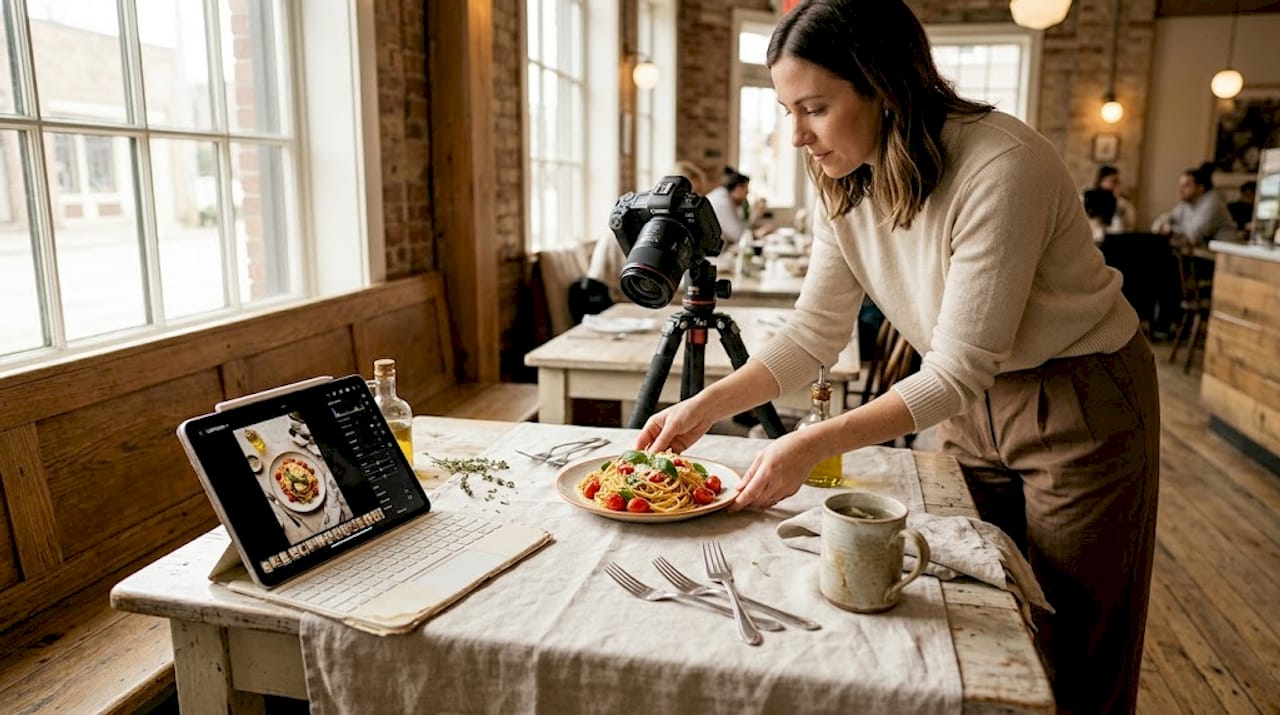
This is not a one-time investment. Menus change, seasons shift, and your visual content should reflect that. Budget for a quarterly photo shoot and treat it like a marketing expense with a return, because it is one.
9. Host events and build community partnerships
Events give your restaurant a reason to be talked about. A themed dinner, a chef’s table night, a cooking class, or a wine pairing evening all generate social sharing, press coverage, and word-of-mouth that a standard weeknight service rarely does.
Community partnerships compound that effect. Partner with a local gym for a post-workout brunch deal, or collaborate with a nearby bookshop for a literary dinner series. These cross-promotions expose your restaurant to pre-qualified audiences who share values with your brand. Print signage and banner displays at partner locations extend your reach into spaces where paid digital ads cannot go.
10. Use AI and data to personalize your marketing
Personalization is no longer a luxury reserved for large chains. AI-powered CRM tools can help any restaurant send the right message to the right customer at the right time. A guest who always orders vegetarian gets a notification about your new plant-based tasting menu. A birthday club member gets a table offer on their actual birthday, not a generic monthly blast.
Restaurants that treat marketing as a data-driven system consistently outperform those running disconnected campaigns. The difference shows up in repeat visits, higher average spend, and lower cost per acquisition over time.
Comparison of top marketing tactics by impact, cost, and complexity
Use this table to prioritize where to focus based on your current resources and goals.
Marketing tactic | Sales/traffic impact | Implementation cost | Complexity | Best for |
Google My Business optimization | High | Free | Low | All restaurant types |
Email and SMS marketing | High | Low | Low-Medium | All restaurant types |
Instagram and TikTok content | High | Low-Medium | Medium | Casual, fast-casual |
Loyalty program with POS | High | Medium | Medium | Mid-size to chain |
Menu engineering | High | Low | Medium | All restaurant types |
Strategic promotions | Medium-High | Low | Low | All restaurant types |
Local influencer partnerships | Medium-High | Low-Medium | Medium | Casual, fast-casual |
Professional photography | Medium-High | Medium | Low | All restaurant types |
Events and community partnerships | Medium | Low-Medium | Medium | Independent, fine dining |
AI and data-driven personalization | Very High | Medium-High | High | Mid-size to chain |
Pro Tip: Build your digital foundation first. Optimizing your Google profile, menu indexing, and email list costs very little and creates the data infrastructure that makes every other tactic more effective.
Recommendations based on your restaurant type and budget
The right marketing mix depends on where you are starting from, not where someone else has succeeded.
Small independent restaurants should focus on Google My Business, email list building, and consistent social content. These three tactics are low-cost, build compounding returns, and do not require a marketing team. Community events and local influencer collaborations add reach without heavy spend.
Mid-size casual restaurants and growing chains can layer in loyalty programs, professional photography, and SMS marketing. At this scale, POS integration becomes practical and begins generating the customer data that powers smarter campaigns.
Fine dining establishments benefit most from experience-driven promotions, polished visual branding, and editorial press coverage. The average check is higher, so every new guest has an outsized lifetime value. Invest accordingly.
Across all types, avoid these common pitfalls:
Spreading budget across too many channels without commitment to any
Running promotions without measuring their impact on margin, not just covers
Ignoring review management as a marketing function
Treating your website and menu as static assets rather than live marketing tools
Local SEO for restaurants is one area where professional help often pays for itself quickly, particularly for restaurants in competitive urban markets.
My honest take on what separates winning restaurant marketing in 2026
I’ve seen restaurant owners pour real money into marketing that looks busy but produces nothing. The pattern is almost always the same: tactics chosen because a competitor was doing them, not because they served a clear goal.
What actually works is boring to say but hard to execute: a connected system where your email list, your loyalty program, your social content, and your menu all tell the same story about who you are. The restaurants I’ve watched grow steadily are not the ones chasing every new platform. They are the ones who know exactly who their customer is and show up for that customer consistently.
The hidden cost of DIY marketing is real. Businesses lose between 20% and 30% of potential revenue from inefficient campaigns and visibility gaps. That is not a statistic to glance at. It is a number worth sitting with. In my view, the most dangerous marketing mistake a restaurant can make is confusing activity with results.
Start with measurement. Pick two or three tactics from this list that align with your actual business goals right now. Run them with discipline. Then scale what works.
— Abhi
How Mydigimenu turns your menu into a marketing engine
Your menu is more than a list of dishes. In the hands of the right platform, it becomes a marketing tool that works around the clock, captures guest data, and drives repeat visits without extra effort from your team.
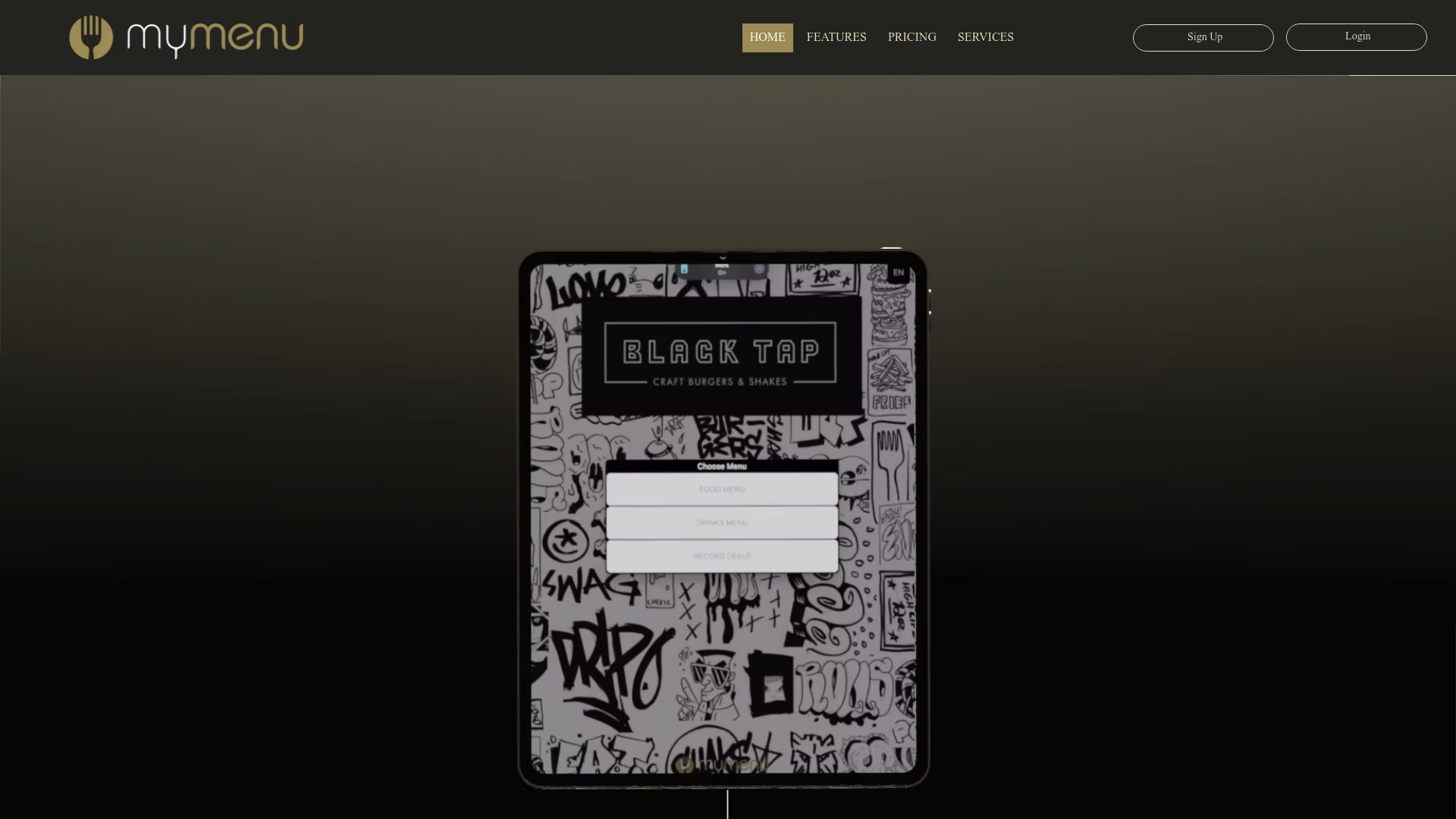
Mydigimenu’s digital tablet and QR menu platform gives restaurants the ability to showcase mouthwatering food visuals, embed promotions directly into the browsing experience, and capture guest profiles through social login for targeted follow-up campaigns. Loyalty stamp cards, upsell prompts, and multilingual support are all built in. Your menu stays fresh and SEO-ready with machine-readable text that Google can actually index. And with a QR code menu that requires no app download, every guest interaction becomes an opportunity to collect data and deepen engagement. Explore plans that fit your budget and see how a dash of digital can turn everyday service into extraordinary guest memories.
FAQ
What are the most cost-effective restaurant marketing ideas?
Google My Business optimization, email marketing, and consistent social media posting deliver the highest returns relative to cost. Email alone generates an ROI of $36 to $44 per dollar spent, making it one of the strongest channels available.
How often should restaurants post on social media?
Posting three to five times per week on Instagram and TikTok is a practical target for most restaurants. Consistency matters more than volume. Regular posting tells the algorithm and your audience that you are active and worth following.
Do loyalty programs really increase restaurant revenue?
Yes, when tied to POS data. Loyalty programs drive repeat visits and generate customer intelligence that makes every subsequent campaign smarter and more targeted than a broad promotion.
Should restaurants hire a marketing agency or do it in-house?
It depends on budget and scale. DIY marketing without expertise can cost restaurants 20% to 30% of potential revenue through inefficiency. For high-competition markets, professional help for SEO and paid ads often pays for itself quickly.
What promotions protect margins while still attracting customers?
Value-add promotions outperform discounts. Offering a complimentary dessert or a bundled meal deal increases perceived value and average check without the margin damage that percentage-off discounts create.
Recommended
Comments