
Top 3 meandu.com Alternatives for Digital Menus 2026
- Abhi Bose
- May 20
- 9 min read

Setting up digital menus that actually increase guest spending while connecting to existing POS and loyalty systems often means juggling clunky app downloads, static PDF menus, or hidden commissions. Many competitors either restrict essential features to enterprise plans, cause guest frustration with unreliable ordering flows, or lack transparency about fees and support. You can compare each contender on real upsell options, device compatibility, guest experience, and pricing structures so you know which digital menu and ordering platform to deploy for your venue in 2026.
Table of Contents
My Digimenu
At a Glance
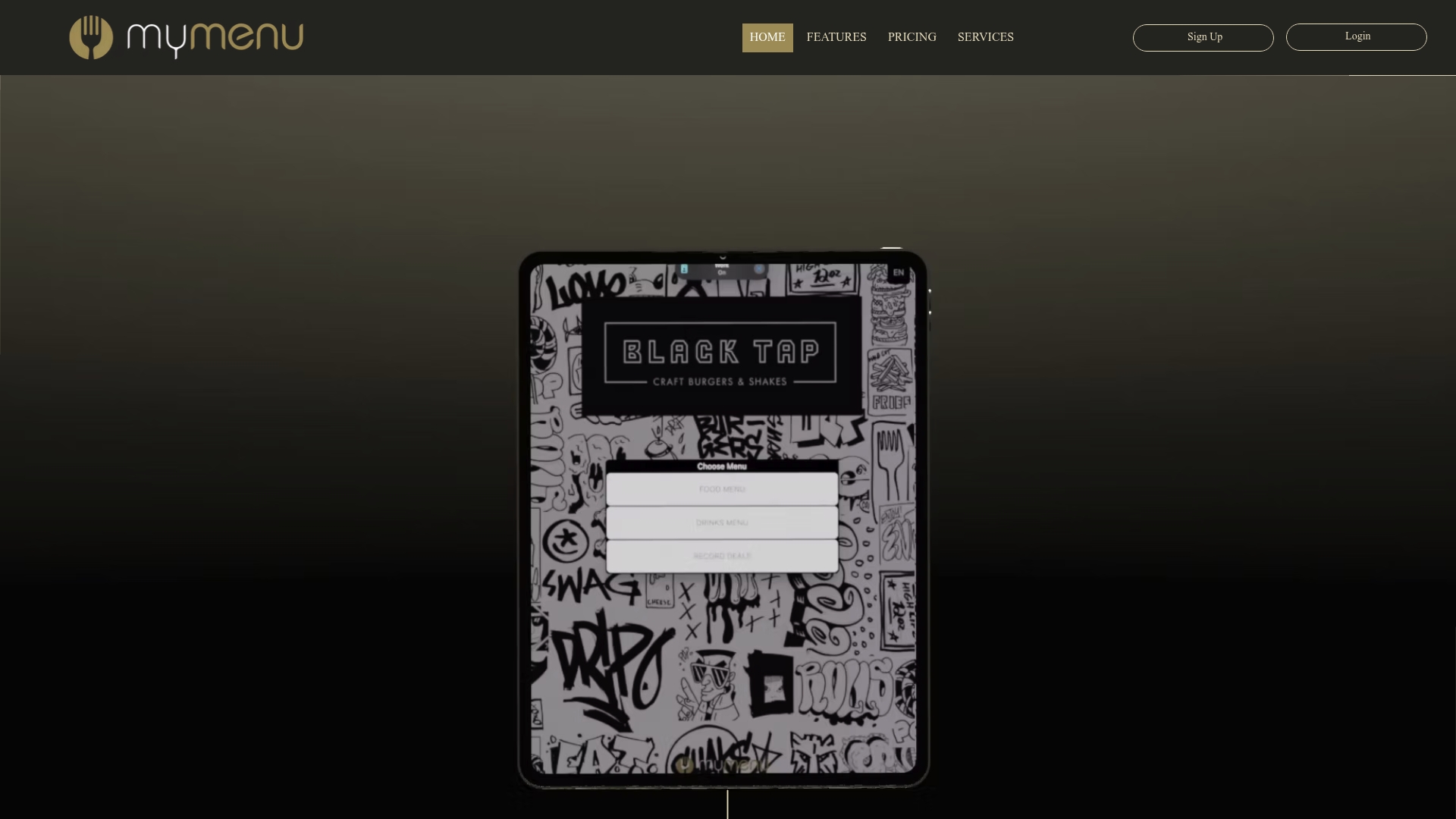
The vendor advertises a 30% sales lift from using multimedia menus. That claim sits alongside a broad feature set that includes QR menus without app downloads, tablet apps, and online ordering with no commission.
Mydigimenu targets restaurants, hotels, bars, and cafes that want contactless ordering plus guest marketing and analytics.
Core Features
QR code menu without app download for immediate guest access across smartphones and tablets.
Digital tablet menu app for iOS and Android that supports rich media and accessibility compliance with WCAG 2.1.
Online ordering with zero commission plus reservation management and order status digital signage.
Guest CRM with interaction tracking and feedback collection, campaign management, loyalty programs and mobile wallet stamp cards.
Multilingual and multi-currency support, nutrition facts display, crypto payment support, and integrations with POS, delivery portals and payment gateways.
Key Differentiator
Mydigimenu centres its presentation on high-quality autoplay food videos embedded directly in menus. The emphasis is not just decorative. Videos play across QR and tablet views to influence ordering choices and justify premium items.
That media-first approach is paired with editable menu layouts so staff can test which clips and thumbnails raise average check size.
Pros
High-quality food videos make premium pricing easier to present and shorten guest decision time by showing textures and portion size.
The backend is user friendly for nontechnical staff which reduces training time and hands-off menu updates during service.
Contactless options, accessibility compliance, and multilingual menus let you serve international guests and meet WCAG 2.1 targets.
Campaign management and CRM capture let you run targeted promos, collect feedback, and track repeat guest behavior without separate marketing tools.
Supports both crypto payments and mobile wallet loyalty which opens alternative payment flows and modern guest incentives.
Cons
The platform’s breadth can be overkill for very small independent restaurants; setup complexity and potential one time design fees add time and cost.
Notable Integrations
POS systems
Online delivery portals
Payment gateways
Who It’s For
Restaurants, cafes, bars and hotels planning to move beyond static PDF menus and wanting one system that handles QR menus, in house tablets, reservations, guest feedback and marketing.
It fits operations that can invest in media assets and minor setup work to get the most from the platform.
Unique Value Proposition
Online ordering with zero commission changes the math on direct sales. That capability plus built in campaign tools lets operators capture margin on delivery and reengage guests through targeted offers rather than relying on third party marketplaces.
For venues running frequent promos the commission saving combines with video driven upsell to improve per cover revenue.
Real World Use Case
A midscale restaurant adds QR menus at tables, uploads short autoplay dish videos, and links orders to the POS. Reservations flow into the same dashboard, and guests use the wallet stamp cards after checkout. The team tracks feedback and swaps low performing clips quickly.
Pricing
Plans start at $39 per month with tiered options based on venue size and features. There are one time setup fees for custom menu design and the vendor currently advertises a limited time free offer across plans.
Website: https://mydigimenu.com
me&u
At a Glance
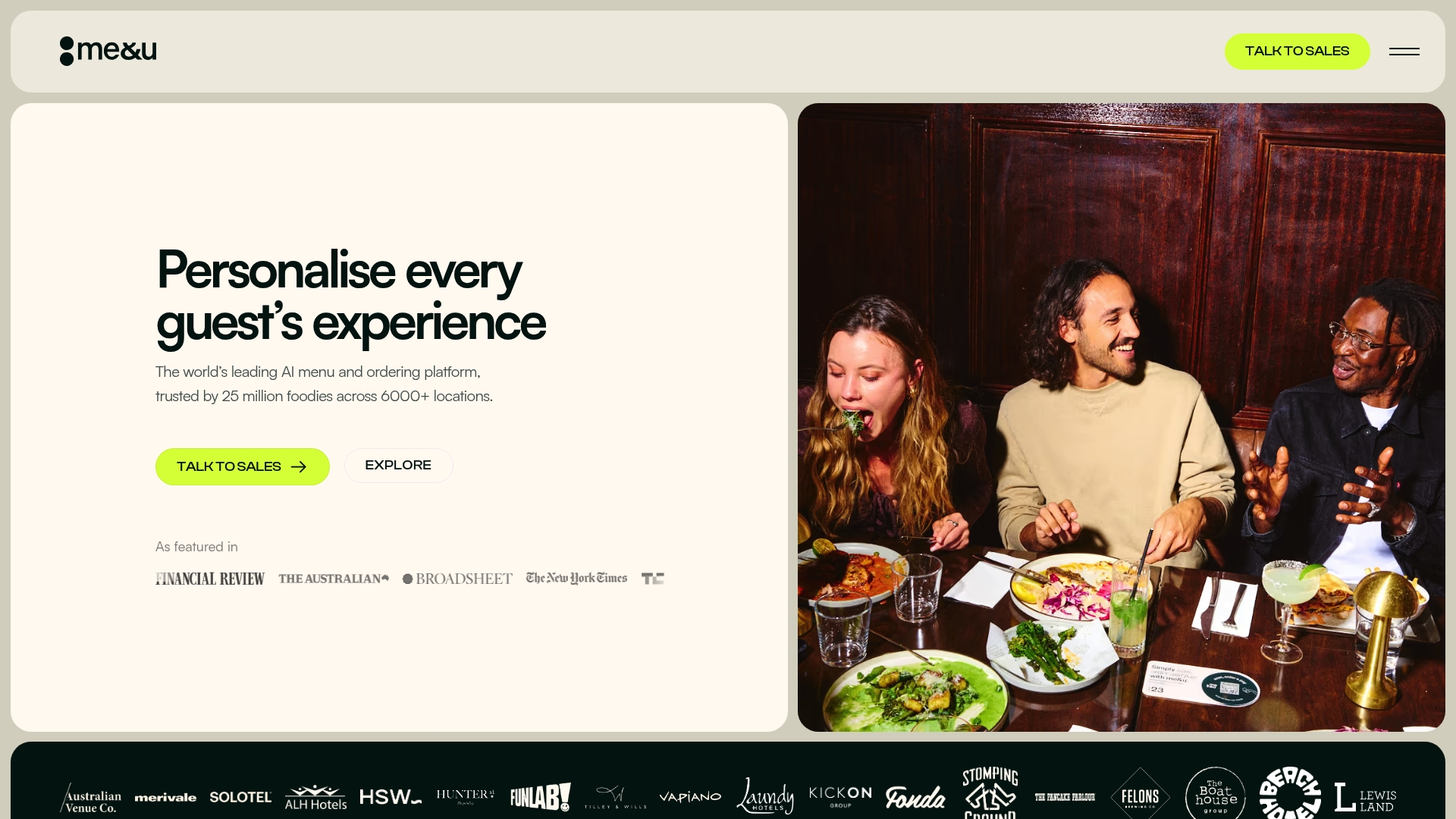
The vendor advertises that its AI personalization is driven by data from 25 million user profiles and billions of data points. That claim frames me&u as a data-first ordering system but third-party reviews report notable reliability and transparency issues.
Core Features
me&u offers several hospitality-focused capabilities, each aimed at guest-facing ordering and menu presentation.
AI personalization for menu recommendations and browsing.
Dynamic taste sorting and trending item displays to surface popular dishes.
High-quality images, multi-language support, and dietary and allergen information for accessibility.
API connections to POS, loyalty, CRM, and payment systems to fit existing stacks.
Key Differentiator
The product’s marketing centers on that 25 million data point to justify on-the-fly menu adjustments and tailored suggestions. For venues that want personalized reorder prompts and trending item placement, that data claim is the central selling point. Expect heavy reliance on algorithmic rules rather than static menus.
Pros
Personalization that aims to raise average check. The recommendation layer and taste sorting are designed to surface complementary items at the point of ordering.
Supports multiple service flows including order and pay, hybrid setups, multi-vendor marketplaces, and staff upsell flows, which makes it flexible for different venue formats.
Visual presentation is strong. High-resolution imagery and multi-language support help guest comprehension and can reduce order errors for complex menus.
Broad third-party connectivity. The product advertises compatibility with over 115 systems, letting operators reuse existing POS and loyalty systems without a full rip and replace.
Cons
Reliability concerns are frequent in user feedback. Reported order failures and navigation problems risk guest frustration in busy service periods.
Group and multi-party ordering flows can feel complex. Several venues describe the experience as confusing when splitting bills or managing shared orders.
Default tip selections and extra fees have caused customer complaints. The data cites confusing defaults that can erode trust at checkout.
Third-party review excerpts describe the interface as poor at times, which raises adoption friction among less tech-savvy guests.
When It May Not Fit
Avoid this solution for very high volume venues where milliseconds and fault tolerance matter. The reliability complaints above make it a poor match for quick service sites that cannot tolerate failed orders.
Who It’s For
Restaurants, bars, cafes, food halls, and multi-vendor venues that want AI-driven guest engagement and are prepared to manage vendor relationships and operational testing during rollout. Suitable for groups that already use modern POS and CRM systems and want advanced recommendation logic.
Real World Use Case
A large pub chain deployed me&u to personalize menus and push trending items across locations. The chain saw higher per-guest spending in targeted tests, but IT and floor managers reported intermittent order failures that required operational workarounds.
Pricing
Not applicable — informational only. The vendor does not publish a standard pricing tier in the provided data, so you should request a quote to learn seat counts, transaction fees, and any additional service charges.
Website: https://meandu.com.au
meandu.com (UK version)
At a Glance
The vendor advertises that its AI engine uses billions of data points across millions of consumer profiles to drive hyper-personalized dining recommendations. The UK edition pairs that claim with dynamic menus, multilingual support, dietary data, and broad third-party connectivity.
Core Features
AI personalized recommendations that adapt suggestions to guest taste and order history.
Dynamic taste sorting and trending-item logic to surface likely sellers per service period.
Order & Pay mobile ordering with built-in payments, plus high-quality photos and multi-language menus.
Dietary and allergen information is integrated for guest safety and labeling.
Key Differentiator
The claim above about billions of data points is the product’s stated differentiator. That dataset is meant to power hyper-personalized menus that change by guest, time of day, and location rather than using static, one-size-fits-all menus.
Pros
The vendor advertises being trusted by major brands and operating in many locations worldwide, which supports enterprise-level deployment narratives.
Offers extensive customization for menu layouts, visual assets, and guest touchpoints to match brand standards.
Powerful AI-driven personalization helps present higher-margin items to receptive guests at the point of choice.
Broad integrations reduce manual reconciliation by connecting orders and guest data to back-end systems.
The vendor presents case studies claiming measurable revenue uplift and stronger guest engagement.
Cons
Third-party reviews highlight recurring user experience problems, including slow or frustrating ordering flows that affect conversion.
Customers report a lack of transparency about fees, service charges, and receipt accuracy in some deployments.
Trustpilot and other negative reviews call out app usability and hidden charges, along with some privacy concerns.
When It May Not Fit
If your operation relies on extremely fast, high-volume table turnover or simple, predictable ordering flows, reported UX slowdowns may create friction at peak service. Sites needing fully documented, transparent fee models or guaranteed support SLAs should probe references and contracts carefully.
Notable Integrations
Point of Sale systems
Loyalty platforms
CRM tools
Payment processors
Customer data sources
These integration categories map to the platform’s focus on guest data and order routing without naming specific vendor partners.
Who It’s For
Hospitality groups, restaurant chains, and multi-location food venues that want an AI-forward menu and ordering layer and can accept variable user experiences in exchange for deep personalization and broad integration potential.
Real World Use Case
A restaurant chain deploys meandu.com to deliver personalized menus per guest profile, reducing perceived wait time and increasing average spend through targeted upsell. The vendor claims this configuration raised average check size in documented case studies.
Pricing
The product data lists pricing as “Not applicable — informational only.” No public pricing tiers are provided in the supplied information.
Website: https://meandu.com/gb
Comparative Analysis of Digital Menu Solutions
When analyzing alternatives to mydigimenu.com for digital menu and ordering software, we find a diverse range of features and strengths among competitors. This section explores key differentiators and areas where each platform excels or may face challenges, providing clarity on which solution best fits specific needs.
Media Presentation and Guest Engagement
mydigimenu.com emphasizes a rich media experience by incorporating high-quality autoplay food videos directly into menus. This approach is designed to boost guest interest and justify premium prices, offering a unique advantage for venues that prioritize visual content. Conversely, while me&u and meandu.com (UK version) support high-resolution imagery and dynamic sorting, they lack the integrated video-first strategy, opting instead for algorithmic personalization tailored to guest history and preferences.
Data Personalization and Algorithmic Insights
Both me&u and meandu.com stand out with their advanced AI-driven personalization models, using vast datasets to recommend items based on guest preferences and ordering trends. This capability can be advantageous for venues focusing on tailored experiences and upselling opportunities. However, reliability and user navigation concerns have been reported, potentially hindering operations during peak hours. mydigimenu.com, by contrast, provides a more consistent and user-friendly backend setup despite utilizing a straightforward recommendation infrastructure.
Best Fit Profiles
For venues seeking rich media engagement and direct influence on guest decisions through visual menus, mydigimenu.com is.
For establishments aiming to leverage AI-powered recommendations to increase average order value, consider me&u for its personalization engine.
For restaurants requiring a globally compatible solution with extensive customization options and multilingual support, meandu.com offers flexibility.
High-volume quick-service outlets that prioritize fault tolerance should favor mydigimenu.com for its stable operations.
Operations with legacy POS and CRM systems may benefit from me&u due to its broad integration capabilities.
Our Pick
We recommend mydigimenu.com for operations prioritizing visual engagement and intuitive setup due to its emphasis on multimedia menus and fault-tolerant design. Nevertheless, venues seeking advanced guest personalization or operating in high complexity environments might find me&u or meandu.com better suited to their specific requirements, acknowledging tradeoffs like implementation reliability and guest navigation ease.
Digital Menu and Ordering Systems Comparison
Choosing the right digital menu software can impact guest engagement, revenue, and operational efficiency across hospitality venues.
Product | Core Feature | Key Differentiator | Best For | Pricing | Notable Limitation |
Mydigimenu | QR menus app-free tablet menu apps | Autoplay food videos for menu upsell | Restaurants cafes hotels | Starting at $39/month | Overkill for very small independents |
me&u | AI personalization dynamic taste sorting | Guest data-driven menu adjustments | Multi-format hospitality venues | Not disclosed | Reliability concerns reported in user reviews |
meandu.com (UK) | AI recommendations multilingual accessibility | Hyper-personalized AI-powered menus | Restaurant chains multi-location | Not disclosed | Recurring UX problems and disclosed fee issues |
Discover a Powerful Alternative to meandu.com for Your Digital Menus
Choosing the right digital menu platform means addressing challenges like unreliable service, confusing ordering flows, and hidden fees. If these issues resonate with your experience considering meandu.com alternatives, Mydigimenu offers a reliable solution designed specifically for restaurants, cafes, bars, and hotels focused on contactless ordering and guest engagement. With features like high-quality food videos, no-commission online ordering, and multi-language support, Mydigimenu helps increase sales and boost customer loyalty while simplifying your daily operations.
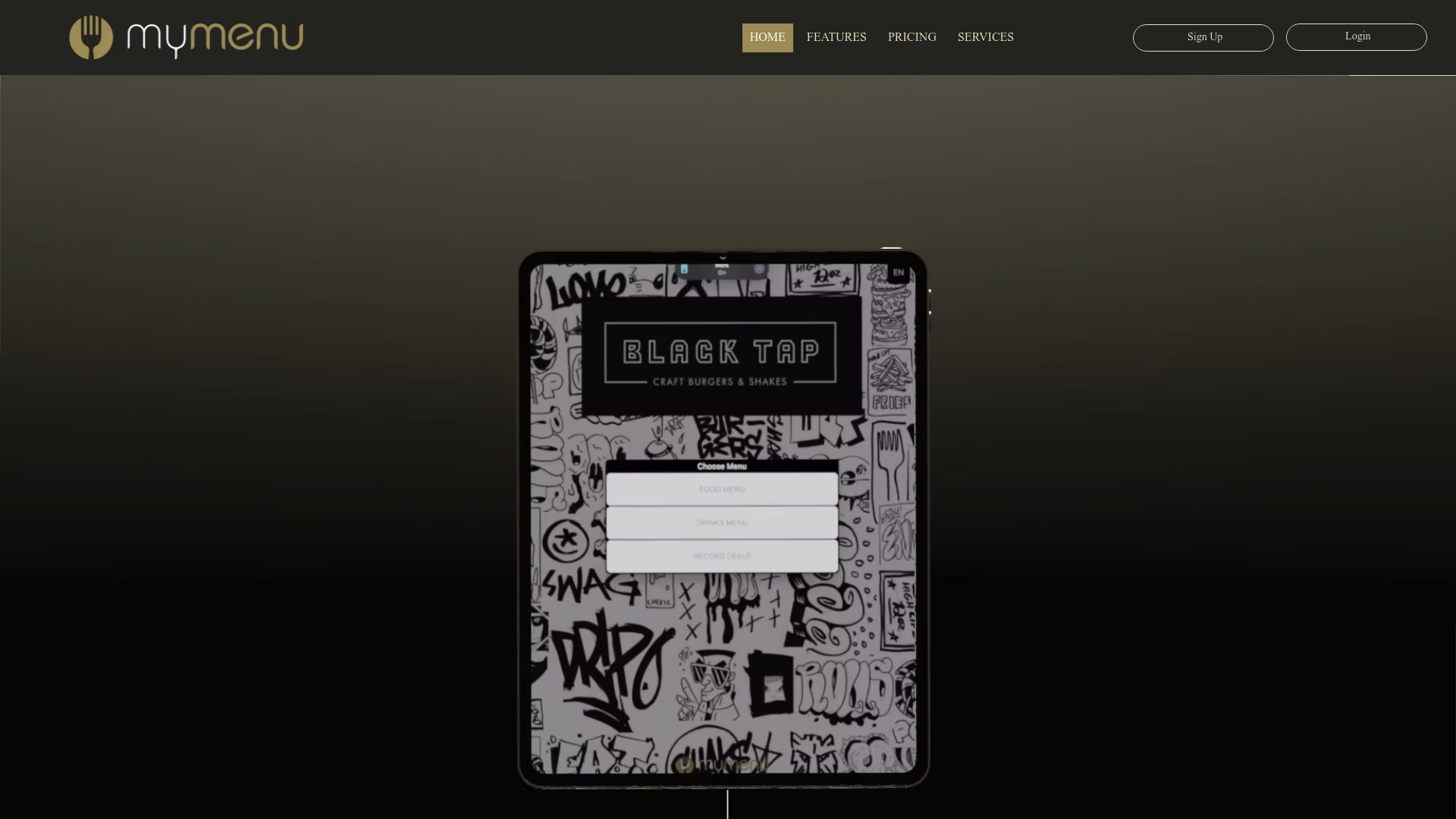
Explore how Mydigimenu’s intuitive menus and powerful guest marketing tools can transform your dining experience. Visit Mydigimenu to see how easy it is to launch contactless service that works smoothly every day. Customize your menu layouts and start capturing guest feedback with tools built for hospitality operators. Act now to reduce order errors and grow revenue with richer guest interactions.
Frequently Asked Questions
What unique features does Mydigimenu offer to enhance guest ordering?
Mydigimenu provides high-quality autoplay food videos directly embedded in its menus, which help justify premium pricing and shorten decision times for guests. This feature sets it apart by allowing operators to influence guest choices effectively with rich media presentations. Consider using Mydigimenu to enhance your menu engagement and potentially increase average check sizes.
How does Mydigimenu compare to me&u in terms of AI personalization?
me&u leverages extensive user data for targeted AI personalization, which is aimed at enhancing guest engagement with tailored menu recommendations. While me&u excels in providing dynamically personalized suggestions, Mydigimenu focuses on multimedia inclusion, which can appeal more to venues looking for visual engagement over pure data-driven recommendations. Choose between the two based on whether you prioritize engaging visual content or personalized menu interactions.
Which platform offers commission-free online ordering?
Mydigimenu supports online ordering with zero commission, allowing operators to capture more margin from direct sales without relying on third-party marketplaces. This feature is particularly beneficial for venues that frequently run promotions or seek to enhance direct sales profitability. For restaurant owners prioritizing cost-effectiveness in online sales, Mydigimenu is an excellent fit.
Can I effectively use Mydigimenu in a very small restaurant?
Mydigimenu’s comprehensive features may be overwhelming for very small independent restaurants, as the setup complexity can introduce challenges and potential costs for customization. If you’re a smaller operation looking for a more straightforward solution, consider the simplicity of alternative platforms better suited for limited menus and less intricate setups.
What is the pricing structure for Mydigimenu?
Mydigimenu’s plans start at $39 per month, with tiered options tailored to venue size and features. This pricing allows for flexibility depending on the needs of your establishment, making it accessible for different restaurant scales. Be prepared to account for one-time setup fees for custom menu designs as part of your budgeting.
Recommended
Điều mình đánh giá cao khi sử dụng mb66 là nền tảng không chỉ có nhiều chuyên mục mà còn biết cách kết nối chúng. Mình bắt đầu từ xổ số siêu tốc rồi chuyển sang slot tại sảnh MG và gần như không gặp khó khăn khi thao tác. Giao diện được thiết kế đơn giản nhưng đủ trực quan để tìm kiếm nội dung nhanh chóng. Theo mình, một bố cục hợp lý sẽ giúp người dùng cảm thấy dễ chịu hơn trong quá trình sử dụng lâu dài.