
What Is Digital Upselling? A Guide for Hospitality Pros
- Abhi Bose
- 2 days ago
- 8 min read

TL;DR:
Digital upselling guides guests to choose higher-value versions of products, increasing revenue without new traffic. It is most effective on post-purchase confirmation screens, where acceptance rates reach 15–25 percent. Keeping offers simple, relevant, and well-placed helps hospitality businesses boost average order values quickly.
Digital upselling is the practice of guiding guests to choose a higher-value or upgraded version of something they already plan to buy, increasing average order value without requiring more traffic or new customers. In hospitality, this technique is the industry standard for growing revenue from existing guests. Digital upselling accounts for 10–30% of total e-commerce revenue, and restaurants, bars, and hotels that apply it consistently see meaningful gains in both sales and guest satisfaction. Unlike cross-selling, which promotes complementary products, upselling focuses on a better version of the same choice. A guest ordering a house wine gets a recommendation for the reserve pour. A diner choosing a standard steak sees the dry-aged upgrade front and center. That distinction matters because the psychology, placement, and timing of each technique differ significantly.
What are the primary digital upselling strategies in hospitality?
The most effective digital upselling strategies in hospitality share one quality: they feel like helpful guidance, not a sales push. Guests who feel guided toward a better experience accept upgrades willingly. Guests who feel pressured leave frustrated.
The three foundational strategies are tier anchoring, order bumps, and post-purchase offers. Each works differently and suits different moments in the guest journey.
Tier anchoring uses a good-better-best model to frame choices. A digital menu that shows a standard burger, a premium burger, and a wagyu burger side by side naturally draws attention to the middle or top option. The standard item anchors the price; the premium item looks like a reasonable step up. This is why menu upselling strategies built around visual hierarchy consistently outperform text-only menus.
Order bumps appear at the point of decision, typically just before a guest confirms their order. A well-placed bump on a digital ordering screen might suggest adding a dessert, a premium side, or a cocktail pairing. The key is relevance. An order bump for a chocolate lava cake works when a guest has already selected a main course. The same offer shown at the start of the session feels random and gets ignored.
Post-purchase upsells arrive after the guest has committed to an order. A confirmation screen that offers a complimentary dessert at a reduced price, or a loyalty point bonus for adding a drink, catches guests at a moment of high receptivity.
Keep upsell offers to one or two options per moment. More choices reduce acceptance rates.
Match the upgrade to what the guest already selected. A seafood diner does not need a meat upgrade.
Use high-quality food photography or video to make the premium option visually compelling.
Set price differences within a range guests perceive as fair, typically under 30% above the base item.
Test one strategy at a time so you can measure what actually moves the needle.
Pro Tip: Place your strongest upsell offer on the item confirmation screen, not the main menu page. Guests who have already made a choice are far more open to adding value than guests still browsing.
How do digital upselling placements affect conversion rates?
Placement determines whether a guest accepts or ignores an upsell offer. The same offer in the wrong location converts at a fraction of its potential.
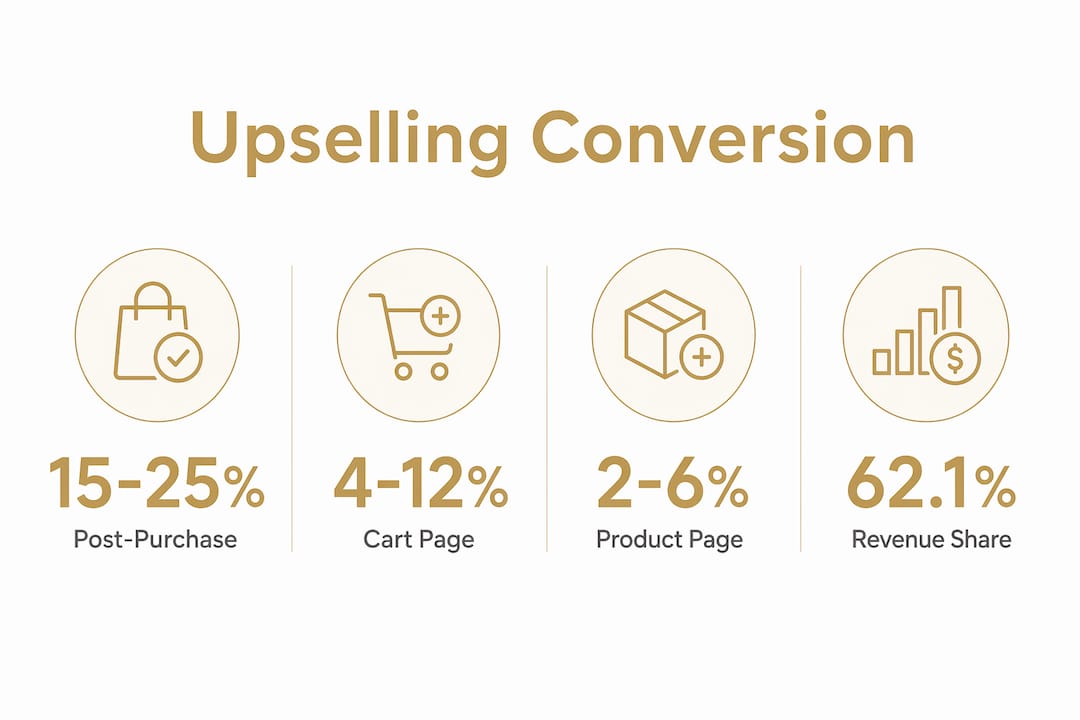
Conversion rates by placement follow a clear pattern: product pages convert at 2–6%, cart pages at 4–12%, and post-purchase confirmation pages at 15–25%. That gap is not accidental. Post-purchase upsells work because the guest has already committed to spending. Payment friction disappears the moment a transaction is confirmed, making one-click add-ons feel effortless rather than costly.
Placement | Typical conversion rate | Why it works |
Product or menu item page | 2–6% | Guest is still deciding; commitment is low |
Cart or order review page | 4–12% | Guest is close to buying; relevance is higher |
Post-purchase confirmation | 15–25% | Transaction is done; no payment friction remains |
About 62.1% of upsell revenue comes from post-purchase offers. That figure reframes where hospitality operators should focus their energy. Most restaurants spend the most effort on menu design and almost none on the confirmation screen. Reversing that priority is one of the fastest ways to lift revenue per guest.
For a restaurant using a digital ordering system, the confirmation screen after an order is placed is prime real estate. A message that reads “Add a scoop of truffle butter to your steak for $3?” converts at rates that dwarf any banner on the main menu page. The offer is specific, the price delta is small, and the guest is already in a spending mindset.
Pro Tip: If your digital ordering platform supports it, configure your post-purchase screen to show one single offer, not a carousel of options. One clear choice converts better than three competing ones.
What psychological principles impact digital upselling success?
Guest psychology drives upsell acceptance more than price or product quality alone. Understanding a few core principles helps hospitality professionals design offers that feel natural rather than forced.
Perceived value is the foundation. Framing an upsell as a helpful recommendation rather than a pitch improves conversion. A server who says “Most guests who order the salmon also enjoy our reserve Chardonnay” is offering guidance. A screen that says “UPGRADE NOW FOR ONLY $5 MORE” is selling. Guests respond to the first and resist the second.
Price delta thresholds matter more than most operators realize. When the price difference between the base item and the upgrade exceeds 25–50% of the original price, acceptance rates drop by 5–15%. A $12 cocktail upgrade on a $10 beer feels steep. A $2 upgrade on the same beer feels like a no-brainer. Keeping the delta small and the benefit clear is the simplest way to improve acceptance.
The paradox of choice is the most underestimated factor. Too many upsell options reduce conversions because guests freeze when faced with too many decisions. A two-path comparison, standard versus premium, with a price difference under 30%, outperforms a menu of five upgrade options every time. Simplicity is not a design preference. It is a revenue strategy.
Frame every offer around guest benefit, not restaurant profit.
Keep price differences small and clearly justified by the upgrade.
Limit options to two at any single decision point.
Avoid upselling on every item. Selectivity makes offers feel curated, not aggressive.
Build trust first. Guests who feel well-served accept upgrades more readily.
Pro Tip: Phrase upsell offers in the language of experience, not transaction. “Guests love pairing this with our house-smoked old fashioned” outperforms “Add a drink for $9.”
How can hospitality businesses implement digital upselling effectively?
Practical implementation separates operators who talk about upselling from those who profit from it. The process is straightforward when broken into clear steps.
Start with one upsell tier. Pick your highest-margin item in one category and create a clear premium version. A standard latte becomes a specialty single-origin latte. A house cocktail becomes a premium spirits version. One clear upgrade is easier to test and measure than a full menu overhaul.
Add one order bump. Choose a single item that pairs naturally with your most popular dish or drink. Place it on the order confirmation step, not the browsing screen. Track how many guests accept it over two weeks before changing anything.
Set up one post-purchase offer. Use your digital ordering system’s confirmation screen to present a single, low-friction add-on. A dessert, a loyalty stamp, or a complimentary upgrade for a small fee all work well here.
Use analytics to measure impact. Track average order value before and after each change. Stores using multiple upselling techniques see 20–35% AOV lifts within 60 days. Hospitality businesses that measure consistently reach those numbers faster than those that guess.
Align offers with guest intent. Advanced upselling maps offers to specific customer profiles and order patterns, ensuring upgrades match what the guest actually wants rather than what the kitchen needs to move. A guest who orders vegetarian dishes every visit does not need a meat upgrade recommendation.
Integrate upsells into your digital menu platform. Platforms like Mydigimenu allow operators to place upsell prompts directly within digital tablet and QR menus, making offers visible at exactly the right moment without requiring staff intervention.
Iterate based on data. Starting with one order bump, one upgrade tier, and one post-purchase offer is the recommended approach. Add complexity only after you have measured what works. Operators who add five upsells at once cannot tell which one drove results.
Upselling also generates additional revenue without extra inventory costs, which is especially valuable in hospitality where margins are tight. A well-placed digital upsell costs nothing to deliver and adds directly to the bottom line.
Key Takeaways
Digital upselling is the single highest-return revenue tactic available to hospitality operators because it increases order value from guests already committed to spending.
Point | Details |
Definition matters | Digital upselling targets higher-value versions of chosen items; cross-selling targets complementary ones. |
Placement drives results | Post-purchase confirmation screens convert at 15–25%, far above product or cart page offers. |
Psychology over price | Keep price deltas under 30% and limit options to two per decision point to maximize acceptance. |
Start simple | One upgrade tier, one order bump, and one post-purchase offer is the proven starting framework. |
Measure everything | Track average order value before and after each change to identify what actually works. |
The upsell that feels like hospitality, not sales
I have watched operators add five upsell prompts to their digital menus overnight and then wonder why guest satisfaction scores dipped. The problem is never the upsell itself. The problem is relevance and restraint.
The best upselling I have seen in hospitality looks nothing like upselling. It looks like a knowledgeable server who knows what you ordered last time and suggests something you will genuinely enjoy more. When that same intelligence is built into a digital menu, through order history, guest profiles, and smart placement, the result feels like personalized service rather than a sales tactic.
The goal of digital upselling is to deepen the guest relationship by offering better solutions, not just bigger checks. Operators who internalize that distinction build loyal guests who return. Operators who treat upselling as a revenue extraction tool eventually see it in their reviews.
My recommendation for any hospitality professional reading this: start with one offer, make it genuinely good, and measure the result before adding more. A single well-placed upsell that converts at 20% beats ten mediocre ones that annoy guests every time. You can find practical framing advice in these restaurant upselling tips that keep the guest experience front and center.
— Abhi
How Mydigimenu brings digital upselling to life
Mydigimenu is built for exactly the kind of upselling this article describes. Its digital tablet and QR menu platform places upsell prompts at the moments that convert best, on item confirmation screens, at the cart step, and on post-order pages, without requiring any staff involvement.
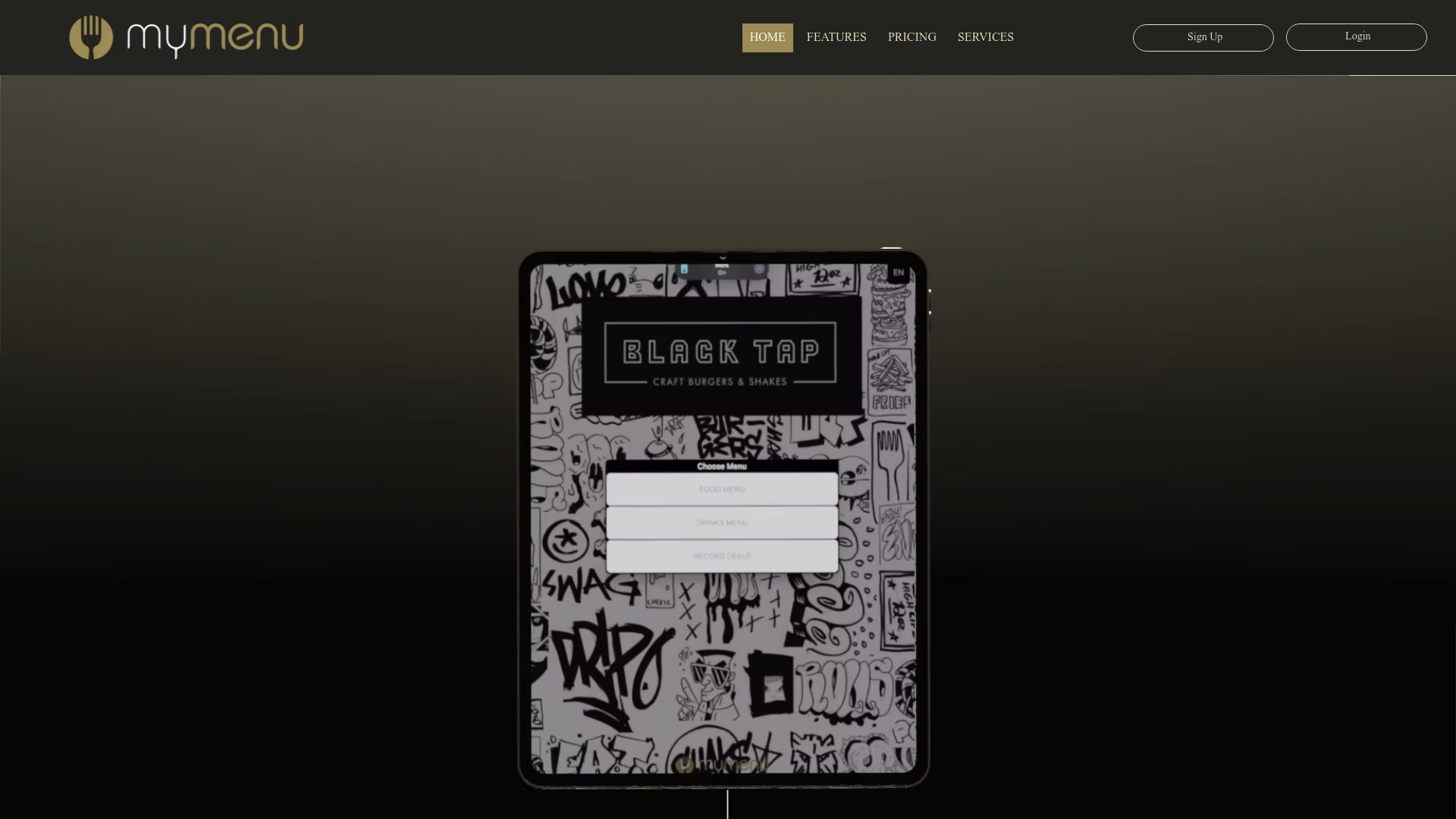
The platform supports high-quality food photography and video to make premium options visually irresistible. CRM integration means offers can be tailored to returning guests based on their order history. For operators ready to see what their menus can do, Mydigimenu’s pricing plans include options for restaurants, cafes, bars, and hotels of every size. A dash of digital can turn an ordinary order into an extraordinary experience, and a meaningfully higher check average.
FAQ
What is digital upselling in simple terms?
Digital upselling is the practice of encouraging a customer to choose a higher-value or upgraded version of a product they already intend to buy. In hospitality, this might mean suggesting a premium cocktail instead of a house pour, or a larger portion for a small additional fee.
How is upselling different from cross-selling?
Upselling promotes a better version of the same item; cross-selling promotes a different, complementary item. A premium steak upgrade is an upsell. Adding a side salad to a steak order is a cross-sell.
What is the best placement for a digital upsell offer?
Post-purchase confirmation pages convert at 15–25%, making them the most effective placement. Guests who have already committed to an order face no payment friction and accept add-ons at significantly higher rates than guests still browsing.
How many upsell options should I show at once?
Show no more than two options at any single decision point. The paradox of choice means more options reduce acceptance rates. A clear standard-versus-premium comparison with a price difference under 30% produces the best results.
How quickly can digital upselling affect revenue?
Businesses using multiple upselling techniques consistently see average order value lifts of 20–35% within 60 days. Starting with one clear upgrade tier and one post-purchase offer is the fastest path to measurable results.
Recommended
Comments