
The Role of Guest Profiles in Hospitality Explained


TL;DR:
Guest profiles centralize guest contact, stay history, preferences, and behavior to enhance personalization and trust. Maintaining clean, unified profiles enables targeted marketing, seamless service, and increased revenue, while fragmented data risks errors and compliance issues. Technology like PMS, CRM, and CDP systems supports profile management, with proper deduplication and staff training essential for effectiveness.
Guest profiles are centralized records that store a guest’s contact details, stay history, preferences, and behavioral data to power personalization and business growth in hospitality. The role of guest profiles in hospitality has shifted from a nice-to-have feature to a core operational requirement. Properties that maintain clean, unified profiles deliver faster recognition, more relevant service, and stronger loyalty outcomes. Those that neglect them face fragmented data, service failures, and compliance risks that erode guest trust.
What data is collected in guest profiles and why it matters
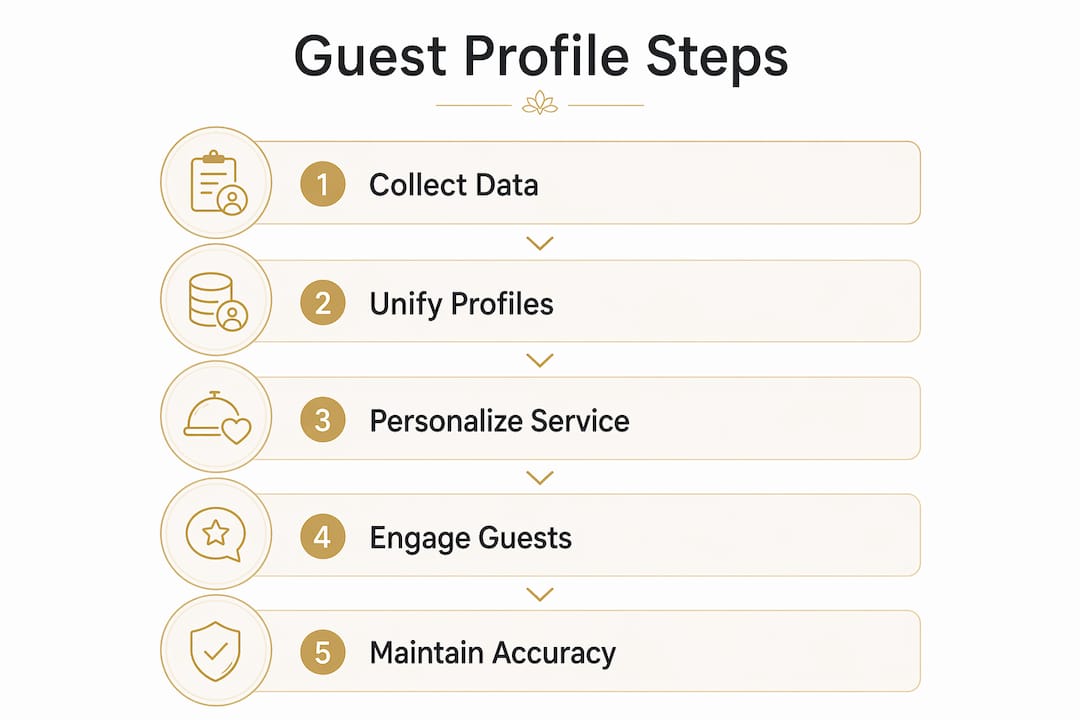
Guest profiles store five core categories of data: contact information, booking history, stated preferences, behavioral patterns, and loyalty status. Each category serves a different operational purpose. Contact data enables direct communication. Booking history reveals stay frequency and spend levels. Preferences guide room setup and dining choices. Behavioral patterns inform upsell timing. Loyalty status determines recognition tier and benefit delivery.

The quality of that data matters as much as its volume. Fragmented guest data leads to operational failures such as missing VIP service notes or failing to apply negotiated rates. A single guest can accumulate 3–4 separate entries across booking channels, each holding a different slice of the full picture.
Duplicate profiles create more than inconvenience. Poor data hygiene poses real privacy regulation risks, particularly when a guest opts out of marketing on one profile but remains active on a duplicate. That gap exposes a property to legal liability and reputational damage.
Contact information: Personal email, phone, and address for direct outreach and identity matching
Booking history: Dates, room types, rates, and channels used across all stays
Preferences: Room location, pillow type, dietary restrictions, and amenity requests
Behavioral data: Spa visits, restaurant spend, activity participation, and checkout timing
Loyalty status: Tier, points balance, redemption history, and communication consent
Pro Tip: Capture a guest’s personal email at every touchpoint. OTA-generated alias emails fragment profiles and make long-term identity matching nearly impossible.
How do unified guest profiles drive personalization and engagement?
A unified guest profile is the difference between a property that greets a returning guest by name with their preferred room ready and one that treats every arrival like a first visit. Clean guest profiles are the foundation of meaningful personalization, loyalty, and operational reliability in hotels. That foundation supports every department that touches the guest.
The personalization enabled by consolidated profiles works across four operational areas:
Front desk: Staff see arrival preferences, previous complaints, and loyalty tier before the guest reaches the counter, enabling proactive recognition.
Housekeeping: Room setup reflects documented preferences, from pillow firmness to allergy-safe products, without the guest needing to ask again.
Marketing: Segmented campaigns reach the right guests with the right offers based on actual behavior, not broad demographic assumptions.
Revenue management: Spend history and booking patterns inform dynamic pricing and upsell timing for each individual guest.
The revenue impact of this personalization is concrete. Adopting a clean, single-view guest record architecture can produce double-digit percentage gains in email revenue per subscriber through better-targeted campaigns. That gain comes directly from knowing which guests respond to which offers.
“Incomplete guest data creates zero margin for error, making high-level service and loyalty building impossible.” — Hospitality Net
Unified profiles also shift the booking relationship. Unified guest profiles enable hotels to convert OTA-booked guests into direct booking relationships through post-stay automated outreach. Direct bookings reduce commission costs and increase guest lifetime value over time. The profile is the mechanism that makes that conversion possible.
Understanding customer engagement in hospitality requires seeing guest profiles not as a database feature but as the engine behind every personalized interaction a property delivers.
What technologies build and maintain unified guest profiles?
Three technology layers support guest profile management in hospitality: the Property Management System (PMS), the Customer Relationship Management system (CRM), and the Customer Data Platform (CDP). Each plays a distinct role, and confusing them leads to gaps in data quality.
The PMS is the operational core. The PMS is evolving into the layer where raw transactional data transforms into guest intelligence, offering competitive advantage through personalized service. It records every stay, charge, and service interaction. A modern PMS does not just store that data. It surfaces it to staff at the moment of service.
The CRM handles communication and relationship history. It tracks email campaigns, guest feedback, and loyalty interactions. The limitation of a traditional CRM is that it operates in isolation from the PMS and point-of-sale systems. That isolation creates the fragmentation that undermines personalization.
The CDP solves that problem. Transitioning from a traditional CRM to a Customer Data Platform allows normalization of data across fragmented systems into a single source of truth, enabling behavior-based revenue management. A CDP integrates the PMS, POS, and booking engine into one unified record per guest.
Technology | Primary function | Key limitation without integration |
PMS | Records stays and transactions | Siloed from marketing and CRM data |
CRM | Manages communication and loyalty | Lacks real-time operational data |
CDP | Unifies all data sources | Requires clean input data to function |
Deduplication is the maintenance practice that keeps these systems accurate. Profile deduplication requires a hybrid approach where exact matches are automated but uncertain matches need human review. Automating every merge risks combining two distinct guests into one record, a failure that is especially damaging for VIP accounts.
Pro Tip: Run a deduplication audit quarterly. Automated rules handle clear matches, but assign a trained staff member to review low-confidence cases before any merge is confirmed.
Practical steps for effective guest profile management
Building accurate guest profiles starts at the first point of contact. Capturing a primary unique identifier like a guest’s personal email during booking or check-in is the most effective way to consolidate profiles over OTA-generated alias emails. That single action prevents the fragmentation that makes every downstream process harder.
Effective guest profile management follows a consistent set of practices across the property:
Capture personal contact details at booking and check-in. Ask for a direct email and phone number regardless of the booking channel.
Automate high-confidence profile merges. Use deterministic rules for exact name and email matches to reduce manual workload.
Assign human review to ambiguous cases. Low-confidence duplicates need a trained eye before merging, especially for VIP or corporate accounts.
Train front desk and reservations staff to update profiles in real time. A preference noted during a stay should be recorded before the guest checks out.
Centralize consent management. Marketing opt-outs must apply across all profile instances, not just the one used for the most recent campaign.
Audit OTA data regularly. Third-party bookings often arrive with proxy emails and incomplete fields. Flag these for follow-up during or after the stay.
The most common failure in guest profile management is treating data collection as a one-time setup task. Profiles decay. Guests change email addresses, travel preferences, and loyalty status. A profile that was accurate two years ago may now route communications to an abandoned inbox or flag an outdated dietary restriction. Regular review cycles keep the data useful.
Customer retention strategies built on accurate guest data consistently outperform broad-based loyalty programs. The difference is specificity. A guest who receives an offer tied to their actual behavior is far more likely to return than one who receives a generic discount.
Key Takeaways
Clean, unified guest profiles are the single most important data asset a hospitality property can maintain for personalization, compliance, and revenue growth.
Point | Details |
Data quality over volume | Fragmented or duplicate profiles cause service failures and compliance risks more than missing data does. |
CDP beats standalone CRM | A Customer Data Platform unifies PMS, POS, and booking data into one actionable guest record. |
Capture personal email first | A direct email at check-in is the most effective way to prevent profile fragmentation from OTA bookings. |
Deduplication needs human review | Automate exact matches but assign trained staff to ambiguous cases before merging any profile. |
Profiles drive direct bookings | Unified guest data enables post-stay outreach that converts OTA guests into direct booking relationships. |
Why I think most hotels are sitting on wasted gold
After spending years watching hospitality teams invest in new technology and still deliver inconsistent guest experiences, I’ve come to one conclusion: the problem is almost never the software. It’s the data going into it.
Properties spend significant budget on PMS upgrades and CRM platforms, then populate them with duplicate entries, OTA alias emails, and preferences that were last updated three years ago. The technology works exactly as designed. The data does not.
What I find most telling is how rarely guest profile management appears in staff training programs. Front desk teams learn check-in procedures and upsell scripts. Almost none of them receive structured training on why capturing a personal email matters or how to flag a profile discrepancy. That gap is where personalization dies.
The hotels that genuinely excel at guest experience treat their guest database as a living asset, not a system record. They audit it, they train around it, and they hold departments accountable for keeping it current. That discipline is not glamorous. But it is what separates a property that remembers you from one that asks for your preferences every single visit.
The future belongs to properties that treat real-time behavioral data as a service tool, not just a marketing asset. That shift requires clean profiles as the starting point. Without them, even the most advanced personalization technology delivers generic results.
— Abhi
Mydigimenu and the guest engagement advantage
Knowing your guests is only half the equation. Acting on that knowledge at the moment of service is where the real value appears.
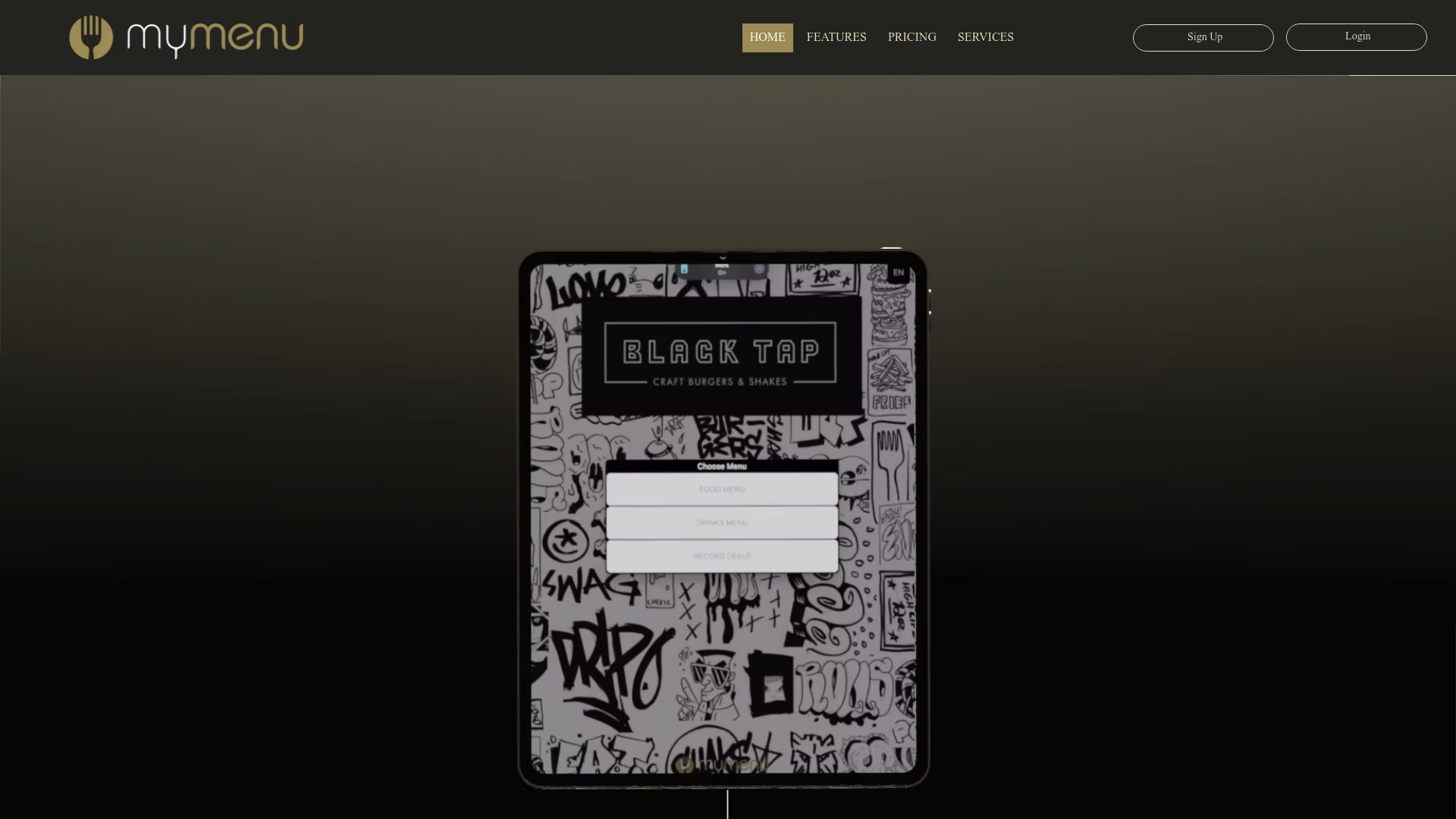
Mydigimenu gives hospitality teams a digital menu platform that connects guest profile insights directly to the dining experience. Through QR code menus, tablet ordering, and social login-based guest profile capture, Mydigimenu collects preference data at the point of interaction and feeds it into CRM and loyalty workflows. Personalized upselling, targeted campaigns, and digital guest feedback collection all operate from a single platform. For properties ready to put their guest data to work, Mydigimenu offers a practical starting point. Explore current pricing options to see which plan fits your operation.
FAQ
What is a guest profile in hospitality?
A guest profile is a centralized record containing a guest’s contact details, stay history, preferences, behavioral data, and loyalty status. Hotels use these records to personalize service, target marketing, and improve operational efficiency.
Why does guest profile data quality matter so much?
Fragmented or duplicate profiles cause service failures, such as missed VIP notes or incorrect rates, and create marketing compliance risks when opt-out preferences are not applied uniformly across all records.
What is the difference between a CRM and a CDP for hotels?
A CRM manages communication and loyalty history, while a Customer Data Platform integrates the PMS, POS, and booking engine into one unified guest record that supports behavior-based personalization and revenue management.
How do guest profiles support direct bookings?
Unified guest profiles enable automated post-stay outreach to OTA-booked guests, building a direct communication relationship that reduces commission costs and increases guest lifetime value over time.
What is the best way to prevent duplicate guest profiles?
Capturing a guest’s personal email at booking or check-in is the most effective prevention method. For existing duplicates, use deterministic rules to automate exact matches and assign trained staff to review ambiguous cases before merging.
Recommended
Comments