
Unlock guest engagement: the power of rich media in digital menus

TL;DR:
Rich media, including photos and videos, transforms digital menus into powerful sales tools by reducing uncertainty and increasing guest engagement. Implementing dynamic updates and strategic placement of rich media significantly boosts sales, improves order accuracy, and lowers operational costs. To maximize results, menus should prioritize authenticity, clear merchandising goals, and data-driven content updates for continuous improvement.
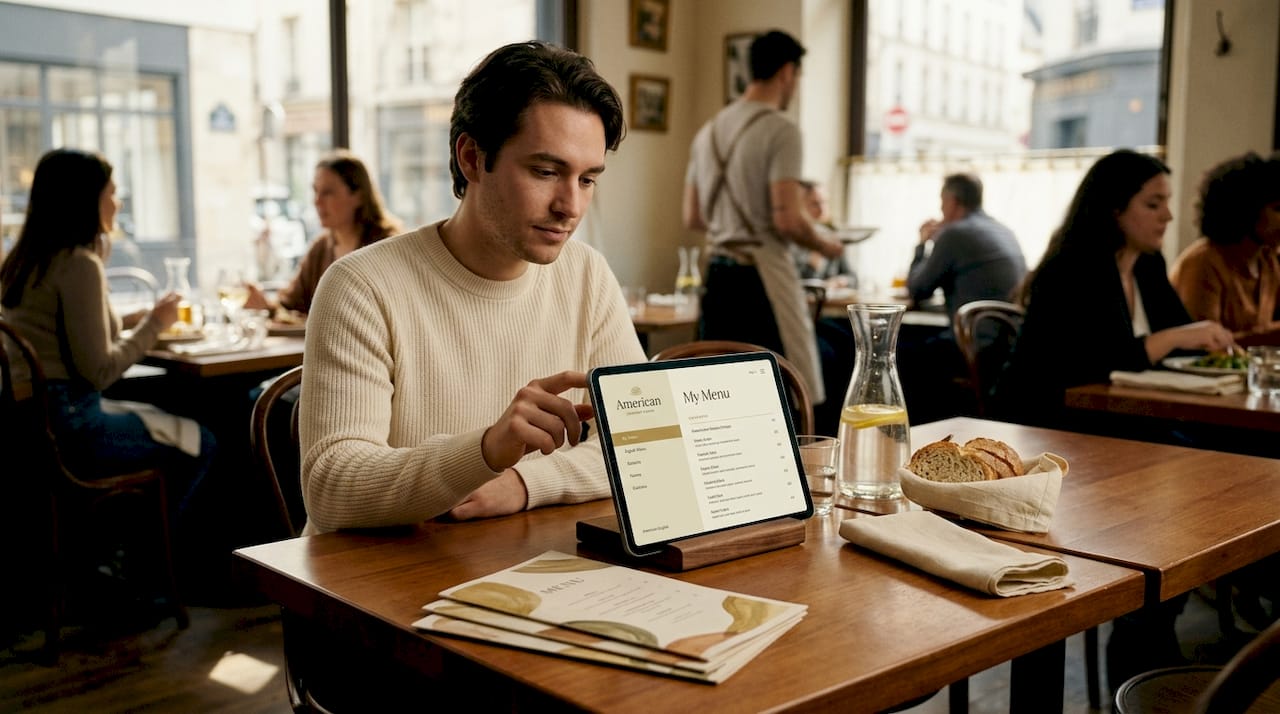
Imagine a guest scanning your menu and pausing, genuinely captivated, as a sizzling close-up video of your signature dish plays across their screen. That moment is not luck. It is strategy. Ordering decisions improve dramatically when dishes are made concrete and visual uncertainty disappears. Restaurants and cafes that still rely on text-only menus are leaving real revenue on the table, not because the food is not good, but because the menu is not working hard enough. This article shows you exactly how rich media transforms your menu into your most powerful sales tool.
Table of Contents
Key Takeaways
Point | Details |
Rich media increases sales | Digital menus with photos and videos boost conversions and average order value. |
Dynamic content drives efficiency | Real-time updates reduce labor costs and improve order accuracy compared to static menus. |
Strategic placement is critical | Featured items, visual hierarchy, and targeted upsell prompts maximize rich media impact. |
Proactive updates build trust | Ensuring your menu media matches reality prevents guest disappointment and enhances credibility. |
What is rich media in menus and why does it matter?
Menus have always been more than item lists. They are the first moment your kitchen gets to speak directly to a guest’s appetite. But a plain text description of “pan-seared salmon with lemon butter” does far less persuasive work than a high-resolution photo or a brief, mouthwatering video clip of the same dish arriving at a beautifully lit table.
Rich media is the collective term for any content that goes beyond static text. In the context of digital menus, this means:
High-resolution food photography that captures color, texture, and portion size
Short video clips or loops showing dishes being prepared or plated
Animated graphics such as “Chef’s Pick” badges or “Limited Time” ribbons that pulse and catch the eye
Interactive elements like expandable ingredient lists, allergen filters, and nutritional breakdowns
Dynamic overlays including real-time “Sold Out” banners or countdown timers for happy hour offers
Each of these elements replaces a static, text-based line with a visual decision cue. That shift matters enormously because guests make ordering choices quickly, often within the first 90 seconds of opening a menu. When browsing feels like an adventure rather than a chore, guests spend more time exploring and more money ordering.
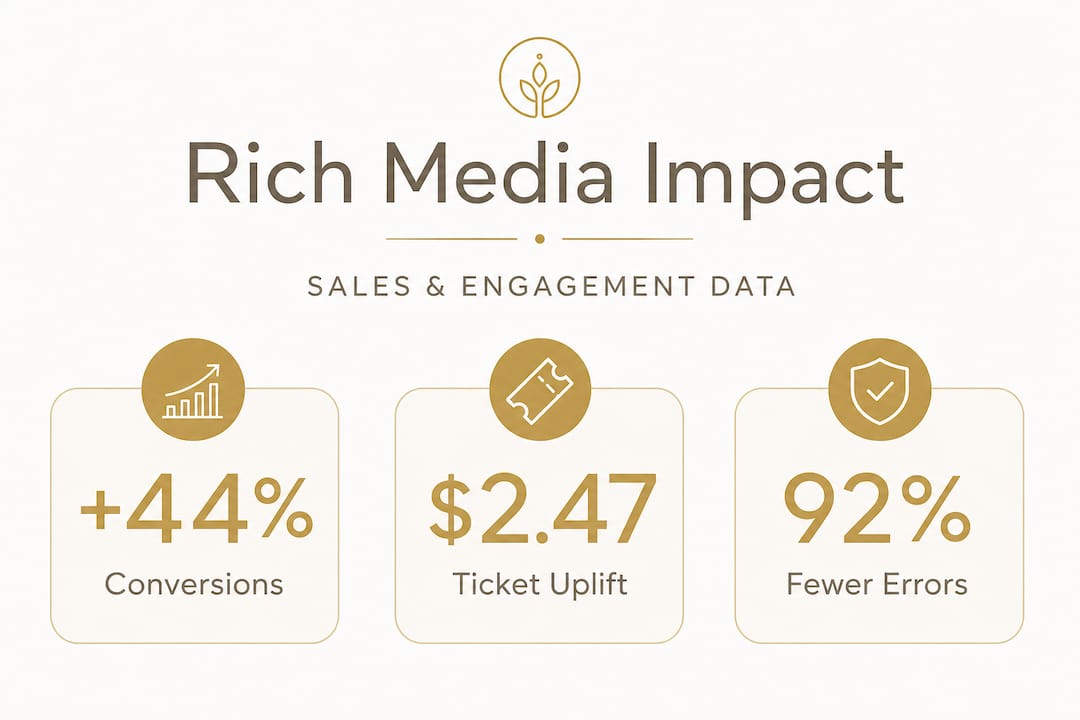
The numbers reinforce this reality. Menus supported by food images that shape choices consistently convert 25 to 44 percent more than text-only alternatives. Dynamic featured items can also reduce perceived wait times by up to 35 percent, because engaged guests simply do not notice the clock as much. Explore how video menus in hospitality elevate this effect even further by bringing the full sensory experience of a dish to life before it ever leaves the kitchen.
“Rich media, especially photography and video, makes dishes more concrete and reduces the uncertainty that causes menu hesitation. When guests feel confident, they order more freely and with greater satisfaction.”
The practical benefits are immediate and layered: clearer communication reduces order errors, engaging visuals encourage impulse add-ons, and share-worthy photos give your venue organic social media exposure every time a guest screenshots your menu.
How does rich media drive guest engagement and sales?
Understanding what rich media is and why it matters is the foundation. Now, let’s ground those benefits in real hospitality numbers.
A well-documented QSR digital signage case study tracking a quick-service chain’s transition to rich media digital menus recorded results that operators should pay close attention to:
Metric | Before rich media | After rich media | Change |
Dinner sales | Baseline | +11% | Significant uplift |
Average ticket size | Baseline | +$2.47 | Higher per-guest spend |
Combo attachment rate | Baseline | +9% | Stronger upsell |
Drive-thru time | 4.2 minutes | 3.6 minutes | 14% faster |
Order accuracy | 94.2% | 98.1% | Near-perfect precision |
Print costs | Baseline | Reduced 92% | Massive savings |
Menu change deployment | 3 to 4 weeks | Under 1 hour | Game-changing agility |
These figures are not anomalies. They represent a consistent pattern: when guests encounter clear, engaging visual content at the exact moment they are deciding what to order, they choose better (more confidently) and they choose more (higher ticket values). That is the engine behind rich media’s commercial power.
Rich media works on guest psychology in several interconnected ways. First, it reduces indecision. A guest who cannot visualize a dish often defaults to something familiar rather than exploring higher-margin specials. A compelling photo or 10-second video breaks that hesitation and opens the door to discovery.
Second, it supports natural upsell prompts. When a visual of a loaded dessert appears just as a guest finishes reviewing their main course, the impulse to add it is organic and unhurried, not pushy.
Third, it reinforces brand story. Authentic photos of your actual kitchen, your plating style, and your ingredients tell guests who you are before a single staff member says a word. That emotional connection translates directly to loyalty and return visits.
The video benefits for restaurant success are particularly striking for premium and mid-market venues where guests want to feel the experience before they commit to ordering. And for operators who want to deepen that impact structurally, the menu design guide offers a thorough framework for combining rich media placement with smart visual hierarchy.
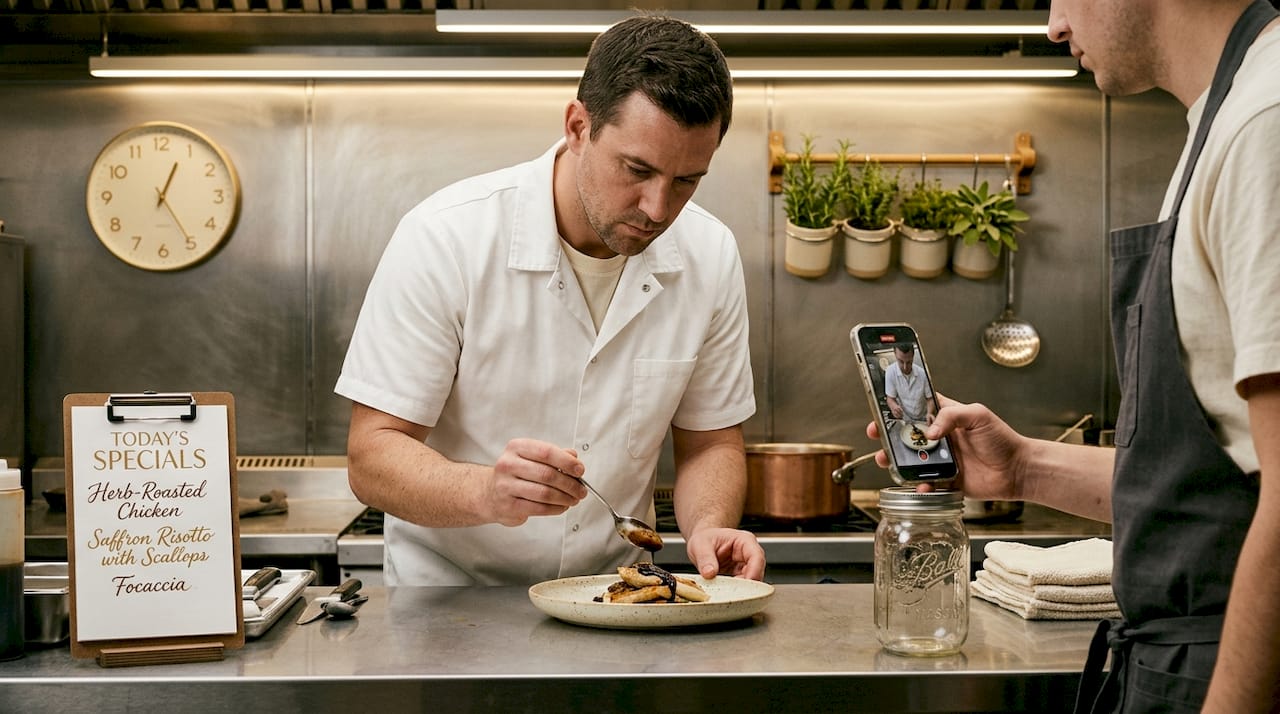
Pro Tip: Introduce “sizzle” videos (short, looping clips of a dish being prepared or plated) for your top three to five highest-margin items. This targeted approach delivers the strongest conversion lift without overwhelming your design.
Best practices: Where, when, and how to use rich media
Knowing that rich media works is one thing. Knowing how to deploy it effectively is what separates operators who see results from those who just add photos and wonder why nothing changed.
The core principle, validated by research into digital menu UX, is that rich media performs best when it is paired with menu UX that guides choice. Visual hierarchy, clearly featured items, and a logical upsell architecture create the scaffolding. Rich media is then the finishing layer that makes the experience feel effortless and exciting.
Effective vs. ineffective rich media use:
Approach | Effective | Ineffective |
Photography | Authentic, brand-consistent shots of your actual dishes | Generic stock photos of food that looks nothing like what you serve |
Video placement | Featured high-margin items, specials, and new launches | Every single item on the menu (visual overload) |
Animations | Subtle “New” or “Chef’s Pick” badges on select items | Flashing or distracting loops that compete for attention |
Content freshness | Updated weekly to reflect current availability and seasonal offers | Outdated images of dishes no longer on the menu |
Layout integration | Media sized to complement text and flow naturally | Oversized visuals that hide pricing or description text |
To optimize menu layout effectively, follow these implementation steps:
Audit your menu for high-impact items. Identify the three to seven dishes you most want guests to order, typically your highest-margin specials or signature items.
Invest in authentic photography and video. A professional half-day shoot can cover your full core menu. Smartphones with good lighting can handle seasonal updates.
Map point-of-choice moments. Decide where in the browsing journey each piece of media should appear: at category level, at item level, or as a featured banner.
Apply visual hierarchy principles. Use size, color contrast, and motion sparingly to draw the eye. Guests should feel guided, not overwhelmed.
Set an update cadence. Plan for at least monthly content reviews. Seasonal changes, new launches, and inventory shifts all require corresponding media updates.
Track performance. Use menu analytics to compare engagement and conversion rates on media-supported items versus non-supported ones, then reallocate your content investment accordingly.
Pro Tip: Avoid generic stock imagery at all costs. Guests instinctively recognize the difference between a real plate from your kitchen and a polished studio photo of a dish that looks nothing like what will arrive at their table. Authenticity builds trust, and trust drives repeat visits.
Operational edge: Real-time updates and dynamic rich media
The conversation about rich media rarely goes deep enough into its operational dimension, and that is a missed opportunity. Beyond engagement and revenue, dynamic rich media gives operators meaningful efficiency advantages.
Static rich media, the kind where photos are uploaded once and left alone, delivers some of the conversion benefits described above. But it also introduces a critical risk. As one expert assessment notes:
“Static rich-media assets without integration can create trust issues when reality changes faster than the menu.”
Think about what happens when a guest selects a beautifully featured dish, is excited by its video presentation, and is then told by a server that it sold out two hours ago. The disappointment is disproportionate, precisely because the rich media raised expectations so effectively. Dynamic, real-time updates prevent this experience.
Here is what dynamic rich media capabilities look like in practice:
Sold-out animations that automatically overlay a “Currently Unavailable” message when inventory runs out, eliminating guest disappointment and staff awkwardness
Dayparted content that switches your breakfast visuals to lunch specials at 11:00 AM without any manual intervention
Personalized offer banners triggered by loyalty status or visit frequency, powered by CRM integration
Seasonal and promotional media that activates on a schedule, so your Valentine’s Day specials appear at midnight on February 1st without anyone having to remember to log in
Pricing and availability sync with your POS, ensuring that what guests see always reflects your current reality
The labor savings are real and quantifiable. The same case study that tracked the sales gains also found that menu changes deploy in under one hour compared to the three-to-four-week cycle required for print updates. Print costs dropped by 92 percent. For a multi-location operation, those figures represent tens of thousands of dollars in annual savings.
Real-time menu updates through a connected digital menu platform give operators both the guest experience advantages of rich media and the operational agility needed to keep that content accurate and relevant every single day.
Our perspective: Why most menus underdeliver and how you can win with rich media
Here is an observation that most technology conversations in hospitality skip over: the majority of restaurants that adopt digital menus and add photos are still underperforming their potential. Not because the technology fails them, but because they treat rich media as decoration rather than as a decision-making tool.
A photo of your pasta dish is not just visual wallpaper. It is a merchandising statement. Every piece of media on your menu should have a job: highlight this item, upsell this add-on, inform about this allergen, or create desire for this seasonal special. When media is placed without a strategic purpose, it adds visual noise without commercial result.
The methodology that separates standout operators from the crowd is straightforward. First, prioritize clarity above everything else. Guests should be able to find what they are looking for quickly. Rich media should accelerate that journey, not complicate it. Second, connect every image and video to a specific merchandising goal. Ask yourself: is this media here to highlight, to upsell, or to inform? If you cannot answer that question clearly, the media probably does not belong there. Third, use data. Menu analytics tell you which items guests are clicking on, how long they spend on each category, and where they abandon the menu before ordering. This information is gold for refining your media placement and content type over time.
The venues winning with rich media are not those with the biggest photography budgets. They are the ones treating their menus as living, evolving tools, constantly informed by guest behavior and updated to reflect what actually works. Explore how to boost digital menu engagement with a data-led approach that turns every menu interaction into a learning opportunity.
A dash of digital, applied with intention, genuinely can turn everyday service into extraordinary guest memories.
Ready to transform your menu? Simple solutions for modern hospitality
The results outlined above, from double-digit sales lifts to near-elimination of print costs, are achievable. The barrier is not technology; it is finding the right platform to make it operationally simple.
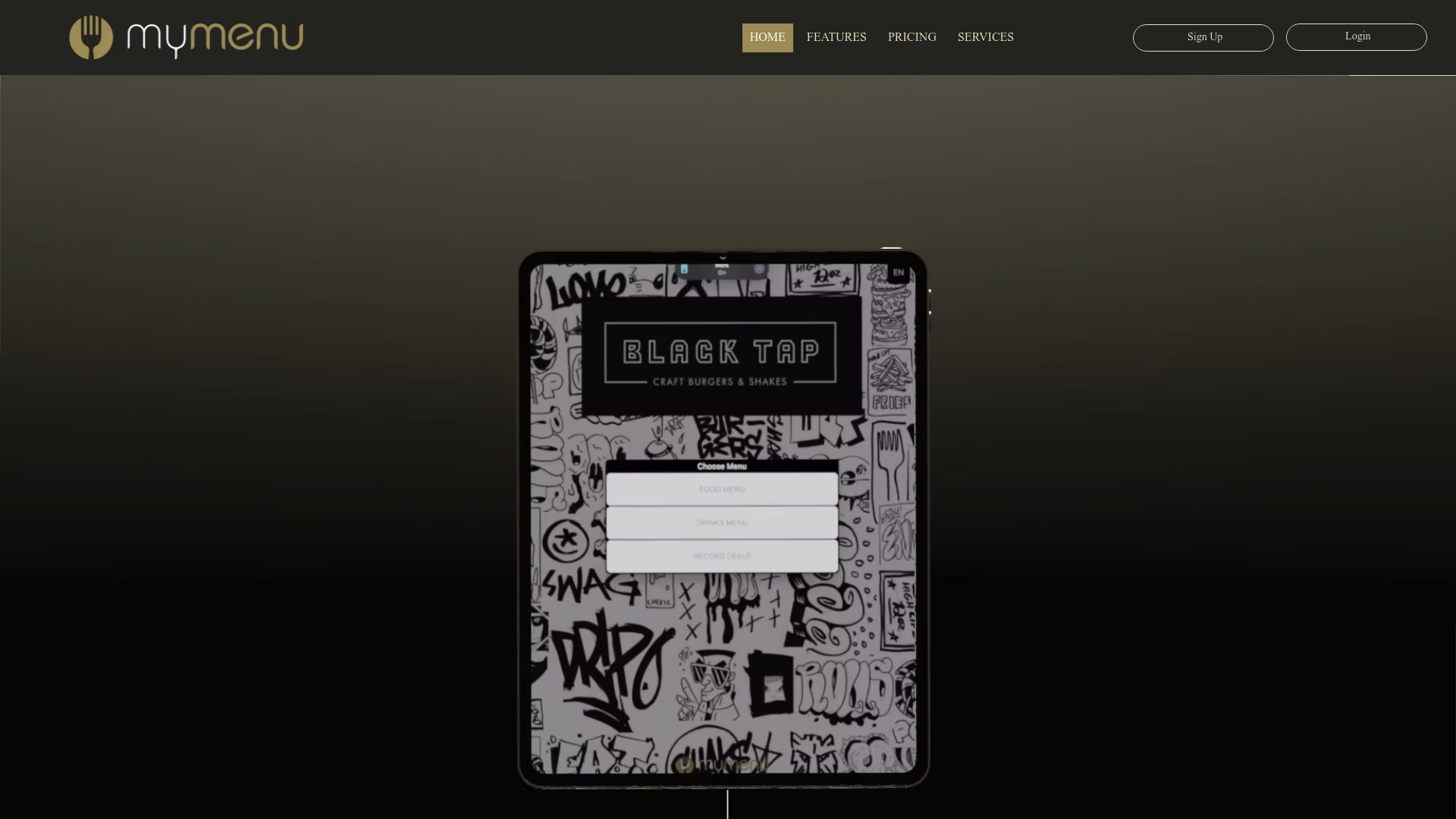
MyDigiMenu.com gives restaurants, cafes, bars, and hotels the tools to implement rich media menus quickly, without technical complexity. Upload high-resolution photos and videos directly to your digital menu solutions, set dynamic update rules, and integrate with your existing POS for real-time accuracy. The platform’s QR menu tools make deployment instant, with no app downloads required for guests. Track engagement analytics, run targeted promotions, and update content in minutes rather than weeks. Every feature is designed to empower hospitality operators to deliver the kind of intuitive, visually rich experience that drives sales, loyalty, and genuine guest delight.
Frequently asked questions
What counts as rich media in a digital menu?
Rich media includes item photos, videos, interactive elements, and dynamic animations integrated directly into the menu experience, making dishes more concrete and reducing uncertainty for guests.
How much can rich media increase my restaurant sales?
Adding rich media can increase conversions by 25 to 44% and drive ticket size increases of $2.47 per guest alongside combo attachment rates up 9 percent.
Can updating digital menu rich media really improve efficiency?
Yes. Dynamic updates reduce menu-change deployment time from three to four weeks to under one hour and eliminate 92 percent of print costs.
Where should I place videos or animations in my menu for best results?
Position videos and animations on featured, high-margin items at key guest decision moments, connecting each piece of media to a merchandising goal such as highlighting, upselling, or informing.
Recommended
Comments