
Advanced menu presentation: boost guest engagement now
- Abhi Bose
- 2 days ago
- 10 min read

TL;DR:
Recent eye-tracking research shows diners read menus sequentially rather than focusing on a “golden triangle,” challenging traditional placement strategies. Advanced digital menus enable real-time updates, personalization, rich media, and data insights, transforming guest engagement and boosting sales. Implementing AI-driven, guest-centric menu designs requires a mindset shift toward continuous experimentation and data-informed improvements.
Imagine a guest settling into your restaurant, picking up a beautifully printed menu, and instinctively glancing at the center before their eyes drift down the left side and then across. For decades, hospitality managers designed menus around this exact behavior, trusting the so-called “golden triangle” to maximize sales of high-margin dishes. But recent eye-tracking research finds no consistent evidence of a single sweet spot where diners linger longest, suggesting that menu reading is far more sequential and individual than the old playbook ever imagined. This article breaks down what the science actually says, what advanced digital solutions make possible, and how you can use data-driven menu presentation to transform guest engagement and drive measurable revenue growth.
Table of Contents
Key Takeaways
Point | Details |
Menu scanning has shifted | Modern diners read menus more sequentially, so layouts must adapt. |
Personalization drives engagement | AI and data-powered menus can boost satisfaction and sales by tailoring choices to each guest. |
Dynamic features matter | Interactive layouts, visuals, and timely updates increase operational efficiency and guest attention. |
Mindset beats technology | Implementing advanced presentation starts with strategy and leadership, not just new tools. |
Understanding advanced menu presentation: what’s changed since the golden triangle
With the foundation set, let’s examine how menu presentation philosophy has shifted and what it means for your restaurant’s success.
The golden triangle was a practical idea born from early eye-movement studies. The theory held that diners naturally focused on the center, top-right, and top-left of a two-page menu spread, forming a triangular scan path that managers could exploit by placing premium items in those zones. Entire design schools built careers on this principle, and countless hospitality training programs still teach it today as gospel truth.
The challenge is that the golden triangle pattern is no longer considered fully reliable, according to updated eye-tracking evidence from San Francisco State University. Researchers using modern scanpath technology found that diners frequently read menus in a more linear, top-to-bottom sequence rather than jumping to a mythical sweet spot. In other words, a high-margin entrée buried halfway down a well-structured digital menu may actually receive more attention than one shoehorned into an arbitrarily designated “golden zone.” Explore more menu design engagement tips to see how this plays out in practice.
“Assuming every guest’s eye lands in the same spot is like assuming every diner orders the same thing. The magic happens when your menu adapts to each individual, not the other way around.”
This shift opens the door to far more flexible and effective design strategies, particularly in the digital realm. Here’s a quick comparison of where things stood versus where they are now:
Feature | Traditional printed menu | Advanced digital menu |
Scan pattern assumption | Fixed golden triangle | Sequential, adaptive, personalized |
Flexibility | Static, reprinting required | Real-time edits, instant updates |
Visual engagement | Photography limited by cost | Full HD images and embedded video |
Personalization | None | Guest-specific highlights and filters |
Analytics | Anecdotal observation | Live data on clicks, views, and orders |
Accessibility | Fixed font size, one language | Adjustable text, multilingual support |
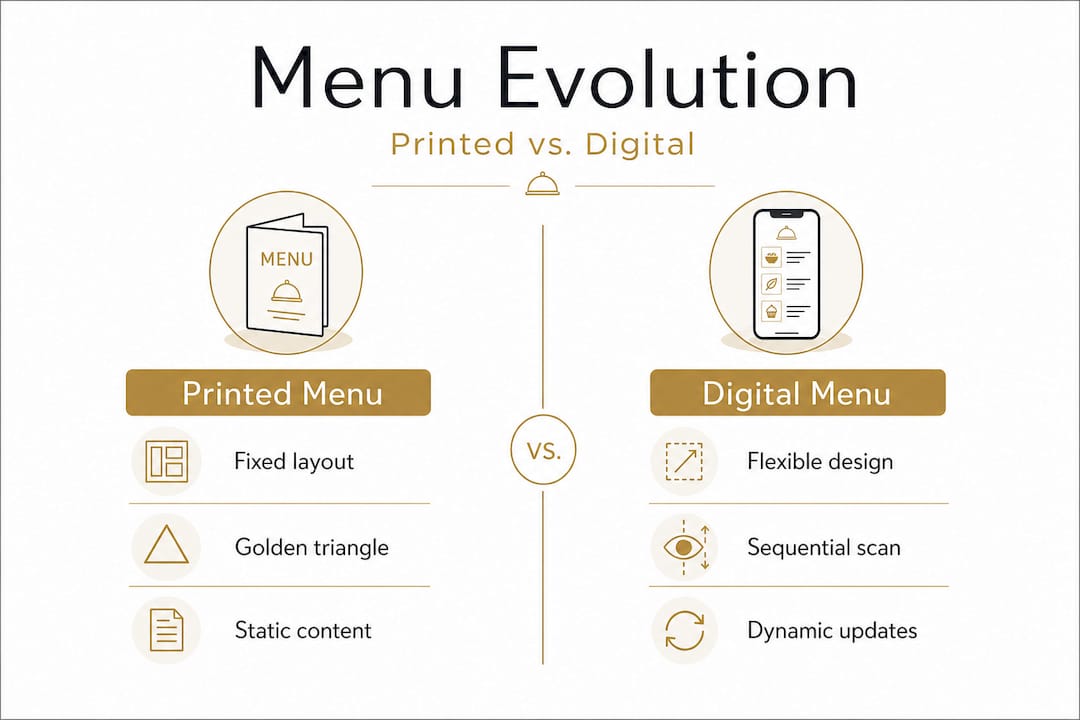
The differences are stark. Printed menus lock you into a design decision made months ago. Digital menus let you respond to what guests actually do, not what you hoped they would do.
Pros of advanced digital presentation:
Instant updates for seasonal specials or sold-out items
Rich media like mouthwatering food videos that influence purchase decisions
Data feedback loops that reveal which sections guests actually engage with
Contactless ordering that reduces wait times and friction
Cons of relying on legacy printed design:
Rigid structure that cannot respond to guest behavior in real time
Expensive reprints every time a price or dish changes
Zero insight into which items genuinely capture attention versus which ones are ignored
No accessibility options for guests with visual impairments or language barriers
Core elements of advanced digital menu presentation
Now that you know the shift in philosophy, let’s look closer at what makes a truly advanced, guest-centric digital menu.
Great digital menu presentation is built on several interconnected pillars, each one amplifying the others. When these elements work in harmony, browsing can feel like an adventure rather than a chore, and that excitement translates directly into higher average check sizes.
Visual hierarchy and layout clarity. Every section, category, and item needs a clear visual weight. Bold typography for category names, slightly smaller text for items, and subtle color contrast to guide the eye downward naturally. Explore digital menu layout examples to see how leading venues structure their pages for maximum flow.
Dynamic sections that shift with context. A lunch crowd wants speed and lighter fare. A Friday evening table wants to linger over cocktails and shareable plates. Dynamic sections allow your menu to surface the right content at the right moment, pushing brunch specials during morning service and premium tasting menus at dinner without any manual intervention.
Interactivity through embedded video. A 10-second clip of a sizzling platter or a chef assembling a signature dish can do more to sell an item than three lines of adjective-heavy copy. Video content creates an emotional connection that static images simply cannot match.
Personalized highlights based on guest data. Data-driven personalization is rapidly moving beyond quick-service restaurants into full-service and hotel dining contexts. Platforms like Sodexo are already using time-of-day data, past purchase behavior, and stated dietary goals to shape what each guest sees first, and this approach is increasingly available to independent operators and boutique hotel restaurants.
Accessibility and multilingual support. A menu that only works in English at a fixed font size quietly excludes a large segment of your potential guests. Advanced platforms support language switching and adjustable display settings that make every guest feel genuinely welcomed.
The table below illustrates how each feature drives outcomes across three key performance areas:
Menu feature | Guest engagement | Sales impact | Operational efficiency |
Embedded food video | Very high | High (upsell uplift) | Medium |
Dynamic time-based sections | High | High | High |
Personalized item highlights | High | Very high | Medium |
Multilingual support | High | Medium | Low |
Real-time sold-out flags | Medium | Medium | Very high |
High | Medium | High |
Pro Tip: Schedule a monthly “menu refresh” session where your team reviews sales data and updates at least two or three featured items or visuals. Guests who visit regularly notice stale content and disengage quickly, while fresh visuals signal a kitchen that is constantly innovating.
How AI and personalization redefine guest menu experience
Beyond visual tricks, AI and data analytics are taking menu presentation to the next level. Here’s how you can leverage them starting today.
Artificial intelligence is increasingly positioned as a concierge layer for menu content, as Sodexo’s research illustrates, where agentic AI tailors dish suggestions to individual dietary restrictions, health goals, time of day, and past purchase patterns throughout an entire dining journey. The analogy is apt: a great server already does this intuitively, steering a regular guest toward a new dish they think they’ll love based on past orders. AI simply scales that intuition to every single table, every single service.
Here’s a practical step-by-step path for implementing personalization in your venue:
Capture guest data thoughtfully. Enable social login or a lightweight loyalty program on your digital menu platform. Even basic profile data—preferred dietary filters, past orders—gives the system enough to start making meaningful suggestions.
Segment your menu by context. Work with your platform to define time windows (breakfast, lunch, happy hour, dinner) and map which items and categories should be promoted in each window. This is the foundation of contextual personalization.
Introduce pairing recommendations. Start with simple wine or cocktail pairings surfaced alongside entrée selections. This is low-risk and delivers immediate upsell value. Read the guide to menu customization for a detailed walkthrough on building pairing logic into your menu structure.
Layer in dietary filtering. Allow guests to toggle dietary preferences like vegan, gluten-free, or nut-free, and watch your menu instantly reorder to show only relevant items. This removes friction and frustration for guests with restrictions.
Analyze and iterate. Review which personalized recommendations actually convert into orders. AI systems improve over time, but only if you feed them clean data and act on the insights they surface.
Immediate benefits of personalization done right:
Reduced decision fatigue for guests, leading to faster order placement
Higher average check values as relevant upsells appear at exactly the right moment
Stronger loyalty, because guests feel genuinely understood rather than just sold to
Lower staff burden since the menu handles common questions about ingredients and allergens
Richer data on guest preferences that informs future menu development and purchasing
Pro Tip: Before rolling out AI personalization across your entire operation, run a two-week pilot at one station or for one meal period. Test how guests respond to personalized pairings and track conversion rates. Use that data to refine your logic before scaling. Check out video menus for engagement to see how combining video content with personalized recommendations creates an especially powerful guest experience.
Best practices and common mistakes in advanced menu presentation
Mastering AI and layout design is valuable, but execution matters. Is your current approach unintentionally limiting results?
Best practices to implement right now:
Use high-resolution images for every featured item. Blurry or poorly lit food photography actively deters ordering.
Design for mobile first. Most guests will browse your QR menu on a smartphone, so test every layout on a 6-inch screen before approving it.
Include clear allergen and nutritional information. This builds trust and reduces server interruptions for clarification questions.
Create seamless upsell moments. Position add-ons like premium toppings, side upgrades, or dessert suggestions at natural decision points, not as afterthoughts after the order is placed.
Consult your bar menu design tips resource to ensure your beverage offerings are as well-presented as your food items, since drinks carry some of the highest margins in hospitality.
Refresh seasonal sections with every menu change cycle and flag limited-time offers with visual urgency cues like countdown timers or “only available this week” labels.
Common mistakes that quietly kill engagement:
Information overload: cramming 80 items onto a single scrollable page overwhelms guests and leads to decision paralysis. Curate aggressively.
Poor mobile UX: tiny tap targets, slow load times, and menus that require pinch-zooming create friction that pushes guests toward ordering less or flagging down a server.
Ignoring analytics: your digital menu generates data every minute of service. Failing to review it monthly is like having a camera system you never check.
Chasing outdated placement myths: as the eye-tracking evidence confirms, some managers still over-rely on placement theories that do not hold up under modern scrutiny, missing real engagement opportunities in the process.
Neglecting guest feedback: short in-menu surveys or post-order ratings give you qualitative insight that raw click data alone cannot provide.
“The restaurants that thrive in 2026 are not the ones with the most items on the menu. They are the ones whose menus make every guest feel like the choices were designed specifically for them.”
Key metrics to track as you implement advanced strategies:
Average items viewed per session
Upsell conversion rate
Time from menu open to order placed
Repeat visit rate among loyalty program members
Guest satisfaction scores tied to specific menu interactions
Perspective: why advanced menu presentation isn’t just about tech, it’s a mindset shift
Here is an uncomfortable truth that rarely makes it into vendor pitch decks: technology alone will not save a menu strategy that lacks genuine hospitality thinking at its core. Plenty of operators have invested in sleek digital platforms only to replicate the same uninspired, overcrowded layouts they had on paper. The interface changed. The thinking did not.
The real opportunity in advanced menu presentation is not just adopting a new tool. It is rebuilding the relationship between your menu and your guest from the ground up. That means asking harder questions. Which items do guests look at but never order, and why? What story does your menu tell about your kitchen’s identity? Are your highest-margin items genuinely the most exciting things you offer, or have you been pushing them because an old design theory said to?
The managers who see the greatest results from digital menus are the ones who treat every data point as a conversation with their guests. They experiment with video menu trends not because it is fashionable but because they genuinely want to know whether a 15-second video of a new dish converts better than a photograph. They run seasonal refresh cycles not just to keep things fresh but because they understand that a returning guest notices when nothing has changed, and that stillness reads as stagnation.
Cultivate a culture of curiosity in your team around menu performance. When a server notices guests consistently asking about a dish that is poorly described, that observation is gold. Feed it back into your digital content. When your analytics show a dramatic drop-off halfway through your menu scroll, that is a signal worth investigating, not ignoring. The most powerful menu in your restaurant is the one your entire team believes in, understands, and actively helps to improve.
How MyDigiMenu helps you master advanced menu presentation
Ready to put these principles into practice? Here’s how MyDigiMenu can help you lead the field in digital menu presentation.
!
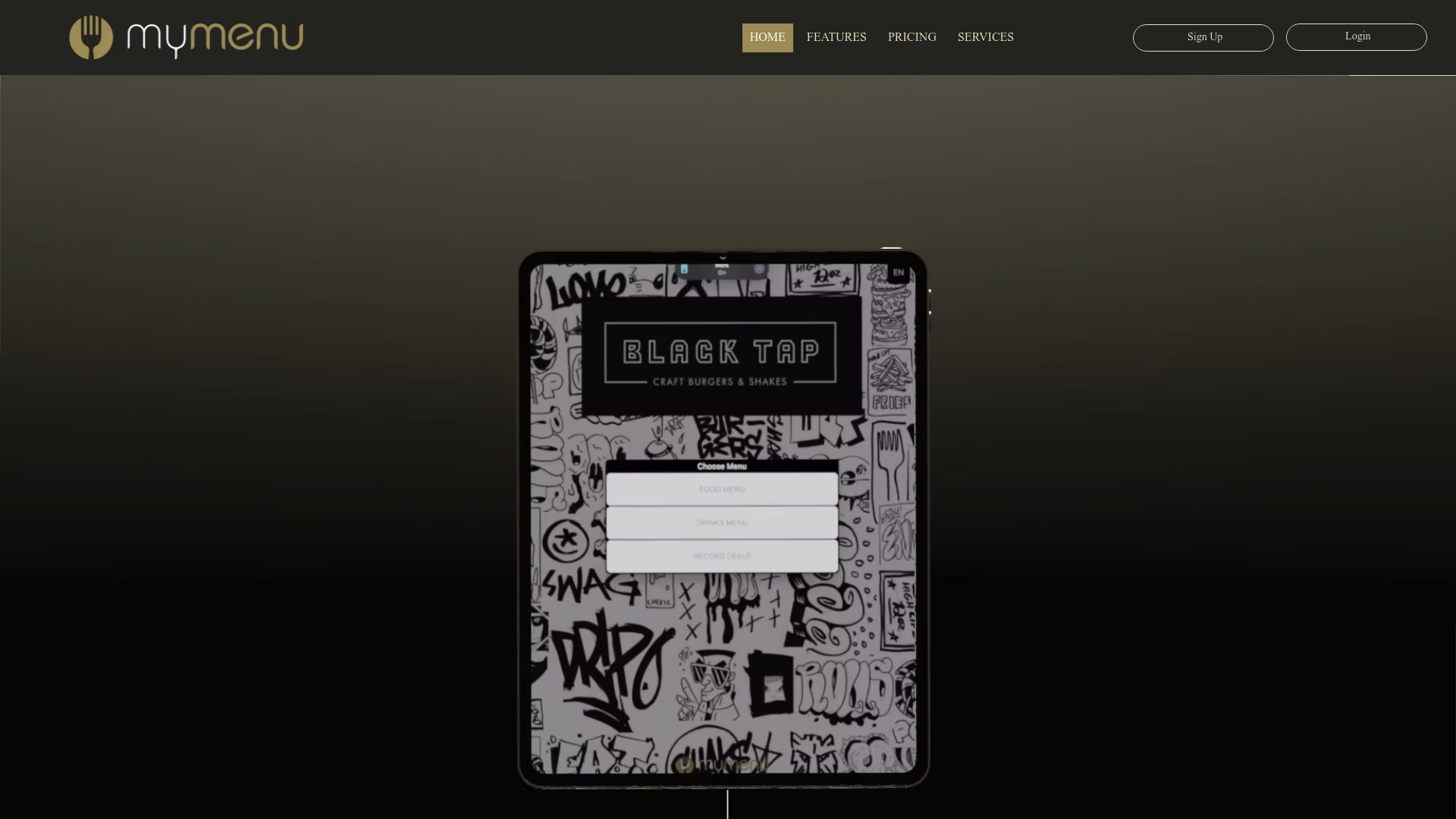
MyDigiMenu is built specifically for hospitality operators who want more than a pretty interface. The platform’s digital tablet menu options support rich media, real-time updates, and seamless upsell flows that align with everything covered in this article. For venues that prioritize contactless convenience, the QR code menu solution requires zero app downloads, making it frictionless for guests and effortless for your team to manage. Whether you run a boutique café, a high-volume bar, or a hotel restaurant, the platform’s customization depth means your menu looks and behaves exactly the way your brand demands. Review the available plans and pricing to find the tier that matches your operation’s scale and ambitions. A dash of digital truly can turn everyday service into extraordinary memories.
Frequently asked questions
What is the golden triangle in menu design and is it still relevant in 2026?
The golden triangle is a legacy theory suggesting diners’ eyes instinctively land on a predictable triangular zone of a menu, but recent eye-tracking findings reveal that reading patterns are far more sequential and individual, making flexible digital design significantly more effective for modern guests.
How does AI personalize digital menus?
AI analyzes guest data including order history, dietary preferences, and time of day to surface the most relevant dish suggestions for each individual, acting as the personalized concierge layer that a skilled server provides but scaled across every table simultaneously.
What are the fastest operational wins from advanced digital menus?
Operators typically see immediate improvements in upsell conversion rates, faster order placement times, and a reduction in server interruptions for allergen or ingredient questions, all of which free your team to focus on genuine hospitality moments.
How often should a restaurant update or refresh its digital menu layout?
At minimum, align major layout refreshes with seasonal menu changes, but high-performing operators review their digital menu’s featured items, visuals, and dynamic sections monthly to maintain strong guest engagement and reflect current inventory accurately.
Recommended
Comments