
Types of Food Delivery Business Models: Choose and Pilot the Right One
- Abhi Bose
- a few seconds ago
- 12 min read

TL;DR:
Most small and midsize restaurants should start with a hybrid delivery model paired with an owned, app-free ordering channel like Mydigimenu to protect margins. Third-party platforms offer immediate customer access but come with high commission fees and data silos, while owning your channel builds long-term loyalty. A well-planned 30 to 90-day pilot helps optimize delivery operations, integrate systems, and verify key performance indicators before scaling.
The eight core types of food delivery business models are in-house delivery, third-party marketplaces/aggregators, hybrid, ghost/virtual kitchens, pickup/curbside/order-ahead, white-label/local couriers, subscription/meal plans, and catering/large-order fulfillment. For most small-to-midsize U.S. restaurants and cafés, the smartest starting point is a hybrid model paired with an owned, app-free ordering channel like Mydigimenu, so you capture customer data and protect margins from day one.
Who each model fits best at a glance:
In-house delivery: Full-service restaurants and hotels with consistent order volume and staff capacity
Third-party marketplaces (DoorDash, Uber Eats, Grubhub): Any venue needing immediate reach without delivery infrastructure
Hybrid: Mid-volume restaurants and cafés balancing margin and geographic reach
Ghost/virtual kitchens: Operators testing new concepts or scaling delivery without a new storefront
Pickup/curbside/order-ahead: Coffee shops, quick-service venues, hotel grab-and-go counters
White-label/local couriers: Brands prioritizing customer experience and data ownership over platform reach
Subscription/meal plans: Cafés, meal-prep kitchens, and corporate catering accounts
Catering/large-order fulfillment: Hotels, event venues, and full-service restaurants with banquet capacity
Table of Contents
When does a hybrid delivery model make sense for your venue?
Ghost kitchens and virtual brands: are they right for your operation?
How do pickup, curbside, and order-ahead models reduce your overhead?
What makes white-label and local courier networks different?
How should you model costs and margins across delivery models?
Why owning your ordering channel is the real competitive advantage
What are the main types of food delivery business models?
Model | Cost & Typical Fees | Customer Data & Loyalty Control | Operational Complexity | Reach & Acquisition | Speed & Service Level | Best-Fit Venue | Tech Required |
In-house delivery | Labor + vehicle + insurance | Full ownership | High | Local only | High control | Full-service restaurants, hotels | POS, routing, KDS |
Third-party aggregator | 15–30% commission per order | Platform-owned | Low to medium | Wide, immediate | Platform-dependent | Any venue, fast launch | Aggregator tablet or API |
Hybrid | Mixed: own costs + commission | Partial | Medium to high | Wide + local | Flexible | Mid-volume restaurants, cafés | Order aggregator, POS, KDS |
Ghost/virtual kitchen | Kitchen lease + aggregator fees | Platform-owned | Medium | Aggregator-dependent | Delivery-only | Concept testing, scaling | Aggregator API, inventory tools |
Pickup/curbside | Minimal | Full ownership | Low | Local | Fast | Coffee shops, QSR, hotel grab-and-go | QR/web ordering, POS |
White-label/local courier | Flat or per-delivery fee | Full ownership | Medium | Local | High control | Brand-conscious restaurants | API integration, CRM |
Subscription/meal plan | Subscription platform fee | Full ownership | Medium | Loyal base | Scheduled | Cafés, meal-prep, corporate | Subscription software, POS |
Catering/large order | Per-event pricing | Full ownership | High | Event-driven | Planned | Hotels, event venues | Catering software, POS |
The single biggest trade-off across every model: reach versus margin and control. Third-party platforms give you customers immediately but commission fees and siloed data cost you long-term. Owning the channel costs more upfront but builds a loyalty asset that compounds.
How does in-house delivery actually work?
Your kitchen handles prep; your drivers handle logistics. Every touchpoint, from packaging to the handoff at the door, stays under your roof.
Pros: Full control over timing, presentation, and customer experience. You own every data point, which feeds directly into loyalty programs and targeted marketing.
Cons: Fleet costs, driver wages, commercial auto insurance, and route planning overhead add up fast. Liability exposure is real if an accident occurs during a delivery run.
Setup checklist:
Hire or designate delivery drivers (W-2 or vetted 1099)
Secure commercial auto insurance and confirm coverage with your carrier
Obtain any local delivery permits required by your city or county
Specify packaging standards for heat retention and spill prevention
Deploy route optimization software (options include Onfleet or Route4Me)
Build food-quality SOPs covering hold times and temperature checks
Train staff on order handoff, customer communication, and refund protocols
Budget line items to model: driver labor, vehicle costs or courier fees, commercial insurance, delivery packaging, and routing software subscription.
Pro Tip: Start with a defined delivery radius of two to three miles. Tight geography keeps food quality high and delivery times predictable, which protects your ratings on every channel.
What do DoorDash, Uber Eats, and Grubhub actually cost you?
Third-party platforms list your restaurant, handle ordering, and often manage last-mile logistics. DoorDash, Uber Eats, and Grubhub dominate U.S. market share and give you immediate access to millions of active users without building any infrastructure yourself.
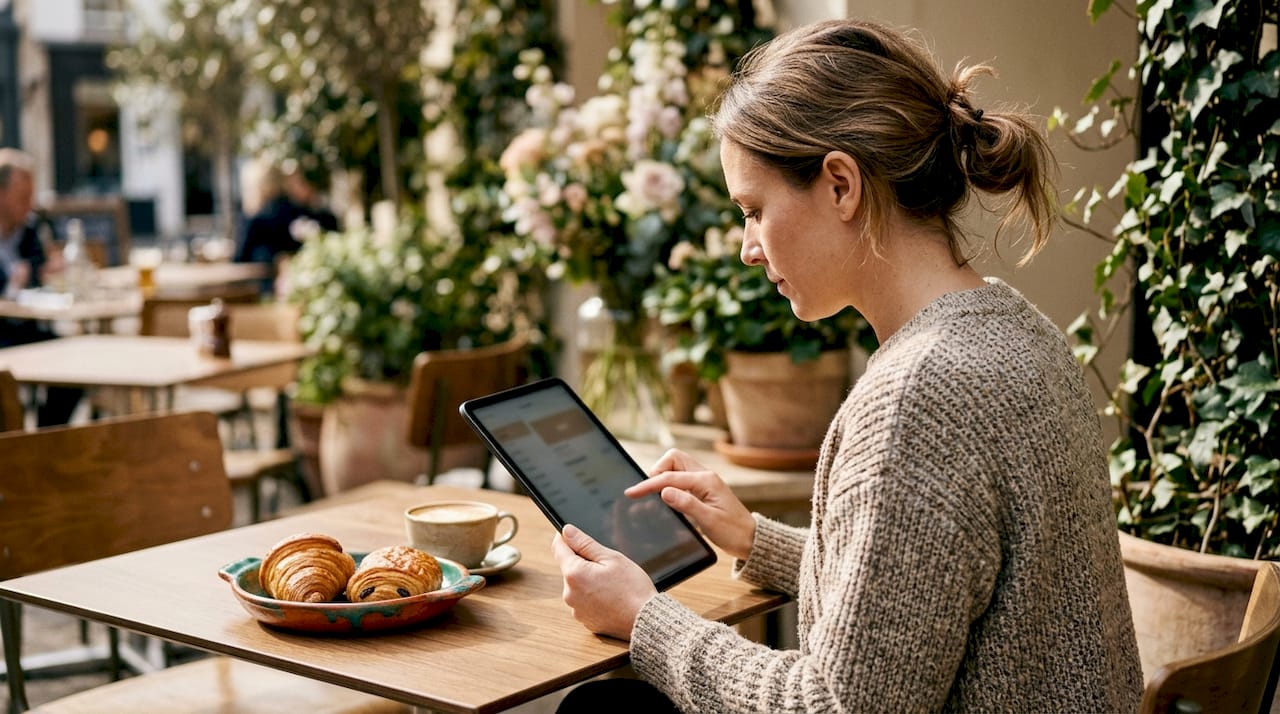
The cost structure is layered. Platform revenue streams include commission per order, customer-facing delivery fees, subscription programs, advertising and sponsored placements, and surge pricing during peak demand. Commission rates vary by plan and volume, and sponsored listings add a separate marketing cost on top.
Operational tips for aggregator success:
Engineer a streamlined delivery menu (fewer items, higher margins, travel-friendly)
Use packaging that maintains temperature and presentation for 20–30 minutes
Set up a dedicated prep line or station to avoid slowing dine-in service
Establish clear SLA expectations with each platform for cancellations and refunds
Reconcile platform payouts weekly against your POS to catch fee discrepancies
Brand dilution is a real risk. When customers associate their order with the platform rather than your restaurant, commission fees become the price of renting someone else’s audience. Negotiating commissions based on volume is possible, and many operators do it once they hit consistent monthly order thresholds.
Pro Tip: Run a separate aggregator-specific menu with slightly higher prices to offset commission costs. Most platforms allow this, and it protects your in-house margins without confusing dine-in guests.
When does a hybrid delivery model make sense for your venue?
A hybrid model means running your own drivers for short-range, high-margin orders while routing wider-geography and peak-demand orders through third-party platforms. Academic research on hybrid delivery confirms this approach can improve both operational efficiency and customer experience, but only when the digital architecture supports it.
Common hybrid patterns:
In-house drivers cover a one-to-two-mile radius; aggregators handle everything beyond that
High-ticket or catering orders stay in-house; standard orders flow to platforms during dinner rush
Owned channel (QR/web ordering) captures dine-in and pickup; aggregators handle pure delivery
Integration checklist for a unified hybrid workflow:
Order aggregation middleware (pulls all channels into one queue)
POS sync so every order hits the same ticket stream
Single kitchen display (KDS) showing source, priority, and timing
Unified receipt and payout reconciliation across channels
Pro Tip: Pre-schedule your in-house drivers for your two highest-volume hours and let the aggregator absorb overflow. This caps your labor cost while keeping the customer experience consistent during peak periods.
Ghost kitchens and virtual brands: are they right for your operation?
Ghost kitchens are delivery-only facilities with no dine-in space. Virtual brands use an existing kitchen to sell food under a separate brand name, often through aggregator listings. Both models let you test new concepts or expand coverage without signing a new lease.
When they make sense:
You want to test a new cuisine concept before committing to a full buildout
Your existing kitchen has idle capacity during off-peak hours
You need delivery coverage in a neighborhood where opening a storefront isn’t viable
Risks to weigh: Marketing overhead is significant because the brand starts with zero recognition. Reach depends almost entirely on aggregator placement. Quality control across multiple virtual brands from one kitchen demands tight SOPs.
Ghost kitchen launch checklist:
Confirm licensing and health department permits for the delivery-only operation
Design kitchen layout for delivery-only throughput (no front-of-house flow)
Engineer a menu built for travel: minimal assembly, stable temperatures, low waste
Set up cross-brand inventory tracking to prevent stockouts across concepts
Pro Tip: Treat each virtual brand as its own P&L from day one. Operators who blend revenue across brands lose visibility into which concept is actually profitable.
How do pickup, curbside, and order-ahead models reduce your overhead?
These models remove last-mile delivery entirely. Guests order ahead via a QR code or web link, then pick up at a designated spot. Contactless, app-free ordering removes the download friction that suppresses impulse orders, and the operational cost is a fraction of any delivery model.
Coffee shops, quick-service restaurants, and hotel grab-and-go counters benefit most. There are no driver costs, no commercial auto insurance, and no routing complexity.
Operational checklist:
Designate a clearly marked pickup area with signage
Set order timing windows that match your kitchen throughput
Use contactless order verification (QR scan or order number)
Package for carry-out: secure lids, bag seals, and branded packaging reinforce quality
Pro Tip: Add a timed discount or bundle offer at checkout for order-ahead guests. A “pick up in 15 minutes and save $2” prompt increases average order value and helps you smooth kitchen load across the hour.
What makes white-label and local courier networks different?
White-label delivery means a courier operates under your restaurant’s brand, not the platform’s. Local courier networks offer similar coverage to national aggregators but with more negotiable terms and often better SLA accountability.
Vetting checklist before signing any courier contract:
Confirm the courier carries commercial auto and liability insurance
Review SLA terms: guaranteed delivery windows, late-order policies, and refund handling
Verify driver background check standards
Test API or webhook integration with your POS before going live
Confirm settlement timing (daily, weekly) and fee structure in writing
Check coverage maps against your actual delivery zone
Branding on delivery matters more than most operators realize. When the driver arrives in your branded bag with your name on the receipt, the customer remembers your restaurant, not a platform.
What tech integrations does every delivery model need?
Integration is the hidden bottleneck. Aggregating orders from multiple providers into a single POS and KDS significantly reduces errors and lead times compared with managing several tablets simultaneously.
Core integration checklist:
POS sync (real-time menu and inventory updates)
Kitchen display system (KDS) with source tagging and priority routing
Order aggregation middleware (consolidates all channels into one queue)
Routing/dispatch software for in-house delivery
CRM and marketing tools connected to your ordering data
Payment gateway with contactless and multi-currency support
Analytics dashboard tracking per-channel performance
Example tech stacks:
Venue Size | Stack Components |
Small (single site) | POS + Mydigimenu QR/web ordering + aggregator API sync |
Multi-site / hotel | Enterprise POS + order aggregation middleware + Mydigimenu CRM + routing software |
Mydigimenu’s app-free QR ordering plugs directly into this stack, capturing guest profiles at the point of order without requiring a download. Those data feed CRM and loyalty tools that third-party apps keep siloed. Restaurants prioritizing deep POS integration consistently report fewer errors and shorter delivery lead times.
Pro Tip: Map your webhook and API sync cadence before launch. An order that hits your aggregator but takes 90 seconds to reach the KDS creates a cascade of timing errors during a busy service.
How should you model costs and margins across delivery models?
Every delivery model carries a distinct cost structure. Understanding the drivers before you launch prevents margin surprises.
Key cost drivers:
Aggregator commissions (variable, negotiable at volume)
Delivery labor (wages, benefits, or contractor fees)
Packaging (per-order cost compounds quickly at scale)
Commercial insurance (required for in-house delivery)
Refunds and waste (higher in delivery than dine-in)
Transaction and payment gateway fees
Illustrative per-order margin comparison:
Model | Revenue per Order | Estimated Cost Drivers | Margin Pressure |
In-house delivery | Full menu price | Labor + vehicle + packaging | Medium (controllable) |
Third-party aggregator | Menu price minus commission | Commission + packaging | High (fixed cost) |
Hybrid | Blended | Mixed labor + partial commission | Medium (managed) |
Pickup/curbside | Full menu price | Packaging only | Low |
Pricing tips: Engineer a delivery-specific menu with higher prices to offset commission costs. Set minimum order thresholds ($20–$25 is common for delivery) to protect per-order economics. Bundle add-ons and timed promotions to lift average order value. Digital menus with video and rich content consistently increase average order value by surfacing upsell items at the right moment.
Commission rates are often negotiable once you hit consistent monthly volume. Document your order data and use it as leverage when renegotiating platform contracts.
How do you choose the right delivery model for your venue?
Work through this checklist before committing to any model or vendor.
Decision checklist:
What is your current weekly order volume, and what do you project in 90 days?
What is your average order value, and what minimum threshold protects your margins?
What is your target delivery geography (radius in miles)?
Do you have staffing capacity for in-house drivers, or does that require new hires?
How much capital can you deploy in the first 90 days?
How important is owning customer data and loyalty to your growth strategy?
Vendor question list:
Who owns the customer data, and can you export it?
What POS and KDS integrations are supported out of the box?
What are the SLA guarantees for delivery time and order accuracy?
What insurance does the courier or platform carry, and what is your liability?
When do you receive payouts, and what are the settlement fees?
What does a sponsored listing or marketing placement cost?
Pilot KPIs to track from week one:
KPI | Target Range | Why It Matters |
Average delivery time | Under 35 minutes | Directly tied to ratings and repeat orders |
Order accuracy rate | Above 97% | Errors drive refunds and churn |
Average order value (AOV) | Benchmark vs. dine-in | Measures upsell effectiveness |
Customer acquisition cost (CAC) | Track per channel | Identifies most efficient growth channel |
Repeat order rate | Above 30% | Signals loyalty and channel health |
For hotels specifically, food delivery in hospitality adds a layer of guest-experience complexity that makes owned ordering channels especially valuable.
What does a 30–90 day delivery pilot look like?
A structured pilot prevents you from scaling a broken model. Here is a time-bound roadmap.
Phase | Weeks | Core Milestones |
Select and configure | 1–4 | Choose model and vendors; complete integration checklist; procure packaging; set up POS/KDS sync; engineer delivery menu |
Soft launch and train | 5–8 | Train staff on new workflow; run soft launch with limited hours; test routing and order flow; collect first KPI data |
Measure and iterate | 9–12 | Review KPIs against targets; identify bottlenecks; negotiate fees if volume warrants; decide go/no-go on scaling |
Go/no-go decision gates:
Delivery time consistently under 35 minutes? Go.
Order accuracy above 97%? Go.
AOV at or above dine-in baseline? Go.
CAC trending down week over week? Go.
Any gate failing at week 12? Diagnose the root cause before scaling.
Pro Tip: Use Mydigimenu’s contactless ordering setup during weeks 1–4 to get your owned ordering channel live before the soft launch. That way, you’re capturing guest data from the first order, not retrofitting CRM after the fact.
Key Takeaways
Owning your ordering channel from day one is the single decision that separates restaurants building a loyalty asset from those renting an audience indefinitely from third-party platforms.
Point | Details |
Start hybrid, own the channel | Pilot third-party reach alongside an owned, app-free ordering channel to protect margins and capture data. |
Integration is the bottleneck | Unifying POS, KDS, and order aggregation into one queue reduces errors and speeds up kitchen throughput. |
Model costs vary sharply | Pickup/curbside carries the lowest cost pressure; aggregator-only delivery carries the highest due to commissions. |
Pilot KPIs decide scale | Track delivery time, order accuracy, AOV, CAC, and repeat rate from week one before committing to any model. |
Mydigimenu accelerates the pilot | Mydigimenu’s QR menus, app-free web ordering, POS integration, and CRM tools cover the owned-channel milestones in the 30–90 day roadmap. |
Why owning your ordering channel is the real competitive advantage
The conventional wisdom says list on every platform and maximize reach. That advice made sense in 2019. Today, operators who have built owned ordering channels treat them as infrastructure on par with their POS, and the reason is straightforward: third-party apps keep customer data siloed, which means every order placed through a platform is a transaction you completed but a relationship you never started.
The hybrid model is not a compromise. It is a deliberate architecture: use aggregators for acquisition, use your owned channel for retention. The math compounds over time because a repeat guest ordering through your QR menu costs you nothing in commission. Hospitality leaders increasingly treat an owned digital ordering system as the foundation of their delivery strategy, not an optional add-on.
One practical note: food delivery operations in the U.S. are subject to local health codes, labor laws, and delivery regulations that vary by state and city, so confirm your compliance requirements with the relevant local authority before launching any model.
Mydigimenu brings your owned ordering channel to life
Running a hybrid delivery model means you need an owned ordering layer that works without friction, and that is exactly where Mydigimenu delivers. Restaurants and cafés using Mydigimenu’s QR menu and app-free web ordering capture guest profiles at the point of order, feed that data directly into CRM and loyalty tools, and integrate with existing POS and third-party delivery platforms, all without asking guests to download anything.
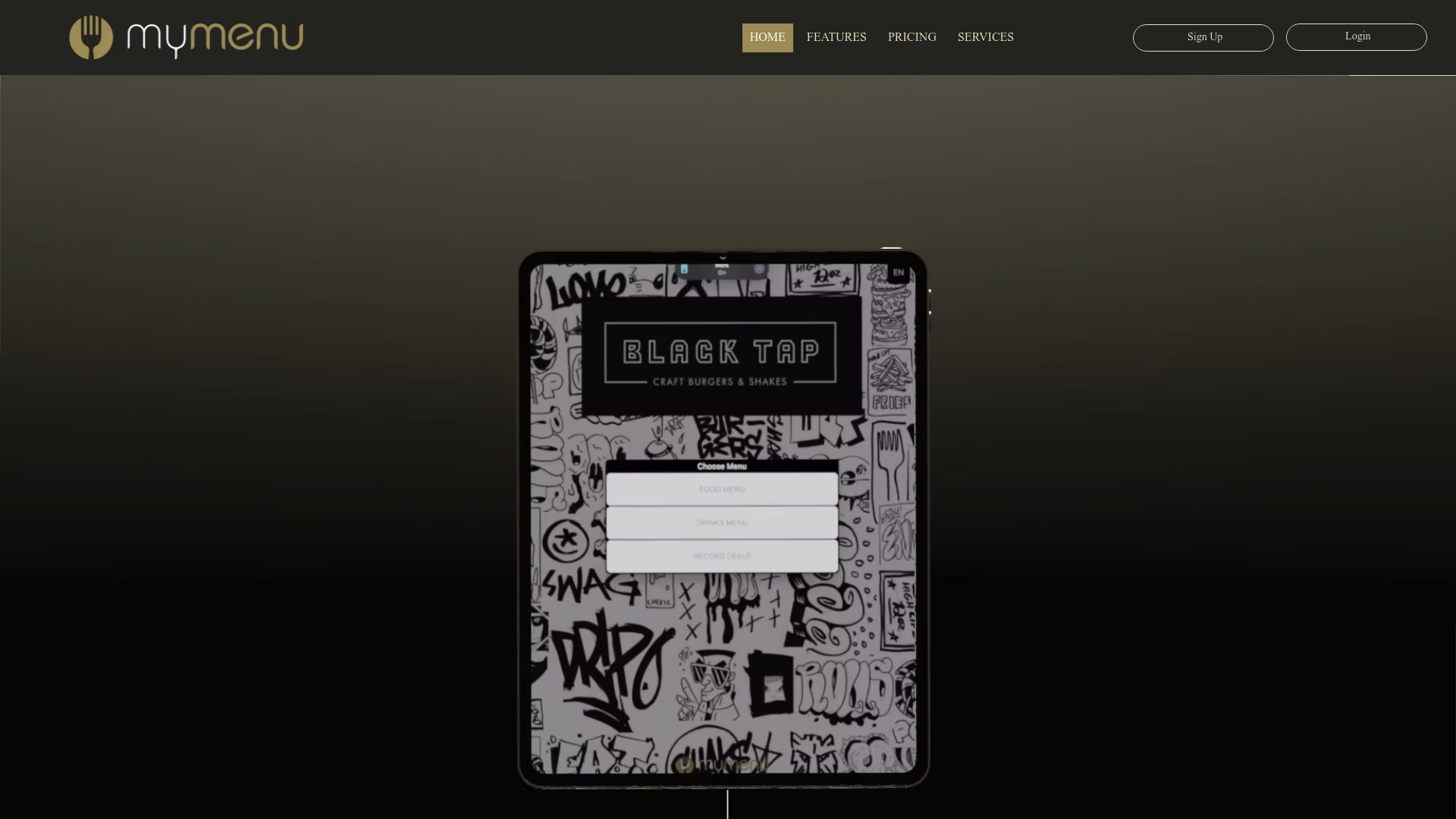
During a 30–90 day pilot, Mydigimenu covers the milestones that matter most: owned ordering channel live in week one, POS and aggregator sync configured before soft launch, and loyalty and marketing tools active from the first order. The platform supports QR menus, tablet menus, contactless payment, reservation management, and multilingual menus for hotels serving international guests. Pricing is transparent and subscription-based. Explore plans and pricing or request a demo at Mydigimenu.com to see how quickly your pilot can go live.
Useful sources and further reading
Food Delivery Business Models Overview (MoneyModels) — Concise taxonomy of five primary delivery model types; useful for comparing alternate industry frameworks.
How Food Delivery Services Work (Enacton) — Detailed breakdown of platform revenue streams, data ownership, and the case for owned ordering channels.
Restaurant Food Delivery Business Guide (eFood) — Practical hybrid model guidance and POS integration recommendations for operators.
Leading Business Models in Food Delivery (Platform Executive) — Academic-style analysis of aggregator, logistics-focused, cloud kitchen, subscription, and hybrid models.
Strategic Business Models in Online Food Delivery in Europe (NOVA) — Research on hybrid model efficiency and the digital architecture required for integration.
Food Delivery Service Industry (EBSCO Research Starters) — Industry overview covering restaurant-to-consumer, platform-to-consumer, and full-stack models with context on DoorDash, Grubhub, and Uber Eats.
Types of Restaurant Models and Concepts (Uber Eats for Merchants) — Practical overview of delivery-only, virtual restaurant, and ghost kitchen formats from an aggregator perspective.
The Role of Food Delivery in Hospitality (Wild Foodz) — Practitioner-focused look at delivery models in hotel and hospitality contexts; recommended starting read for hotel operators.
Contactless Dining Trends for 2026 (Mydigimenu) — Reviews mobile-first and app-free ordering trends relevant to pickup and hybrid model pilots.
Why Use Third-Party Delivery Integration for Restaurants (Mydigimenu) — Covers hybrid strategy and the integration checklist for connecting aggregators to your POS and KDS.
Recommended