
What Is Order Accuracy in Restaurants and How to Improve It


TL;DR:
Implementing a final verification step can improve order accuracy rates and prevent up to 80% of errors.
Measuring accuracy through specific KPIs and standardizing processes helps identify system gaps and reduces costly mistakes.
Order accuracy is the percentage of customer orders completed exactly as requested. The formula is straightforward: (Correct Orders ÷ Total Orders) × 100. If your kitchen sends out almost all orders correctly, your order accuracy rate is very high. The single highest-impact action you can take today? Require a 30-second final verification before every order leaves the kitchen or counter.
Stat to know: A 30-second final verification step can prevent roughly 80% of errors before they reach the customer.
Here is what that looks like in practice:
This shift: Assign one person to physically check every outgoing order against the ticket before handoff.
This week: Print a packout checklist and tape it to the expo station.
This month: Measure your current accuracy rate, set a target of 98%+, and track remake and refund rates weekly.
Table of Contents
What order accuracy really means for your restaurant
Order accuracy is not just a kitchen metric. It is a direct signal of how well your entire operation, from the moment a guest places an order to the moment it lands in their hands, is functioning. A wrong entrée at a dine-in table costs you a remake and a frustrated guest. A missing side in a takeout bag costs you a refund, a one-star review, and possibly that customer’s next ten visits. A delivery order with the wrong modifier for a guest with a food allergy can cost you far more than revenue.
The business impacts compound quickly. Each incorrect order triggers at least one of the following:
Food waste from remade dishes
Labor cost for the remake
Refund or discount issued to the guest
Negative online review that influences future diners
Potential allergen or dietary safety incident
Delivery platform penalty or lower algorithmic ranking
Even a 1% error rate can produce significant rework costs and customer churn at scale. A restaurant doing 300 covers a night at 99% accuracy still sends out three wrong orders every shift. Multiply that across a week, and the cost in food, labor, and lost goodwill becomes a real line item. The importance of order accuracy to customer loyalty and brand trust is hard to overstate, particularly in a market where guests have dozens of alternatives a tap away.
How to measure order accuracy and the KPIs that matter
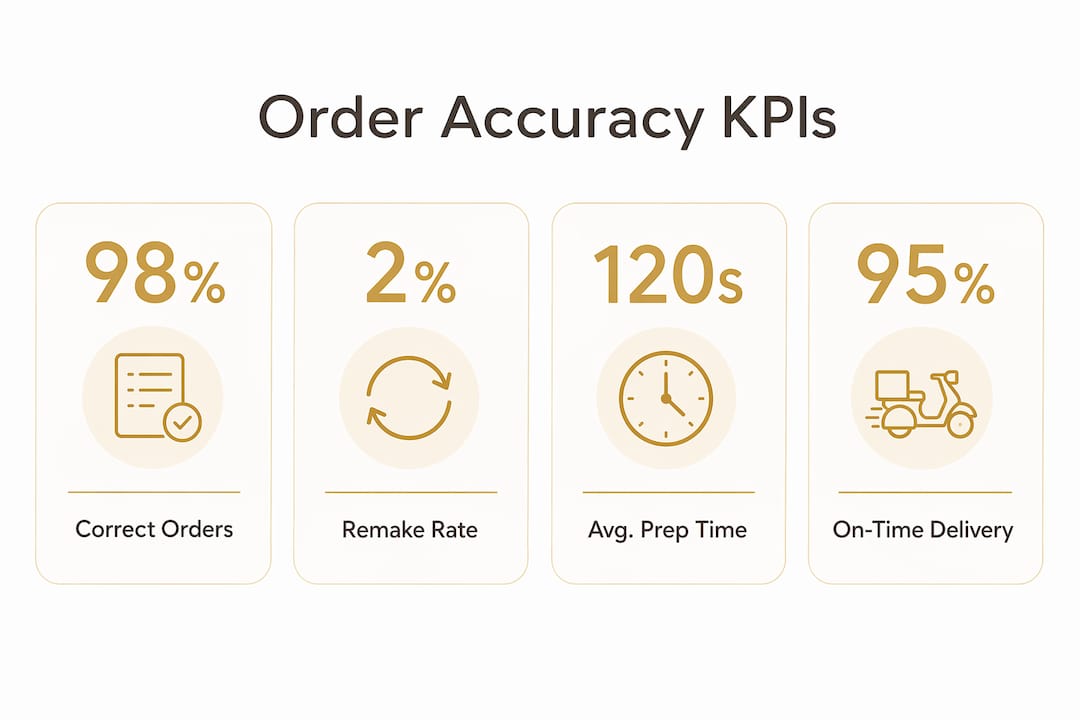
The core formula is simple. Divide your correct orders by total orders, then multiply by 100. A restaurant fulfilling 480 correct orders out of 500 in a dinner service runs a 96% accuracy rate. Industry guidance from FSR Magazine recommends setting a measurable target of 98% or higher where feasible, and using technology to identify gaps when you fall short.
Accuracy rate alone, though, tells you what happened. These related KPIs tell you why:
KPI | What It Measures | Why It Matters |
Remake rate | % of orders redone after initial prep | Reveals kitchen-side errors and ticket misreads |
Refund/comp rate | % of orders resulting in a refund or discount | Captures guest-facing impact of errors |
Order cycle time | Time from order placed to ready for pickup | Identifies bottlenecks that lead to rushed packing |
Accuracy by channel | Error rate for dine-in, app, third-party delivery | Pinpoints where your process breaks down |
Accuracy by daypart | Error rate during breakfast, lunch, dinner, late night | Reveals peak-hour staffing and process gaps |
Tracking accuracy by channel and daypart is where the real insight lives. Breaking order cycle time into stages, specifically when the order was received, when prep began, when it was packed, and when it was ready for pickup, helps you pinpoint exactly where errors enter the process.
The 30/30/30 concept in accuracy audits
The 30/30/30 framework applies neatly to order accuracy audits: spend 30 seconds at the expo station verifying each order, conduct a 30-minute weekly review of your remake and refund data, and run a 30-day pilot of any new process change before scaling it. This cadence keeps improvement cycles tight and measurable without overwhelming your team.
What actually causes order errors in your kitchen
Most errors are not random. They cluster around predictable failure points, and recognizing them as system gaps rather than individual mistakes is the first step toward fixing them for good.
Menu ambiguity: Vague modifier names (“spicy” with no scale, “sauce on the side” with no default defined) create interpretation gaps between the guest’s intent and the kitchen’s execution.
Manual transcription: Every time a human re-enters an order, from a phone call to a POS ticket, from a third-party tablet to a handwritten chit, there is a new opportunity for error.
Tech fragmentation: When your delivery app, your POS, and your kitchen display system do not talk to each other, orders get re-keyed or verbally relayed, and common causes of inaccuracy multiply fast.
Packaging and labeling failures: An unlabeled bag at the expo station is an accident waiting to happen, especially during a Friday dinner rush with six delivery orders staged at once.
Peak-hour throughput: Speed pressure during high-volume windows compresses verification steps that staff would otherwise take. Accuracy drops not because the team stops caring, but because the process was never designed to hold up under pressure.
Pro Tip: When you investigate an error, ask “what in the process allowed this to happen?” before asking “who made this mistake?” Blame-free root-cause analysis surfaces fixable system gaps; blame surfaces defensiveness.
Prioritized tactics to improve order accuracy right now
Process fixes alone, before any technology investment, can deliver significant accuracy improvements. Start with the quick wins, then layer in medium and advanced changes as your team builds confidence with each step.
Quick wins (implement this week)
Update your online menus today. Outdated items, missing modifiers, and ambiguous descriptions are the cheapest errors to prevent. Audit every channel, your website, third-party apps, and in-house QR menus, and align them to your current menu. Menu digitization with clear item descriptions and photos reduces ordering mistakes before a ticket is ever printed.
Print a packout checklist and post it at expo. List every item in the order, including drinks, sauces, and utensils. The server or expeditor checks each item off before the bag is sealed or the plate leaves the pass.
Label every bag. Use a simple format: guest name, order number, and bag count (e.g., “Bag 1 of 3”). Stage drinks separately and label those too. Clear labeling and staging prevents the most common packout errors: missing items and mixed-up orders.
Require a verbal or visual confirmation at handoff. For dine-in, the server confirms the dish name before setting it down. For takeout and delivery, the cashier or expeditor reads the order number and item count to the driver or guest.
Medium-term fixes (implement this month)
Assign a dedicated expeditor role during peak hours. The expeditor owns the final check: every order passes through them before it leaves the kitchen. This single role change often produces the most visible accuracy improvement of any process fix.
Run weekly accuracy reviews with your team. Share remake and refund data without naming individuals. Focus the conversation on what process allowed the error, not who made it. A blame-free feedback loop builds a culture where staff flag problems early rather than hiding them.
Standardize modifier language across every channel. If your POS says “no onion” but your delivery app says “remove onion,” your kitchen is interpreting two different instructions. Align the language once, and errors from misreads drop immediately.
Advanced systems changes (implement over 60–90 days)
Integrate your POS with your delivery platforms. Omnichannel ordering integration means orders from QR codes, apps, and third-party platforms all deliver the same structured data directly to your kitchen display system, with no manual re-entry. When menus and ordering channels feed a single POS/KDS, the error surface falls sharply.
Explore voice AI for phone orders. AI-powered order capture systems can reduce manual entry errors by up to roughly 90% in specific contexts while eliminating missed calls entirely.
Pilot one change per week. Roll out each tactic as a one-week pilot, measure the impact on your remake and refund rates, then decide whether to scale or adjust before moving to the next change.
Pro Tip: Pilot your packout checklist on your highest-error channel first, typically third-party delivery, where you have the least visibility into what happens after the bag leaves your counter. The data from that pilot will tell you exactly where to focus next.
Who owns order accuracy on your team
Accuracy is a shared responsibility, but “shared” without clear ownership means no one is truly accountable. Here is a practical ownership model:
Role | Owns | Verifies |
Server / cashier | Accurate order entry at POS | Reads back order to guest before submitting |
Kitchen station | Correct prep per ticket | Calls out modifications to expo before plating |
Expeditor | Final order completeness | Checks every item against ticket before handoff |
Shift lead / manager | Process adherence and data | Reviews remake/refund log at end of shift |
Delivery partner | Correct bag received | Confirms order number and bag count at pickup |
A few shift checklist items that make this model work in practice:
Expeditor signs off on every delivery order before it is sealed.
Shift lead pulls the remake count at the end of each service and logs the reason.
Manager reviews weekly accuracy data and flags any channel or daypart with a rate below 96%.
Pro Tip: Tie your weekly accuracy review to a specific data point, your remake rate or refund rate, not a general “how did we do?” conversation. Numbers make the discussion concrete and keep it from becoming personal.
How to design your operation so errors are harder to make
The most durable accuracy improvements come from making errors structurally difficult, not from asking staff to try harder. This is the systems-design principle that separates high-performing kitchens from those stuck in a cycle of retraining.
The core idea: treat every order as structured data that moves unchanged from the customer to the kitchen. Every time a human re-interprets or re-enters that data, you introduce a new error opportunity. Eliminate the translation steps, and accuracy improves automatically.
Here is a phased rollout that operationalizes this principle:
Phase 1: Audit and baseline (Week 1–2). Measure your current accuracy rate by channel and daypart. Identify your top three error types (missing items, wrong modifiers, wrong order entirely). Set a target rate of 98%+.
Phase 2: Process fixes (Week 3–6). Implement packout checklists, labeling standards, and the expeditor verification role. Acceptance criteria: remake rate drops by at least 15% from baseline.
Phase 3: Menu and modifier standardization (Week 7–10). Align modifier language across all channels. Update online menus to match your current POS configuration. Acceptance criteria: modifier-related errors drop to near zero.
Phase 4: Integration (Week 11–16). Connect your ordering channels to a single POS/KDS so orders route directly without re-entry. Digital ordering workflows that connect QR menus and app orders directly to the kitchen display remove the manual translation step entirely.
Integration features worth prioritizing:
POS-to-marketplace order routing (no manual re-keying from third-party tablets)
Kitchen display system with modifier highlighting
Automated modifier prompts that require the guest to confirm customizations before submitting
Audit logging so you can trace any error back to its source channel
Key Takeaways
Order accuracy is a system-design problem first and a training problem second. Fix the process, then layer in technology, and you will see measurable gains within 30 days.
Point | Details |
Formula and target | Measure accuracy as (Correct Orders ÷ Total Orders) × 100; aim for 98% or higher. |
Process before tech | Menu clarity, printed checklists, and final verification can deliver 15% accuracy improvements before any technology investment. |
Track by channel and daypart | Granular KPIs (remake rate, refund rate, accuracy by channel) reveal root causes that a single aggregate number hides. |
Assign clear ownership | Every order needs a named verifier at each stage: entry, expo, and handoff. |
Mydigimenu’s role | Mydigimenu’s POS integration, structured modifiers, and real-time menu updates help reduce manual translation steps and support a unified source of truth for orders across every channel. |
Why accuracy is really a leadership and design problem
Order accuracy rarely fails because a cook or server stopped caring. It fails because the operation was designed in a way that makes errors easy to commit and hard to catch. That distinction matters for how leaders respond. Retraining the same staff on the same broken process produces the same results. Redesigning the process so that errors are structurally harder to make produces lasting change.
The most effective operations leaders start with data: which channel, which daypart, which error type? Then they change the process before they change the people. A restaurant that moves from a verbal handoff to a printed packout checklist does not need a new hire or a new training program. It needs a piece of paper and a clear expectation.
The measurable ROI shows up fast. When a kitchen introduces a final verification step and a labeling standard, remake rates typically fall within the first week. When those process fixes are backed by POS integration that eliminates manual re-entry, the gains compound. Digitizing restaurant operations is not about replacing your team. It is about giving them a process that makes doing the right thing the path of least resistance.
How Mydigimenu helps you cut order errors at the source
The most common causes of order inaccuracy, manual transcription, outdated menus, fragmented tech, and missed modifiers, are exactly what a well-integrated digital menu platform is built to address. Mydigimenu connects your QR menus, tablet ordering, and online ordering channels directly to your POS and kitchen display system, so orders arrive as structured data with no re-entry required. Modifiers are captured at the point of selection, menus update in real time across every channel, and every order routes to the kitchen with the same accuracy whether it came from a table QR scan or a delivery app.
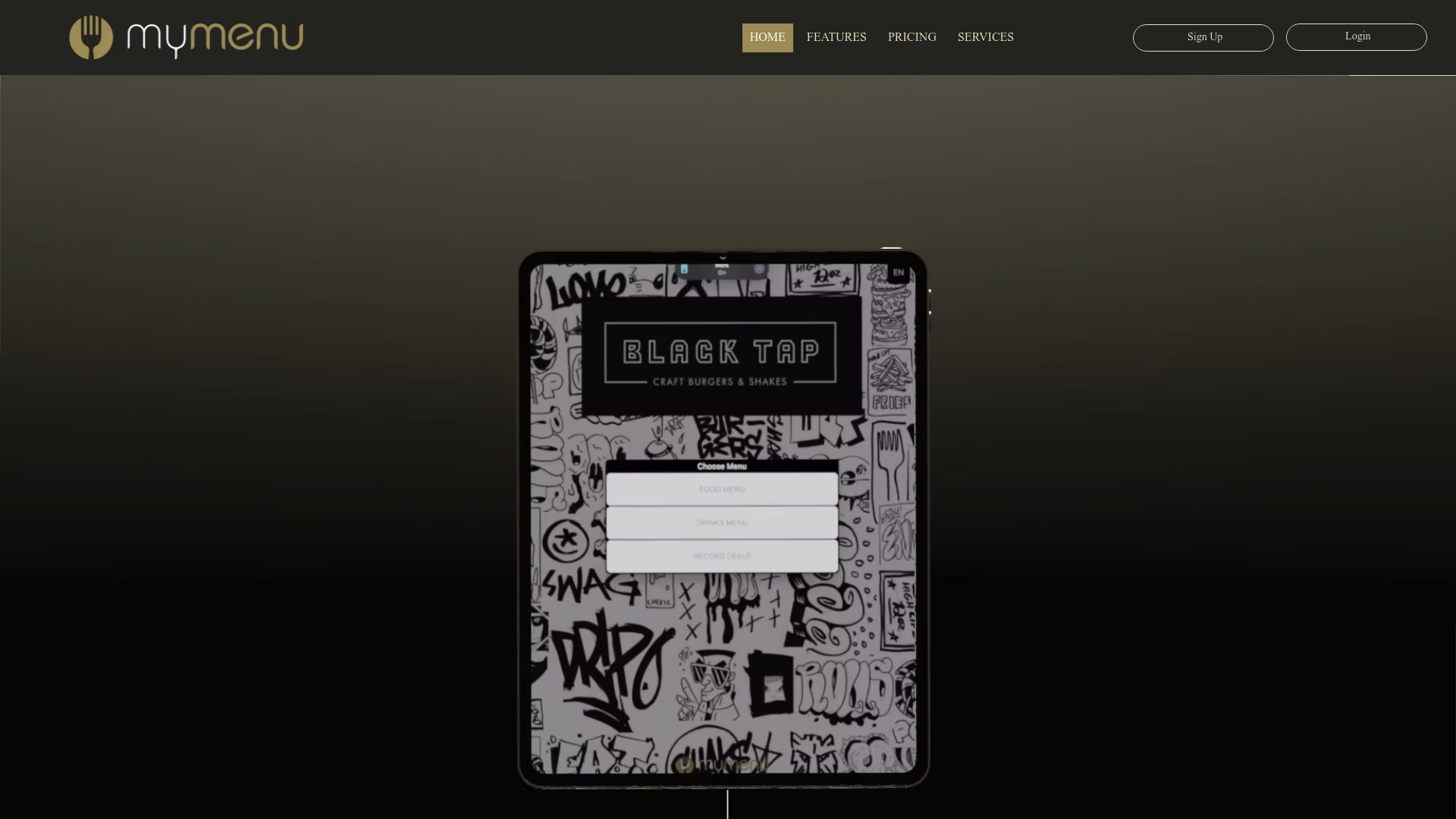
For restaurants ready to move from process fixes to a fully integrated ordering system, Mydigimenu’s digital menu platform gives you the tools to pilot one channel at a time, measure the impact, and scale what works. You can also explore USD pricing plans to find the tier that fits your operation. Start with a single channel pilot this week, measure your remake rate before and after, and let the data guide your next move.
Useful sources and further reading
A short list of authoritative resources for operators who want to go deeper on measurement, process design, and technology integration:
Tech4Serve: Mastering Order Accuracy in High-Volume Kitchens — Practical playbook covering verification steps, packout checklists, labeling standards, and AI-assisted order capture. Useful for both quick wins and advanced tactics.
FSR Magazine: 10 Tips to Improve Order Accuracy — Industry-facing guidance on setting measurable accuracy targets and using technology to close gaps.
Orderout: On-Demand Fulfillment Guide — Covers order cycle time measurement, channel-by-channel tracking, and omnichannel integration for restaurant operators.
Altametrics: Restaurant Order Fulfillment Process — Operational analysis of the root causes of inaccuracy, including tech fragmentation and peak-hour process failures.
Conexiom: Understanding the Impact of Order Accuracy — Quantifies the cost of even low error rates and makes the financial case for accuracy investment.
Mydigimenu: Streamline Online Food Ordering Workflow — Documents how digitized workflows reduce online-ordering errors and includes implementation checklists for pilots.
Wild Foodz: The Role of Food Delivery in Hospitality — External perspective on delivery trends, packaging decisions, and operational implications for accuracy at the handoff stage.
Recommended
Comments