
The Role of Personalization in Dining for Restaurants

TL;DR:
Personalization in dining tailors every guest touchpoint, significantly increasing loyalty and revenue. Effective personalization relies on unified data, operational integration, and behavior-triggered communications to deliver genuine, consistent experiences. Most successful operators treat personalization as a culture, focusing on operational excellence rather than just marketing tactics.
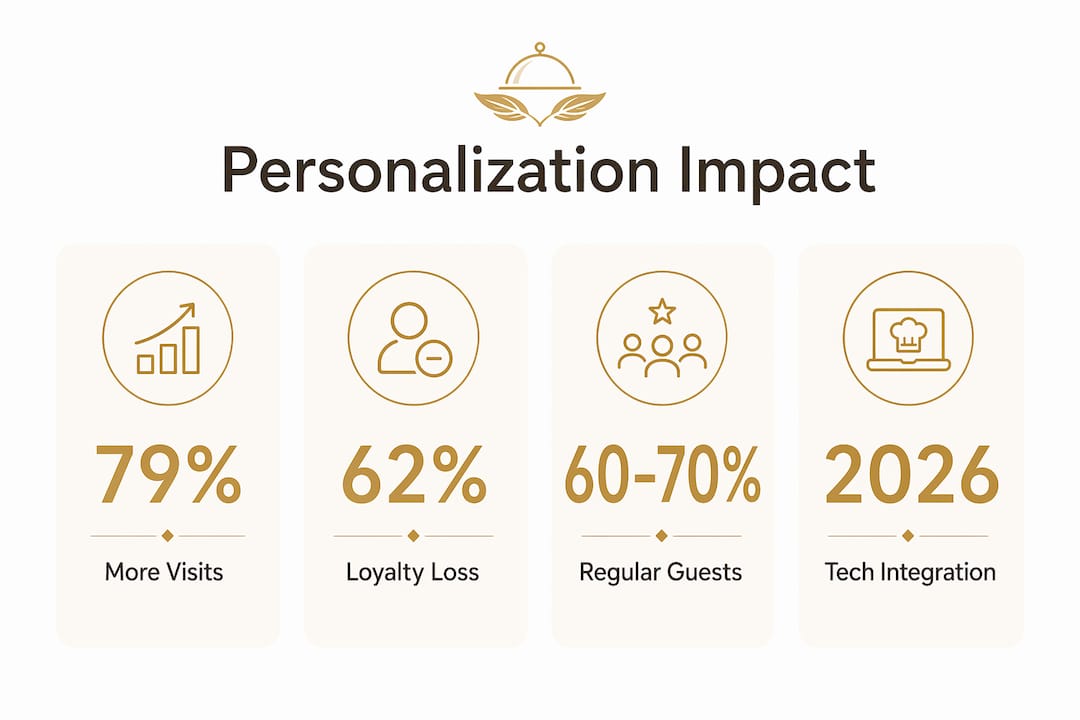
Personalization in dining is defined as the practice of tailoring every guest touchpoint, from menu recommendations to loyalty rewards, to individual preferences and behaviors. The role of personalization in dining has shifted from a nice-to-have amenity to a measurable revenue driver: 62% of customers say they would lose loyalty to a brand that fails to personalize their experience. Platforms like Punchh, Olo, and AI-powered menu engines now make behavior-driven personalization accessible at scale, even for independent operators. Restaurants that treat personalization as an operational priority, not just a marketing tactic, are the ones turning first-time visitors into regulars.
How personalization drives customer loyalty and revenue
The importance of dining personalization becomes undeniable when you look at what it does to guest behavior. 79% of customers are more likely to visit a restaurant after receiving personalized offers, and more than half say personalization increases their likelihood of spending more. That is not a marginal lift. It is the difference between a guest who visits twice a year and one who visits twice a month.
The psychology behind this is straightforward. Guests who feel recognized experience a sense of comfort and belonging that generic service cannot replicate. When a loyalty platform like Punchh surfaces a guest’s favorite order at checkout, or when a digital menu highlights dishes aligned with a guest’s dietary history, the restaurant signals that it pays attention. That signal builds trust, and trust builds frequency.
Behavior-driven personalization outperforms calendar-based promotions by a wide margin. Sending a birthday coupon is table stakes. Sending a targeted offer because a guest has not visited in 21 days, based on their actual visit cadence, is the kind of personalized dining experience that changes behavior. AI-driven personalized engagement delivers a 6% to 10% incremental revenue lift, according to industry research. That figure compounds across a full guest base.
Key behaviors that personalization directly influences:
Repeat visit frequency: 65% of consumers say a restaurant remembering their preferences directly influences their decision to return.
Average order value: Curated recommendations based on past orders consistently increase add-on and upsell conversion.
Emotional loyalty: Guests who feel known are less price-sensitive and more forgiving of occasional service lapses.
Word-of-mouth referrals: A memorable, tailored experience gives guests a story worth sharing, which no paid campaign can manufacture.
How do restaurants operationalize personalization effectively?
Personalization must be operationalized across people, data, and technology to avoid becoming a friction point rather than a guest benefit. The most common failure mode is fragmented data. A restaurant may have rich loyalty data in Punchh, detailed order history in Olo, and reservation notes in OpenTable, but if those systems do not communicate, the guest experience remains disconnected.
A unified guest profile is the foundation. Bloom Intelligence’s 2026 research identifies synchronization across POS, WiFi, reservations, reviews, and online ordering as the minimum requirement for effective personalization. Without that unified view, a server might greet a VIP guest without knowing they left a critical review two weeks ago, or a digital menu might recommend a dish the guest is allergic to.
The FNGRFOOD platform, launched in 2026 by Moxie Labs, represents the direction the industry is moving. It integrates systems like Olo, Punchh, and Flybuy into a single digital ecosystem, allowing restaurants to deliver consistent personalized experiences regardless of whether the guest orders at a kiosk, through a mobile app, or at the table.
Pro Tip: Before investing in new personalization technology, audit your existing data sources. Map every system that captures guest data, POS, loyalty, reservations, WiFi, and online ordering, and identify where the gaps are. Closing those gaps delivers more value than adding another platform.
The table below outlines the key touchpoints where personalization can be deployed and the data each requires:
Touchpoint | Data required | Personalization output |
Self-serve kiosk | Order history, loyalty ID | Suggested reorders, loyalty point display |
Digital menu board | Time of day, visit frequency | Featured items, targeted promotions |
Staff-assisted service | Guest profile, dietary notes | Tailored recommendations, allergy alerts |
Post-visit communication | Sentiment data, visit recency | Recovery offers, re-engagement messages |
Online ordering platform | Preference history, past orders | Curated menu, personalized upsells |
Self-serve kiosks and POS systems, when connected to guest profiles, create consistent experiences across every ordering channel while maintaining service speed. The key is that the technology serves the guest, not the other way around. Personalization that slows down service or requires staff to navigate multiple screens defeats its own purpose.
Marketing-centric vs. operational personalization: what actually works?
The distinction between marketing personalization and operational personalization is one of the most underappreciated concepts in restaurant management. Many operators invest heavily in email campaigns that address guests by first name and call it personalization. That approach consistently underperforms because it touches the guest only outside the restaurant, not during the experience itself.
Operational personalization, by contrast, shapes what happens at every moment of the guest’s visit. It means the digital menu adapts to show allergen-free options when a guest’s profile flags a dietary restriction. It means the loyalty program surfaces a relevant reward at the exact moment of ordering, not in a follow-up email three days later. It means the manager receives an alert when a high-value guest who left a negative review walks back through the door.
Approach | Scope | Impact on guest experience | Revenue effect |
Marketing personalization | Email, SMS, app notifications | Moderate, pre/post visit only | Short-term lift from promotions |
Operational personalization | Every in-venue and digital touchpoint | High, shapes the live experience | Sustained frequency and spend growth |
Sentiment-integrated personalization | Combines behavioral and review data | Highest, enables real-time recovery | Strongest long-term retention |
Integrating sentiment data with behavioral data for timely response creates a competitive advantage that marketing campaigns alone cannot replicate. A guest who receives a genuine recovery offer within hours of a poor experience is far more likely to return than one who receives a generic discount coupon a week later. The role of data in restaurant marketing is to make these moments possible at scale, not just for VIPs but for every guest whose behavior signals disengagement.
Treating personalization as an operational priority rather than a marketing campaign produces sustainable revenue growth. It requires cross-functional alignment between front-of-house teams, marketing, and technology, but the payoff is a guest experience that feels genuinely attentive rather than algorithmically manufactured.
What are the best examples of personalization in dining?
The most effective examples of how personalization affects dining share one characteristic: they are triggered by guest behavior, not by the restaurant’s promotional calendar. Here are the approaches that consistently deliver results for hospitality operators:
Tailored menus based on dietary history: DoorDash survey data confirms that guests actively seek allergen and dietary information and respond positively to curated options. A digital menu that surfaces gluten-free or vegan options automatically for a returning guest removes friction and signals care.
Tiered VIP loyalty programs: Platforms like Punchh allow operators to build tiered reward structures where top-spending guests unlock exclusive benefits, early access to new menu items, or surprise upgrades. The surprise element is particularly powerful because it creates emotional memory without requiring a discount.
AI-powered menu recommendations: Restaurants using AI-driven recommendation engines see measurable increases in average order value because the system surfaces items the guest is statistically likely to enjoy, based on past orders and similar guest profiles.
Behavior-triggered communications: A guest who visits every two weeks and suddenly goes four weeks without returning is a high-priority re-engagement target. Automated, behavior-triggered outreach, not a generic newsletter, is what brings them back.
Personalized chef recommendations: Curated suggestions from the kitchen, matched to a guest’s flavor preferences or past favorites, transform a standard menu into a mouthwatering, personal invitation.
Pro Tip: Build your personalization triggers around visit cadence, not just loyalty points. A guest who visits frequently but never joins the loyalty program is still a high-value guest. Capture their behavior through POS data and WiFi analytics, and treat them accordingly.
The targeted marketing strategies that work best in 2026 combine these behavioral triggers with the right communication channel, whether that is a push notification, a digital menu prompt, or a server-side alert.
Challenges and best practices for dining personalization in 2026
The impact of personalization on customer satisfaction is well-documented, but execution remains difficult for most operators. The most common barriers are technology fragmentation, discount dependency, and inconsistent delivery. Here is how to address each:
Unify your data sources first. Technology fragmentation is the single biggest barrier to effective personalization. Before adding new tools, connect your existing POS, loyalty, reservation, and online ordering data into a single guest profile. Bloom Intelligence’s research shows this unification is foundational, not optional.
Measure frequency and lifetime value, not just loyalty program activity. Measuring personalization only via loyalty program data risks misrepresenting guest engagement because loyalty programs capture only a fraction of your actual guest base. Track visit frequency, average spend, and retention across all guests.
Avoid coupon-driven personalization. Over-reliance on discounts erodes margins and trains guests to wait for deals rather than visit at full price. Personalization should deliver relevance and recognition, not just a cheaper meal.
Build reactive AI communications. Automated messages triggered by guest behavior, such as lapsed visits, negative reviews, or milestone orders, outperform scheduled broadcast campaigns. Speed matters: responding to a negative sentiment signal within hours, not days, is what retains at-risk guests.
Train your team alongside your technology. Personalization technology fails when front-of-house staff do not know how to use the data available to them. A server who can glance at a tablet and see that a guest prefers a window table and orders the same starter every visit delivers a human touch that no algorithm can replicate on its own.
Key takeaways
Personalization in dining drives measurable loyalty and revenue only when it is operationalized across unified guest data, every service touchpoint, and behavior-triggered communications rather than treated as a marketing add-on.
Point | Details |
Personalization drives loyalty | 62% of customers lose loyalty without personalization; behavior-driven offers increase visit likelihood by 79%. |
Unified data is non-negotiable | Connecting POS, loyalty, WiFi, and reservations into one guest profile is the foundation of consistent personalization. |
Operational beats marketing-only | Personalization that shapes the live dining experience delivers stronger retention than email campaigns alone. |
Avoid discount dependency | Coupon-based personalization erodes margins; recognition and relevance outperform discounts for long-term loyalty. |
Measure the right metrics | Track visit frequency, average order value, and retention across all guests, not just loyalty program members. |
Why I think most restaurants are personalizing the wrong thing
Most operators I speak with are proud of their loyalty program. They have a points system, a birthday email, maybe a tiered rewards structure. When I ask how many of their top-spending guests are actually enrolled in that program, the number is almost always lower than expected. That gap is where most personalization strategies quietly fail.
The real opportunity is not in the loyalty program. It is in the 60% to 70% of guests who visit regularly but never sign up for anything. Their behavior is visible in POS data, WiFi analytics, and online ordering history. Treating that data as a personalization asset, rather than a reporting afterthought, is what separates operators who grow guest lifetime value from those who keep running the same promotions to the same shrinking audience.
I have also seen operators invest in sophisticated AI recommendation engines before they have solved the basics. A guest who receives a personalized menu recommendation but then waits 20 minutes for their order has not had a personalized experience. They have had a frustrating one with a digital veneer. Personalization without operational consistency is worse than no personalization at all, because it sets an expectation the experience cannot meet.
The restaurants that get this right treat personalization as a culture, not a campaign. They train servers to use guest data. They build menus that adapt. They respond to negative reviews within hours, not weeks. And they measure success by whether guests come back more often and spend more when they do, not by how many emails they opened. That is the standard worth holding yourself to.
— Abhi
Transform your menu into a personalization engine with Mydigimenu
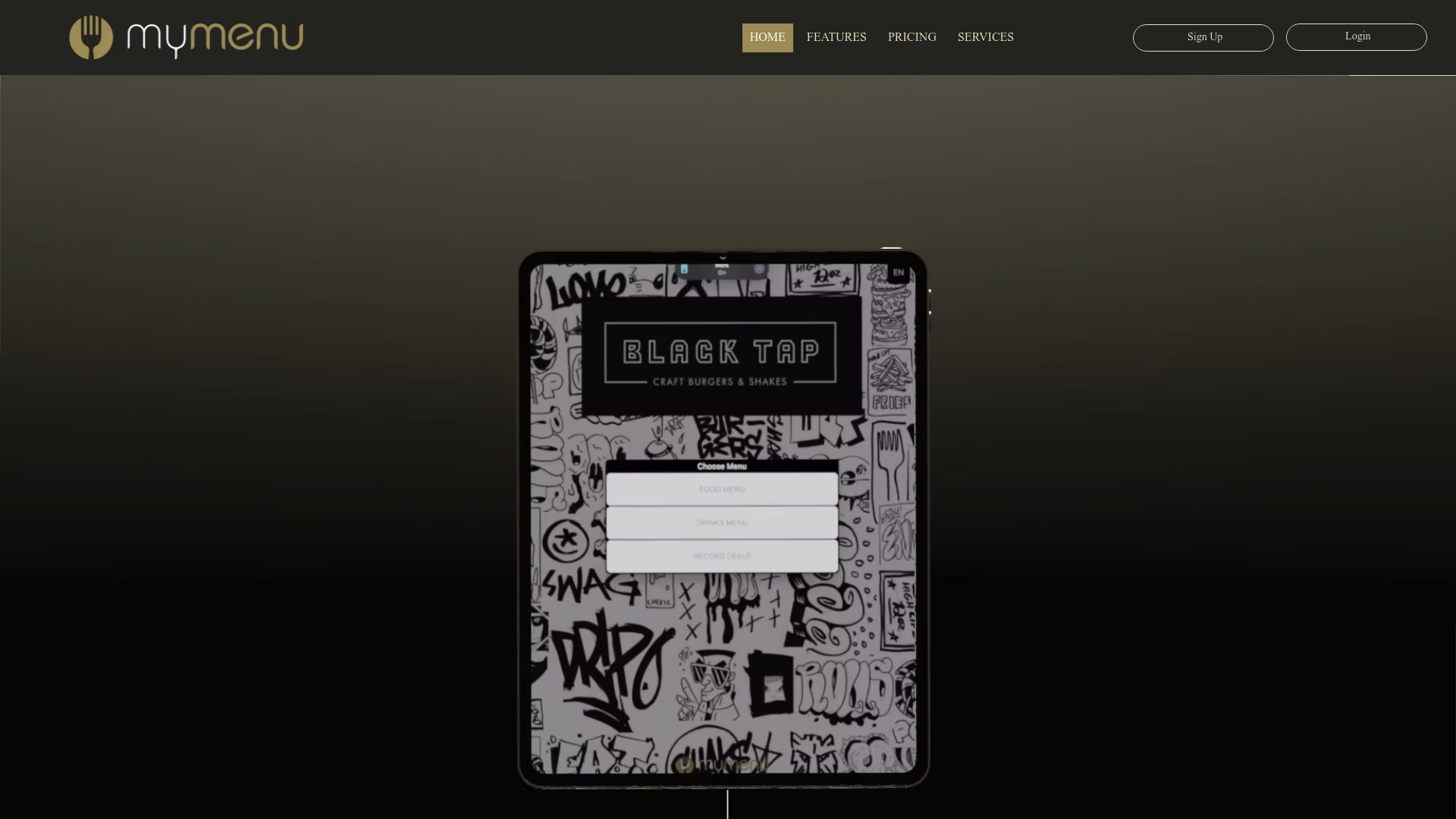
Mydigimenu gives hospitality operators the digital infrastructure to deliver personalized dining experiences at every touchpoint. The platform’s digital tablet and iPad menus display tailored content based on guest preferences, dietary needs, and order history, turning every table into an opportunity for a genuinely attentive interaction. With built-in loyalty integration, CRM capabilities, and guest profile capture via social login, Mydigimenu connects the data dots that fragmented systems leave behind. Whether you are running a single café or a multi-location restaurant group, the platform’s QR menu solutions make personalized, contactless ordering accessible without a single app download. Explore how Mydigimenu can help you build the unified guest experience your customers expect.
FAQ
What is the role of personalization in dining?
Personalization in dining means tailoring menu recommendations, service interactions, and communications to individual guest preferences and behaviors. It directly increases visit frequency, average order value, and long-term loyalty.
How does personalization affect customer loyalty in restaurants?
62% of customers say they would lose loyalty to a brand without a personalized experience, and 79% are more likely to visit after receiving a personalized offer. Personalization creates emotional recognition that generic service cannot replicate.
What are the best examples of tailored menus in restaurants?
Tailored menus include allergen-filtered displays for guests with dietary restrictions, AI-powered dish recommendations based on order history, and curated chef suggestions matched to a guest’s flavor preferences. DoorDash survey data confirms guests respond positively to these curated options.
Why does marketing-only personalization underperform?
Marketing personalization, such as name-based emails, only reaches guests outside the restaurant and does not shape the live experience. Operational personalization, delivered through digital menus, kiosks, and staff-side alerts, produces stronger retention and spend growth.
How should restaurants measure personalization success?
Measure visit frequency, average order value, and guest retention across your full guest base, not just loyalty program members. Measuring only loyalty program activity misrepresents engagement because loyalty programs capture only a fraction of actual guests.
Recommended
Comments