
The Role of Payment Options in Hospitality: 2026 Guide


TL;DR:
Payment options in hospitality influence guest satisfaction and booking conversion by offering diverse and visible payment methods.
Integrating payment systems enhances operational efficiency, security, and real-time revenue visibility through unified workflows.
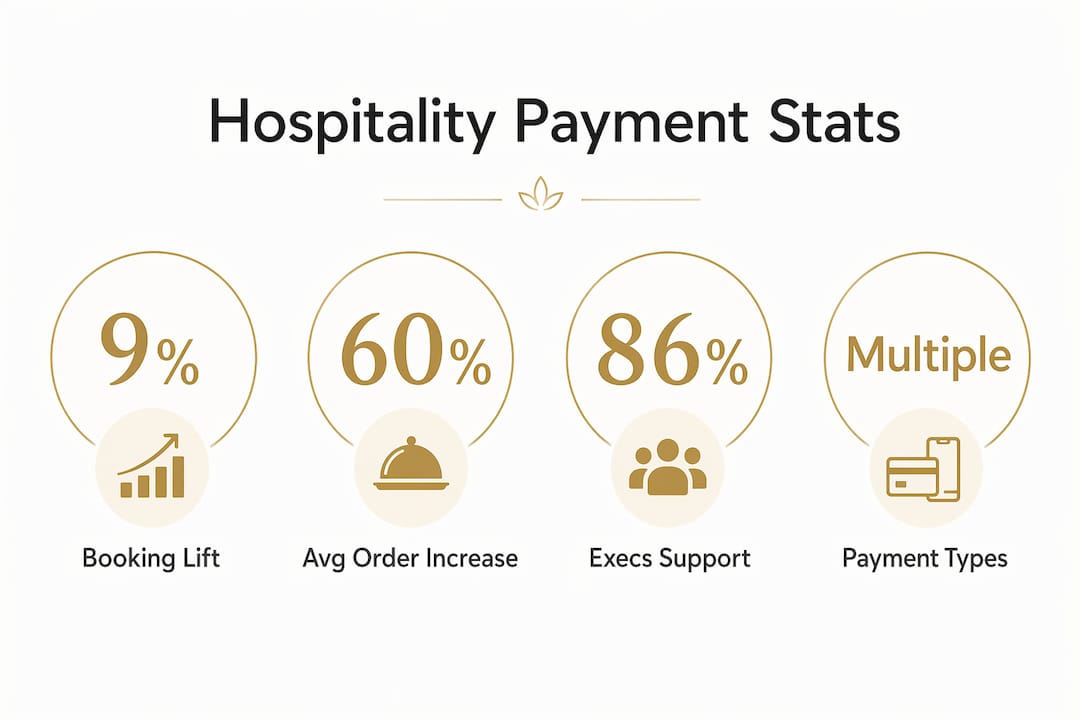
Payment options in hospitality are defined as the full set of methods a property accepts to complete a guest transaction, from booking to checkout. The role of payment options in hospitality extends far beyond processing a credit card. Payments shape the guest’s first impression, influence booking decisions, and determine how smoothly your staff closes out a stay. 90% of hospitality executives view payment infrastructure as critical to operations. That consensus reflects a shift in thinking: payments are no longer a back-office function. They are a front-line guest experience tool.
How do payment options affect hospitality guest satisfaction?
Offering diverse payment methods is the single most direct way to reduce booking abandonment and increase conversion. 9% of consumers abandon a purchase when their preferred payment method is not available. In hospitality, where average booking values are high and competition is fierce, that abandonment rate translates to meaningful lost revenue every week.
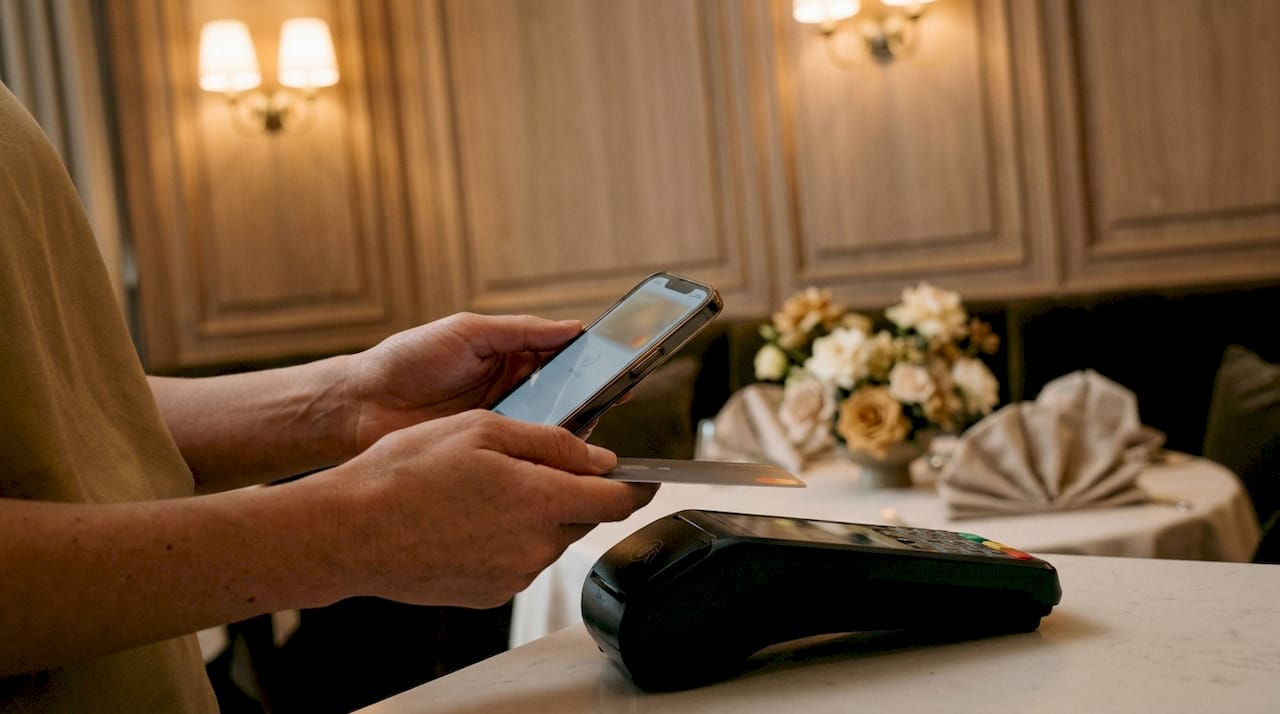
Guest payment preferences have shifted dramatically. Travelers now expect to pay with credit cards, debit cards, digital wallets like Apple Pay and Google Pay, and Buy Now Pay Later (BNPL) services. Each method serves a different guest profile. Business travelers often prefer corporate cards. Younger leisure guests gravitate toward digital wallets and BNPL. International visitors may rely on bank transfers or regional payment networks.
The psychology behind payment visibility matters too. Visual prominence of payment methods on booking pages triggers what researchers call “mental simulation,” where guests picture themselves completing the stay. That mental rehearsal lowers hesitation and increases the likelihood of completing the booking. Displaying accepted payment logos clearly on your booking page is not decoration. It is a conversion tool.
Here is what limited payment acceptance costs a hospitality business:
Lost bookings from guests who cannot pay their preferred way
Reduced average order value when BNPL is unavailable for high-ticket packages
Negative reviews citing checkout friction as a pain point
Staff time spent resolving payment disputes at the front desk
Reputational damage when international guests face declined cards
Pro Tip: Place payment method icons prominently on your booking confirmation page and at the digital checkout step, not just on the payment entry screen. Earlier visibility reduces drop-off before guests reach the payment form.
How does integrating payment systems improve hotel operations?
Integrated payment technology connects your Property Management System (PMS), Point of Sale (POS), and booking engine into a single financial workflow. That connection eliminates the manual reconciliation errors that occur when these systems operate in silos. A front desk agent should never need to cross-reference three separate screens to confirm a guest’s payment status.
The operational gains are concrete. Automatic folio posting means charges from the restaurant, spa, or room service flow directly to the guest’s account without staff intervention. Checkout becomes a two-minute process instead of a ten-minute one. Digital bank transfer payments grew 40% in 2024, accounting for 25% of digital retail payments by 2025. Hotels that have not integrated these newer payment rails into their PMS face growing gaps between what guests expect and what the property can deliver.
Security and fraud prevention also improve with integration. AI and integrated payment technology automates identity verification and flags suspicious transactions without slowing the guest experience. Centralized systems also simplify PCI DSS compliance, since sensitive card data flows through one audited environment rather than multiple disconnected terminals.
Integration benefit | Operational impact |
Automatic folio posting | Eliminates manual charge entry; speeds checkout |
Unified PMS and POS data | Reduces end-of-day reconciliation errors |
Centralized fraud detection | Flags anomalies across all revenue centers |
Single compliance environment | Simplifies PCI DSS audit scope |
Real-time revenue visibility | Supports accurate daily financial reporting |
Pro Tip: When evaluating payment platforms, ask vendors specifically how their system handles split folios and late charges after checkout. These edge cases expose integration gaps that standard demos never show.
What are the real challenges of hotel payment acceptance?
Hotels face payment acceptance challenges that restaurants and retail businesses rarely encounter. The most common friction point is the incidental hold. Hotels require a credit or debit card at check-in to place a hold covering potential incidental charges such as room service, minibar use, or damages. That hold temporarily removes funds from the guest’s available balance.
Prepaid cards and neobank cards create specific problems in this context. Many prepaid cards do not support authorization holds, so the hotel cannot guarantee coverage for incidentals. Neobank cards sometimes process holds differently than traditional bank cards, causing authorization failures that confuse both staff and guests. Properties that accept cash deposits as an alternative face their own liability and accounting complications.
The timing of authorization management matters more than most operators realize. An authorization placed at check-in must be released promptly after checkout. Delayed releases generate guest complaints and, in some cases, chargebacks. The guest who sees a hold on their account five days after checking out is not thinking about your property fondly.
Common payment acceptance challenges in hotels include:
Prepaid and neobank cards declined for incidental holds
Authorization holds not released within the expected window
International cards triggering fraud alerts on the hotel’s payment gateway
Guests booking online with one card and presenting a different card at check-in
Disputes arising from unclear communication about hold amounts and timelines
Clear communication at booking and again at check-in prevents most of these disputes. A brief, plain-language explanation of the hold policy, delivered digitally before arrival, sets accurate expectations and reduces front desk friction.
How do modern payment options drive revenue growth in hotels?
BNPL is the most underused revenue tool in hospitality. Offering BNPL increases average order value by up to 60% on high-ticket items. A guest who hesitates to book a $800 suite for a long weekend may commit immediately when they can split that cost into four interest-free payments. The property receives the full amount upfront from the BNPL provider. The guest gets the stay they actually want.
The more nuanced opportunity lies in in-house financing versus third-party BNPL. Third-party BNPL services charge the hotel a merchant fee, typically higher than standard card processing rates. Hotels that develop their own installment payment programs retain that margin and control the guest experience end to end. The guest relationship stays with the property, not with a financial technology company.
Revenue growth from payment flexibility follows a clear sequence:
Offer BNPL at booking to capture guests who would otherwise book a lower-tier room or not book at all.
Present upsell packages at the payment step, where guests are already in a spending mindset.
Enable digital wallet payments at the restaurant and spa to reduce friction on ancillary spend.
Use payment data to identify high-value guests and target them with loyalty offers before their next stay.
Evaluate in-house installment options for packages above a defined price threshold to protect margin.
86% of hospitality executives see integrated financial infrastructure as vital for growth. The executives who act on that belief are the ones building payment strategies that generate revenue, not just process transactions.
Pro Tip: Test BNPL visibility by placing it directly on the room selection page, not just at checkout. Guests who see the installment option early make higher-value room selections before they ever reach the payment screen.
Payments also enable cross-selling in ways that traditional front desk interactions cannot. A contactless dining experience paired with flexible payment options at the table encourages guests to order more freely, knowing they can pay the way they prefer. That combination of digital convenience and payment choice turns a single restaurant visit into a higher-value transaction.
Key Takeaways
Payment flexibility is the most direct lever hospitality professionals have for increasing booking conversion, average spend, and guest satisfaction simultaneously.
Point | Details |
Payments shape guest experience | Payment options influence booking confidence and perceived professionalism from the first click. |
Abandonment is measurable | 9% of consumers abandon purchases when their preferred payment method is unavailable. |
Integration reduces errors | Connecting PMS, POS, and booking systems eliminates manual reconciliation and speeds checkout. |
BNPL grows average order value | Offering installment options can increase average order value by up to 60% on high-ticket bookings. |
In-house financing protects margin | Hotels that offer their own installment programs retain fees that third-party BNPL providers otherwise collect. |
Payments as a silent architect of guest loyalty
The hospitality industry talks constantly about guest experience, yet payment strategy rarely appears in those conversations. That gap is where revenue quietly leaks.
I have watched properties invest heavily in lobby redesigns and staff training while their payment infrastructure runs on disconnected systems from 2015. Guests notice the friction even when they cannot name it. A checkout that takes twelve minutes, a hold that lingers on their bank statement, a booking page that does not show their preferred wallet option. These are not minor inconveniences. They are the moments that determine whether a guest returns.
The properties that treat payment strategy as a growth lever rather than a cost center think differently about every touchpoint. They ask which payment methods their highest-value guests prefer. They measure checkout time the same way they measure check-in satisfaction scores. They test BNPL placement the same way they test room photography.
My honest recommendation: audit your payment acceptance before your next capital project. Map every point where a guest touches a payment system, from the booking engine to the restaurant bill to the checkout folio. You will find at least two places where friction is costing you money. Fix those first. The return on that work will exceed almost any renovation budget.
The future of hospitality payments runs through guest payment preferences that are increasingly digital, mobile, and installment-based. Properties that align their infrastructure with those preferences now will have a measurable advantage by the end of 2026.
— Abhi
Mydigimenu and the payment-ready guest experience
Payments and digital ordering belong in the same conversation. When guests can browse a menu, place an order, and pay without waiting for a staff member, the entire transaction becomes faster and more satisfying.
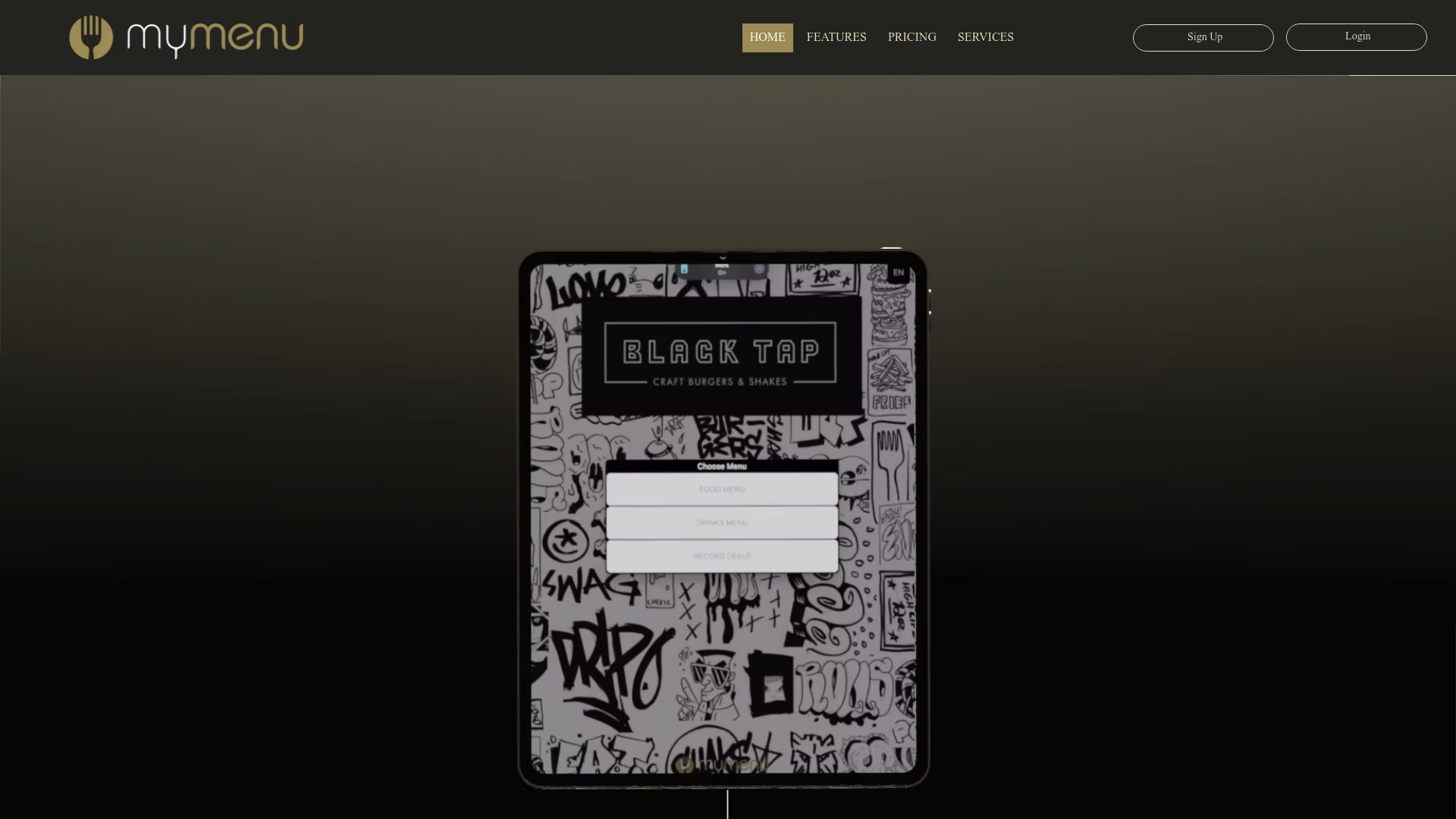
Mydigimenu connects digital menu ordering with flexible payment acceptance, supporting multiple currencies, digital wallets, and even cryptocurrency payments. The platform’s QR code menus and tablet ordering systems reduce the gap between what a guest wants and how quickly they can pay for it. For restaurants, cafes, bars, and hotels looking to align their payment experience with modern guest expectations, Mydigimenu offers a practical starting point. Explore Mydigimenu’s pricing plans to find the right fit for your property.
FAQ
What is the role of payment options in hospitality?
Payment options in hospitality determine how easily guests can complete bookings and on-property transactions. They directly affect booking conversion rates, guest satisfaction scores, and operational efficiency.
Why do hotels require a credit card at check-in?
Hotels place a hold on a credit or debit card at check-in to cover potential incidental charges such as room service or damages. Prepaid cards are often declined because they do not support authorization holds reliably.
How does BNPL affect hotel revenue?
Offering Buy Now Pay Later at booking can increase average order value by up to 60% on high-ticket items. Guests who would otherwise book a lower-tier room often upgrade when installment options are available.
What payment methods do hotel guests prefer?
Guest payment preferences now include credit cards, debit cards, digital wallets like Apple Pay and Google Pay, bank transfers, and BNPL services. The preferred method varies by traveler profile, age group, and country of origin.
How do integrated payment systems reduce hotel operating costs?
Integrated payment systems connect the PMS, POS, and booking engine, eliminating manual charge entry and reconciliation errors. Automatic folio posting and centralized fraud detection reduce staff workload and compliance complexity.
Recommended
Comments