
The Future of Digital Hospitality: 2026 Strategy Guide

TL;DR:
Digital hospitality’s future depends on AI integration that enhances staff empathy and guest satisfaction.
Successful transformation requires redesigning workflows and unifying data before adopting new digital tools.
The future of digital hospitality is being written right now, and the most dangerous myth still circulating the industry is that technology is here to replace your staff. It is not. The hotels, restaurants, and resorts pulling ahead in 2026 are the ones using AI, smart systems, and digital guest tools not to reduce headcount but to free their people for the moments that actually build loyalty. This guide breaks down what digital transformation really looks like in practice, which trends deserve your attention, and how to act on them without losing what makes hospitality worth experiencing in the first place.
Table of Contents
Key takeaways
Point | Details |
AI amplifies, not replaces | Digital tools handle repetitive tasks so staff can focus on meaningful guest interactions. |
Process redesign is non-negotiable | Layering tech over outdated workflows produces friction, not results. Redesign first, then digitize. |
Data integration unlocks real value | Moving from siloed legacy systems to unified, machine-readable data is where efficiency gains live. |
Guest experience is the true metric | Technology investments should be measured by guest satisfaction scores, not just cost reduction. |
Human warmth stays irreplaceable | Emotionally intelligent hospitality, supported by smart tools, outperforms pure automation every time. |
The future of digital hospitality starts with foundations
Before chasing the newest AI chatbot or voice assistant, it helps to understand what digital hospitality actually means at its core. At its broadest, hospitality digital solutions encompass any technology that transforms how guests are served, how operations run, and how data flows through a property. That includes Property Management Systems (PMS), AI-driven booking engines, IoT devices, digital menu platforms, mobile concierge apps, and everything connecting them.
The PMS is evolving fast. Legacy PMS platforms are giving way to open commerce hubs that connect best-of-breed specialist tools rather than locking operators into monolithic software. Think of it less like a single dashboard and more like an operating system that lets specialized AI apps plug in and work together. That architecture shift matters enormously for operators who want flexibility without sacrificing data coherence.
What does this look like on the ground? A cloud-based PMS can reduce administrative time by 25 hours per month, cut stockouts by 40% with digital inventory management, and bring operational efficiency up by as much as 30%. Those are not abstract gains. That is your front desk team spending less time on check-in paperwork and more time making a first impression that guests remember.
Key components of a well-integrated digital hospitality setup include:
Cloud-based PMS connecting reservations, housekeeping, and billing in real time
AI-powered concierge and chatbot tools handling routine queries at scale
IoT devices managing room temperature, lighting, and energy consumption automatically
Digital menu and ordering platforms capturing guest preferences at every touchpoint
CRM and loyalty integrations turning transactional data into personalized outreach
Pro Tip: Before adding any new tool, audit where your staff currently spends the most repetitive time. The highest-ROI digital investments almost always address the most time-consuming manual processes first.
AI-driven trends reshaping hotel operations
AI is no longer a future promise in hospitality. It is already changing how hotels price rooms, respond to guests, and manage energy. AI-driven chatbots now handle 85% of guest queries without human intervention, and AI concierge services have pushed satisfaction scores up by 22% at properties that have deployed them well. That is a meaningful lift achieved without adding a single staff member.
Dynamic pricing is another area where AI earns its keep quickly. Revenue management tools that once required specialist analysts are now accessible to mid-scale properties, adjusting rates in real time based on demand signals, competitor pricing, and local events. The result is smarter yield without the guesswork.
Then there is the emerging world of agentic commerce. Google has named hotels as a key vertical for AI agents that can autonomously research, match, and complete bookings on a traveler’s behalf using its Agent Payments Protocol. For hospitality operators, this means your property’s discoverability and data structure will determine whether an AI agent recommends you or your competitor. It is a distribution shift as significant as the rise of online travel agencies.
AI Application | Operational Impact | Guest Impact |
Chatbots and virtual concierge | Reduces staff workload by up to 70% | Faster query resolution, 24/7 availability |
Dynamic pricing tools | Optimizes revenue per available room | Transparent, competitive rates |
Predictive maintenance (IoT) | Reduces equipment downtime by 22% | Fewer disruptions during the stay |
Personalized marketing AI | Higher campaign conversion rates | Relevant offers based on actual preferences |
Agentic booking systems | Broader reach through AI-driven distribution | Frictionless, research-free booking |
The properties winning right now are those treating AI as a strategic layer woven into operations, not a novelty bolted on for press releases. AI-first hotels are reporting a 12% boost in occupancy and significantly leaner cost structures compared to peers still taking a piecemeal approach. The gap between early adopters and late movers is widening every quarter.
Keeping the human connection alive
Technology in hospitality has one job above all others: make it easier for people to be genuinely good to other people. Every piece of software, every sensor, every AI model should be evaluated against that standard. And yet the risk of losing the human thread in a rush toward automation is real.
“AI may transform operations, but hospitality will always need human connection.” — IHM Principal, as reported by The Hans India
That quote captures something operators often lose sight of during a digital transformation project. The goal is not a frictionless, human-free experience. It is a frictionless experience that creates space for human warmth, empathy, and genuine care to shine. When technology removes manual tasks, your staff are not made redundant. They are liberated to do the things no algorithm can replicate: remember a returning guest’s birthday, sense when someone has had a rough journey, or turn a complaint into a story the guest tells for years.
The concept of emotionally intelligent design is gaining traction in forward-thinking properties. This means physical and digital spaces built to recognize and respond to how guests actually feel, not just what they request. Consider a lobby that adjusts lighting to a warm glow as evening check-ins arrive, guided by occupancy sensors. Or a digital concierge that flags a guest’s earlier frustration so the next staff member can address it proactively. Experiential hospitality increasingly blends digital, cultural, and physical elements into spaces designed for emotional resonance rather than spectacle.
Pro Tip: When training staff on new digital tools, frame the conversation around what the technology frees them to do, not what it replaces. Adoption is dramatically faster when staff see digital tools as allies, not threats.
Practical strategies for digital integration
Knowing which technologies exist is one thing. Knowing how to weave them into your operation without creating a patchwork of disconnected tools is quite another. The most common mistake operators make is layering digital fixes on top of outdated workflows and then wondering why nothing improves. Successful transformation requires redesigning business processes, data models, and guest journeys from the ground up, not just swapping out a user interface.
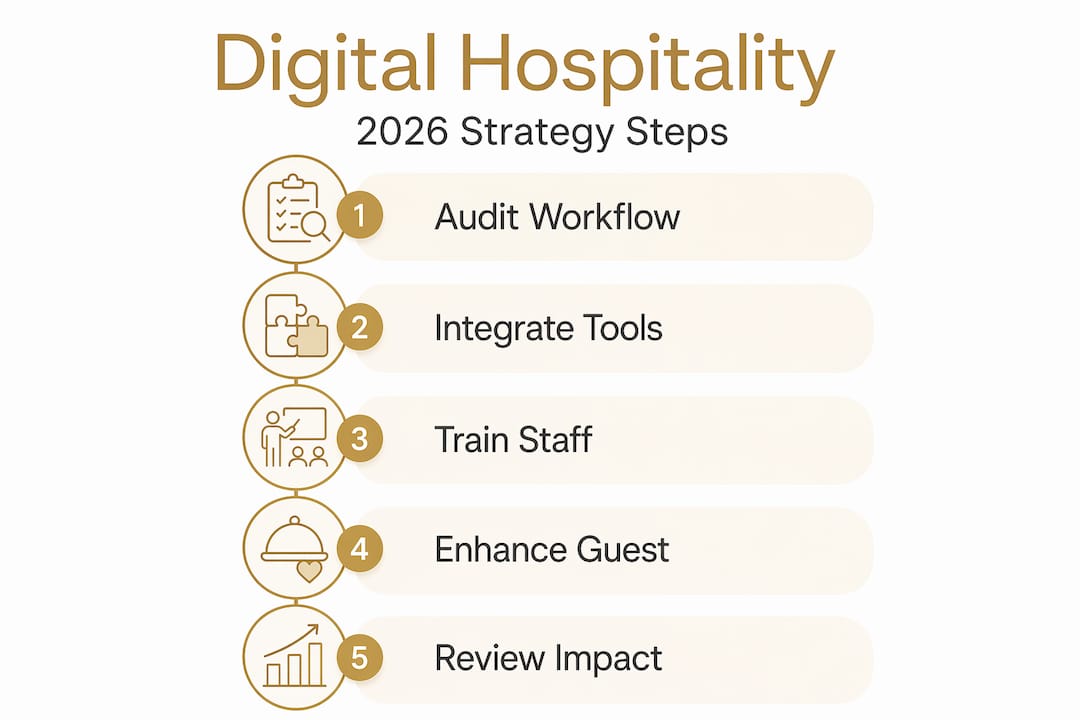
Here is a practical sequence that works:
Audit your data infrastructure. Identify where guest data lives, how it flows between systems, and where it gets siloed. Unified, machine-readable data is the prerequisite for any meaningful AI deployment.
Redesign the guest experience map. Walk every touchpoint from pre-arrival to post-stay. Mark where digital tools can eliminate friction and where human interaction should be preserved or added.
Prioritize high-impact, low-complexity wins first. Digital guest tools like mobile concierge apps reduce wait times by 35%, and 72% of guests already use hotel apps for requests. These are proven, low-risk starting points.
Build a unified digital shelf. Make your property’s services, experiences, and packages machine-readable so AI agents and distribution platforms can bundle and surface them effectively.
Measure what matters. Track guest satisfaction scores and repeat visit rates alongside cost metrics. If digital investments are not improving how guests feel, they are solving the wrong problem.
Integration approach | Best for | Risk level |
Modular, API-connected tools | Properties with mixed legacy systems | Low to medium |
Full platform replacement | New builds or major renovations | Medium to high |
Incremental touchpoint upgrades | Budget-conscious operators | Low |
AI-first operational redesign | Properties targeting competitive advantage | High reward, requires commitment |
For food and beverage specifically, digital table ordering is one of the fastest-returning investments available. Guests who browse visual, interactive menus spend more, order more confidently, and leave fewer items on the table. A well-designed digital menu captures preference data too, feeding the CRM systems that power personalized return visits.
What the next wave of digital hospitality looks like
The next chapter of hospitality digital transformation will be defined by properties that do not just use AI tools but are built around AI thinking from the start. That means leaner operational teams supported by intelligent automation, distribution strategies designed for AI-agent discoverability, and guest experiences that blend physical comfort, cultural authenticity, and digital personalization into something genuinely memorable.
Emerging trends worth tracking closely include:
AI-first operations where scheduling, maintenance, energy, and revenue management run on unified predictive models rather than separate point solutions
Agentic distribution where being discoverable by AI booking agents becomes as critical as ranking on a traditional search engine
Wellness and sustainability integration where digital systems track and communicate a property’s environmental and wellness credentials as part of the guest experience, not just a marketing footnote
Hyper-personalized guest profiles built from every digital interaction, enabling guest loyalty strategies that feel genuinely thoughtful rather than algorithmically generic
Multidimensional lifestyle ecosystems where hospitality properties merge culture, wellness, and creativity into experiences guests cannot find elsewhere
The properties that will define hospitality in the next decade are already moving. The gap between those who commit to digital transformation at depth and those who dabble with isolated fixes will only grow.
My perspective on technology and the human touch
I have watched a lot of digital transformation projects in hospitality, and the pattern that frustrates me most is the “technology shopping” approach. A property adds a chatbot here, a QR menu there, maybe a new app for check-in, and then wonders why the guest satisfaction scores barely moved. The problem is almost never the tools. It is the absence of a rethought process underneath them.
In my experience, the operators who get the most from digital investments are those who spend more time redesigning how their team works than they do evaluating software demos. When you rethink the workflow first, technology becomes a multiplier. When you skip that step, it becomes expensive noise.
I have also seen the “over-automation” trap play out in ways that genuinely damage brands. A hotel that routes every guest interaction through a bot, regardless of the emotional context, is not efficient. It is tone-deaf. The guests who needed a human moment and got a scripted response do not come back, and they do say something about it online.
What gives me genuine optimism is the growing number of operators who treat digital tools as infrastructure for their people, not a replacement for them. A dash of digital can turn everyday service into extraordinary memories, but only when the people delivering that service have been freed from the mundane and empowered to actually connect. That is the real promise of the future of digital hospitality, and it is absolutely within reach for operators of every size.
— Abhi
Transform your guest experience with Mydigimenu
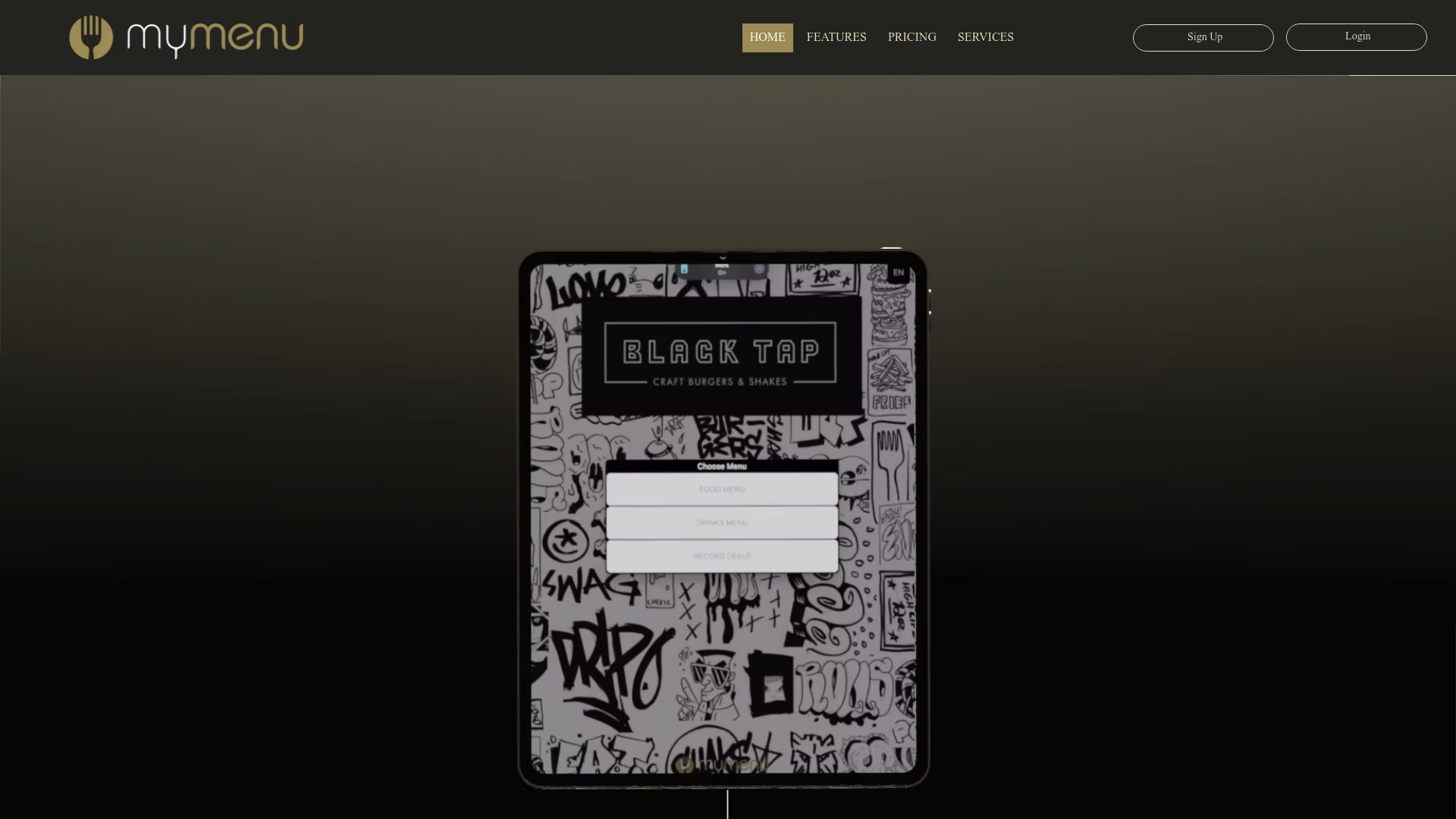
If this article has sparked ideas about where digital tools could create real impact in your property, Mydigimenu offers a practical place to start. Mydigimenu’s restaurant digital tablet menus and QR code menu solutions are purpose-built for hospitality operators who want to modernize the dining experience without complexity. Guests browse mouthwatering visuals, order with confidence, and your team spends less time fielding questions and more time delivering genuine hospitality. With CRM integration, loyalty features, and multilingual support built in, Mydigimenu connects directly to the digital guest engagement strategies discussed throughout this guide. Explore the options and find the plan that fits your property’s size and ambitions at Mydigimenu.com.
FAQ
What is the future of digital hospitality?
The future of digital hospitality centers on AI-first operations, agentic booking systems, and deeply personalized guest experiences built on unified data. Properties that redesign their processes around these technologies, rather than simply adding tools, will lead the next decade.
What are hospitality digital solutions?
Hospitality digital solutions include cloud-based PMS platforms, AI chatbots, digital menu systems, mobile concierge apps, IoT devices, and CRM tools that together improve operational efficiency and guest engagement. They work best when integrated into a single, connected data ecosystem rather than deployed in isolation.
How is hospitality changing because of technology?
Technology is shifting hospitality from reactive, manual service toward proactive, data-informed experiences. AI handles routine operations so staff can focus on emotional connection, while digital tools like mobile apps reduce guest wait times by up to 35% and increase satisfaction scores measurably.
Will AI replace hospitality workers?
AI will automate repetitive tasks but cannot replicate human warmth, empathy, or judgment. The most successful properties use AI to remove manual workload so their people can spend more time on the relationship-driven interactions that build real guest loyalty.
How should hospitality businesses start their digital transformation?
Start by auditing your data infrastructure and redesigning guest experience workflows before selecting tools. Prioritize high-impact, low-complexity investments like digital menus and mobile concierge apps, then build toward unified AI-enabled systems as your data foundation matures.
Recommended
Comments