
The Real Role of Data in Restaurant Marketing

TL;DR:
Effective restaurant marketing depends on unifying guest data across systems to develop actionable behavioral insights. First-party data and visit frequency are key to targeting, personalization, and maximizing revenue from loyal customers. Connecting existing systems and leveraging advanced analytics tools enable restaurants to make data-driven decisions that improve retention and growth.
Most restaurant owners collect plenty of data. Point-of-sale reports, online reviews, loyalty app activity, reservation logs. Yet the role of data in restaurant marketing is widely misunderstood. The assumption is simple: more data means better decisions. The reality is almost the opposite. Winning restaurant marketing in 2026 depends not on volume but on unified, actionable behavioral insights that actually tell you who your guests are and what moves them. This article cuts through the noise and shows you how to make your data work harder.
Table of Contents
Key Takeaways
Point | Details |
Unification beats accumulation | Fragmented data across systems creates blind spots; a single guest profile unlocks true personalization. |
First-party data is your most valuable asset | Owning direct ordering data gives you behavioral insight that third-party platforms never share. |
Visit frequency predicts revenue | A guest’s fifth visit is worth roughly 4.5 times their first, so retention drives outsized returns. |
Segmentation drives campaign results | Grouping guests by behavior and lifecycle stage dramatically improves marketing relevance and response rates. |
Real-time activation separates leaders | Acting on churn signals and sentiment data quickly is what distinguishes high-growth restaurants from the rest. |
The role of data in restaurant marketing starts with unification
Here is the problem most restaurants face: their data lives in silos. The POS captures what guests order. The loyalty platform tracks points. The online ordering system records delivery history. The reservation tool logs visit dates. None of these systems talk to each other by default, which means you end up with four partial pictures of the same guest and no complete story.
This fragmentation is the single biggest obstacle to smart restaurant marketing. Disconnected systems and inconsistent guest identity severely limit what you can do with even the best segmentation tools. You might know someone orders pad thai every Tuesday from your app, but if that same person has a loyalty account under a different email and dines in on weekends, you have no idea they are actually one of your most frequent guests.
The solution is what data professionals call a “golden record.” This is a single unified customer profile that merges identity and behavior across every touchpoint. When you build one, several things become possible that simply were not before:
True segmentation: You can group guests by actual lifetime visit frequency, not just app activity.
Personalized campaigns: You can send a win-back offer to someone whose in-person visits dropped, even if they still order online occasionally.
Accurate attribution: You can measure whether a campaign drove real incremental visits rather than just activity from guests who would have come anyway.
Budget efficiency: You stop marketing equally to everyone and focus spend where it returns the most.
Lazy Dog Restaurants put this into practice by implementing a platform that unified POS, loyalty, online ordering, and marketing data into single customer profiles, which enabled segmentation by location, preferences, and engagement patterns that simply did not exist before.
Pro Tip: Before adding any new data source, audit whether your existing tools can share data with each other. A clean connection between your POS and loyalty platform is worth more than three new analytics subscriptions running in isolation.
The data types that actually move the needle
Not all data is equally useful for marketing purposes. Restaurant owners often get distracted by metrics that feel important but do not directly inform decisions. Here are the data categories that matter most, and why.
Transaction history and visit frequency are the foundation. How often a guest visits, what they spend per visit, and whether that frequency is increasing or declining tells you more about their value than any demographic data. A guest’s fifth visit is worth about 4.5 times their first, which means frequency data directly predicts lifetime value. It also tells you who is drifting away before they actually leave.
Menu preferences and order behavior reveal what guests love and what they tolerate. A guest who always adds the premium add-on is telling you something about their willingness to spend. Someone who consistently orders the same low-margin item might respond well to a targeted upsell promotion. Consolidating POS, online ordering, and loyalty data into one behavioral view lets you make smarter menu, pricing, and promotion decisions than any gut instinct ever could.
Sentiment and review data often get treated as a customer service issue rather than a marketing signal. That framing costs restaurants real money. Negative sentiment patterns, especially around specific items or service times, are a leading indicator of churn. Catching them early lets you act before a guest decides not to return.
Contact and demographic data collected with consent is what enables you to actually reach guests. Without it, you can observe behavior but cannot act on it through direct channels like email or SMS.
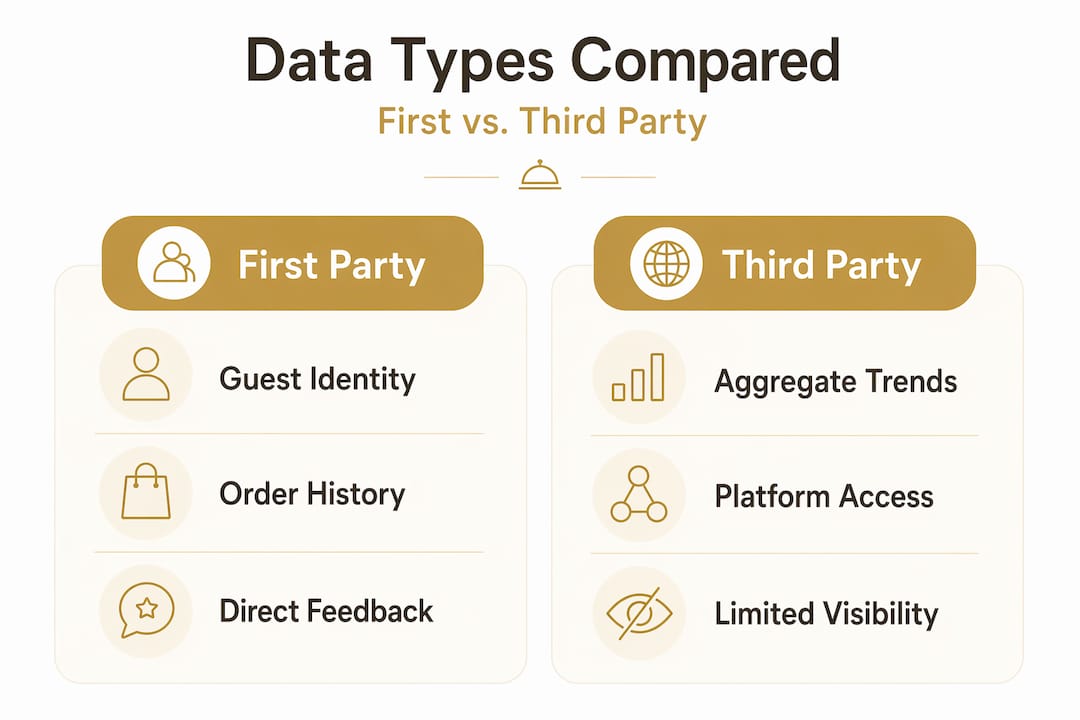
One distinction worth emphasizing: the difference between first-party data and third-party platform data is enormous. When guests order through a delivery marketplace, that platform keeps the behavioral data. You get the sale, but they get the insight. Restaurants that own first-party ordering data through direct channels see customer lifetime value increase by 67% compared to those heavily dependent on third-party platforms.
Turning guest data into targeted marketing campaigns
Once your data is unified and you know what types of information matter, the next step is translating that into campaigns that actually perform. Here is a practical sequence.
Segment by behavior, not just demographics. Divide your guest base into groups such as new guests (one to two visits), developing regulars (three to five visits), loyal advocates (six or more visits), and lapsed guests (no visit in 60-plus days). Each group needs a different message and a different offer.
Automate personalized touchpoints. Birthday offers sent three days before the occasion consistently outperform generic promotions. Win-back campaigns triggered when a regular goes 45 days without a visit recover a meaningful portion of guests who would otherwise churn quietly. The key is that these messages feel personal because they are based on real behavior, not batch-and-blast sending.
Tie campaigns to actual revenue, not just opens and clicks. Tracking whether campaigns attract new or repeat customers and linking outreach to real check data is what separates restaurants that know their marketing works from those that hope it does. If you cannot draw a line from a campaign to an incremental visit, you are measuring vanity metrics.
Reallocate budget toward your highest-value segments. The top 1% of guests generate 25 to 35% of restaurant revenue. Spending disproportionately to retain and delight them, through exclusive previews, loyalty perks, or personalized outreach, delivers returns that broad acquisition campaigns rarely match.
Use data to identify your best acquisition channels. When you know which channels first brought in your most frequent guests, you can invest there instead of spreading budget across every platform equally.
Pro Tip: When building win-back campaigns, segment lapsed guests by their historical spend level before setting the offer value. A high-spend guest who has gone quiet warrants a more generous incentive than someone who visited twice and spent modestly. The loyalty strategies you apply should reflect the segment’s actual worth.
Advanced tools and real-world results
The analytics conversation in restaurants has moved well beyond basic dashboards. Customer Data Platforms, or CDPs, are now purpose-built to handle the identity resolution challenge that makes unified guest profiles so difficult to build manually. These platforms ingest data from POS, loyalty, online ordering, and marketing tools, then stitch together individual guest identities even when the same person uses multiple emails or orders across channels.
Approach | What it enables | Limitation without it |
Fragmented data collection | Basic sales reporting | Cannot identify individual guest behavior across channels |
Unified guest profiles (CDP) | True segmentation, personalization, churn detection | Requires integration work upfront |
AI-driven real-time activation | Instant response to sentiment drops and at-risk guests | Needs clean, unified data as foundation |
First-party direct ordering data | Full behavioral view, targeted campaigns, lifetime value growth | Lost entirely when relying on third-party delivery platforms |
The Guest360 platform from Punchh illustrates what advanced attribution looks like in practice. It identifies 60 to 80% of guests from their very first transaction, before they ever join a loyalty program, and measures campaign performance by incremental visits and revenue across all guests, not just loyalty members. That kind of attribution removes the guesswork from budget decisions entirely.
AI is also reshaping how restaurants respond to sentiment signals. Rather than reviewing feedback manually each week, modern platforms can flag a surge in negative comments about a specific dish or service period in near real time, giving marketing and operations teams a chance to respond before it becomes a reputation problem. Restaurants that unify guest data and act in real time consistently outperform those still working from fragmented snapshots, and the gap is widening as these tools become more accessible. The role of data analytics in hospitality is shifting from descriptive reporting to predictive and prescriptive action, and restaurants that adapt early will have a durable competitive edge.
My take: the data trap most restaurants fall into
I’ve watched restaurant after restaurant invest in new analytics tools thinking that more data will finally give them the clarity they need. What I’ve consistently seen instead is that the problem was never a lack of data. It was that the data they already had was scattered across systems that had never spoken to each other.
In my experience, the single most transformative step a restaurant can take is not adding a new platform. It is connecting the ones they already have. When a POS transaction, a loyalty redemption, and an online order finally resolve to the same guest identity, the marketing picture changes completely. Suddenly you are not guessing who your best customers are. You know.
What I’ve learned is that the importance of data in the dining industry is not about having the most sophisticated tech stack. It is about having the discipline to collect clean, consistent, first-party data and the systems to act on it quickly. Restaurants using standardized data collection are 3.2 times more likely to make accurate marketing decisions. That stat should put a pin in the “more data is always better” argument.
My contrarian view: the restaurants winning with data right now are not the ones with the biggest budgets or the fanciest tools. They are the ones that got disciplined about the basics first.
— Abhi
How Mydigimenu helps you capture and use guest data
One of the most practical places to start building first-party data is at the point of ordering itself. That is exactly where Mydigimenu’s digital menu platform creates real marketing value.
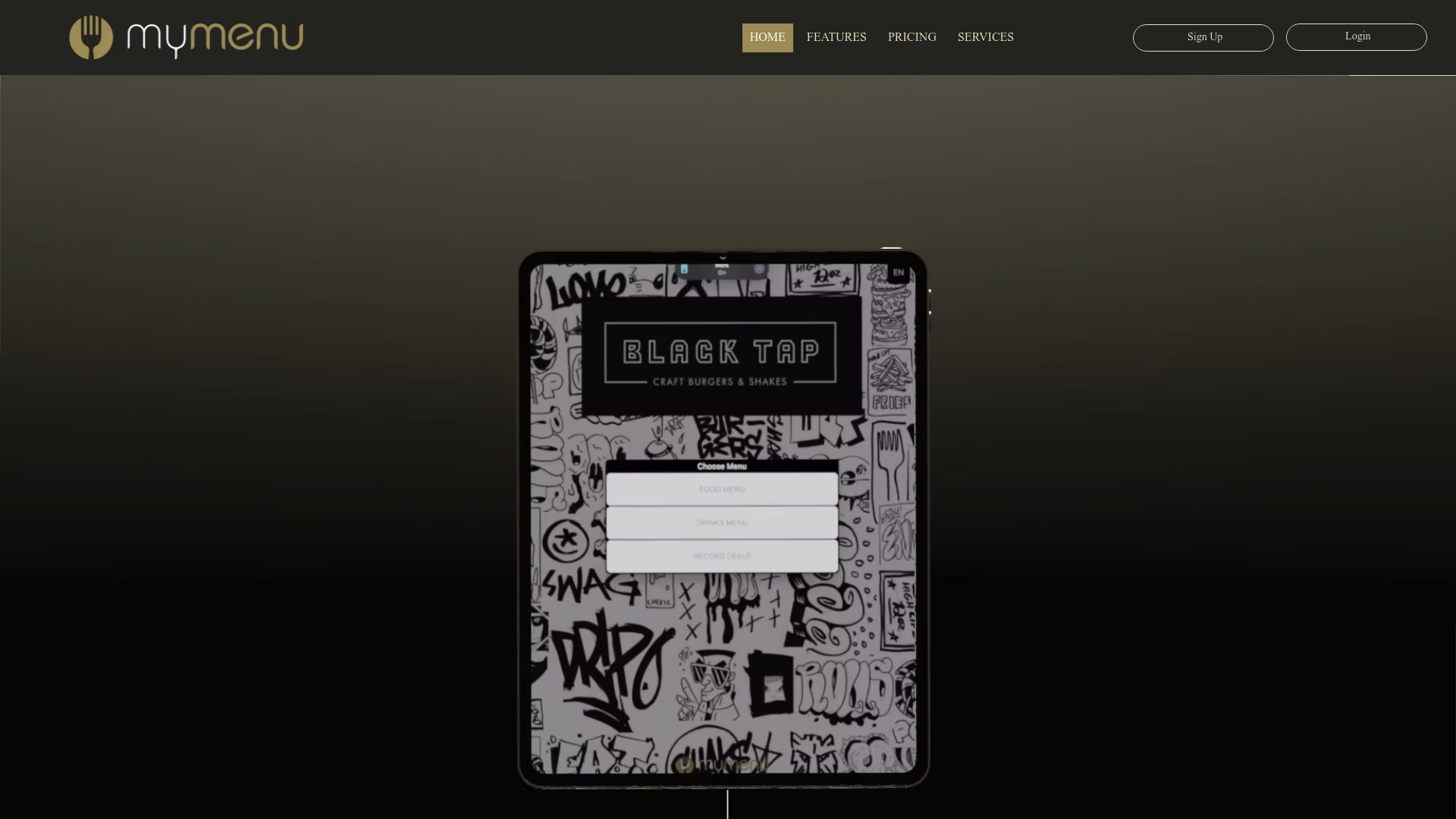
When guests browse and order through a QR menu, the interaction generates behavioral data you own entirely. Which items caught their attention? What did they add to the cart and then remove? What combinations do they favor? With Mydigimenu’s guest profile capture via social login, you can tie that behavior to an actual identity and feed it directly into your CRM and marketing workflows, without relying on a third-party platform that keeps the data for itself.
The platform’s tablet and iPad menu options extend this further in dine-in settings, where capturing in-person behavioral data has historically been the hardest challenge. Add loyalty program integration, targeted campaign tools, and guest feedback collection, and you have a system designed from the ground up to support the kind of targeted marketing that actually moves revenue. Explore Mydigimenu’s pricing and plans to find the right fit for your operation, whether you run a single-location café or a multi-site restaurant group.
FAQ
What is the role of data in restaurant marketing?
Data enables restaurants to understand guest behavior, personalize marketing campaigns, measure campaign effectiveness, and allocate budget to the highest-return segments. The critical factor is not how much data you collect but whether it is unified into a single, actionable guest profile.
Why is first-party data better than third-party platform data?
First-party data gives restaurants full visibility into guest identity and behavior, enabling targeted promotions and retention programs. Third-party delivery platforms retain that behavioral data for themselves, leaving restaurants with revenue but no insight.
What is a customer data platform (CDP) for restaurants?
A CDP is a tool that pulls data from multiple systems, such as POS, loyalty, and online ordering, and resolves it into a single guest profile. This enables accurate segmentation, personalized messaging, and real-time response to churn signals.
How do restaurants measure whether a marketing campaign actually worked?
Effective measurement ties campaign activity to incremental visits and real check data, not just email opens or clicks. Platforms like Guest360 from Punchh attribute revenue across all guests, not only loyalty members, which gives a far more accurate read on true campaign lift.
How does visit frequency affect restaurant revenue?
Visit frequency is one of the strongest predictors of guest lifetime value. A guest’s fifth visit is worth approximately 4.5 times their first, and the top 1% of guests by visit frequency generate 25 to 35% of total restaurant revenue.
Recommended
Comments