
Holiday Gift Card Play: Boost January Covers for Restaurant Managers

The fastest way to lift gift-card revenue is a holiday bonus-card stacking promotion, something like buy $50 and get a $10 bonus card, paired with delayed activation that seeds visits during your slowest weeks. Digital e-gift delivery and POS or CRM integration multiply the effect. The immediate move: turn on your POS gift-card module or launch an e-gift checkout on your platform before the holiday rush starts.
TL;DR:
Implementing a gift-card stacking promotion with delayed activation can double units sold and generate repeat visits that boost revenue in slow months.
Running staff scripts paired with in-store displays and bulk outreach to local businesses significantly increases gift-card sales and awareness.
Digital e-gift cards dominate most sales, but the platform must support instant delivery, social sharing, and CRM integration to scale effectively.
Testing the entire gift-card purchase and redemption flow beforehand helps prevent operational issues during peak season, ensuring smooth execution.
Tracking key metrics such as redemption rate, incremental spend, and liability reconciliation is essential for understanding ROI and avoiding year-end surprises.
Table of Contents
Your 4-Week Launch Checklist For A Restaurant Gift Card Promotion
Which Restaurant Gift Card Promotion Tactics Actually Drive Revenue?
What Platform Features Actually Scale A Gift-Card Promotion?
When Should You Run Gift-Card Promotions Throughout The Year?
How Mydigimenu Makes Your Holiday Gift-Card Promotion Easier To Run
Your 4-Week Launch Checklist For A Restaurant Gift Card Promotion
Most restaurants wait too long to get their gift-card infrastructure in order, then scramble through the first two weeks of December fixing things that should have been ready in October. A tight four-week runway prevents that.
Week 1: Enable your POS gift-card module or activate the e-gift feature in your ordering platform. Decide on preset denominations, plus a custom-amount option, so buyers aren’t boxed into awkward increments.
Week 2: Order physical card stock if you’re offering a tangible product. Set your terms of service and PIN verification process now, not after your first fraud dispute.
Week 3: Train every server and host on the promotion, and design a simple in-store display along with a line on receipts pointing to your gift-card page.
Week 4: Add a prominent gift-card link to your homepage navigation, build a one-page checkout, and set up a bulk-order contact address with a basic invoice template ready to send.
Lock your operational controls before launch: a documented balance-check method, a fraud-prevention step for large digital purchases and a monthly reconciliation process that matches gift-card liability against your books. Skipping that last piece is how restaurants lose track of six-figure liabilities without ever noticing. A week-by-week operational cadence like this is standard advice among restaurant operators heading into peak season for good reason: it works.
Which Restaurant Gift Card Promotion Tactics Actually Drive Revenue?
Not every gift-card promotion pulls its weight equally. Some tactics generate real incremental visits; others just shift revenue you’d have gotten anyway. Here’s what separates the two.
Bonus-card stacking is the highest-leverage tactic available to most independent restaurants. The structure matters more than the discount size: sell a $50 gift card, issue a separate $10 bonus card, delay that bonus card’s activation until January or February, and set an expiration date that forces a visit within a defined window. Well-structured stacking promotions can double units sold during the holiday push, and the bonus card frequently drives a second visit worth more than its face value once the guest is back in the building ordering apps and drinks. The delayed activation is the entire point. It converts December cash into January covers, exactly when your dining room needs bodies. That timing shift toward slow months is what makes stacking promotions worth the setup effort rather than just a discount by another name.
Staff scripting closes the gap between “we sell gift cards” and “we actually sell gift cards.” A one-line prompt at check drop, something as simple as “we’ve got a holiday bonus-card promotion running right now if you’re doing any gift shopping,” converts far more than a table tent or a QR code nobody scans. Pair it with a small incentive: $5 per gift-card sale or a monthly leaderboard prize keeps front-of-house engaged past week one.
Corporate and bulk orders remain underused by most independent operators. Direct outreach to nearby businesses ahead of the holidays tends to outperform waiting for corporate buyers to find you.
Smaller, low-friction plays add up too: offering a gift card as change instead of cash back, printing a QR link on every receipt, and keeping tasteful table tents near the host stand.
Pro Tip: Map your preset denominations to real guest experiences, like a dinner for two or a Sunday brunch for four, instead of round numbers like $25 or $100. It anchors buyer behavior and keeps people from underbuying relative to what they actually intend to gift.
What Platform Features Actually Scale A Gift-Card Promotion?
Digital and physical formats each win in different situations. Physical cards still matter for boutique gifting, holiday markets, and partner displays where someone wants to hand over something tangible. But digital e-gift cards now account for a majority of restaurant gift-card volume in most segments, largely because they’re instant, mobile-friendly, and cost nothing to fulfill.
Scaling a promotion past a handful of manual sales requires specific platform capabilities:
Instant e-gift delivery so a last-minute buyer at 11 p.m. on December 23 can still send a usable card.
Scheduled delivery for buyers who want the card to land on the actual holiday morning, not the purchase date.
One-page mobile checkout that doesn’t force an app download or account creation.
Social delivery links so a card can be shared through text or social messaging, not just email.
POS and CRM sync so every gift-card sale and redemption feeds the same guest record as reservations and orders.
Loyalty integration and reload options that turn a one-time gift-card purchase into an ongoing relationship.
That last point is where most restaurants leave money on the table. Tying gift cards to loyalty and guest profiles means the person who redeemed a $50 card in January isn’t a stranger again in February. They’re a known guest you can email about your Valentine’s Day menu.
Before your holiday push goes live, run the entire flow end-to-end at least once: purchase, scheduled delivery, balance check, in-store redemption, and the resulting report landing correctly in your revenue dashboard. Testing this in November beats discovering a broken redemption flow on December 24.
When Should You Run Gift-Card Promotions Throughout The Year?
November through December is peak season, and it deserves a real cadence, not a single email blast. A reasonable schedule looks like: an early-November teaser email to your CRM list, weekly social posts through Thanksgiving week, a site banner announcement the moment your stacking promo goes live, and geo-targeted ads to local zip codes starting the first week of December.
Secondary windows matter more than most operators realize:
Valentine’s Day: gift cards positioned as a low-pressure alternative to reservation scarcity.
Mother’s Day and Father’s Day: family-focused messaging, often paired with brunch-specific denominations.
Graduation season (May–June): framed around celebration dinners for local families.
Corporate gifting (October–December): bulk outreach timed ahead of office holiday budgets closing out.
Placement determines whether any of this converts. A gift-card link belongs in your primary site navigation, not buried in a footer. Reservation confirmation emails should carry a purchase link, checkout flows should offer a gift-card upsell, and your social bio link should point straight to checkout rather than your homepage. Local partnerships, cross-promoting with a nearby boutique or salon around the holidays, extend reach without ad spend. Restaurants that treat their email list as a promotion channel year-round, not just in December, see steadier gift-card sales across these secondary windows.
How Do You Calculate ROI On A Gift-Card Promotion?
Run the math before you commit to a bonus size, because a $10 bonus on a $50 card behaves very differently depending on redemption rate and average check.
Metric | Assumption | Result |
Gift cards sold | units at $50 | $2,000 in upfront revenue |
Bonus cards issued | $10 each, activated in January | $2,000 total bonus liability |
Bonus redemption rate | a return to redeem | incremental covers driven by bonus visits |
Average check per bonus visit | incremental spend beyond the bonus cost | incremental revenue |
Net effect | Incremental revenue minus unredeemed liability write-off | Net positive when redemption holds above roughly 40% |
Published operator examples consistently show this kind of structure landing net positive because the incremental spend from returning guests outweighs the cost of the bonus itself, provided redemption and average check stay in a reasonable range.
Track five numbers monthly: units sold, redemption rate, bonus activation rate, incremental covers driven by bonus visits, and breakage (cards never redeemed). Tie every gift-card transaction into your POS revenue report and guest CRM record, then reconcile outstanding liability against your books every month. Skipping reconciliation is how a $2,000 bonus liability quietly becomes a $15,000 surprise at year-end audit.
What I’d Fix First In Most Gift-Card Programs
Most restaurants bury their gift-card purchase option two clicks deep on a website nobody visits in December. That’s the single most expensive mistake I see. If a guest has to hunt for the “buy a gift card” button, you’ve already lost the impulse purchase that holiday shopping runs on. One-tap purchase paths aren’t a nice-to-have; they’re the difference between a promotion that sells and one that quietly underperforms.
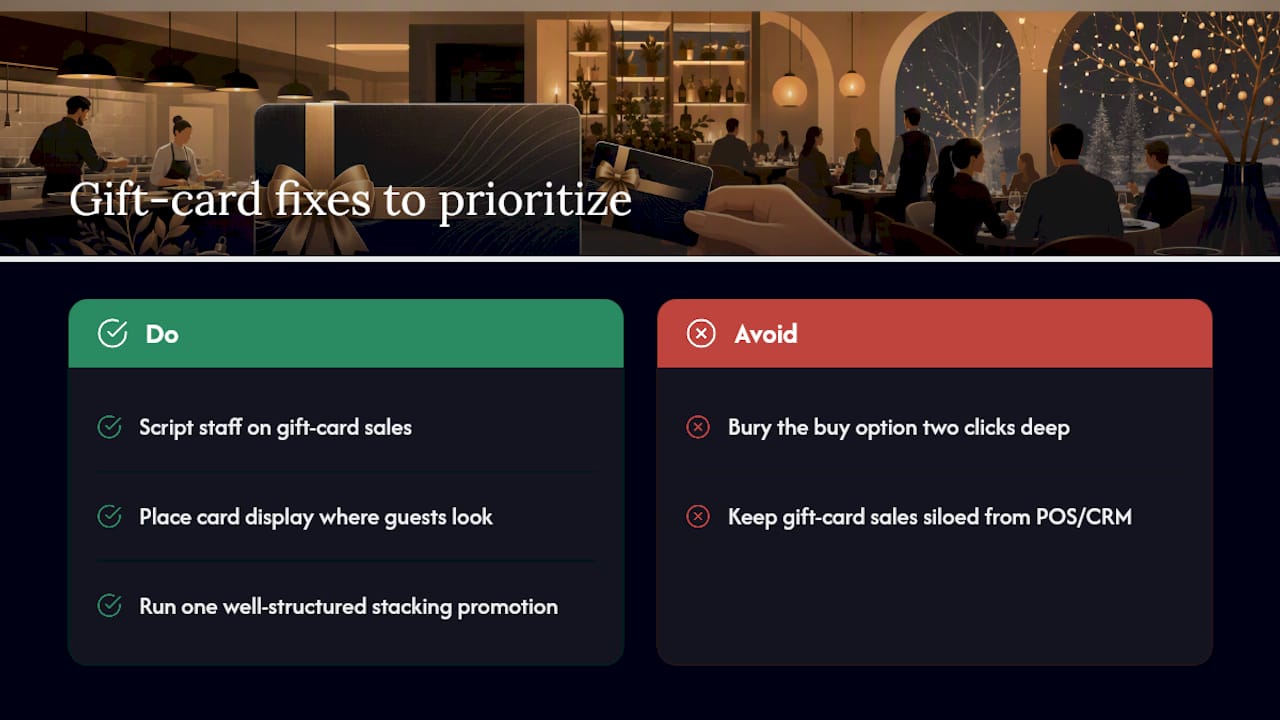
The second failure is treating gift cards as a side ledger instead of connected data. If your gift-card sales don’t talk to your POS and your CRM, you’re sitting on a list of guests you can’t market to.
If you do nothing else this year: script your staff, put a card display somewhere guests actually look, and run one well-structured stacking promotion. That’s the 80/20 of the entire category.
— Abhi
How Mydigimenu Makes Your Holiday Gift-Card Promotion Easier To Run
Running the checklist above manually, POS setup, e-gift checkout, staff training, CRM syncing, eats up hours most managers don’t have in November. Mydigimenu bundles those pieces into one platform: QR code menus that carry a gift-card link directly to guests scanning at the table, e-gift checkout built for mobile, and guest profile capture that automatically folds every gift-card buyer into your CRM for loyalty and remarketing later.
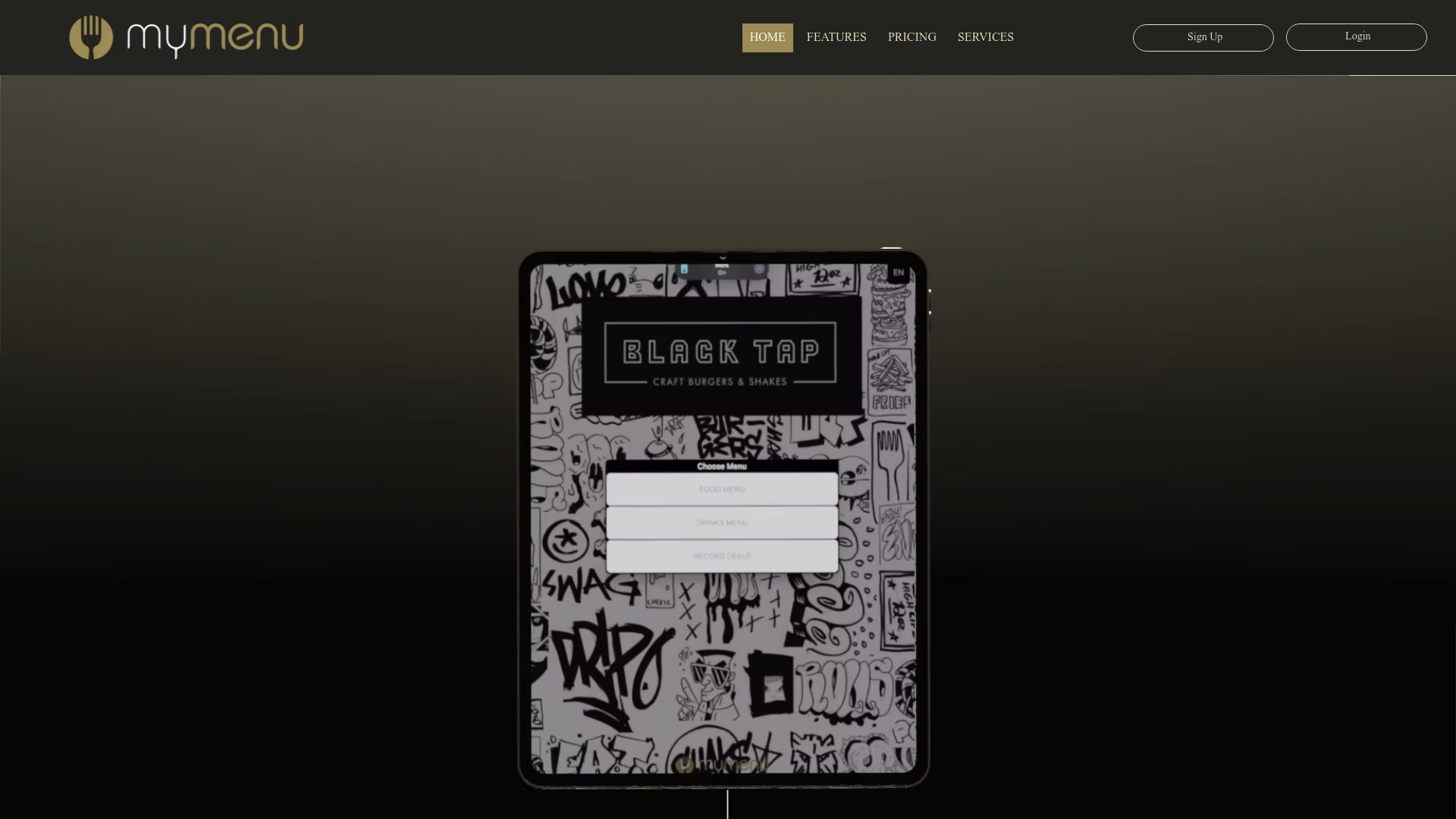
For a holiday stacking campaign, the starter setup is straightforward: activate e-gift sales through the digital tablet and iPad menu system, link your bonus-card terms directly in the checkout flow, and let scheduled delivery handle the guests who want a card to arrive on the actual holiday. Bulk and corporate orders route through the same dashboard, so a five-figure office order doesn’t require a separate manual invoice process. If you’re building out table-side QR ordering alongside your gift-card push, the QR menu tool puts that purchase link in front of every dine-in guest automatically. Set up your holiday campaign this week and have it live before your first December rush.
Sources
Recommended
Comments