
Top 3 Digital Menu Solutions for restapp.com Alternatives 2026

Finding a digital menu platform that drives orders, supports multimedia, and protects profit margins is tougher than expected for hospitality managers and owners. Many popular platforms hide full pricing, lock core features like integrations or zero commission behind premium plans, or limit language and currency support. This comparison highlights pricing, multimedia options, and integration depth so hospitality managers and owners can select a digital menu solution that fits their venue’s needs.
Table of Contents
My DigiMenu
At a Glance
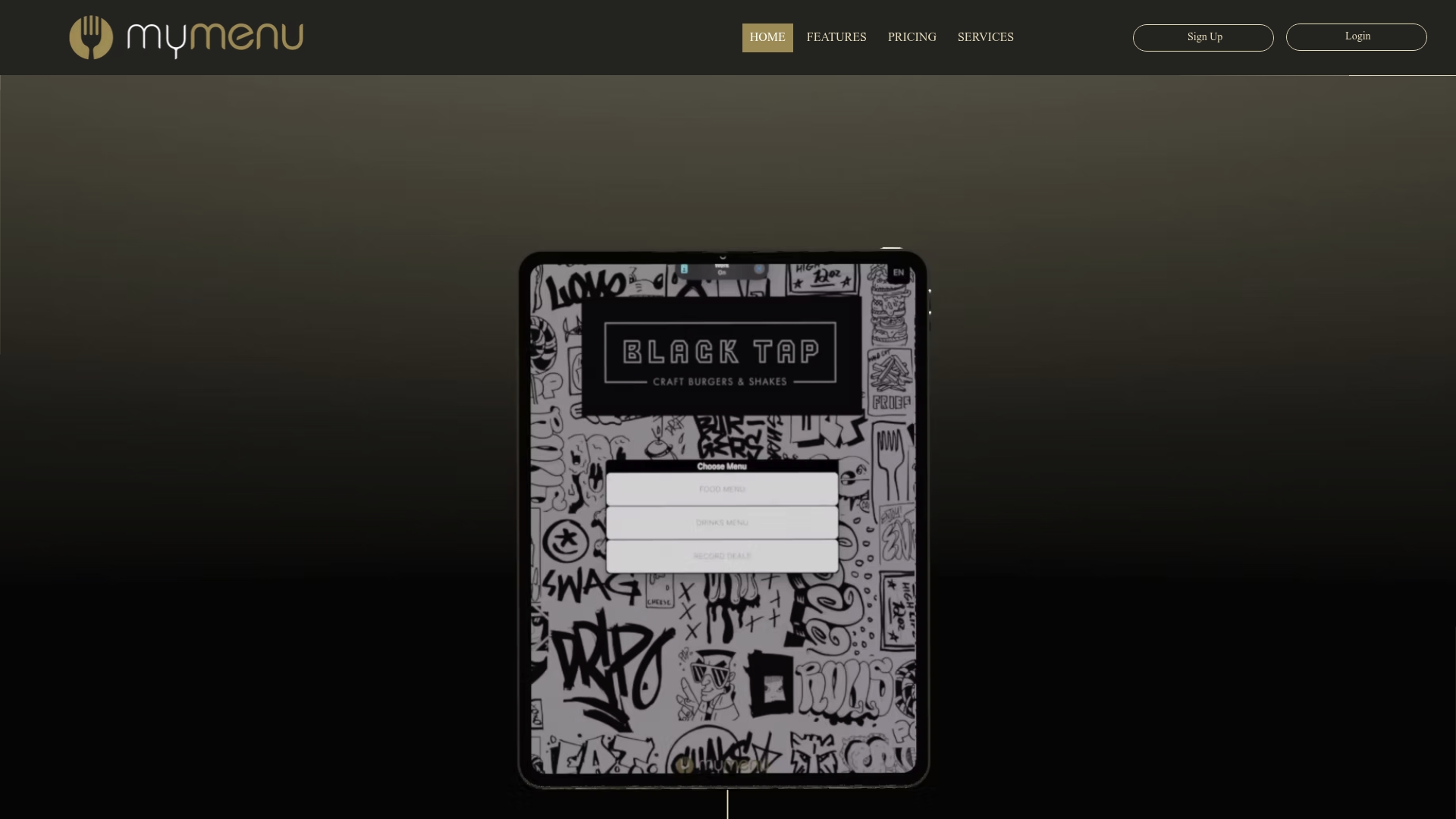
My DigiMenu reports a 15% sales increase tied to autoplaying high quality food videos. The system pairs QR and tablet menus with online ordering that charges zero commission to venues. It supports multi language and multi currency operations and integrates with POS, payment gateways, and delivery platforms.
Core Features
QR and tablet menus display images and high quality food videos while AI powered tools generate menu descriptions to match each dish. Online ordering runs with zero commission and accepts cryptocurrency payments, social login, and mobile OTP via SMS or WhatsApp. The platform includes reservation and table management, guest CRM, campaigns, loyalty stamp cards, feedback capture, nutrition facts, chat, and customizable digital signage for order status.
Key Differentiator
Autoplaying food videos are the signature interaction here. Videos begin at the point of decision and keep guests focused on menu items. That reported uplift suggests video content converts browsing into paid orders more often.
Pros
Rich multimedia menus and AI powered descriptions let dishes tell a concise story and encourage add ons. Online ordering with zero commission reduces per order cost and protects margin for venues. Broad language support for 50 languages and currency support for 70 currencies helps multi location operations. Integrations with POS systems, payment gateways, reservation systems, and delivery platforms simplify connectivity and reduce manual order reconciliation.
Cons
Public pricing tiers are not listed, which makes cost comparison before contact difficult.
Notable Integrations
POS systems
Payment gateways
Online delivery platforms
Reservation systems
Who It’s For
Hospitality managers and owners running restaurants, bars, cafes, or hotels who want a multimedia menu that also handles orders, reservations, and guest data. Teams that value low transaction fees will find the zero commission ordering useful. Larger venues with multiple locations will benefit from the language, currency, and wide integration coverage.
Unique Value Proposition
Online ordering with zero commission is the most concrete cost advantage for venues. Combining that lower transaction cost with autoplaying menu videos raises the chance a guest upgrades or adds a course at checkout. For venues that need both margin protection and stronger visual merchandising, this pairing changes how digital menus influence average checks.
Real World Use Case
A hotel chain deploys My DigiMenu across its restaurants and pool bars to offer contactless menus, loyalty rewards, and real time order updates on digital signage. Staff use the guest CRM and social login to capture profiles and send targeted campaigns. The result reported by the vendor is higher guest satisfaction and smoother order flow across outlets.
Pricing
Public subscription tiers are not published on the vendor site. The company advertises zero commission on online orders but does not show per month or per seat fees publicly. Contact sales for deployment pricing and integration quotes.
Website: https://mydigimenu.com
Menu Tiger
At a Glance
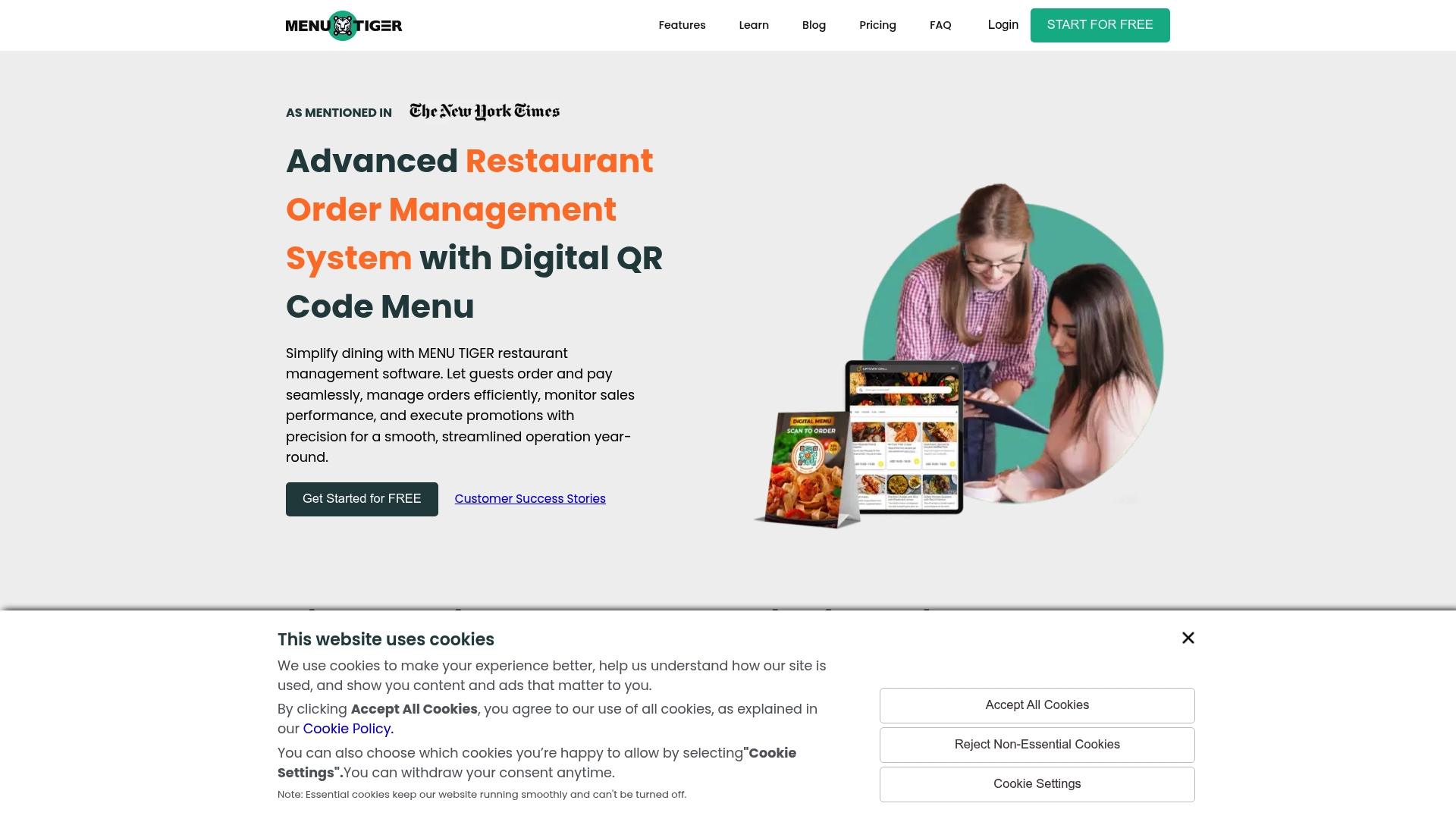
Menu Tiger reports an all in one restaurant management system that includes QR code menus, order management, and sales analytics. The platform advertises support for contactless ordering and multilingual menus. That combination targets restaurants that want menu control, payment handling, and simple reporting from a single dashboard.
Core Features
Menu Tiger lets staff publish QR code menus and push real time menu and price changes to guests on phones and tablets. It handles ordering and payments and collects sales and revenue analytics with detailed reports. The system also offers pre designed templates for menus and marketing materials, plus support for promotions, feedback capture, and scheduling marketing campaigns.
Key Differentiator
Menu Tiger combines menu display, order routing, and analytics in one package while offering integrations with standard POS and payment providers. That focus reduces the number of separate tools a cafe or restaurant must manage. The integration with payment gateways and Loyverse POS aims to keep order flows continuous from guest to checkout.
Pros
Menu Tiger is quick to set up and easy to use, so staff can publish a QR code menu without a long onboarding project. The analytics module surfaces sales trends and item performance, helping managers test pricing and promotions. The templates and multilingual support simplify guest-facing design work, and the included payment gateway links help reduce manual reconciliation for many operators.
Cons
Some advanced features such as custom domain white label and WiFi QR codes require higher tier plans, which raises monthly costs for small operations.
The free plan limits tables and QR codes, so larger or high volume restaurants may need a paid tier to handle service levels.
Integrations like Zapier and Canva appear on higher plans only, adding another upgrade step for automation and design workflows.
When It May Not Fit
Menu Tiger focuses on restaurants and similar food service locations and may not suit retail businesses or venues with complex event needs. Large restaurant groups that need unrestricted tables and accounts could find the free tier limiting. Teams that require deep custom integrations beyond the listed partners should expect to move to higher plans.
Notable Integrations
Loyverse POS
Stripe
PayPal
Adyen
Zapier (available on higher plans)
Canva (available on higher plans)
Who It’s For
Restaurants and cafes seeking an entry point into contactless ordering will find Menu Tiger practical and familiar. Independent operators who want analytics without managing multiple vendors will prefer its single dashboard. Multi location small chains that need multilingual menus and promotion scheduling will gain operational clarity from the reporting features.
Real World Use Case
A neighborhood cafe publishes a QR code at each table and uses Menu Tiger to update prices and daily specials from a tablet. Orders arrive at the kitchen and payments process through Stripe or PayPal, shortening the guest wait. The manager reviews weekly sales reports and drops underperforming items from the printed lineup.
Pricing
Menu Tiger uses a freemium model with paid tiers. Paid plans start at $17 per month, with an advanced plan at $46 per month and a premium plan at $119 per month. Higher tiers unlock white label options, WiFi QR codes, and expanded third party integrations.
Website: https://menutiger.com
Restoplus
At a Glance
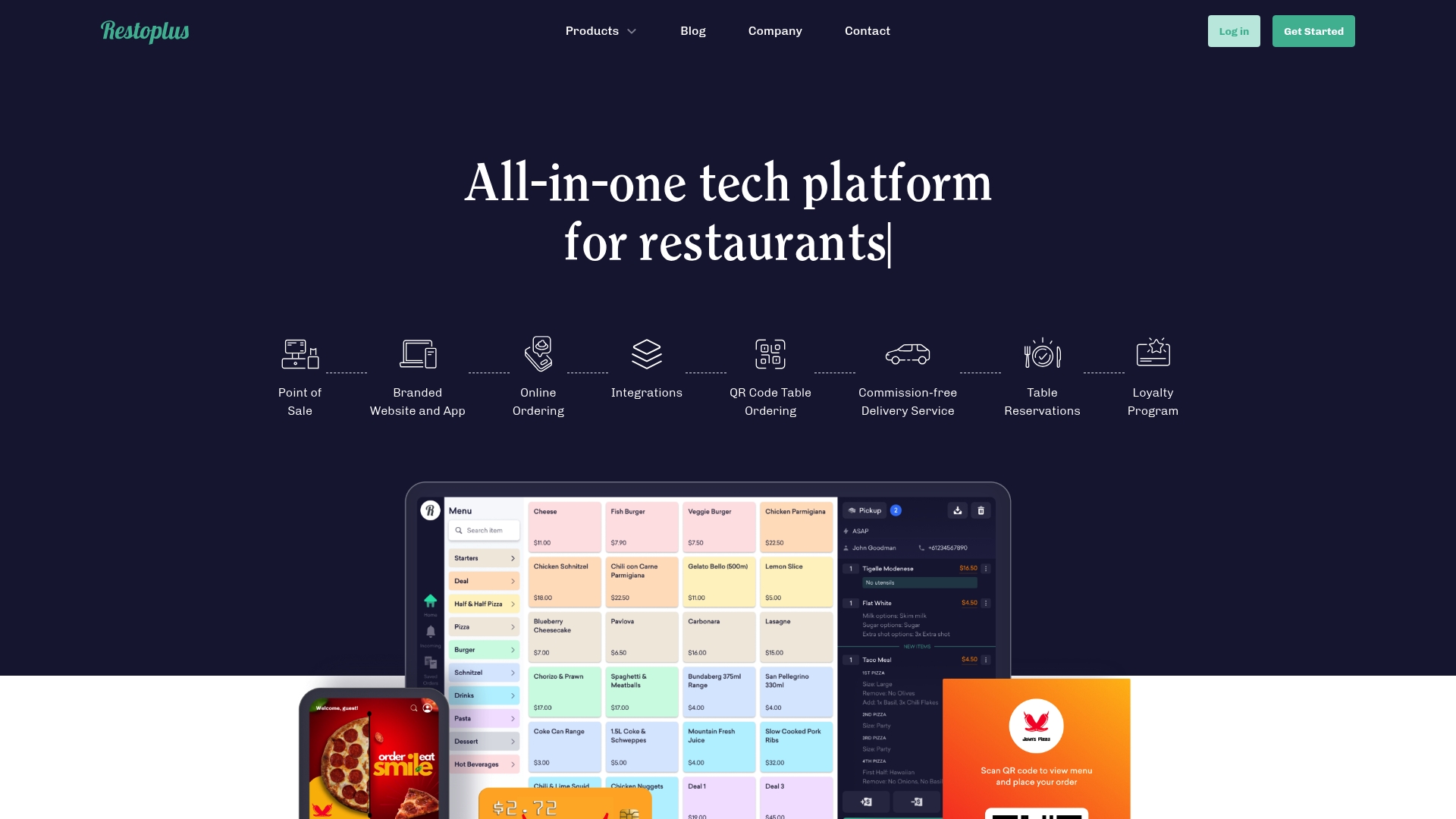
Commission-free delivery routes orders through the Uber driver network or your in house drivers while the system handles automated driver scheduling. The platform bundles point of sale, online ordering, reservations, and marketing tools into one vendor relationship. Several features such as AI voice ordering and inventory integrations are listed as coming soon.
Core Features
Restoplus combines a Point of Sale system with a branded website and mobile app that include SEO-friendly pages and rich food imagery. The online ordering module supports loyalty programs, commission-free delivery, and multi channel order aggregation so you can consolidate phone, web, and delivery marketplace orders. Front of house features include QR Code table ordering, real time table reservations, SMS campaigns, and a Kitchen Display System paired with optional printers and tablets for order routing.
Key Differentiator
The standout capability is the integrated commission-free delivery model using Uber drivers or in house drivers with automated driver scheduling. That mix links delivery routing to orders, reservations, and in house fulfillment in a single system. Other vendors often require separate delivery partners or manual scheduling.
Pros
The platform reduces vendor count by offering POS, ordering, delivery, and marketing under one roof, which shortens vendor management work for managers. Delivery options include a no commission route through Uber or your own drivers, which can reduce per order fees. Staff and guests report an intuitive interface for ordering and table service, and branding options let you present a unified online presence.
Cons
Pricing tiers or per unit costs are not published in public materials. You must contact sales for accurate quotes.
Several capabilities such as AI voice ordering and Xero integration are marked as upcoming rather than available now.
Independent performance metrics and third party reviews are not provided, so expected uptime and throughput rates are unclear.
Who It’s For
Growing restaurants, cafes, and pizzerias that want a single vendor to manage POS, online ordering, delivery, reservations, and loyalty will find this platform relevant. Operators who plan to run their own drivers or who want a delivery option without marketplace commissions will see particular value. Smaller operators who need only a simple menu page may find the scope more than they need.
Real World Use Case
A local café uses Restoplus to accept web orders, manage QR code table checks, and run a digital stamp loyalty program after each purchase. Reservations appear in the same dashboard as incoming orders, and kitchen staff follow tickets on the Kitchen Display System. That setup reduced manual call handling and shortened ticket times for peak service.
Pricing
Restoplus does not publish pricing tiers publicly. The vendor lists features and delivery options but asks businesses to request a quote for implementation costs and hardware add ons. Contacting sales is the fastest way to get a tailored price based on locations and required hardware.
Website: https://restoplus.com
Comparison of alternatives
For businesses seeking digital menu solutions, an assessment of My DigiMenu alongside Menu Tiger and Restoplus reveals strong distinctions across key hospitality software features. These platforms address diverse operational needs, focusing on various priorities such as user engagement, integration, and functional scope.
Marketing and Engagement Features
My DigiMenu innovates by integrating autoplaying high-quality food videos, which studies have shown lead to a 15% increase in sales. This functionality highlights dishes authentically, enhancing consumer interest. While both Menu Tiger and Restoplus offer fundamental menu visualization and management, My DigiMenu’s focus on visual engagement distinctly appeals to venues aiming to uplift sales through attractive food presentation.
Delivery and Service Integration
Restoplus excels with its integrated delivery solutions, allowing businesses to use their own drivers or access an Uber-based delivery network without incurring commission fees. This integrated system simplifies logistics and order management for venues prioritizing delivery processes. In comparison, while My DigiMenu and Menu Tiger offer delivery support, the in-depth driver management features make Restoplus a suitable choice for delivery-oriented operations.
Best fit
Select My DigiMenu for its ability to transform customer experiences with vivid visual presentations and AI-generated menu descriptions.
Choose Menu Tiger if your establishment requires rapid deployment and values detailed analytics within an intuitive single-dashboard solution.
Opt for Restoplus to consolidate POS, delivery, and loyalty services into one system that simplifies vendor management.
Our pick
My DigiMenu is our recommendation for establishments focused on achieving increased sales and optimizing customer engagement with visually appealing and interactive menu designs. However, operators prioritizing dedicated delivery logistics or simple onboarding might prefer exploring solutions like Restoplus and Menu Tiger respectively. For those embracing a multimedia-driven approach to dining experiences, My DigiMenu’s features uniquely elevate guest decision-making and satisfaction.
Digital menu systems differ in their multimedia features, ordering integrations, and pricing transparency, providing distinct options for hospitality managers seeking effective table service tools.
Product | Core Feature | Key Differentiator | Pricing | Notable Limitation |
Mydigimenu | Multimedia menus, CRM, campaigns | Autoplaying food videos | Price not published | Public pricing tiers not listed |
Menu Tiger | QR code menus, analytics | Integrated menu and payment handling | $17–$119 per month | Advanced features locked to higher plans |
Restoplus | POS, branded apps, delivery | Commission-free delivery option | Price not published | Key features marked “upcoming” |
How Can You Choose the Right Digital Menu Solution Among restapp.com Alternatives?
Finding a digital menu platform that delivers both cost savings and guest engagement can feel challenging. Mydigimenu answers this by offering zero commission online ordering paired with autoplaying food videos that increase sales by helping guests make confident choices. Hospitality managers and owners in restaurants, bars, cafes, and hotels will appreciate multilingual support and integrations with POS, payment, and delivery systems.
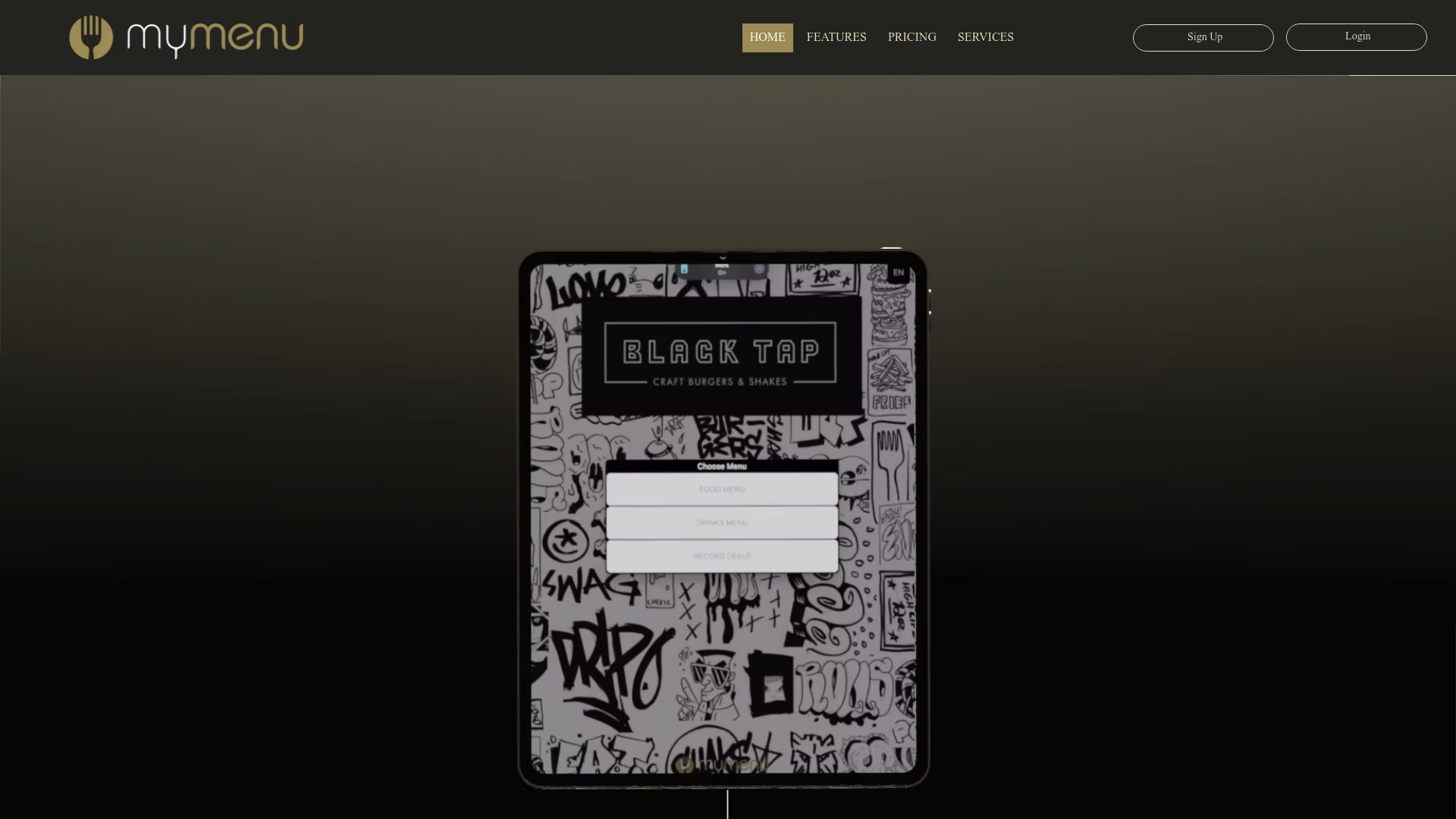
Explore how Mydigimenu can enhance your contactless ordering while preserving margin on every sale. Visit Mydigimenu to learn how to set up multimedia-rich menus and launch targeted marketing campaigns that increase average checks.
FAQ
What features does Mydigimenu offer for online ordering?
Mydigimenu provides online ordering with zero commission, enhancing profit margins for venues. This feature allows venues to accept payments through various methods, including cryptocurrency and social logins. This helps hospitality managers streamline their operations without incurring extra costs.
How does Menu Tiger compare to Mydigimenu in terms of ease of use?
Menu Tiger is quick to set up and user-friendly, making it simple for staff to publish QR code menus without a long onboarding process. This contrasts with Mydigimenu, which also offers rich multimedia menus but may require more initial setup for its advanced features. Independent operators will appreciate the straightforward configuration of Menu Tiger when managing contactless ordering and analytics.
What is the pricing model for Mydigimenu?
Mydigimenu does not publicly list its subscription tiers or pricing details, which may complicate upfront cost comparisons. Potential users should contact Mydigimenu’s sales team for tailored pricing based on their unique needs and deployment scope. This approach allows for a customized quote that matches venue requirements.
Can I use Mydigimenu if I operate multiple locations?
Mydigimenu supports multi-language and multi-currency operations, making it suitable for larger venues with multiple locations. This functionality ensures that hospitality managers can effectively manage their diverse clientele by offering localized services tailored to different regions. Teams looking to expand will find this feature beneficial for streamlined operations across several sites.
What kind of customer data management does Mydigimenu include?
Mydigimenu features a guest CRM that helps hospitality operators capture and manage customer profiles effectively. This tool not only collects essential information but also enables targeted campaigns, improving guest satisfaction and loyalty. Hospitality managers can leverage this data for stronger customer engagement strategies.
Recommended
Every destination has a story, but the road leading there can become part of the story too. Reviewing Mapquest Directions gives travelers a chance to understand the journey, anticipate important turns, and leave enough freedom to discover something memorable along the way.