
Unlock Reservation Management for Smarter Hospitality Ops

TL;DR:
Reservation management is a strategic process that optimizes guest bookings, flow, and personalization.
Implementing smart policies and technologies can boost efficiency, revenue, and guest experience significantly.
Matching reservation models and using AI-driven tools leads to better operations and stronger guest loyalty.
Most hospitality managers assume taking reservations is simply a matter of writing down names and times. But that narrow view leaves serious revenue on the table. Reservation management is a strategic discipline that shapes how guests experience your venue from the very first interaction. When done well, it synchronizes bookings, staff deployment, kitchen pacing, and guest personalization into a single, seamless operation. This article walks you through the essential concepts, proven models, smart technologies, and tangible business results that come from treating reservation management as the performance engine it truly is.
Table of Contents
Key Takeaways
Point | Details |
Strategic process | Reservation management is a disciplined approach to bookings that protects revenue and guest experience. |
Right-fit models | Choose between reservation-first or hybrid models based on your venue style and guest flow. |
Smart technology | AI and digital tools make it easy to manage capacity, predict no-shows, and personalize service. |
Proven results | Efficient reservation management boosts profits, speeds up service, and increases guest satisfaction. |
Defining reservation management in hospitality
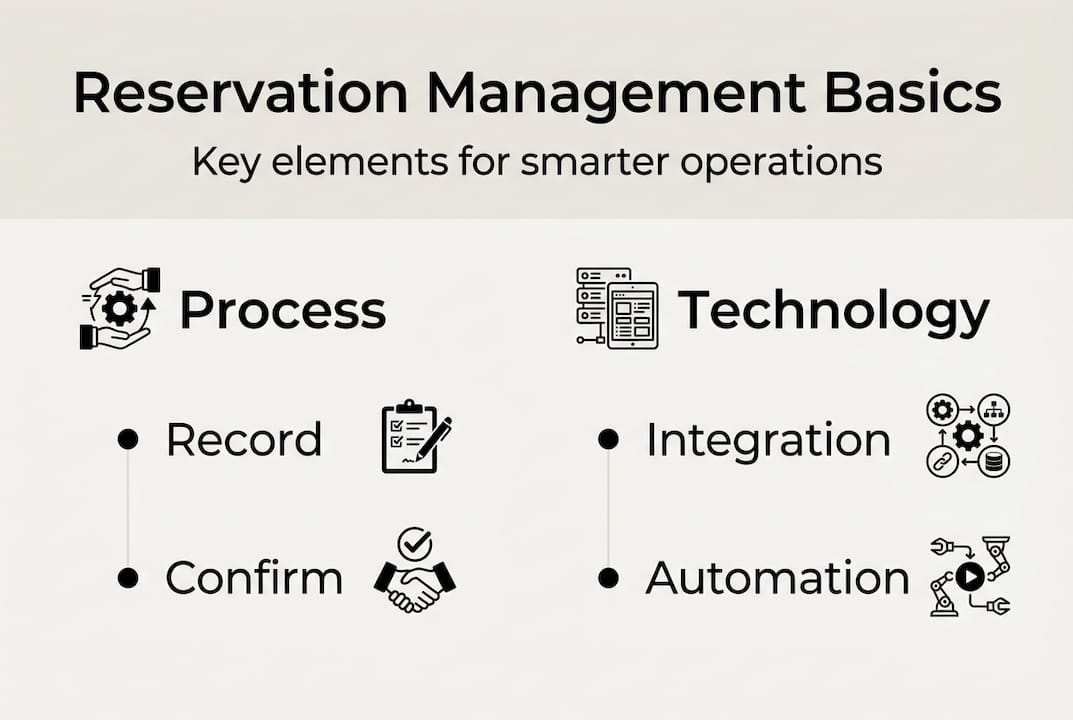
Reservation management is far more than a scheduling task. At its fullest, reservation management is the process of recording, confirming, and sequencing guest bookings against available seating or room capacity, managing waitlists, and optimizing table or room turnover in hospitality venues like restaurants, cafes, bars, and hotels. That definition might sound technical, but the real-world impact is anything but abstract. It touches every moment of a guest’s journey, from the instant they click “book a table” to the moment they settle their check.
Think of it as the connective tissue between your front-of-house team, your kitchen, and your guests. Without a structured process, even a talented team can find itself overwhelmed by overlapping arrivals, empty tables during peak hours, or frustrated walk-in guests who cannot get a straight answer about wait times.
Modern reservation management covers several distinct layers:
Pre-service booking: Capturing reservation details accurately and sending timely confirmations
Capacity sequencing: Staggering arrival times to prevent lobby bottlenecks and kitchen overload
Waitlist activation: Converting no-shows and cancellations into seated guests quickly
Turnover optimization: Pacing service so tables reset efficiently without rushing guests
Guest profile integration: Linking booking records to preferences, dietary needs, and visit history
One of the smartest operational moves a venue can make is maintaining a capacity buffer. Keeping roughly 10 to 15 percent of your seating uncommitted absorbs the inevitable no-shows without leaving your team scrambling. This buffer is not wasted space; it is your operational safety net.
“The difference between a chaotic Saturday night and a smooth one often comes down to how well you’ve pre-sequenced your arrivals and pre-positioned your team.”
Pro Tip: Review your reservation management methods monthly. Small adjustments to pacing intervals and buffer sizes can yield measurable improvements in guest satisfaction scores over time.
Smart systems today go several steps further by integrating guest profiles with operational data. When a regular guest books, the system can automatically flag their allergy notes, preferred server, or favorite table. That kind of personalization transforms a routine reservation into the foundation of a genuinely memorable visit.
Popular models: Reservation-first vs. hybrid approaches
With foundational concepts in place, let’s see how real-world restaurants and hotels structure their reservation strategy. Not every venue operates the same way, and choosing the wrong model for your concept can create friction for both guests and staff.
Reservation best practices consistently point to two dominant models that cover most hospitality formats:
Model | Best suited for | Booking split | Walk-in policy |
Reservation-first | Fine dining, exclusive concepts | 90%+ advance bookings | Near-zero walk-ins |
Hybrid | Fast-casual, high-traffic venues | 40 to 60% advance bookings | Active walk-in and waitlist |
The reservation-first model suits fine dining and exclusive concepts where near-zero walk-ins are expected. Every table is allocated in advance, allowing the kitchen and floor team to plan precisely. The tradeoff is that a single cluster of no-shows can leave revenue-draining gaps in the dining room.
The hybrid model balances advance bookings with real-time walk-in management. Typically, 40 to 60 percent of covers are pre-booked, and the rest flow through walk-ins and active waitlists. This approach suits fast-casual restaurants, lively bars, and hotels with high transient traffic. It requires nimble front-desk or host staff who can make quick seating decisions without a script.
Beyond the basic model, several supporting policies sharpen execution:
Grace periods: Most successful venues extend a 10 to 15 minute window before releasing a held table, protecting guest goodwill without sacrificing revenue
Deposit thresholds: For groups of six or more, or for high-value tasting menus, requiring a deposit dramatically reduces no-show rates
Cancellation windows: A 24 to 48 hour cancellation policy gives you time to fill vacated slots through your waitlist
Overbooking strategy: Carefully calibrated overbooking, especially for reservation-first venues, can offset predictable no-show patterns
Pro Tip: Run a three-month review of your no-show patterns by day of week and booking lead time. You will likely find that Friday bookings made more than two weeks in advance carry a higher no-show risk, which should inform your deposit policy.
Choosing the right model influences far more than your floor plan. It shapes staffing levels, kitchen prep volumes, and the overall tone of the guest experience. A fine dining venue running a hybrid model without the right policies will feel chaotic. A fast-casual spot running reservation-first without flexibility will frustrate walk-in guests and leave tables empty. Match the model to your concept, and everything downstream becomes easier to manage.
Key components and smart technologies in reservation management
Once you select your model, understanding the must-have features and technologies becomes critical. Modern reservation systems have evolved well beyond digital notebooks. They are intelligent platforms that connect booking data to every corner of your operation.
Oracle Hospitality’s research on AI for risk prediction highlights several expert-level capabilities that separate good systems from great ones: capacity buffers calibrated to no-show rates, AI-driven risk prediction, server rotation logic, smart assignment for VIPs, and specialized reservation types like pseudo, owner, and block reservations in hotel settings.
Here is a breakdown of the key technological components every hospitality manager should prioritize:
Feature | Function | Business impact |
AI no-show prediction | Flags high-risk bookings based on behavior patterns | Reduces revenue loss from empty tables |
Relational database engine | Prevents double-bookings across all channels | Eliminates overbooking errors |
Kitchen pacing controls | Staggers order flow to match kitchen capacity | Prevents quality breakdowns during peak service |
Guest profile management | Links preferences, history, and dietary flags | Powers personalized service at scale |
Waitlist automation | Notifies waitlisted guests when slots open | Fills cancellations faster and more efficiently |
AI algorithms, in particular, are transforming how venues handle demand spikes. Instead of relying on a manager’s intuition, smart systems analyze booking lead times, guest history, and even weather data to predict which reservations are likely to cancel. That intelligence lets you make proactive decisions rather than reactive ones.
“Technology should amplify great hospitality, not replace the human judgment that makes guests feel genuinely welcomed.”
For restaurants and cafes, table and reservation apps that visualize your floor plan in real time are particularly valuable. Hosts can drag and drop table assignments, see exactly where each party is in their dining journey, and anticipate turnover without interrupting service. For hotel properties, a hotel reservation app that integrates with property management systems ensures that room blocks, VIP holds, and group bookings are all visible in a single dashboard.
Venues exploring broader hospitality partnerships can also benefit from partner hotel technologies that extend reservation capabilities across multi-property networks. The ability to share guest profiles and booking history across locations is an increasingly powerful loyalty tool.
Special booking categories deserve particular attention. VIP reservations should trigger automatic alerts to the floor manager and kitchen. Group blocks need capacity checks that account for the entire seating zone, not just individual table sizes. Owner holds, used for private events or celebrity visits, must be invisible to the public booking engine while remaining fully visible to the operations team.
Proven benefits: Efficiency, revenue, and guest experience gains
Equipped with technology and best practices, what kind of results should hospitality businesses expect? The numbers are compelling, and they reflect improvements across three critical areas: operational efficiency, revenue performance, and guest satisfaction.
Efficiency gains that show up fast:
Venues using optimized reservation systems report 25% efficiency gains and up to 15% shorter wait times, according to OpenTable research
Table turnover rates improve by up to 30% when pacing controls and waitlist automation work in tandem
Staff scheduling becomes more accurate because pre-booked covers give managers a reliable demand forecast 24 to 48 hours in advance
Kitchen prep waste drops when the kitchen receives staggered ticket flow rather than a sudden rush of simultaneous orders
Revenue performance that compounds over time:
Smart overbooking, calibrated carefully, generates an 8 to 15% revenue uplift without noticeably degrading the guest experience. The key is keeping no-shows below 10%, which is absolutely achievable with deposit policies and AI-driven risk flags in place.
Venues that invest in digital efficiency strategies also report 20 to 40% more bookings after streamlining their online reservation flow, simply because frictionless booking converts more intent into confirmed covers.
Statistic callout: High-value guests who receive personalized, seamless experiences spend up to 26% more per visit compared to guests who encounter friction during booking or seating.
Pro Tip: Track your no-show rate weekly, not monthly. A sudden spike often signals a broken confirmation email or a grace period policy that guests are not aware of. Catching it early prevents compounding revenue loss.
Guest experience improvements that build loyalty:
The most underappreciated benefit of strong reservation management is its effect on guest loyalty. When a returning guest is greeted by name, seated at their preferred table, and served by a team that already knows their preferences, the emotional impact is significant. That kind of experience is what drives word-of-mouth referrals and repeat visits.
Strategies that boost guest engagement through personalized touchpoints, such as customized welcome messages and dietary-aware menus, become far more powerful when they are anchored to a well-maintained guest profile within your reservation system. The data you collect during booking becomes the raw material for hospitality that feels genuinely personal rather than transactional.
Expert perspective: Why reservation management is more than just software
Here is an uncomfortable truth that software vendors rarely volunteer: buying the most sophisticated reservation platform on the market will not automatically fix a struggling operation. Systems are powerful, but local knowledge and team culture are what turn data into genuine hospitality.
We have seen venues spend significantly on feature-rich platforms, only to continue losing guests to competitors running simpler tools with better-trained teams. The difference is not the software. It is whether the host team truly understands the guest profiles the system is capturing, and whether the floor manager uses pacing data to make real-time decisions rather than just glancing at a screen.
Consistent communication is often the most overlooked lever. A system that sends automated confirmations is valuable, but a team member who proactively calls a VIP guest to confirm special arrangements creates a memory. Proactive troubleshooting, such as identifying a late-running kitchen early and contacting an approaching reservation to offer a complimentary welcome drink at the bar, requires human judgment that no algorithm fully replicates.
Data-informed recalibration is where smart operators truly separate themselves. Reviewing your optimize reservation workflow processes quarterly, adjusting buffer sizes based on seasonal no-show trends, and refining pacing intervals as your team’s speed improves are ongoing disciplines, not one-time configurations. The venues that consistently outperform their peers treat their reservation system as a living tool that grows with their operation, not a static piece of software they set up once and forget.
Take the next step with smarter reservation management
Reservation management done right is genuinely transformative. It turns a fragmented guest journey into a smooth, memorable experience that keeps tables full and guests coming back.
MyDigiMenu.com brings that transformation within reach for restaurants, cafes, bars, and hotels of every size. From intuitive digital menu solutions that speed up service from the moment guests sit down, to scan QR menus that integrate seamlessly with your reservation and ordering flow, the platform empowers your team to deliver personalized hospitality at scale. Guests check in faster, waitlists move smarter, and your staff spends less time on admin and more time creating moments that matter. Explore flexible plans and find the right fit at MyDigiMenu pricing today.
Frequently asked questions
What is reservation management in hospitality?
Reservation management is the structured process of recording, confirming, and sequencing guest bookings against available seating or room capacity, managing waitlists, and optimizing turnover in venues like restaurants and hotels. It is a strategic operational discipline, not just a scheduling task.
How do restaurants and hotels reduce no-shows with reservation management?
Venues maintain a 10 to 15% capacity buffer for no-shows, enforce 10 to 15 minute grace periods before releasing held tables, and require deposits for groups of six or more guests or high-value menus. These combined policies reliably push no-show rates below the 10% target benchmark.
What technology features should I look for in a reservation management system?
Prioritize AI no-show prediction, real-time availability management, guest profile integration, relational database consistency to prevent double-bookings, and kitchen pacing controls. Smart assign capabilities for VIPs and group block management are also essential for higher-volume or multi-format venues.
What results can I expect from optimized reservation management?
Expect a 25% efficiency increase and up to 15% shorter guest wait times, with smart overbooking generating an 8 to 15% revenue uplift and table turnover improving by up to 30% when pacing and waitlist tools are fully activated.
Recommended
Comments