
QR, App, or Both for Restaurants: Choose by Thresholds, One Dashboard


A QR menu is a scan-and-browse entry point that gets a guest looking at your dishes within seconds; a branded app is a fuller ordering and loyalty engine built for repeat visits. The two solve different problems, and the smart move is matching each to your revenue mix: QR-first when dine-in dominates, app-first when delivery, pickup, or repeat ordering carry real weight. If off-premise revenue is climbing past a meaningful share of sales, that is your signal to look harder at an app layer.
TL;DR:
QR menus can boost table turnover and check sizes but often lack retention tools like login or push notifications, limiting repeat business.
Apps provide ongoing guest data, loyalty features, and faster repeat orders but require more time and higher costs to develop and maintain.
Implementing a hybrid system with a QR menu for speed and an app for loyalty is most effective when both pull from a synchronized, real-time menu source.
QR scan rates typically range from 60% to 85%, with measurable improvements in speed and efficiency during peak hours; apps may show benefits over longer pilot periods.
A single, managed platform like MyDigiMenu simplifies updates across channels, reduces fragmentation, and costs vary based on features and scale, ranging from $39 monthly plans upward.
Table of Contents
QR menus and apps compared by function and outcome
A QR code itself does almost nothing. It is a pointer, a shortcut to a web page, and the experience it opens determines whether that scan turns into a sale. Some restaurants scan straight into a static PDF, which frustrates guests trying to zoom or search. Others scan into a full digital menu with live pricing, food photography, and ordering built in, which is a fundamentally different guest experience even though both start with the same square barcode.
Apps are software the guest installs and returns to, carrying login data, order history, and push notification permission with them.
The practical differences show up fast once you compare capability:
Menu editing: QR-linked digital menus update instantly from a dashboard; printed menus need reprinting, and static PDFs need re-uploading.
Ordering and payment: Both can support pay-at-table and online checkout, but apps typically retain saved payment methods for faster repeat checkout.
Data capture: QR menus can collect guest emails at checkout; apps capture ongoing behavioral data, including order frequency and favorite items.
Push notifications: Only apps can message guests directly; QR menus depend on email or SMS capture at the point of order.
Integration burden: A QR menu needs one clean link into your POS; an app usually needs POS integration plus account management, payment tokenization, and either app store distribution or a progressive web app.
Multi-location groups feel integration pain more acutely than single-site operators, since every additional channel multiplies the number of systems that must stay in sync.
The trade-offs, weighed honestly
QR menu pros: fast to launch, low cost to maintain, and virtually no reprinting once prices or dishes change.
QR menu cons: weak retention since there is no login or push channel, and some exposure to phishing if a code is tampered with or replaced.
App pros: first-party guest data, easier repeat ordering, and a natural home for loyalty programs and digital stamp cards.
App cons: adoption friction, since guests must download or install something before ordering, and generally higher build and maintenance cost.
Hybrid approach: most operators do best running a QR menu for in-venue speed and an app or web ordering layer for takeout and delivery regulars.
Common mistake: buying a QR tool and an app from two different vendors, then discovering the menus, prices, and inventory never sync.
What QR menus and apps actually do for revenue and speed
Menu channel decisions should be judged by measurable outcomes, not intuition. Track scan rate (percentage of tables that scan), order rate after scanning, average check size, table-turn time, and repeat-order share if guests have accounts.
Hospitality reporting on QR adoption shows scan rates often landing between 60% and 85% at properly equipped tables, with measured gains in average check and table-turn efficiency where order-pay QR flows replace manual ordering, according to industry data on QR adoption. Those figures matter because they translate directly into server capacity: faster ordering and faster payment both shorten the time a table sits between courses.
The cleanest way to validate this for your own dining room is a short pilot. Run a QR order-pay setup on a subset of tables for 30 days and track scan rate, order rate, check size, and table-turn against a comparable control section. If you are testing an app instead, give it 90 days and watch activation rate (percentage of guests who complete setup) and repeat-order frequency before drawing conclusions, since apps take longer to show their value than a same-visit QR scan does. The operational benefits of QR menus extend beyond speed into reduced staff workload during peak hours, since fewer servers are needed just to hand out and collect physical menus.

Getting each one live: timelines and what to budget
QR menus are the faster build by a wide margin. A basic checklist looks like this:
Design the digital menu layout and confirm categories, pricing, and photography.
Generate secure, branded QR codes tied to a vanity domain rather than a generic shortener.
Print table cards or stands and test every code on multiple phone models before launch.
Confirm the ordering link routes correctly and that payment, if included, settles into your POS.
Most operators can go from decision to live QR menu within a matter of hours to a few days, depending on menu complexity and whether payment integration is involved.
An app project runs on a longer clock. Expect weeks to months covering branding, guest onboarding flow, POS integration, and a decision between a native app store presence or a progressive web app that skips downloads entirely. Pricing shapes vary by vendor: some charges flat monthly subscriptions, others layer in per-transaction fees, and setup fees are common for anything requiring custom integration work. A simple ROI check divides the monthly platform cost by the incremental repeat-order revenue you can attribute to the app; if that revenue does not clear the cost within a couple of billing cycles, the pilot needs a rethink before you scale it.
Keeping QR ordering safe and usable for every guest
QR fraud, sometimes called quishing, works by covering a legitimate code with a fake sticker that redirects guests to a malicious site. The FTC advises against scanning unexpected codes and recommends checking the destination link before entering any information, while CISA’s phishing guidance covers how to recognize and report suspicious links more broadly.
Restaurants can apply both directly:
Use tamper-evident table cards so a sticker swap is visibly obvious to staff.
Route every code through a branded, HTTPS vanity domain instead of a generic link shortener.
Add a small line of signage reminding guests to confirm the domain before entering payment details.
Keep printed menus on hand for guests who prefer them or cannot use a smartphone comfortably.
Pro Tip: Design your digital menu with screen-reader-friendly text and an adjustable font size toggle, since accessibility failures push guests straight back to asking a server for help.
When to choose QR only, app only, or both
Check your revenue mix first. If off-premise orders (delivery and pickup combined) are a small slice of sales, a QR menu alone likely covers the job.
Watch for the tipping point. As pickup and delivery revenue grows and repeat guests become a meaningful share of traffic, an app or app-like ordering layer starts paying for itself faster.
Weigh your modifiers. Strong brand recognition, marketing budget, and in-house technical capacity all make an app rollout smoother; their absence argues for staying QR-first longer.
Run the checklist before signing anything. Confirm POS integration, pilot in one location first, and require a single menu source feeding every channel so nothing drifts out of sync.
How MyDigiMenu approaches the QR menu and app trade-off
MyDigiMenu treats QR menus, tablet ordering, and app-like guest experiences as one connected system rather than three separate purchases. Guests order through a QR menu, a tablet, or a browser-based app with no download required, while every channel pulls from the same menu, pricing, and inventory. That structure removes the fragmentation risk that comes from running a QR vendor and an app vendor side by side, where a price change on one channel never quite makes it to the other.
Keeping QR and app menus current without extra work
A QR menu backed by a dashboard updates the moment you change a price or pull a sold-out dish, with no reprinting and no app store review to wait through. A static PDF or a printed card cannot do that, which is why so many “QR menus” that are really just scanned PDFs age badly within weeks.
Apps carry a heavier maintenance load. Native apps often require store review cycles before an update goes live, and any change to ordering flow, payment processor, or loyalty logic needs testing across device types before release. A progressive web app skips the store review step but still needs regular testing as phone operating systems update.
The practical rule: menu content (dishes, prices, descriptions) should update in real time regardless of channel, while structural changes to an app (new features, redesigned flows) follow a slower, more deliberate release cycle. Restaurants running both a QR menu and an app benefit most when both pull from a single managed menu, so a price change or a sold-out item disappears everywhere at once instead of requiring two separate edits.
Where apps and QR menus each earn their marketing value
QR menus are a moment-of-service tool. Their marketing value is limited mostly to what a guest sees while browsing: featured dishes, upsell placement, and food photography that nudges a bigger order. Some platforms extend this with guest profile capture at checkout, turning a single scan into an email address for future campaigns.
Apps open a longer relationship. Once a guest has an account, a restaurant can run loyalty programs with digital stamp cards, send targeted campaigns based on order history, and offer gift vouchers that bring guests back on their own initiative rather than waiting for them to walk in. Push notifications, available only through an app, let a restaurant reach a guest directly rather than hoping an email gets opened.
Industry commentary on online food ordering’s role for restaurants frames these channels as complementary rather than competing: QR handles the in-venue moment while ordering apps and web platforms extend the relationship past the table. A practitioner comparison of QR menus and ordering apps makes a similar point, arguing that operators who treat the two as rivals often end up buying the wrong tool for the job they actually have.

What real deployments tend to show
Dine-in-heavy independent restaurants that move from static or printed menus to a QR-based digital menu typically report faster ordering cycles once the menu includes photography and live pricing, since guests browse and decide without waiting on a server to explain daily specials. The gain shows up most clearly during peak hours, when table-turn speed matters more than any other single metric.
Operations with a large delivery or pickup share tend to get more out of an app or web-ordering layer, since repeat guests can reorder favorites in a few taps and loyalty programs give them a reason to skip third-party delivery apps that charge commission. A hotel with in-room dining and multiple food and beverage outlets often benefits from a unified experience covering QR ordering at the restaurant, an in-room ordering flow, and reservation management under one guest-facing system, since guests move between those touchpoints during a single stay.
The common thread across both patterns: the channel that wins is the one matched to how guests already behave, not the one that looks more modern on paper.
What restaurant owners get wrong when buying menu tech
The most common mistake is buying disconnected point tools: a QR vendor here, an app vendor there, neither talking to the other. The second is investing in a full app before dine-in ordering even works well, chasing retention before the basics are solid.
Checklist: map your revenue mix, pilot a QR menu in one location, require POS integration before signing, and measure results for the first 60 days before expanding. Build toward owning your guest data long term, not renting it from a delivery platform.
— Abhi
One menu, every channel, no app download required
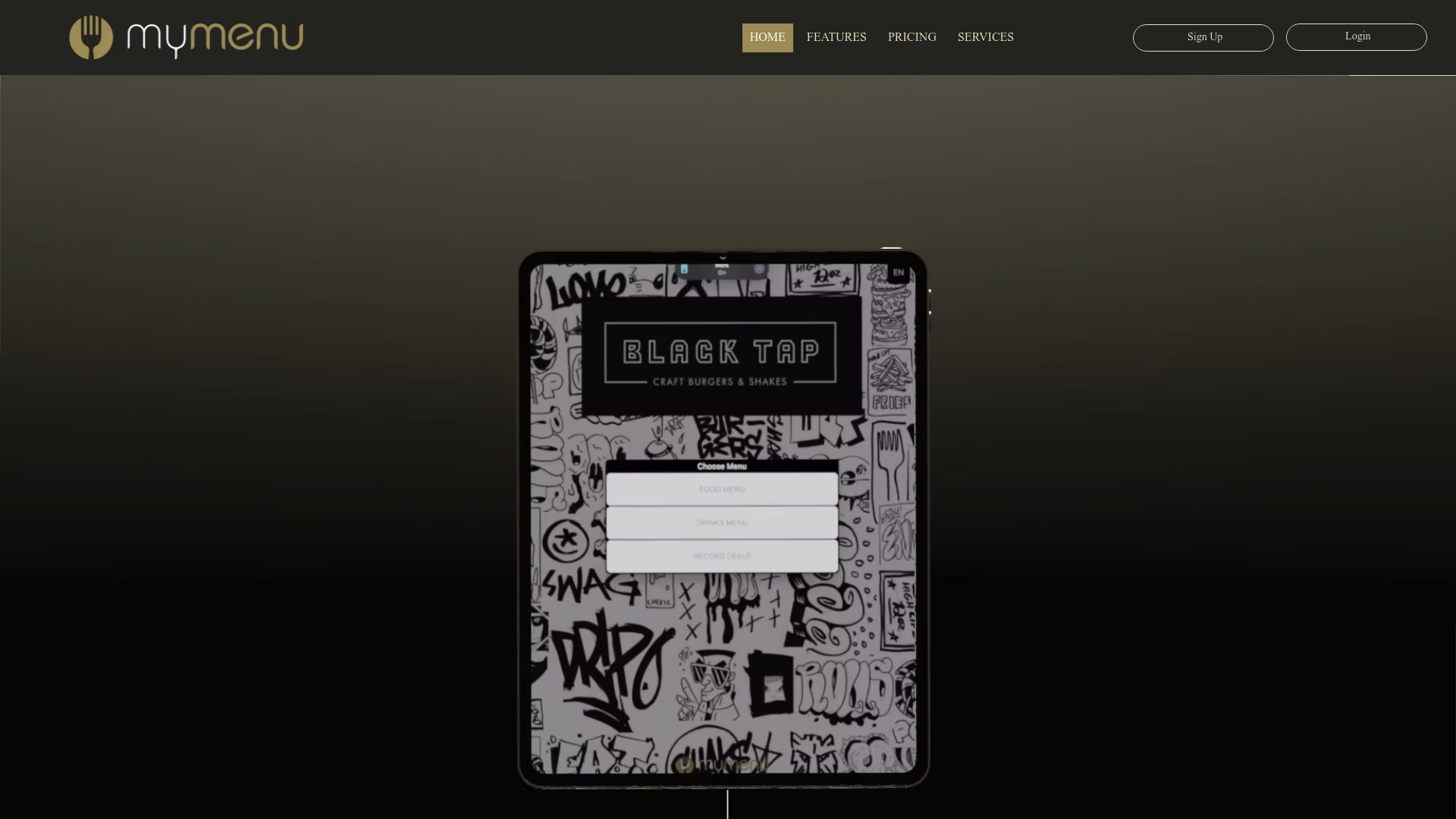
Running a QR vendor for the dining room and a separate app for takeout means two menus to update and two systems that never quite agree on pricing. MyDigiMenu runs QR menus, tablet ordering, and app-like guest experiences from a single dashboard, so a price change lands everywhere at once and guests never have to download anything to order. Plans range from the StartUp Menu at $39 per month to the higher Emerald Menu tier, with a QR Menu product built to plug straight into your existing POS. Check the pricing page to find the plan that matches your revenue mix.
Where to read more on QR security and adoption
For ongoing guidance, follow the FTC’s consumer alerts on QR scams and CISA’s phishing resources.
Sources
FAQ
How do you set up a QR menu?
Design your digital menu, generate a branded QR code linked to a secure vanity domain, then print and test it on several phone models before placing it on tables. Most restaurants can go live within hours to a few days depending on menu complexity.
Do you need an app to use QR codes?
No. A QR code just opens a link in a phone’s built-in camera or browser, so guests can view a digital menu without installing anything. Apps add features like saved accounts and push notifications, but they are a separate layer, not a requirement for QR scanning to work.
Can you scan a QR code to view a restaurant menu?
Yes, scanning a table’s QR code with a phone camera opens the restaurant’s digital menu directly in the browser, with no download needed. Many setups also let guests order and pay from that same scanned page.
What is the FTC’s warning about QR codes?
The FTC warns against scanning unexpected QR codes placed in public without a clear, trusted source, since scammers can cover legitimate codes with fake ones that lead to malicious sites. Restaurants can reduce this risk with tamper-evident table cards and branded, HTTPS-secured links.
Recommended
phrazle has a simple way of tricking players: it lets your brain create a phrase before you have considered all the possibilities.