
Optimizing Restaurant Sales Process: 2026 Guide


TL;DR:
Optimizing restaurant sales involves using data, service design, and technology to increase revenue per guest without acquiring new customers. It requires strategic menu engineering, staff micro-moments, digital wait management, and active loyalty program measurement to drive sustainable growth. Most operators underestimate the importance of layering these approaches and risk losing warmth for speed, which can harm guest satisfaction and loyalty.
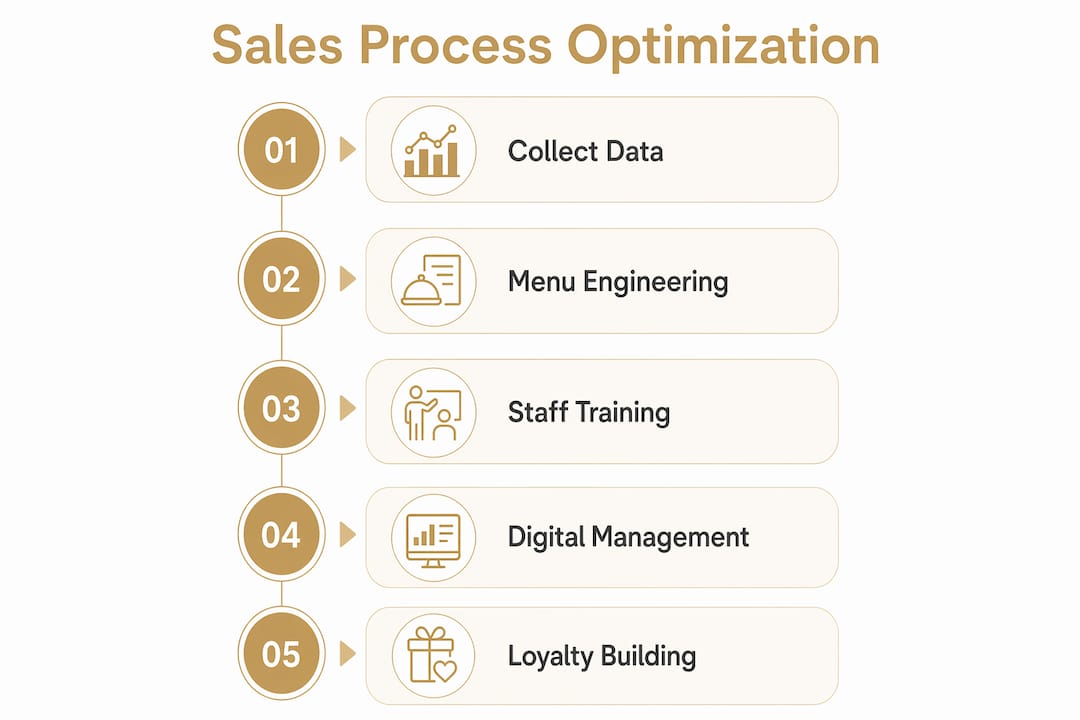
Optimizing the restaurant sales process is defined as the systematic use of data, service design, and technology to increase revenue per guest without adding new customers. Done right, it touches every moment from menu layout to the final farewell at the door. Menu engineering alone lifts revenue 10–15% without a single new cover, and that is before you factor in loyalty programs, digital wait management, or frontline coaching. The strategies in this guide cover all four levers, with specific tools and frameworks you can apply this week.
How does optimizing the restaurant sales process start?
The answer is POS data. Every revenue improvement in a restaurant traces back to knowing which items sell, which items profit, and which items do both. Contribution margin combined with POS sales mix is more effective than popularity alone when making menu decisions. A dish that sells 200 covers a week but costs 70% of its price to produce is quietly draining your margin.
The industry standard framework for this analysis is menu engineering, built around a 2×2 matrix that plots profitability against popularity. Each item lands in one of four categories.
Category | Popularity | Profitability | Strategy |
Stars | High | High | Protect, promote, keep pricing stable |
Puzzles | Low | High | Reposition, rename, or highlight visually |
Plowhorses | High | Low | Reduce portion cost or raise price subtly |
Dogs | Low | Low | Remove or replace with seasonal specials |
The matrix is only as good as the inputs. Build it from item-level POS data and exact recipe costs, not estimates. Run the analysis monthly, not annually. Small, incremental changes to pricing or placement outperform full menu overhauls because they carry less operational disruption and allow you to measure the effect of each change cleanly.
Strategic placement matters as much as the numbers. Items in the top-right corner of a printed menu or the first scroll position on a digital menu receive disproportionate attention. Move your Stars there. Rename your Puzzles with more descriptive, appetite-driven language. A “Grilled Chicken Plate” becomes “Herb-Roasted Half Chicken with Lemon Pan Jus,” and the perceived value shifts without touching the recipe.
Pro Tip: Never remove a Plowhorse without testing a price increase first. Guests who order it frequently may absorb a $1.50–$2.00 increase without complaint, converting a margin problem into a margin asset.
How do frontline staff interactions drive revenue?
Service behavior is a direct sales variable, not just a hospitality nicety. Nearly 1 in 4 guests were not greeted or acknowledged during 2026 on-premises QSR research. That missed greeting correlates with lower satisfaction scores and a perception that service is slow, even when it is not.
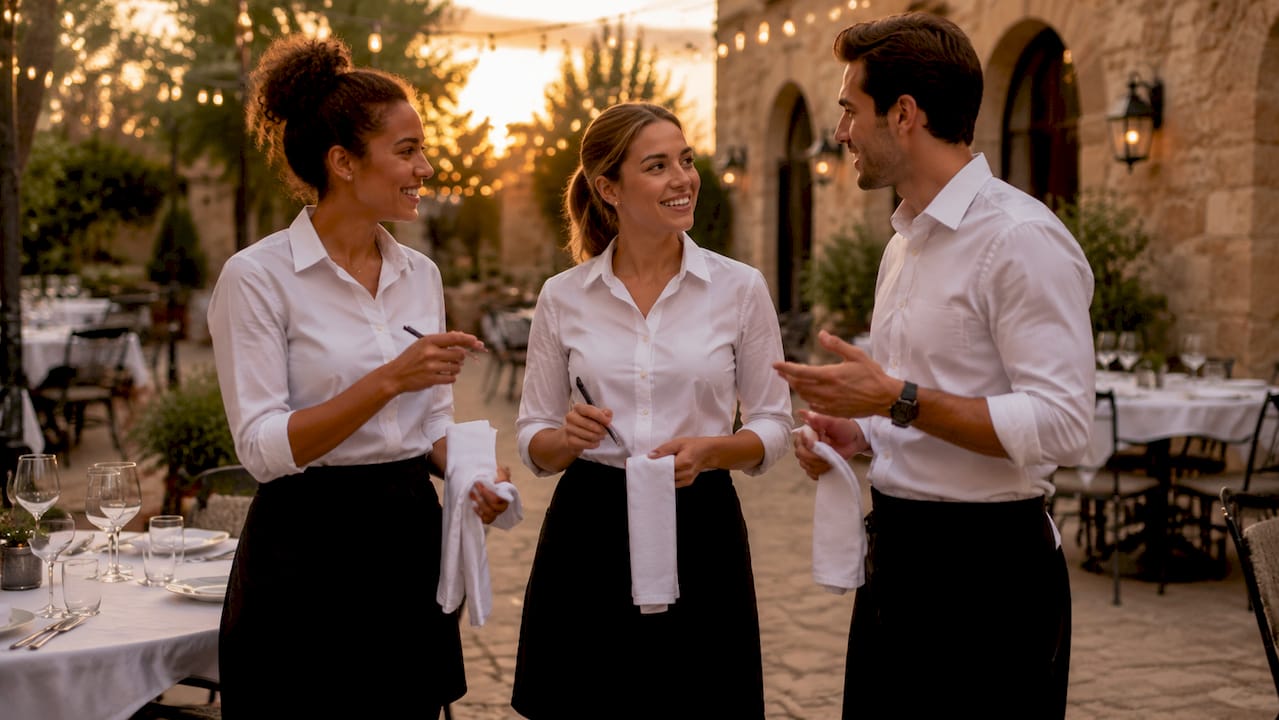
The bigger missed opportunity is suggestive selling. Suggestive selling prompts occur only 60.6% of the time in quick service restaurants, making it the single largest untapped revenue lever in frontline operations. A server who recommends a specific appetizer or dessert converts at a meaningfully higher rate than one who asks “Is there anything else?”
Coaching frontline staff on three scripted micro-moments produces the fastest results:
The greeting. Acknowledge every guest within 30 seconds of arrival, even during a rush. A simple “Welcome in, I’ll be right with you” prevents the perception of being ignored and sets a warmer tone for the entire visit.
The suggestive sell. Train staff to recommend one specific item, not a category. “Our short rib tacos are incredible tonight” outperforms “Can I tell you about our specials?” The specificity signals confidence and creates appetite.
The parting remark. A genuine farewell, using the guest’s name if known, increases the likelihood of a return visit. It costs nothing and takes four seconds.
Perceived speed and human connection both influence guest satisfaction independently. Speeding up service without preserving warmth makes the experience feel transactional. The goal is to do both, and scripted micro-moments are the mechanism that makes that possible at scale. For more on turning table speed into a revenue asset, the Mydigimenu guide on improving table turnover covers the operational side in depth.
Pro Tip: Role-play these three micro-moments in your next pre-shift meeting. Fifteen minutes of practice with real scenarios produces more behavior change than a written policy ever will.
Does digital wait management actually reduce walkouts?
Yes, and the data is specific. Businesses using digital queue management reduce actual wait times by 25–30% and cut perceived wait times by an additional 35%. Those two numbers matter differently. Actual reduction comes from operational efficiency. Perceived reduction comes from communication, and communication is free to implement.
The mechanism is simple. When guests receive a real-time SMS update saying “Your table is ready in approximately 8 minutes,” the uncertainty disappears. Uncertainty is what drives walkouts, not the wait itself. Proactive wait communication reduces perceived wait time by about 35%, which means a 12-minute wait feels like 8 minutes to an informed guest.
Here is what a digital wait management setup looks like in practice:
Guests join a virtual queue via QR code at the door or a host tablet, with no app download required.
The system sends automated SMS updates at defined intervals.
Staff receive a dashboard showing queue position, estimated wait, and table readiness.
Post-visit, the system captures contact data for follow-up marketing.
The business impact extends beyond satisfaction scores. Lower walkout rates mean more covers per service. Higher satisfaction scores mean better online reviews. Contact data captured at queue entry feeds directly into your CRM for loyalty campaigns. One technology investment produces four measurable outcomes.
Metric | Traditional Queue | Digital Queue Management |
Perceived wait time | Unmanaged, often overestimated | Reduced by up to 35% with proactive updates |
Walkout rate | Higher during peak hours | Reduced through real-time transparency |
Contact data capture | Manual or absent | Automated at queue entry |
Staff coordination | Verbal, inconsistent | Dashboard-driven, consistent |
How do loyalty programs deliver measurable ROI?
Loyalty programs are a strategic operating system, not a discount mechanism. 83% of loyalty program owners report positive ROI, averaging 5.3× returns. That figure assumes the program is actively measured and managed, not set up and forgotten. The difference between a loyalty program that compounds and one that stagnates is data discipline.
The most effective programs share three characteristics. First, they integrate with the POS so that every transaction is automatically tracked without staff intervention. Second, they use behavioral data to trigger personalized offers rather than blanket discounts. A guest who orders wine with every meal should receive a wine-pairing offer, not a free dessert coupon. Third, they treat the loyalty budget as a marketing investment with a defined cost-per-retained-customer target, not as a line item to cut when margins tighten.
AI-driven loyalty platforms now analyze purchase patterns to predict churn before it happens. A guest who visited weekly and has not returned in 21 days is a win-back opportunity, not a lost customer. Automated re-engagement campaigns triggered by that gap convert at rates far above standard promotional emails.
For restaurants building loyalty from scratch, the Mydigimenu resource on guest loyalty programs outlines which program structures produce the strongest repeat visit rates.
Pro Tip: Choose loyalty technology based on how easy it is for your manager to pull a weekly report, not on how many features the platform offers. A program your team actually uses beats a sophisticated one nobody checks.
Key takeaways
Successful restaurant revenue optimization requires layering fast POS feedback loops, menu engineering, and long-term loyalty infrastructure to produce compounding growth.
Point | Details |
Menu engineering drives margin | Use the Stars/Plowhorses/Puzzles/Dogs matrix monthly with real POS and recipe cost data. |
Frontline micro-moments convert | Scripted greetings, specific suggestive sells, and genuine farewells measurably increase spend and return visits. |
Digital wait management reduces walkouts | Proactive SMS updates cut perceived wait time by up to 35%, keeping guests in seat and in a spending mood. |
Loyalty programs require active measurement | Programs averaging 5.3× ROI are tracked, data-driven, and integrated with CRM, not set-and-forget discount cards. |
Layer your time horizons | Combine quick POS wins with medium-term menu changes and long-term loyalty investment for sustained revenue growth. |
What most operators get wrong about sales optimization
Most restaurant operators I have worked with treat sales optimization as a single project. They overhaul the menu, run a loyalty promotion, and then return to daily operations. Six months later, the numbers drift back. The reason is structural, not motivational.
Sustainable sales growth requires three layers operating simultaneously: fast POS feedback loops that catch problems within days, medium-term menu engineering that adjusts quarterly, and long-term loyalty and CRM infrastructure that compounds over years. Collapsing all three into one initiative is why most “menu redesigns” underperform their projections.
The other mistake I see consistently is sacrificing warmth for speed. A restaurant that cuts its average service time by two minutes but loses the greeting and the farewell has made a bad trade. Guests do not remember how fast they were served. They remember how they felt. The operators who get this right coach their teams on scripted hospitality moments while simultaneously using technology to handle the operational load. That combination, human warmth plus digital efficiency, is what turns a one-time visitor into a regular.
Incremental menu tweaks also outperform full overhauls in my experience. Changing three items based on contribution margin data produces a cleaner read on what worked than changing thirty items at once. Treat your menu as a living document, not a seasonal publication.
— Abhi
How Mydigimenu supports your sales process
Mydigimenu is built for exactly the kind of multi-layered sales optimization this article describes. Its digital menu platform captures item-level ordering data that feeds directly into menu engineering decisions, so you always know which dishes are earning their place. The QR code ordering system reduces perceived wait times by getting guests into the ordering flow faster, without requiring any app download.
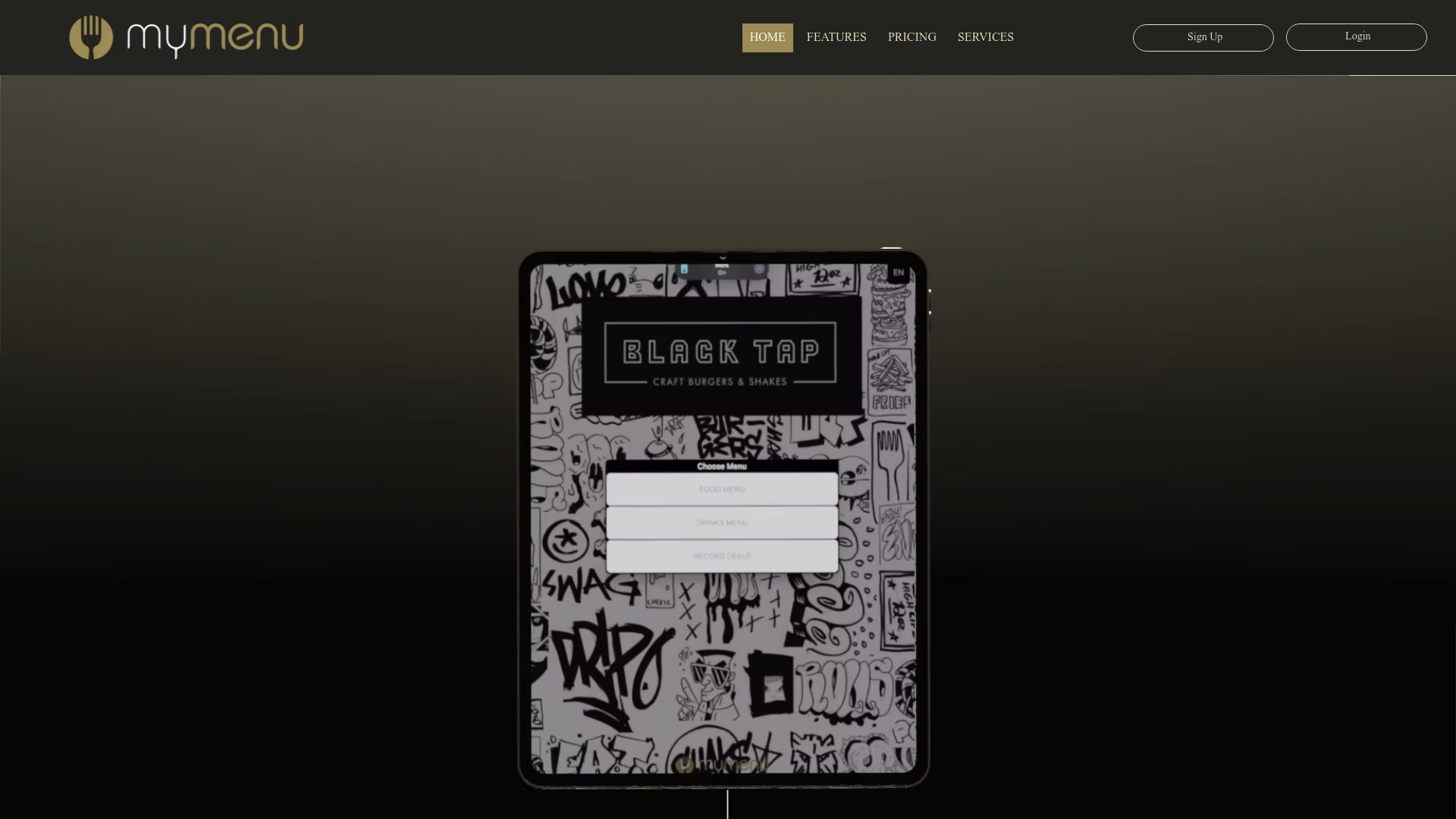
Mydigimenu’s CRM integration connects guest ordering behavior to loyalty campaigns, making personalized re-engagement automatic rather than manual. The platform supports digital stamp cards, targeted promotions, and social login for guest profile capture, turning every visit into a data point that improves the next one. Explore the full digital menu platform to see how it fits your operation, or check plans and pricing to find the right tier for your venue size.
FAQ
What is restaurant sales process optimization?
Restaurant sales process optimization is the systematic use of data, service design, and technology to increase revenue per guest. It covers menu engineering, frontline service behavior, wait management, and loyalty program measurement.
How much can menu engineering increase revenue?
Menu engineering lifts restaurant revenue by 10–15% without adding new customers. The gain comes from repositioning high-margin items and removing or repricing low-margin ones using POS and recipe cost data.
What is the ROI of a restaurant loyalty program?
83% of loyalty program owners report positive ROI, averaging 5.3×. Programs that integrate with POS data and use behavioral triggers consistently outperform those built around flat discounts.
How does digital queue management reduce walkouts?
Proactive SMS and real-time wait updates remove the uncertainty that causes guests to leave. Digital queue systems reduce perceived wait times by 35%, keeping more guests in seat through the full dining experience.
Why does suggestive selling have such a low adoption rate?
Suggestive selling prompts occur only 60.6% of the time in QSR settings, primarily because staff are not coached on specific language. Scripting one concrete recommendation per shift briefing closes this gap quickly and measurably.
Recommended
Comments