
Menu Video Content for Restaurants: A 2026 Guide

TL;DR:
Menu video content uses short, visually appealing clips to influence customers’ ordering decisions. Restaurants with videos see significantly more engagement and higher sales compared to text-only menus. Consistent creation, proper distribution, and data analysis maximize the effectiveness of menu videos.
Menu video content is defined as short-form, dynamic visual storytelling that showcases dishes, drinks, and dining experiences to influence customer decisions before they order. Restaurants that use video on their menus see 94% more views than those relying on text alone. That gap is not a minor edge. It is the difference between a guest who orders confidently and one who defaults to the cheapest item on the list. This guide to menu video content walks restaurant and cafe owners through every stage of production, from tools and workflow to distribution and measurement, so every video earns its place on the menu.
What is a guide to menu video content?
Menu video content, known in production circles as food video marketing, covers any short clip that presents a dish with motion, sound, and visual appeal. The format ranges from a simple 6-second sizzle reel of a burger hitting the grill to a 30-second storytelling piece that shows the farm origin of a salad. What separates effective clips from forgettable ones is intentionality. Every frame should answer one question for the viewer: “Do I want to eat this right now?” Platforms like Mydigimenu are built to embed this kind of rich video content directly into digital menus, connecting the visual moment to the order button.
What tools do you need to create professional menu videos?
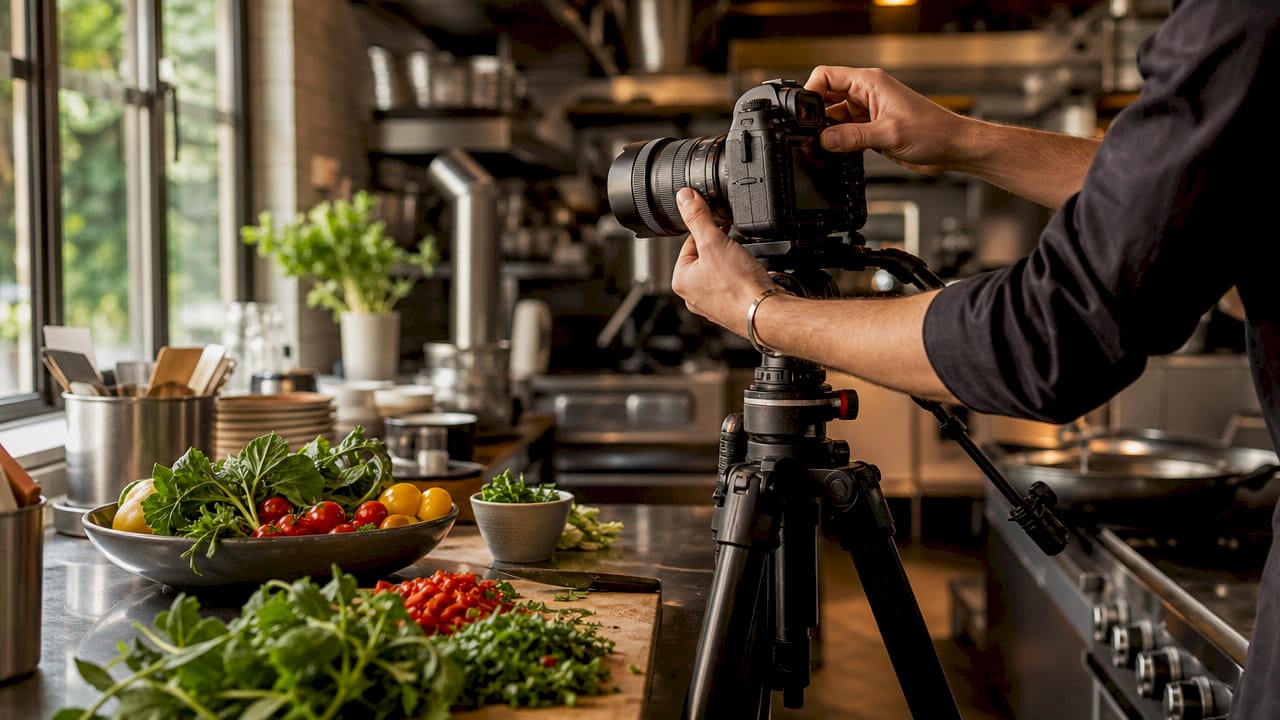
The barrier to professional-quality menu video production has dropped sharply. AI tools now produce polished 30-second menu clips in roughly 90 seconds, with caption accuracy reaching 95%. That means a two-person cafe team can publish a fresh featured-dish video every morning without hiring a videographer.
Core production tools
AI video generators: Platforms that accept a dish photo and a text prompt, then animate the image with motion effects, voiceover, and music. They handle the heavy lifting of rendering and captioning automatically.
Video editing software: Tools like Adobe Premiere Rush or CapCut allow you to trim clips, add branded lower-thirds, and adjust color grading to make food look its most appetizing.
Captioning tools: Auto-caption features built into most AI generators or standalone tools like Rev ensure every word is readable on screen.
Hosting platforms: YouTube remains the most cost-effective platform for hosting menu videos, especially for restaurants managing multiple locations that need to pull the same content to different screens.
Pro Tip: Shoot or source your hero dish photos at a consistent angle and lighting setup. AI video generators produce far better motion effects when the input image has clean edges, a neutral background, and natural light.
Tool category | Primary use | Best for |
AI video generator | Animate photos into clips | Daily dish features, small teams |
Editing software | Trim, color, brand overlays | Polished brand-consistent content |
Captioning tool | Accessibility and silent viewing | All social and in-venue screens |
YouTube hosting | Multi-location video delivery | Chains and multi-site operators |
Understanding AI-driven content creation helps restaurant owners pick tools that fit their team size and publishing frequency before committing to a workflow.
How do you make menu videos step by step?
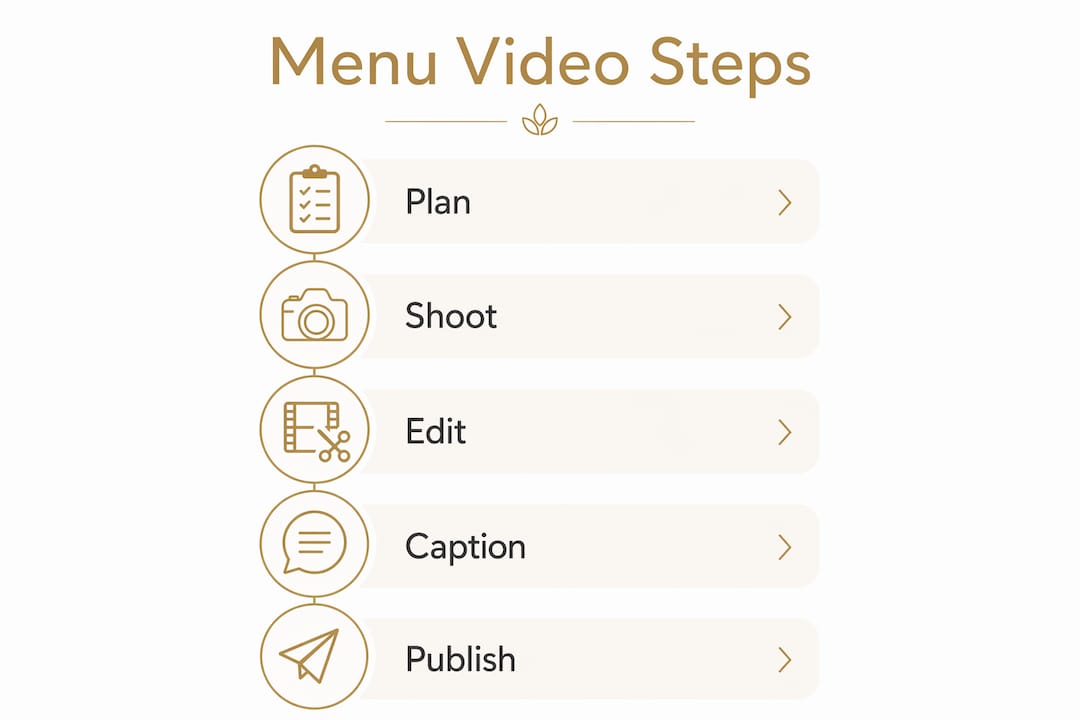
A repeatable production process is what separates restaurants that publish one video and stop from those that build a library of content that drives orders week after week. The workflow below applies whether you are creating menu video content with a smartphone or a full AI production suite.
Select the dish. Choose items with strong visual appeal, high margins, or seasonal relevance. A matte-colored soup films poorly. A glossy braised short rib with a sauce pour films beautifully.
Write a concise script or prompt. For AI tools, a prompt like “close-up of truffle pasta with steam rising, warm Italian restaurant lighting, 15 seconds” produces a focused result. For filmed content, write three sentences maximum: what the dish is, one sensory detail, and the call to action.
Capture or source your visuals. Use a DSLR, a modern smartphone on a tripod, or licensed food photography. Lighting is the single biggest quality factor. Natural window light or a simple ring light eliminates the flat, unappetizing look that kills appetite appeal.
Edit for format. Vertical 9:16 ratio is the standard for TikTok, Instagram Reels, and in-app carousels. Landscape 16:9 works for YouTube and digital menu boards. Export both versions from a single edit to save time.
Add captions and music. Captions go on every video without exception. Music should match the restaurant’s atmosphere, not a generic corporate library track.
Insert a call to action. The last 2 seconds of every clip should display a clear prompt: “Order Now,” “Scan to Order,” or “Available Today Only.”
Publish with SEO tags. On YouTube, title the video with the dish name, restaurant name, and location. Add a description with your ordering link. On social platforms, use location tags and relevant food hashtags.
Pro Tip: Schedule your posts to go live between 10:30 and 11:15 AM. Clips published in that window reach guests while they are actively deciding where to eat lunch, which measurably lifts midday orders.
What are the best practices for menu videos?
The most common mistake in menu video creation is treating the video as decoration rather than a sales tool. Every production decision, from music tempo to caption font size, affects whether a viewer taps “add to cart” or keeps scrolling.
Audio and music selection
Generic corporate music creates a psychological disconnect between the food and the feeling you want to evoke. A craft cocktail bar needs jazz or lo-fi beats, not the same upbeat pop track used in a fast-food ad. Matching audio to your restaurant’s atmosphere is not a stylistic preference. It is a conversion factor.
Captions are non-negotiable
85% of social video viewers watch without sound. That statistic means a video without captions is invisible to the majority of your audience. Captions also make your content accessible to guests with hearing impairments, which broadens your reach without any additional production cost.
Video length and visual quality
Keep individual clips between 6 and 30 seconds. Longer videos lose viewers before the call to action appears.
Use high-resolution images and well-lit footage. Blurry or dark food photos undermine appetite appeal regardless of how good the dish actually is.
Avoid heavy filters that alter the true color of the food. Guests feel misled when the dish arrives looking different from the video.
Use subtle motion effects on still photos rather than aggressive zoom or shake. The goal is to bring the image to life, not distract from the food.
Include your ordering link or QR code in the final frame so the path from “I want this” to “I ordered this” is as short as possible.
How should you distribute menu video content?
Creating great video content is only half the work. Placing it where hungry guests actually see it determines whether the effort pays off. AI vertical video platforms now make it practical for small teams to produce dozens of optimized clips and push them across multiple channels simultaneously.
In-venue screens and digital menu boards
Loop short clips on digital menu boards and kiosks at the point of decision, right where guests are reading the menu. A 15-second video of a signature dessert running on a screen above the counter sells more desserts than any printed insert. YouTube hosting makes it easy to update the content on every screen in a multi-location restaurant from a single dashboard.
Social media and ordering apps
Post vertical 9:16 clips to TikTok and Instagram Reels with location tags and dish-specific hashtags.
Use in-app carousels on delivery platforms to feature video thumbnails for high-margin items.
Embed UTM parameters in ordering links within video descriptions to track exactly which clip drove which order.
Schedule posts for the 10:30–11:15 AM window for lunch and the 4:30–5:30 PM window for dinner to reach guests during active decision-making periods.
Understanding video SEO principles helps your clips rank in search results and on YouTube, extending their reach well beyond your existing followers.
Distribution channel | Format | Primary goal |
Digital menu boards | 16:9 landscape loop | In-venue upsell |
TikTok / Instagram Reels | 9:16 vertical | New customer discovery |
YouTube | 16:9 with SEO tags | Multi-location hosting, search visibility |
Delivery app carousels | Square or vertical thumbnail | Conversion on ordering platforms |
How do you measure and improve menu video performance?
Publishing a video is the beginning of the process, not the end. The restaurants that get the best return from video content treat each clip as a hypothesis and use data to confirm or refine it.
Track these metrics for every video you publish:
Views and watch time: A high view count with low watch time means the opening frame is not compelling enough. Recut the first two seconds.
Add-to-cart rate: If your digital menu platform tracks taps from a video to an item page, this metric directly connects content to revenue.
Sales uplift: Compare weekly sales of a featured dish during and after a video campaign versus a baseline period without video promotion.
Caption engagement: Some platforms show whether viewers read captions. High caption engagement on a low-audio video confirms the accessibility investment is working.
Test one variable at a time. Change the opening hook in one version, the music in another, and the caption style in a third. AI tools make this kind of variant testing fast enough that a small team can run meaningful experiments weekly rather than quarterly. The restaurants that iterate consistently outperform those that publish and forget.
Key Takeaways
Menu video content drives measurably higher engagement and sales when restaurants pair a repeatable production workflow with deliberate distribution and data-driven iteration.
Point | Details |
Video outperforms text | Visual menu content generates 94% more views than text-based menu information. |
AI cuts production time | AI tools render professional 30-second clips in roughly 90 seconds, making daily publishing realistic. |
Captions are required | 85% of social viewers watch without sound, so captions are essential for every video. |
Format determines reach | Use 9:16 vertical for social and in-app, and 16:9 landscape for YouTube and digital menu boards. |
Measure and iterate | Track views, add-to-cart rates, and sales uplift to refine content and improve return over time. |
Why most restaurant video content misses the mark
After working closely with hospitality operators across dozens of venues, the pattern I see most often is this: a restaurant invests real effort in filming a beautiful dish, then pairs it with the wrong music and publishes it at the wrong time. The visual is strong. Everything else undercuts it.
The fix is simpler than most owners expect. Walk into your dining room during a busy service and listen. What does the room sound like? What is the energy? That atmosphere is your audio brief. A neighborhood bistro with candlelit tables and quiet conversation needs something entirely different from a rooftop bar with a DJ. Generic music is not neutral. It actively signals to the viewer that the brand does not know itself.
The second thing I would push back on is the idea that you need a large production budget to make this work. The restaurants seeing the strongest results from menu video content in 2026 are often the ones using AI tools to publish a fresh featured-dish clip every single morning. Consistency beats perfection. A slightly imperfect video that goes live at 10:45 AM every day will outperform a polished production that appears once a month.
Finally, do not skip the call to action. The video’s job is not to entertain. It is to move a guest from “that looks good” to “I am ordering that.” Every clip needs a clear, visible prompt in the final frame. That one detail is the difference between a view and a sale.
— Abhi
How Mydigimenu brings video menus to life for your venue
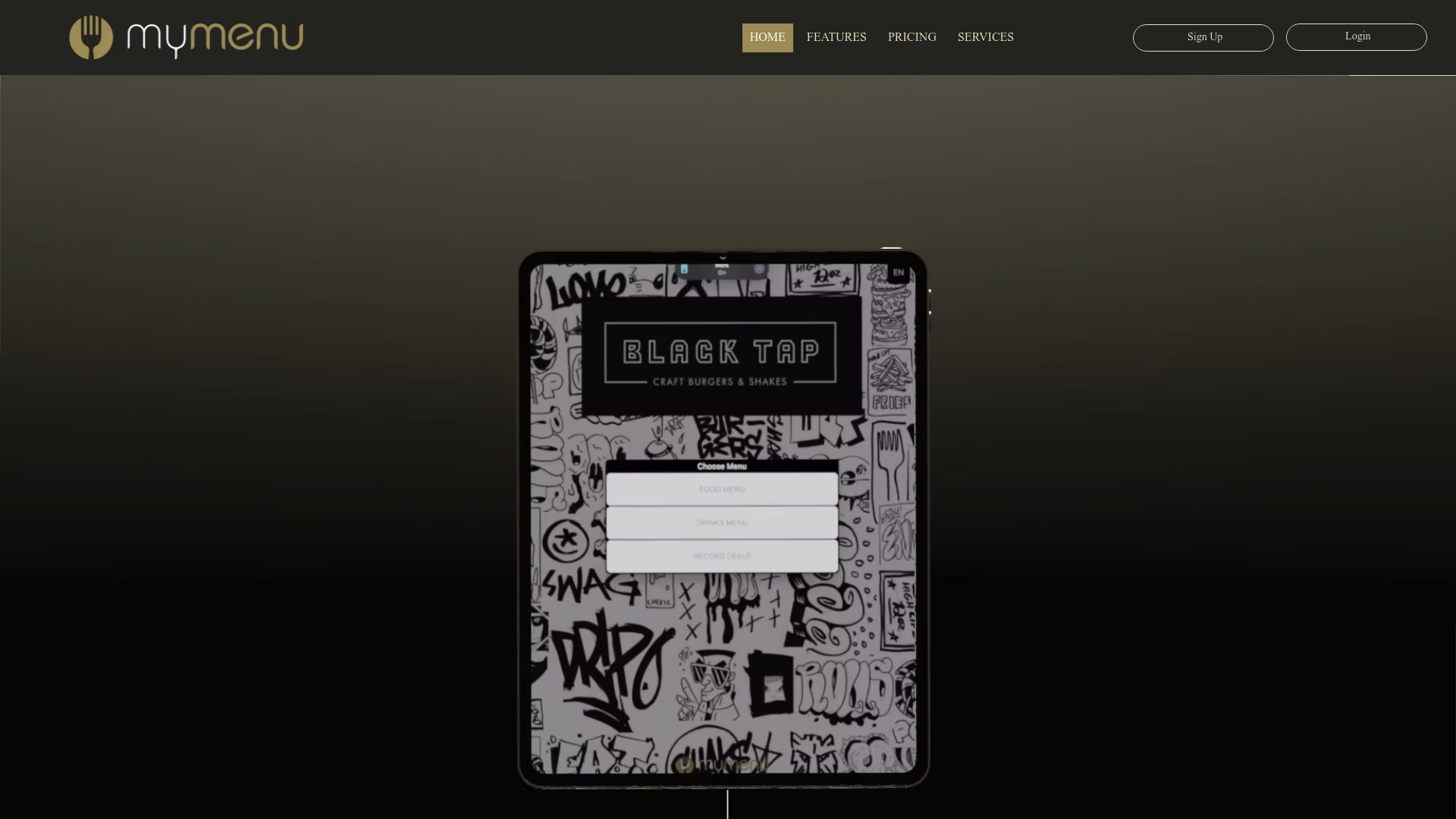
Mydigimenu is built for exactly this kind of content. The platform lets restaurant and cafe owners embed high-quality food videos directly into their digital tablet and iPad menus, so guests see a mouthwatering clip the moment they browse a dish. Updating video content takes minutes, not hours, and the platform supports multiple languages and currencies for venues serving international guests.
Mydigimenu also powers QR code menus that guests scan at the table to access video-rich menus without downloading an app. For operators ready to see what the platform costs for their venue size, the pricing page covers plans for independent restaurants through to multi-location groups. A dash of digital can turn everyday table service into an experience guests talk about and return for.
FAQ
What is menu video content?
Menu video content is short-form video, typically 6–30 seconds long, that visually showcases a dish or drink to influence a guest’s ordering decision. It appears on digital menus, social media, and in-venue screens.
How long should a menu video be?
The most effective menu video clips run between 6 and 30 seconds, with a clear call to action in the final 2 seconds. Shorter clips hold attention better and perform well on social platforms and digital menu boards.
Do menu videos need captions?
Yes. 85% of social video viewers watch without sound, so captions are required for any video published on social media or embedded in a digital menu. They also improve accessibility for guests with hearing impairments.
What is the best format for menu videos on social media?
Vertical 9:16 is the standard format for TikTok, Instagram Reels, and in-app carousels. Landscape 16:9 works for YouTube hosting and digital menu board displays.
When is the best time to post menu videos?
Scheduling menu video posts between 10:30 and 11:15 AM targets guests who are actively deciding where to eat lunch, which produces the strongest lift in midday orders.
Recommended
Comments