
Menu Item Description Best Practices for Restaurants


TL;DR:
Effective menu descriptions can increase sales by highlighting sensory details and organizing content clearly. Consistency in tone and style across channels builds trust and enhances perceived quality, while well-structured descriptions optimize decision-making. Incorporating provenance and schema markup further boosts perceived value and search visibility.
Menu item description best practices are defined as the structured techniques restaurants use to write dish copy that drives orders, builds trust, and reflects brand identity. Effective menu descriptions can increase sales by 27%, according to Cornell University research cited in 2026. That single figure reframes menu writing from a housekeeping task into a revenue strategy. The cognitive principle of 7±2 items per menu section further shows that how you organize and phrase descriptions shapes customer decisions before a server says a word. This guide gives restaurant and hospitality professionals a practical, research-backed framework for writing descriptions that sell.

1. Menu item description best practices: why language is your first salesperson
The words on your menu work before any staff member speaks. Menu descriptions influence spending by 15–25% without changing prices, purely through perceived value. That means a rewrite can outperform a discount campaign at zero food cost.
The industry term for this discipline is menu microcopy: the short, purposeful text that sits beneath a dish name. Menu microcopy covers word choice, sentence structure, sensory cues, and brand voice. Mastering it is the fastest way to lift average check size without touching your pricing sheet.
Three forces drive that lift. First, precise language reduces decision anxiety. Second, sensory words activate anticipation before the food arrives. Third, consistent tone signals kitchen quality and brand confidence. Each of the following sections addresses one or more of these forces directly.
2. How to use sensory and precise language to entice customers
Sensory words activate the same brain regions as actual tasting, which means a well-chosen adjective creates genuine appetite before the plate arrives. One well-placed sensory word per dish outperforms a string of vague superlatives. “Crispy” does more work than “delicious.”
Strong menu microcopy relies on four techniques:
Use one to two sensory words per dish. Choose words tied to texture, temperature, or aroma: charred, velvety, smoky, bright. More than two sensory words per description tips into overload.
Choose concrete, active verbs. “Slow-roasted for six hours” tells a story. “Prepared with care” tells nothing. Verbs like charred, brined, hand-rolled, and stone-ground signal craft and justify price.
Name the key ingredient specifically. “Aged Cheddar” beats “cheese.” “Sicilian lemon” beats “lemon.” Specificity builds credibility and perceived quality.
Cut vague superlatives. Words like amazing, delicious, and incredible carry no information. Customers discount them instantly.
Pro Tip: Read each description aloud. If you cannot picture the dish from the words alone, rewrite it. Your guests cannot taste the food before ordering, so your words must do that sensory work.
The goal is appetite, not poetry. Every word must earn its place by adding a specific sensory or factual detail the customer could not infer from the dish name alone.
3. Structuring menu descriptions for clarity and scan-ability
Brevity is a feature, not a compromise. Keep descriptions under 25 words, ideally one to two sentences. Guests scan menus rather than read them, and a dense paragraph signals effort, not quality.
The 7±2 principle from cognitive psychology states that the human brain processes about 7 items comfortably per category before decision fatigue sets in. Restaurants that list 14 pasta options with long descriptions for each create paralysis. Guests either default to a familiar safe choice or ask the server, which slows table turns.
Four structural rules improve scan-ability:
Keep each description to one or two sentences.
Avoid repeating the dish name inside the description.
Use line breaks between items, not dense blocks of text.
Skip obvious details: do not describe a burger as “served in a bun.”
Format element | Best practice | Why it matters |
Description length | Under 25 words | Matches guest scanning behavior |
Items per category | 5–9 items | Prevents decision paralysis |
Sentence count | 1–2 sentences | Keeps copy tight and readable |
Redundancy | Avoid repeating dish name | Wastes limited reading attention |
Pro Tip: Preview every description on a mobile screen before publishing. Text that reads cleanly on a printed menu often wraps awkwardly on a phone or QR menu, cutting off key sensory words.
Digital menus add a second audience: AI and search engines. A two-line pattern works well for both. Lead with a canonical ingredient line, then follow with a sensory sentence. This structure satisfies human scanners and AI parsing requirements simultaneously.
4. Consistency in tone and style across the menu and platforms
Mixing description styles mid-menu creates cognitive friction. Inconsistent menu language erodes trust in kitchen standards, because guests unconsciously read tonal inconsistency as operational inconsistency. A fine-dining venue that writes three poetic descriptions and then one bare ingredient list signals a gap in attention.
Choose one of two styles and apply it everywhere:
Minimalist: Ingredient-led, no adjectives beyond one sensory word. Works for upscale, ingredient-forward concepts.
Evocative: Short narrative cues, origin references, and one or two sensory words. Works for casual dining, gastropubs, and concept restaurants.
Neither style is superior. The wrong choice is mixing them. A menu that opens with “Pan-seared duck breast, cherry gastrique, wilted greens” and later reads “Our amazing loaded fries with cheese and bacon” signals two different kitchens, two different standards.
Consistency also applies across channels. Your print menu, digital menu, delivery app listing, and website should carry identical descriptions. Menu localization for multi-location groups adds complexity, but the style rules remain the same: one voice, one register, applied everywhere.
5. Leveraging provenance, storytelling, and upselling in descriptions
Geographical and supplier origin labels increase perceived quality and justify higher prices. “Scottish salmon” reads as more premium than “salmon fillet.” “Heirloom tomatoes from a local farm” reads as more trustworthy than “fresh tomatoes.” Provenance is not decoration. It is a pricing argument written into the copy.
Effective provenance and storytelling techniques include:
Name the farm, breed, or region when it adds genuine distinction. “Berkshire pork belly” signals a specific flavor profile. “Pork belly” does not.
Use brief origin cues, not full paragraphs. One phrase like “aged 18 months in Kentucky oak” carries more weight than three sentences of backstory.
Highlight house-made and signature elements. “House-fermented kimchi” and “our 48-hour broth” signal craft and exclusivity that guests cannot replicate at home.
Place detailed descriptions on high-margin items. Copy investment should follow profit margin. Your most profitable dish deserves your best sentence.
Descriptions also function as a menu upselling tool. A server who reads “slow-braised short rib, bone marrow butter, roasted root vegetables” can echo that language at the table. The description primes the guest; the server closes the sale. When copy and service language align, upsell conversion rises without pressure tactics.
Numbered steps for building a provenance-led description:
Start with the protein or hero ingredient and its origin.
Add the preparation method using a concrete verb.
Name one supporting ingredient that adds contrast or texture.
Close with a sensory word that captures the eating experience.
Example: “Grass-fed Angus sirloin, wood-fired over cherry wood, with charred spring onions and a smoky bone marrow butter.”
6. Digital menus, schema markup, and SEO for menu descriptions
Digital menus require a layer of technical thinking that print menus do not. Schema.org MenuItem structured data tells search engines and AI assistants exactly what a dish is, what it costs, and what allergens it contains. Restaurants that apply this markup gain an edge in local search and AI-generated recommendations.
The fields that matter most in MenuItem schema are: name, description, offers (price), nutrition (calories), and suitableForDiet (allergen and dietary flags). Writing descriptions with these fields in mind forces clarity. A description that works in a schema field also works on a menu card.
Restaurant SEO for menu pages follows the same logic as product page optimization. Canonical ingredient names outperform creative nicknames in search. “Grilled Atlantic salmon” ranks. “Ocean’s Treasure” does not. Use the creative name as the dish title and the canonical description as the copy beneath it.
Optimizing menu pages for search in 2026 means treating each dish description as a micro-product page. Include the key ingredient, preparation method, and at least one dietary tag. This approach serves guests, search engines, and AI assistants with a single piece of copy.
7. Testing, updating, and maintaining your menu descriptions
Menu descriptions are not permanent. Seasonal ingredient changes, price adjustments, and guest feedback all require copy updates. A description written for a winter menu reads oddly in July. Restaurants that treat copy as a living document outperform those that reprint and forget.
Three testing methods produce reliable feedback:
A/B test on digital platforms. Change one description and track order volume for that item over two weeks. Digital menus make this fast and free.
Ask your servers. Front-of-house staff hear guest reactions daily. If guests consistently ask “what does that mean?” the description has failed.
Review delivery app data. Items with low click-through rates on delivery platforms often have weak descriptions, not weak dishes.
Bar menu engineering applies the same testing logic to beverage lists. A cocktail described as “vodka, lime, soda” sells less than “house-infused cucumber vodka, fresh lime, sparkling water.” The drink is identical. The copy is not.
Update descriptions at least seasonally. Flag any item that underperforms for a copy review before assuming the dish itself is the problem.
Key takeaways
Menu item description best practices require combining sensory precision, structural clarity, consistent brand voice, and provenance-led storytelling to drive measurable sales growth.
Point | Details |
Sensory language drives sales | One precise sensory word per dish activates appetite and outperforms vague superlatives. |
Structure prevents decision fatigue | Keep descriptions under 25 words and limit categories to 5–9 items to reduce paralysis. |
Consistency signals quality | Mixing description styles mid-menu erodes guest trust in kitchen standards. |
Provenance justifies price | Origin and supplier labels increase perceived quality and support higher price points. |
Digital copy serves two audiences | Descriptions must satisfy human scanners and schema markup requirements simultaneously. |
My honest take on where menu writing actually goes wrong
Most restaurants I have seen get the basics right: sensory words, short sentences, no “amazing.” Where they consistently fall short is consistency across channels. A beautifully written print menu paired with bare-bones delivery app listings is a missed opportunity that costs real revenue every week.
The debate between minimalist and evocative styles is largely a distraction. Both work. What kills a menu’s credibility is switching between them on the same page. Guests notice this even when they cannot articulate why. They just feel less confident about the kitchen.
The shift I find most underappreciated is treating digital menu descriptions as structured data, not just copy. Applying schema.org MenuItem markup is not a developer task. It is a menu writing decision. The restaurants that write descriptions with canonical ingredient names and dietary flags built in will outperform those that do not, as AI-driven search and recommendation engines become the primary discovery channel for dining.
My practical advice: audit your highest-margin items first. Rewrite their descriptions using the provenance-plus-verb-plus-sensory-word formula. Test for two weeks on your digital menu. The results will make the case for updating the rest of the menu better than any argument I can offer here.
— Abhi
Mydigimenu makes menu description updates effortless
Writing great menu copy is only half the work. Publishing it consistently across print, tablet, and digital channels is where most restaurants lose ground.
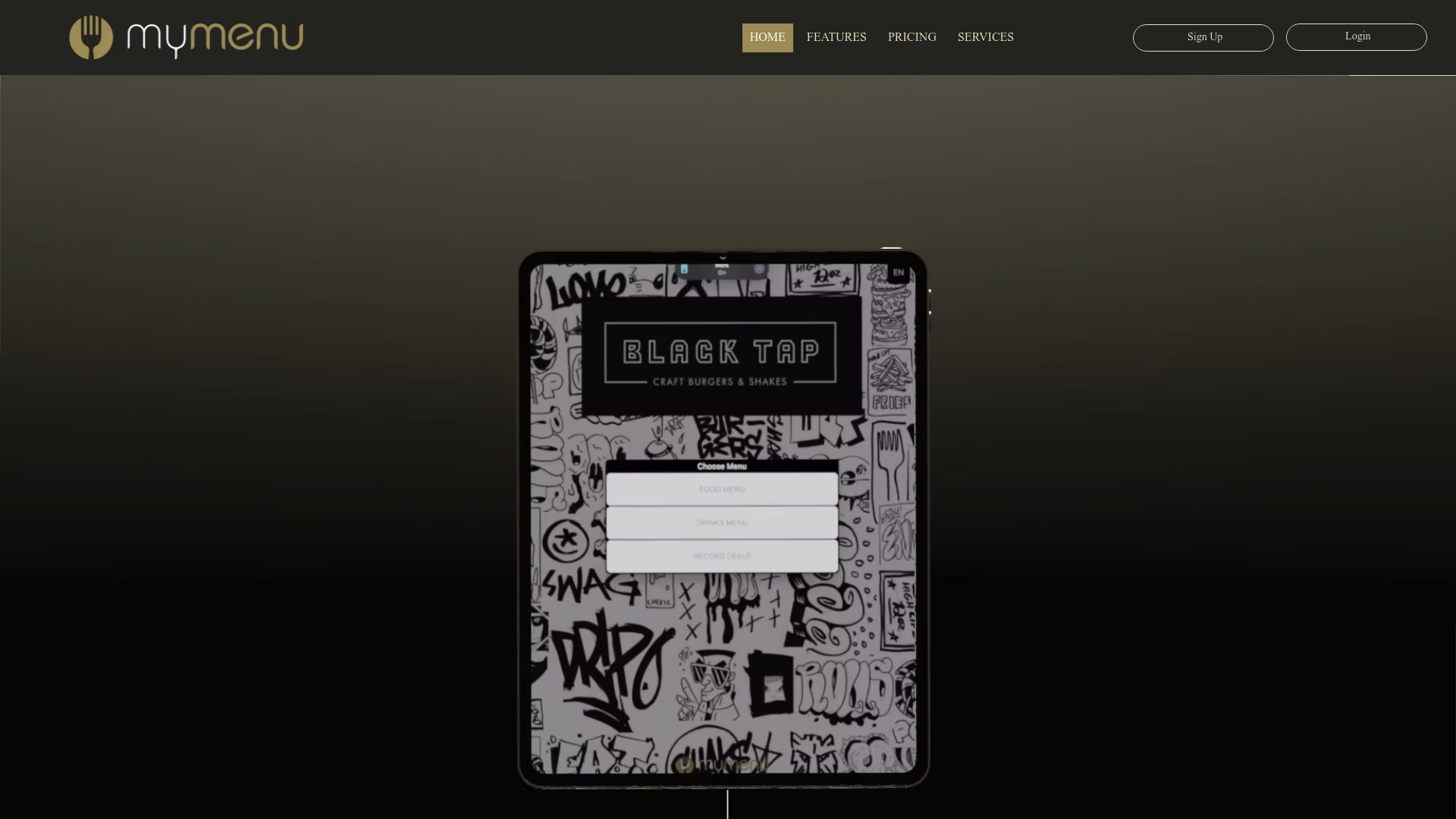
Mydigimenu’s digital tablet menu platform lets you update descriptions instantly across every touchpoint, from QR menus to in-room tablet menus, without reprinting or rebuilding pages. The platform supports dietary tags, allergen flags, and rich media so your copy works harder for every guest. You can also explore pricing plans built for restaurants of every size, from single-location cafes to multi-property hotel groups. When your descriptions are this good, they deserve a platform that presents them at their best.
FAQ
How long should a menu item description be?
Menu item descriptions perform best at under 25 words, ideally one to two sentences. Shorter copy matches how guests scan menus and reduces decision fatigue.
How many items should each menu section have?
Cognitive research shows the brain processes about 7 items comfortably per category. Keeping each section to 5–9 items prevents decision paralysis and improves order confidence.
Do sensory words actually increase sales?
Sensory words activate the same brain regions as tasting, which builds anticipation before the food arrives. One well-chosen sensory word per dish is more effective than multiple vague adjectives.
Why does consistency in menu descriptions matter?
Mixing description styles mid-menu creates cognitive friction that guests read as inconsistency in kitchen standards. A single, consistent voice across all menu sections and channels builds trust and brand credibility.
What is MenuItem schema and do I need it?
MenuItem schema is structured data markup from schema.org that tells search engines and AI assistants the name, description, price, and allergens of each dish. Restaurants that apply it gain measurable advantages in local search and AI-driven discovery.
Recommended
Whoa, what a wise post! Your advice on how to write menu item descriptions struck a chord. It's true that a well-described food can take you directly to the dining block blast experience, and I appreciated how you highlighted the significance of storytelling to attract guests!
I recently discovered a very useful mouse testing website that can check the condition of your mouse scroll wheel through scrolling tests. If you want to see whether your mouse is damaged, you can try Scroll Test.
The further you travel Snow Rider 3D, the faster the game becomes, transforming a peaceful snowy ride into an intense test of concentration and reflexes.