
Guide to optimizing your restaurant's online ordering

TL;DR:
Streamlining online ordering enhances guest experience and increases revenue through higher order values.
Transparent pricing and realistic wait times are crucial to reduce cart abandonment and build trust.
Building a simple, guest-focused digital system with clear menus and fast checkout drives repeat business.
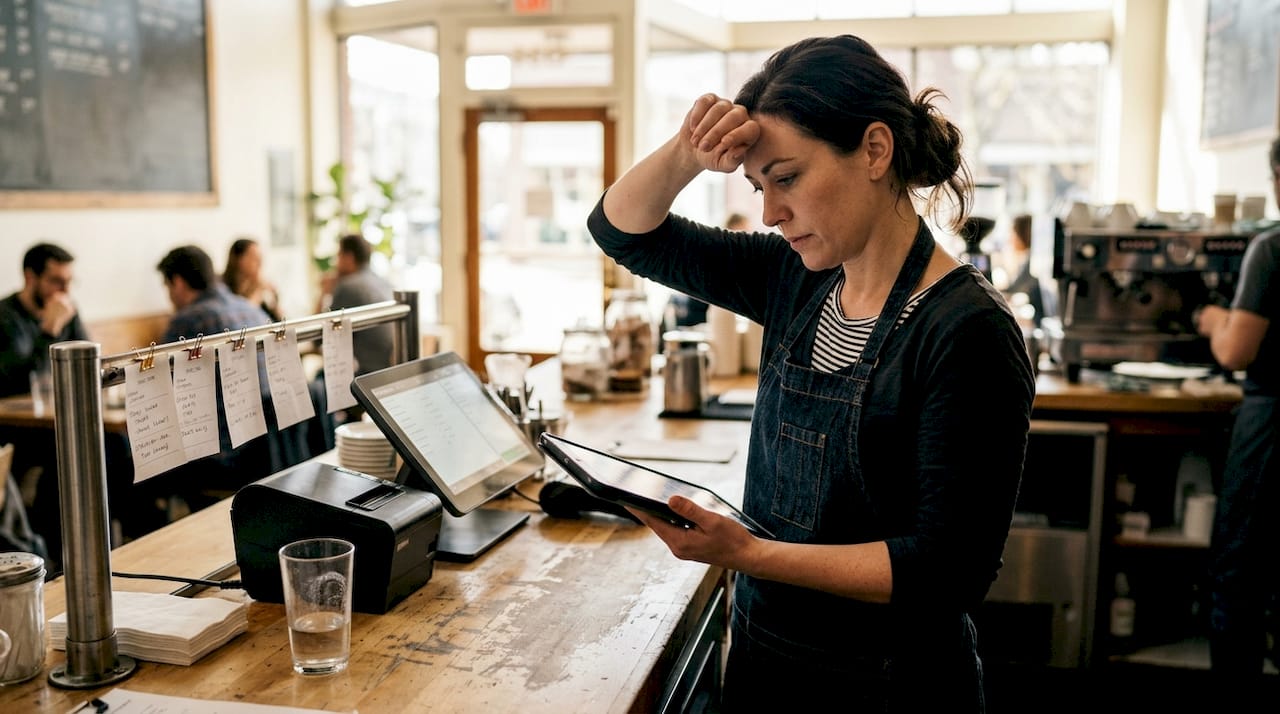
Picture this: a Friday night rush, tickets piling up, and a guest refreshing their phone waiting on an order that never arrives. Frustrating for them, costly for you. Inefficient online ordering quietly bleeds revenue and erodes the guest trust you’ve worked hard to build. 80% of customers abandon orders if wait times exceed 60 minutes, and that number should stop every hospitality manager cold. This guide gives you a clear, evidence-backed path to streamlining your digital ordering process, from setup and execution to troubleshooting, so every order becomes a seamless experience that keeps guests coming back.
Table of Contents
Key Takeaways
Point | Details |
Direct ordering saves margin | Using first-party solutions can avoid 15-30% commission fees from third-party platforms. |
Speed is critical | 80% of customers will abandon their cart if they wait longer than 60 minutes. |
Transparent pricing boosts loyalty | Hidden fees are a major reason for cart abandonment; clear, upfront pricing is key. |
Digital menus drive engagement | Modern, mobile-friendly menus improve guest experience and encourage repeat orders. |
Data-driven improvement | Regularly analyzing customer data helps identify bottlenecks and optimize workflow. |
Understanding the online ordering process
Online ordering is more than a convenience feature. It’s the digital front door of your restaurant or hotel, and how it performs shapes the entire guest relationship. At its core, an online ordering system allows guests to browse your menu, customize their selections, pay, and receive confirmation, all without speaking to a single staff member. But the scope runs deeper than that simple transaction.
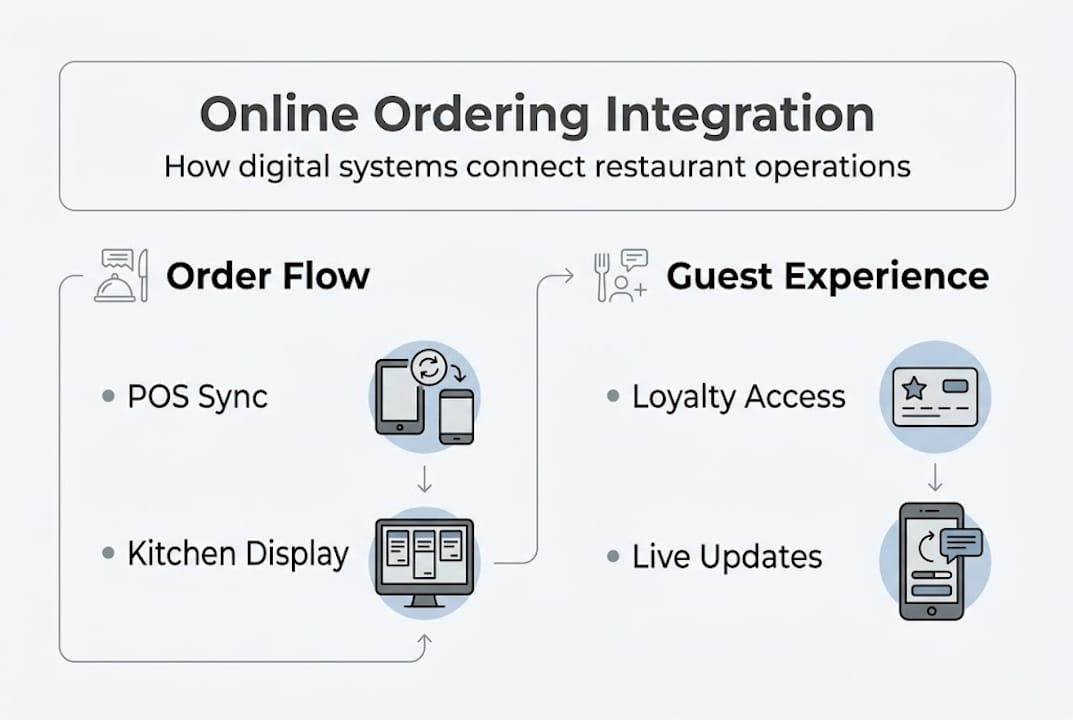
Modern systems integrate with your point-of-sale (POS) software, kitchen display screens, loyalty programs, and delivery platforms. They capture guest data, trigger marketing automations, and generate insights that help you refine your offerings over time. Understanding this ecosystem is the first step toward optimizing it. For a thorough breakdown of how these systems connect, the online ordering system guide from MyDigiMenu offers a practical starting point.
The market numbers make the urgency clear. Online ordering will reach 21% of restaurant sales by 2026, a shift that rewards operators who invest early and penalizes those who lag behind.
Why it matters for hospitality managers:
Reduces pressure on front-of-house staff during peak hours
Increases average order value through smart upselling prompts
Captures guest data for personalized marketing and loyalty programs
Enables contactless, app-free ordering that modern diners expect
Supports multiple languages and currencies for international guests
Market snapshot: online ordering growth
Metric | Current figure |
Share of restaurant sales (2026) | 21% |
Consumer preference for digital menus | Growing year-over-year |
Average annual delivery spend per customer | $1,800 |
Cart abandonment due to hidden fees | Up to 40% |
The data paints a vivid picture. Guests are ready to order digitally, and they’re spending seriously. The question is whether your system is built to capture that opportunity or quietly push customers toward a competitor.
Preparation: Setting up for success
Once you understand the process and its importance, the next step is preparing your team and resources for a smooth digital rollout. Rushing into implementation without the right foundation is like building a kitchen without checking the plumbing. Things will break at the worst possible moment.
Start by auditing your current operational readiness. Ask yourself: Does your POS integrate with digital ordering tools? Is your menu data clean, accurate, and photo-ready? Do your kitchen workflows support the volume that digital orders can generate? These questions reveal gaps before they become problems.
Essential tools for a seamless setup:
A reliable POS system with API integration capabilities
A digital menu platform that supports real-time updates
A stable internet connection with a backup option
Staff training materials for order management and troubleshooting
A feedback mechanism to capture early guest experiences
One of the most consequential decisions you’ll make is choosing between a third-party ordering platform and a first-party solution. Both have merit, but the financial implications are significant. Third-party commissions run 15 to 30% per order, which can hollow out margins on high-volume nights. First-party solutions require more upfront investment but return full control over branding, data, and revenue. For a deeper look at how this choice plays out in practice, explore the impact of ordering platforms on restaurant profitability.
Third-party vs. first-party: a quick comparison
Factor | Third-party platform | First-party solution |
Commission fees | 15 to 30% per order | None |
Brand control | Limited | Full |
Guest data ownership | Platform retains it | You own it |
Setup complexity | Low | Moderate |
Long-term margin impact | High cost | Higher return |
For managers focused on optimizing digital ordering workflow, first-party systems consistently deliver stronger long-term results.
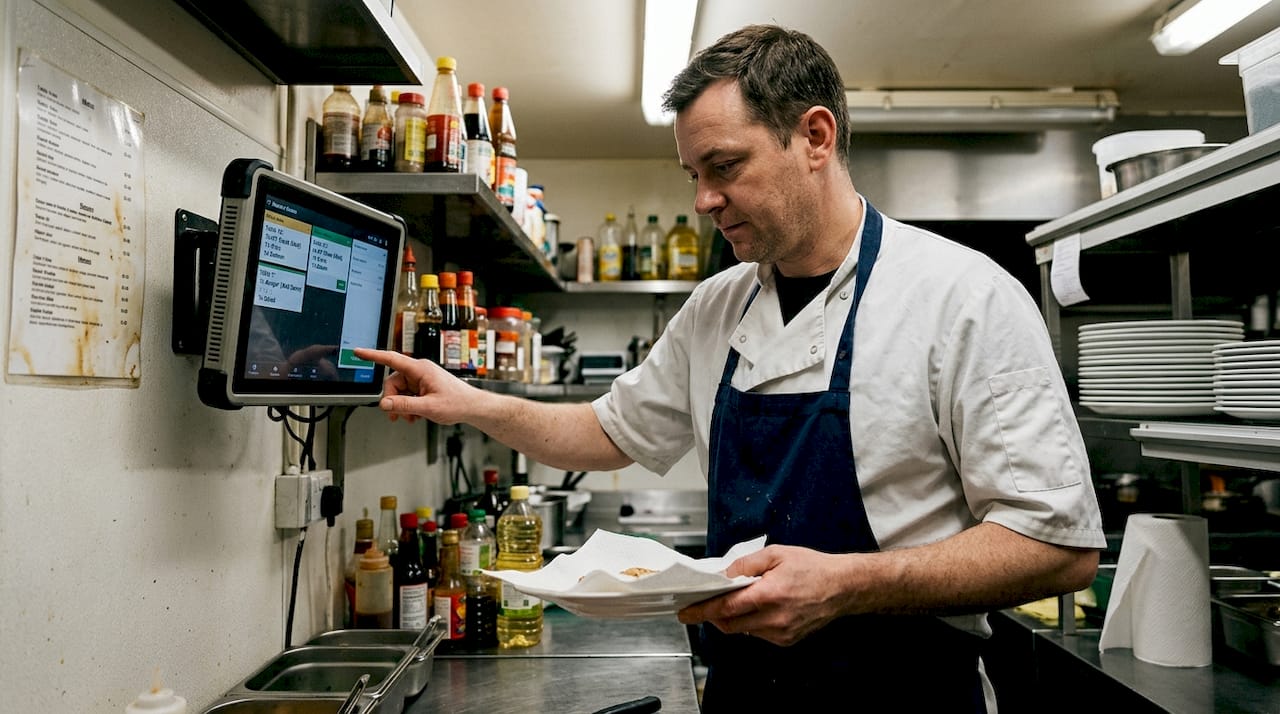
Pro Tip: If you’re currently on a third-party platform, don’t abandon it overnight. Run both in parallel, then gradually shift your marketing efforts toward your direct channel. You’ll protect revenue while building independence.
Execution: Step-by-step guide to streamlining orders
With preparation covered, here are the practical steps to streamline your online ordering process for maximum customer retention and operational efficiency. This is where strategy meets the guest experience.
Step-by-step implementation:
Activate your digital menu. Upload high-quality photos, accurate descriptions, and clear pricing. A visually rich menu isn’t just attractive; it drives higher order values and reduces confusion at checkout.
Configure your order flow. Set up item modifiers, portion options, and upsell prompts. Guide guests naturally toward add-ons without feeling pushy.
Integrate real-time order tracking. Guests who can track their order are far less likely to call, complain, or cancel. Transparency builds trust.
Set up automated notifications. Confirmation emails, preparation updates, and delivery alerts reduce anxiety and signal professionalism.
Streamline payment and checkout. Offer multiple payment methods including cards, digital wallets, and even cryptocurrency. Fewer clicks at checkout means fewer abandoned carts.
Test the full guest journey. Place test orders across devices. Fix friction before your guests find it.
The revenue potential here is real. Customers spend an average of $1,800 per year on food delivery. Capturing even a fraction of that spend through your direct channel, rather than a third-party platform, transforms your bottom line.
It’s also worth noting that 55% of consumers prefer direct ordering channels over third-party apps. Guests want to order from you. Give them a frictionless way to do it. Investing in enhancing guest engagement through intuitive digital menus is one of the fastest ways to act on that preference. For hotels and multi-concept venues, mobile ordering transformation offers a compelling model for scaling these principles across multiple touchpoints.
Stat callout: Consumers who order directly spend more per transaction and return more frequently than those who order through aggregator apps.
Troubleshooting and optimizing for best results
After implementing your streamlined process, it’s crucial to address and prevent common pitfalls that many managers encounter. Even the best-designed systems develop friction over time, and staying ahead of those issues separates good operators from great ones.
Cart abandonment rates hit 40% due to hidden fees. That’s nearly half your potential orders evaporating at the final step. Guests who feel surprised by service charges or delivery fees at checkout don’t just abandon the order; they often don’t come back. Transparent pricing, displayed early in the ordering flow, is one of the simplest and most impactful fixes available.
“Hidden charges and unexpected delays are the two fastest ways to destroy guest trust online. Fix those first, and everything else becomes easier.”
Wait time management is equally critical. 80% of customers abandon orders if the wait exceeds 60 minutes. Build realistic time estimates into your system, and update them dynamically during busy periods. Overpromising and underdelivering is far more damaging than setting an honest, longer wait time upfront.
Common issues and how to fix them:
Slow checkout: Reduce form fields, enable saved payment methods, and simplify the final confirmation step
Menu confusion: Use clear categories, filter options, and allergen labels to help guests find what they want quickly
Order errors: Implement kitchen confirmation screens and double-check modifier logic in your system setup
Low repeat orders: Launch a digital loyalty program with stamp cards or points to reward returning guests
Poor mobile experience: Test your ordering interface on multiple devices and screen sizes regularly
A/B testing is your ongoing optimization engine. Test different layouts, button placements, and upsell prompts to see what drives higher conversion. Small changes compound over time. For managers also managing reservations, streamlining reservation workflow follows the same logic: reduce friction, increase clarity, and let the system do the heavy lifting.
Pro Tip: Survey guests who didn’t complete their order. A short, one-question exit survey can reveal exactly what broke the experience, and that data is worth more than any assumption.
Our unique take on optimizing online ordering
Having tackled troubleshooting, here’s a perspective drawn from closely observing industry successes and failures. The most common mistake managers make isn’t choosing the wrong platform. It’s overcomplicating the experience in pursuit of features that guests never asked for.
There’s a real temptation to add every available integration, animation, and upsell layer the moment a new system goes live. The result is a cluttered interface that confuses guests and slows down the very process you set out to improve. The restaurants that consistently outperform their peers share one trait: radical clarity. Clean menus. Transparent pricing. Fast checkout.
Guest-first design isn’t a trend. It’s the foundation. When you build your ordering experience around what makes it easier for the guest, rather than what looks impressive in a demo, conversion rates follow naturally. The workflow streamlining insights that drive real results are almost always rooted in subtraction, not addition. Remove the friction. Trust the guest. The technology should be invisible, and the experience should feel effortless.
Take your online ordering to the next level
You now have a proven framework for transforming your restaurant’s digital ordering experience. The next step is putting these strategies into motion with tools built specifically for hospitality.
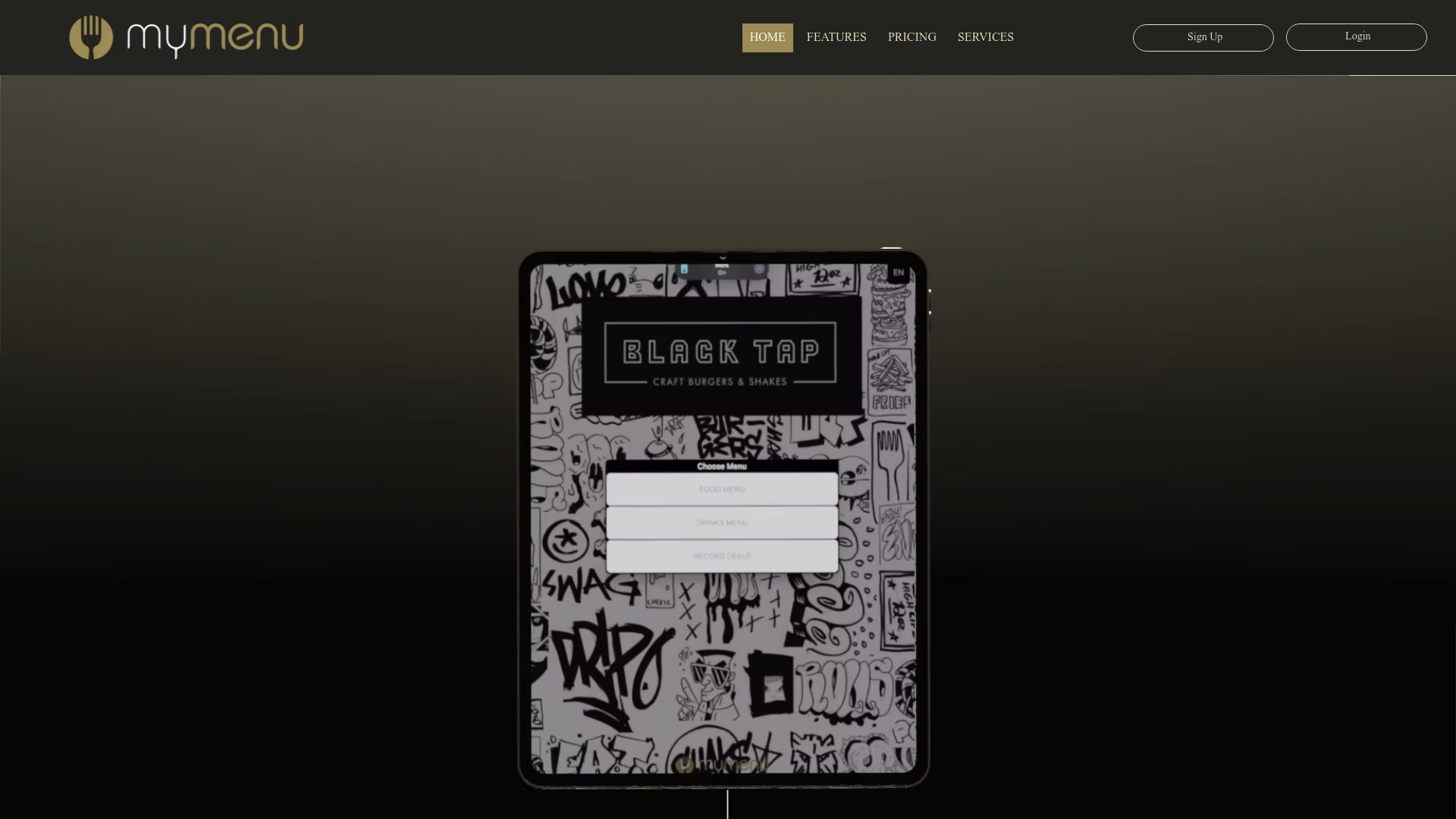
MyDigiMenu empowers restaurants, cafes, bars, and hotels with intuitive digital menu solutions that make every order feel seamless. From our powerful QR menu generator that requires zero app downloads to flexible plans and pricing designed to fit operations of every size, we give you the tools to own your ordering channel, protect your margins, and delight every guest. The future of hospitality is direct, digital, and guest-first. Let’s build it together.
Frequently asked questions
What are the key features of an effective online ordering process?
Essential features include easy digital menus, direct ordering, real-time updates, transparent fees, and fast payment integration. 55% of consumers prefer direct ordering channels, making a seamless first-party experience a competitive priority.
How can restaurants reduce cart abandonment rates online?
Eliminate hidden fees and simplify checkout; hidden fees cause 40% cart abandonment, making transparent pricing one of the highest-impact changes you can make.
How do wait times impact online orders?
If order fulfillment takes longer than 60 minutes, 80% of customers will abandon their purchase, so accurate, dynamic time estimates are essential for retention.
What is the average value of an online food order?
The average order value in the U.S. sits between $25 and $40, though customers who order directly tend to spend more per transaction than those using third-party apps.
How can managers ensure their online ordering process stays competitive?
Regularly update menus, optimize workflows based on guest feedback, and review system performance against current consumer preference benchmarks to stay ahead of evolving expectations.
Recommended
Comments