
Digital food signage: boost engagement & streamline service

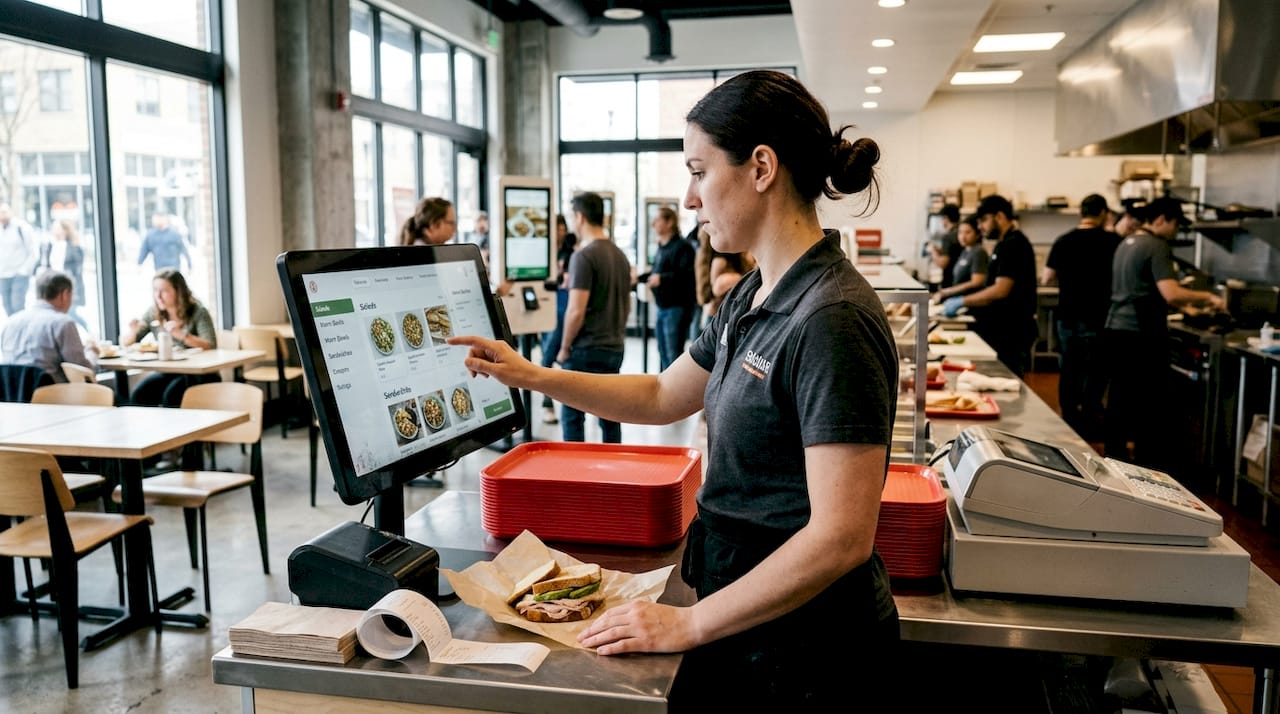
A glowing screen above the counter catches a guest’s eye, and suddenly a mouthwatering video of a slow-roasted short rib turns a coffee order into a full dinner reservation. That moment is not accidental. The digital signage market was valued at roughly $2.6 billion in 2022 and is projected to reach $3.9 billion by 2028, with 70 to 74 percent of quick-service restaurants already using digital menu boards. Yet the myth persists that only large chains can afford or benefit from this technology. This guide breaks that assumption apart, walking you through what digital food signage is, how it drives measurable results, where managers stumble, and how to roll it out with confidence.
Table of Contents
Key Takeaways
Point | Details |
Drives proven ROI | Digital food signage can boost sales, average order value, and recover investment in as little as 1.3 months. |
Enhances engagement | Dynamic visuals and real-time updates increase guest satisfaction and drive impulse purchases. |
Avoid common mistakes | Key pitfalls like installation errors and outdated info can be prevented with proper planning and expert advice. |
Scale with templates and cloud | Multi-site operators succeed by starting small, measuring, and scaling with cloud CMS platforms. |
What is digital food signage?
Now that you know the scale of impact, let’s break down exactly what digital food signage is and what sets it apart from the laminated menus of yesterday.
Digital menu boards consist of electronic screens in restaurants and hotels displaying menu items, prices, promotions, and visuals dynamically via cloud-based content management systems (CMS). The core setup typically involves three components: a commercial-grade display screen, a media player that runs the content, and a cloud-based CMS that lets you update everything remotely. Think of the CMS as the brain, the media player as the nervous system, and the screen as the face your guests actually see.
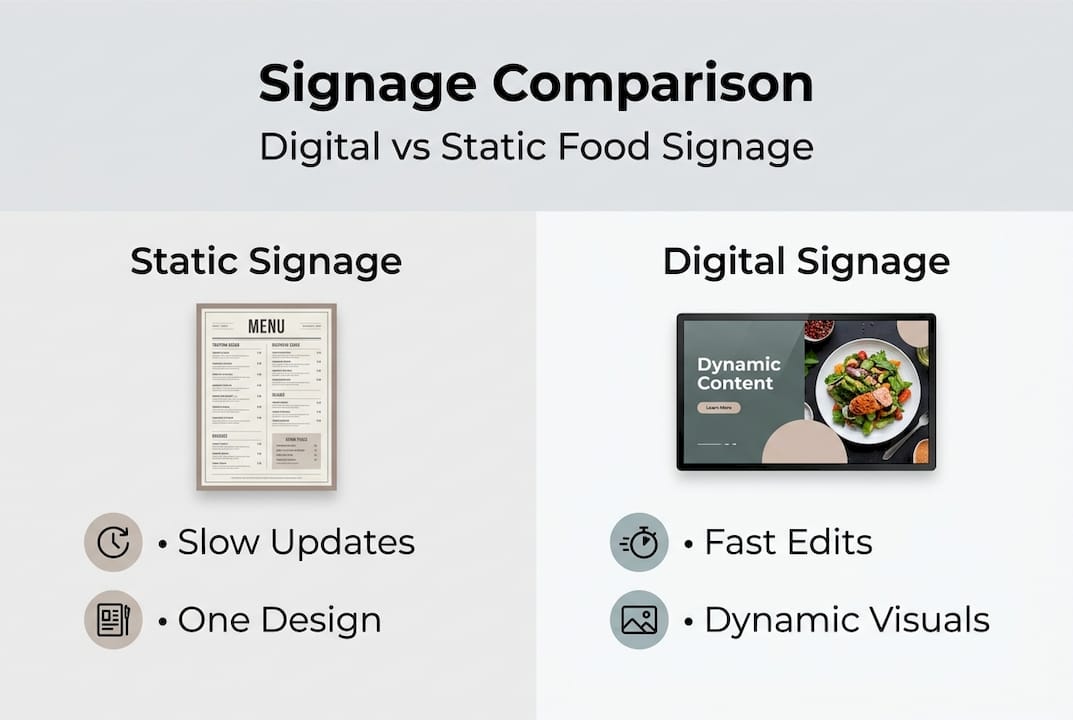
What makes this so different from static signage is flexibility. With a printed menu, changing a price or adding a seasonal special means a reprint, a delay, and a cost. With digital signage, you push an update from a laptop and every screen in every location reflects it within minutes. That agility is transformative for managers juggling seasonal menus, daily specials, or happy-hour pricing.
Here is a quick comparison to illustrate the difference:
Feature | Static signage | Digital food signage |
Update speed | Days to weeks | Minutes |
Visual appeal | Limited | High-impact video and animation |
Pricing flexibility | Fixed until reprint | Real-time dynamic pricing |
Multi-location sync | Manual | Automated via cloud CMS |
Long-term cost | Recurring print costs | Lower ongoing cost |
The main uses span menu display, promotional content, upsell suggestions, nutritional information, and even wayfinding in larger hotel properties. A well-crafted menu design guide can help you decide which content zones deserve the most visual weight. Exploring digital menu layout examples is also a smart starting point before you commit to a screen configuration.
Key advantages at a glance:
Instant updates across all screens from one dashboard
Rich visuals including video and animation that static menus cannot replicate
Dynamic pricing that adjusts for time of day, demand, or promotions
Reduced perceived wait times because engaging content keeps guests occupied
Lower long-term costs compared to repeated print production
How digital food signage drives guest engagement and sales
Understanding its features is only half the story. Here is how digital food signage translates into real results for your operation.
The numbers are hard to ignore. ROI benchmarks show sales uplifts ranging from 3 to 37 percent, average order value (AOV) increases of 18 to 35 percent, revenue growth of roughly $4,200 per month per location, and payback periods as short as 1.3 months. Total ROI figures span 300 to 968 percent depending on the concept and execution. For a mid-size restaurant or hotel F&B outlet, that is not a luxury investment. It is a revenue engine.
The mechanism behind these gains is rooted in psychology. Vivid food photography and short video clips trigger what researchers call the “visual hunger” response, making guests more likely to order premium items they might otherwise overlook. Real-time updates allow you to spotlight high-margin dishes during peak hours and quietly retire slow movers without any awkward server explanations.
“A dash of digital can turn everyday service into extraordinary memories. When guests see a perfectly plated dish rotating on screen, the decision to order it feels effortless.”
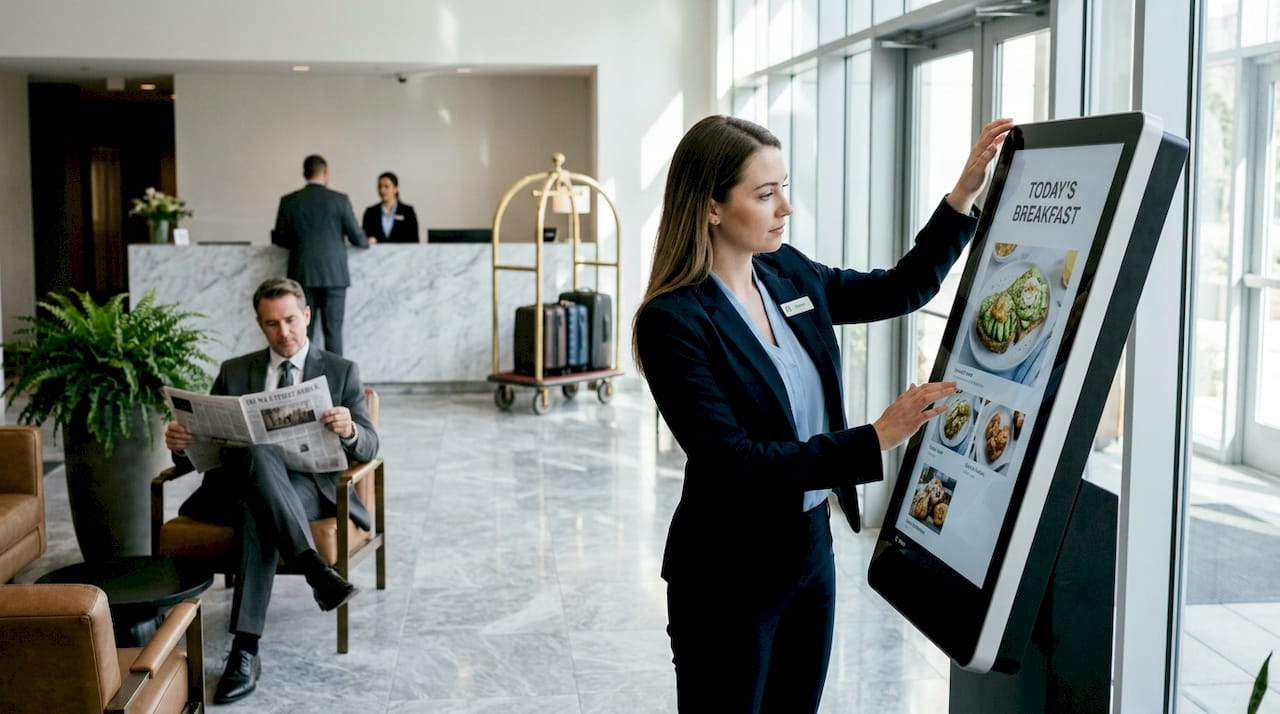
For hotels specifically, digital signage does even more. Customized boards support F&B sales through real-time updates, wayfinding, and cross-selling between outlets, and an impressive 80 percent of guests report that user-generated content influences their purchase decisions. Featuring guest photos or social proof on lobby screens can ignite curiosity and drive foot traffic to your restaurant or bar.
To see how these principles apply in practice, explore how to boost engagement with digital menus across different hospitality formats.
Pro Tip: Schedule your highest-calorie, highest-margin items to appear prominently during your busiest two-hour window. A/B test two different visual treatments over two weeks and let the AOV data tell you which one wins.
Common challenges and how to avoid them
While the benefits are compelling, digital food signage is not without its challenges. Here is what you need to watch out for and how to steer clear.
Key challenges include hardware failures such as screen burn-in and overheating in drive-thru environments, poor installation decisions like screens placed where glare washes out the image, content clutter that overwhelms guests rather than guiding them, and the misuse of consumer-grade televisions instead of commercial displays. Multi-site management adds another layer of complexity, and dynamic pricing, if handled clumsily, can trigger guest backlash.
Content mistakes are surprisingly common, even among experienced operators. Screens packed with too many items, flashing animations that compete for attention, and outdated pricing that contradicts what staff are quoting at the register all erode trust faster than any technical glitch.
Here is a practical checklist to avoid the most costly errors:
Use commercial-grade screens rated for continuous operation, not consumer TVs
Plan installation carefully, accounting for ambient light, viewing angles, and cable management
Set a content review schedule, at minimum weekly, to catch stale promotions or pricing errors
Limit animations to one or two subtle transitions per zone to guide the eye without distracting it
Build fallback content for internet outages so screens never go dark or display error messages
Pilot before scaling to catch hardware and placement issues before they multiply across locations
For managers thinking about digitalizing operations for efficiency, the lesson is clear: technology only delivers on its promise when the human systems around it are equally well designed.
Pro Tip: Before finalizing screen placement, visit your space at different times of day and observe how natural light shifts. A screen that looks perfect at noon can become unreadable by 3 p.m. if positioned near a west-facing window.
Best practices for getting the most from digital signage
Once you know the risks, it is all about best practices. Here are proven ways to make your investment deliver.
Menu psychology and phased rollouts are two of the most powerful levers available to managers. Hierarchy matters enormously: guests scan screens in predictable patterns, so placing high-margin items in the upper-right zone or featuring them with larger images consistently lifts AOV. Subtle motion, like a gentle steam rising from a bowl of soup, draws attention without causing visual fatigue.
Here is a numbered framework for best-practice implementation:
Audit your current menu for high-margin, visually appealing items that deserve featured placement
Design for clarity first, limiting each screen zone to three to five items maximum
Incorporate subtle animation only where it adds appetite appeal, not just for visual noise
Integrate with your POS and KDS so sold-out items disappear automatically without manual intervention
Run A/B tests on at least two content variations per quarter and track AOV and conversion by item
Ensure ADA compliance by using sufficient contrast ratios and readable font sizes for all guests
Phase your rollout, starting with one or two screens before committing to a full deployment
Learning to optimize menu layout is a skill that pays dividends long after launch. If your concept lends itself to storytelling, video menus in hospitality offer an especially powerful format for showcasing signature dishes. For a full-featured solution, explore eMenu solutions that combine digital signage with tablet ordering in one platform.
Pro Tip: Do not wait for perfection before launching. A clean, simple screen with three featured items and one promotional message will outperform a cluttered board every time. Iterate from simplicity, not from complexity.
From pilot to scale: Steps to implement digital food signage
Ready to take action? Here is how to roll out digital food signage in your own operation, step by step.
Starting with a pilot in a high-traffic zone, measuring AOV and traffic before and after, and using templates for quick wins before scaling with a cloud CMS is the approach that consistently delivers the best outcomes. It reduces risk, builds internal confidence, and generates the data you need to justify broader investment.
Assess your environment: Map high-traffic zones, measure ambient light, and identify where guests naturally pause or queue
Define your baseline metrics: Record current AOV, items per check, and dwell time before installing a single screen
Select hardware and CMS: Choose commercial-grade screens and a cloud-based platform that integrates with your existing POS
Launch a single-location pilot: Run it for four to six weeks, keeping content simple and tracking results weekly
Analyze and iterate: Compare post-pilot AOV and sales data against your baseline, adjust content based on findings
Build scalable templates: Create reusable content layouts that maintain brand consistency across all future locations
Roll out with cloud CMS: Use centralized management to push updates simultaneously across every screen in every location
Using a strong pilot testing approach with menu design principles baked in from day one means your first screen is already optimized, not just functional. Multi-location operators should invest in naming conventions and folder structures within their CMS early, because clean organization at ten locations is far easier to maintain than retrofitting it at fifty.
Why most managers underestimate the power and pitfalls of digital food signage
With the roadmap in hand, here is a candid perspective on why digital food signage’s biggest barriers and biggest wins often go overlooked.
Most managers approach digital signage as a hardware decision. They compare screen sizes, research mounting options, and debate media player brands for weeks. Then they go live with whatever content their supplier provides as a template and wonder why the results are underwhelming. The technology is the easy part. The hard part is the content strategy, the POS integration, and the ongoing commitment to refreshing what guests see.
The operators who see 30-plus percent sales lifts are not using better screens. They are using better menu strategy insights, training their teams to align verbal recommendations with what is featured on screen, and treating content updates as a weekly operational habit rather than a one-time setup task.
Underestimating staff training is perhaps the single most overlooked factor. A server who does not know what is being promoted on the digital board cannot reinforce that message at the table. When signage and service speak the same language, the guest experience becomes genuinely cohesive. Start small, listen to both staff and guests, and let real feedback shape your content calendar. That is where the real ROI lives.
Ready to transform your guest experience?
If you are ready to see digital food signage in action, here is how you can make the leap with expert support.
MyDigiMenu.com empowers restaurants and hotels to launch intuitive, visually stunning digital menus without the complexity of traditional signage systems. Whether you want a full restaurant digital menu solution for tablet-based ordering or a frictionless scan menu generator that guests access instantly from their phones, the platform scales to fit your operation.
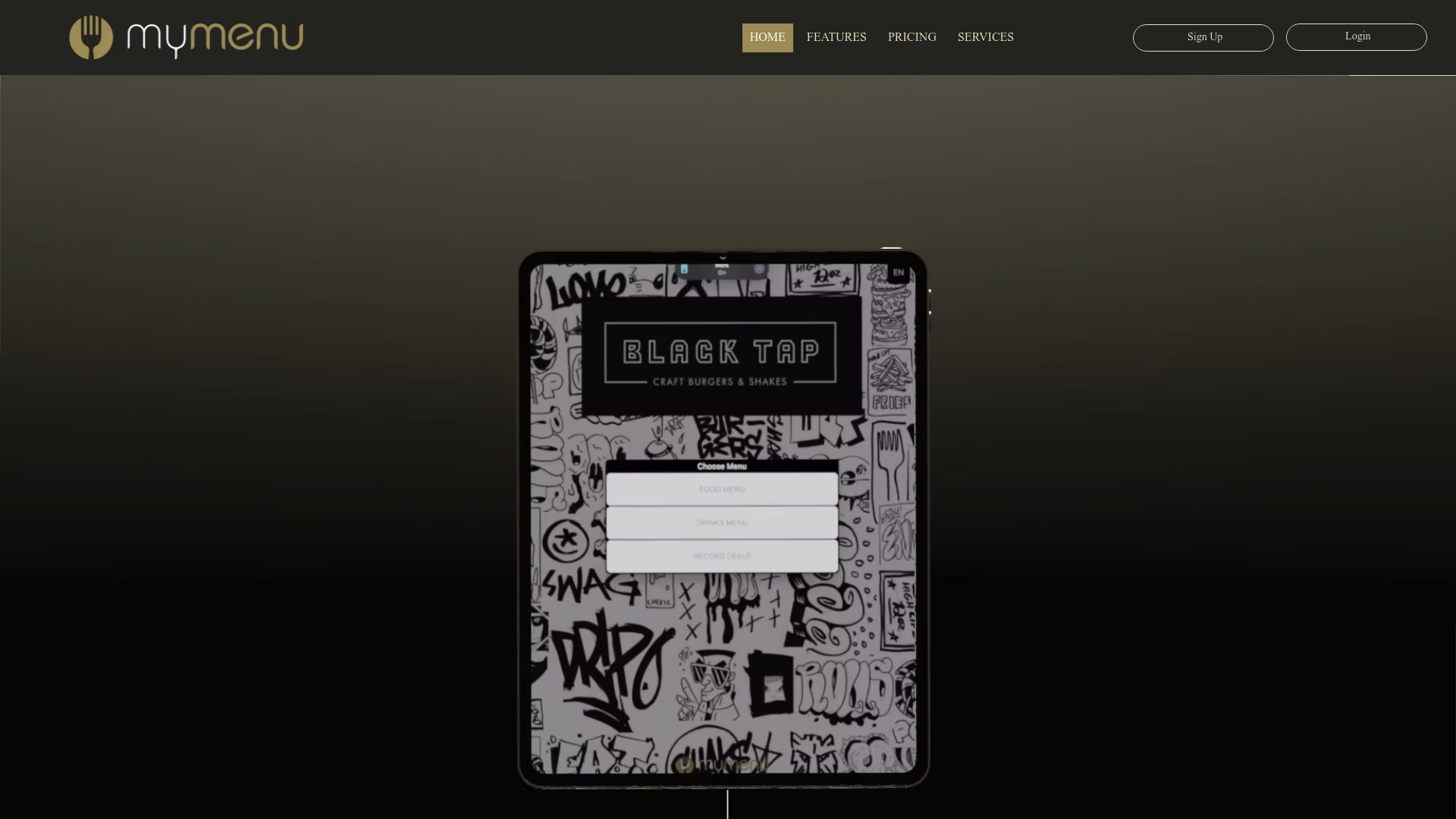
Getting started is straightforward, and free QR menu pricing means you can explore the platform’s capabilities before committing to a full rollout. From single-location cafes to multi-property hotel groups, MyDigiMenu.com delivers the tools to turn every screen into a sales opportunity.
Frequently asked questions
What hardware is needed for digital food signage?
Most setups require commercial-grade screens, a dedicated media player, and a cloud-based CMS to manage and update content remotely. Consumer televisions are not recommended because they are not built for continuous operation in commercial environments.
How quickly can digital food signage pay for itself?
Payback periods range from as little as 1.3 months to 18 months depending on your location, traffic volume, and how effectively you use the platform’s promotional features. Higher-traffic venues with strong content strategies typically see the fastest returns.
Does digital signage really increase guest engagement?
Yes. Hotels report measurable F&B sales gains through cross-selling and wayfinding, while 80% of UGC influences guest purchase decisions. Restaurants consistently see sales and AOV rise when compelling visuals replace static printed menus.
How do you keep digital food signage content up to date?
Managers use cloud-based CMS platforms to schedule updates, sync pricing changes, and push seasonal promotions to all screens simultaneously, eliminating the lag and cost of printed menu reprints.
What are common pitfalls to avoid with digital menu boards?
Poor installation, cluttered visuals, and outdated content are the top culprits. Avoid them by piloting before scaling, scheduling regular content audits, and always having a fallback plan for connectivity outages.
Recommended
Comments