
12 Restaurant Chatbot Ideas That Actually Save Staff Time

The fastest way to increase bookings and reclaim staff hours is to deploy a chatbot that handles reservations, menu and allergen questions, and online ordering. Those three tasks eat more phone and counter time than anything else in a shift, and they’re also the easiest to automate well.
If you’re building a shortlist, start here:
Reservations and waitlist management — captures after-hours bookings your host stand misses entirely.
Online ordering and pickup — turns idle phone-tag into direct, commission-free revenue.
Menu and allergen Q&A — answers the same 15 questions your servers repeat every night.
Promotions and loyalty prompts — nudges repeat visits without a staffer lifting a finger.
Proactive waitlist texts — cuts walk-away rates during your Friday night crunch.
If you can only launch one thing this month, launch reservations and menu Q&A together. They solve the two most common reasons your phone rings during dinner service, and they’re the two easiest to prove with a number your owner or GP will actually care about.
Key Takeaways
Restaurant chatbots succeed when they combine accurate menu data, clear escalation rules, and a weekly review habit that closes knowledge gaps fast.
Point | Details |
Start with two use cases | Launch reservations and menu Q&A first before expanding to ordering, loyalty, or internal tools. |
Escalate, don’t automate, emergencies | Route allergy concerns and complaints to a human within about 60 seconds, always. |
Run the 30-day loop | Monitor daily in week one, fix top gaps in week two, review satisfaction and conversion in weeks three and four. |
Track five core metrics | Watch resolution rate, bookings captured, order revenue uplift, abandonment, and escalation speed. |
Keep menu data in one place | Mydigimenu’s QR menus and reservation tools give chatbots a single accurate source to pull from. |
Table of Contents
What Is a Restaurant Chatbot Idea, and Where Does It Fit the Guest Journey?
A restaurant chatbot is an automated messaging tool that answers guest questions, takes orders, and books tables across your website, social channels, or SMS, without a human typing every reply. Think of it as a extra staff member who never clocks out, never forgets the gluten-free menu, and never gets flustered on a Saturday rush.
The clearest way to plan chatbot ideas is to map them against what we call the Five Service Moments: Discover (a guest finds your restaurant online and has a question), Decide (they’re comparing your menu against three other options open in browser tabs), Reserve (they want a table or a pickup slot), Arrive (they’re walking in, running late, or checking wait time), and Return (they’re deciding whether to come back). A good chatbot idea slots into one of these moments and moves the guest forward without friction.
Chatbots are not built for every moment, though. The instant a guest mentions a severe allergy, a complaint about their meal, or anything emotionally charged, the bot’s job is to hand off to a human, fast. Restaurant chatbots can automate reservations, order placement, menu inquiries, and delivery tracking, but they should never be the last word on anything involving a guest’s safety or a genuine grievance. Set that boundary before you launch anything else.
12 Restaurant Chatbot Ideas Worth Building This Quarter
Group your chatbot ideas into two buckets: the ones your guests interact with directly, and the ones that quietly run your back-of-house. Both matter, but they get built differently and measured differently.
Guest-facing ideas
1. Reservation booking and confirmation. The bot checks availability, books the table, and sends a confirmation text. Minimum setup is a connected reservation system; without one, the bot should collect the guest’s name, party size, and preferred time, then route that lead to your host stand rather than promising a table it can’t confirm. KPI to track: bookings captured through chat versus phone. Template: “I’d love to grab you a table! What time and how many in your party?”
2. Waitlist management. Instead of a paper list and a shouted name, guests text their party size and get a real-time position update. KPI: average wait-time accuracy (how close your estimate lands to actual seating time).
3. Online ordering and pickup. The chatbot walks a guest through your menu, handles modifiers (“no onions,” “extra sauce”), and confirms pickup time, illustrating the role of online food ordering for restaurants and customers. This is where POS integration becomes essential, not optional. Without it, orders land in a queue nobody’s watching. KPI: direct-order revenue versus third-party delivery commission saved.
4. Order tracking updates. Once an order’s placed, the bot sends “your food is being prepared” and “your order is ready” texts automatically. KPI: reduction in “where’s my order” phone calls.
5. Menu and allergen Q&A. This is the single highest-frequency use case in most restaurants. Guests ask about gluten-free options, spice levels, and ingredient lists constantly, and a bot trained on your actual menu answers instantly instead of putting a guest on hold. KPI: percentage of menu questions resolved without staff involvement. The catch: the bot needs a single, accurate source of menu truth, not a PDF from three menu updates ago.
6. Promotions and loyalty integration. The bot can text a returning guest about a happy hour deal or remind a loyalty member they’ve got a free appetizer waiting. KPI: redemption rate on chatbot-delivered offers.
7. Proactive nudges. A short “we miss you, come back this week for 15% off” message to guests who haven’t ordered in 30 days. KPI: reactivation rate.
Internal operations ideas
8. Employee scheduling requests. Staff message the bot to request a shift swap or check next week’s schedule instead of texting the manager directly at 11 PM. KPI: reduction in scheduling-related manager interruptions.
9. Incident reporting. A quick chatbot form lets staff log a broken piece of equipment or a safety issue immediately, timestamped and routed to the right manager. KPI: average time from incident to resolution.
10. Inventory alerts. Connected to your POS, the bot flags when a high-velocity item is running low so someone reorders before you’re 86ing your best seller on a Saturday night. KPI: number of unplanned stockouts per month.
11. Staff training refreshers. New hires can ask the bot “what’s in the house vinaigrette?” or “how do we handle a walk-in with a peanut allergy?” instead of pulling a manager off the floor. KPI: reduction in repeated training questions during onboarding.
12. Catering and event lead qualification. The bot collects date, headcount, and budget range for catering inquiries before a human ever gets involved, so your events coordinator only spends time on qualified leads. KPI: percentage of catering inquiries that convert to booked events.
Pro Tip: Don’t try to launch all 12 at once. Pick the two or three ideas that solve your loudest, most repetitive pain point first, prove the KPI moves, then expand. A chatbot that does three things well beats one that does twelve things badly.
Copy-Ready Chatbot Flows for Every Channel
Different channels need different message structures because guests use them differently. Website chatbots handle detailed menu and booking questions best, while voice AI is better suited to heavy phone-volume problems like a flooded reservation line. Sequence your channels based on where your guests already write to you.
Website ordering widget flow:
Greet and ask pickup or delivery.
Present menu categories, capture modifiers as free text.
Confirm order total and pickup time.
Send SMS confirmation with order number.
Instagram/DM booking flow: Guests messaging your Instagram expect a response within minutes, not hours. A bot handling first-touch replies (“What time works for 4 people tonight?”) and routing confirmed bookings to your reservation system keeps that channel from becoming a black hole.
WhatsApp waitlist and SMS pickup templates:
Waitlist add: “You’re #4 on the list, estimated wait 20 minutes. We’ll text you when your table’s ready.”
Pickup ready: “Your order is ready for pickup at the counter. Just give us your name!”
Allergen escalation: “That’s a great question about severe allergies. Let me connect you with someone on our team who can walk through every ingredient with you.”
That last template matters more than it looks. A bot that tries to answer a severe allergy question on its own is a liability. A bot that validates the concern and escalates within a minute protects both the guest and the restaurant.
Running the Bot Safely: Metrics, Guardrails, and the 30-Day Fix-It Loop
Sentiment detection is the guardrail most owners skip, and it’s the one that prevents the worst outcomes. When a guest’s message reads as frustrated, angry, or urgent, the bot should escalate to a human immediately rather than attempting to smooth things over with a scripted reply. The same rule applies without exception to allergy concerns: never let a bot attempt to resolve one on its own.
Launching with 25 to 40 well-structured Q&A pairs covering hours, menu and dietary needs, reservations, and order status gives you a strong starting foundation. From there, run a weekly optimization loop: pull unanswered questions every week, and by week two, update the 10 to 15 responses that are generating the most confusion or repeat contact.
Restaurants that follow this cadence consistently see chatbot resolution rates climb from roughly 60 to 70 percent at launch to 85 to 90 percent by month three. That jump doesn’t happen by accident. It happens because someone actually reads the transcripts every week and fixes the gaps.
Track these five metrics from day one:
Chatbot resolution rate — percentage of conversations closed without human intervention.
Bookings captured — reservations or waitlist adds completed entirely through chat.
Direct-order revenue uplift — online orders placed through your own channel versus third-party apps.
Conversation abandonment — how often guests drop off mid-conversation, a sign your flow is too long or confusing.
Escalation response time — how fast a human picks up once the bot hands off a flagged conversation.
A 30-Day Checklist to Launch Your First Chatbot
Getting from idea to live bot doesn’t need to take a quarter. Here’s a realistic month-by-month build:
Define your objective and success metric. Pick one (bookings captured, order revenue, or fewer phone interruptions) and make it the number you check weekly.
Pick your starting channel. Website first, in most cases, since it handles menu, policy, and booking questions well before you expand to social messaging.
Collect 25 to 40 real customer questions from your staff, your Google reviews, and your voicemail transcripts. These become your first Q&A set.
Connect what you can. Integrate with your POS system, reservation platform, and loyalty program wherever possible.
Build a fallback for what you can’t connect. If a direct integration isn’t available, the bot should capture lead details and route them to a human rather than confirm something it can’t guarantee.
Your first month should follow this rhythm:
Week 1: Monitor every conversation daily. Catch obvious gaps immediately.
Week 2: Add responses for your top 10 unanswered question categories.
Week 3: Review guest satisfaction signals and adjust tone if replies feel robotic or off-brand.
Week 4: Review conversion numbers against your objective from step one, and decide whether to expand to a second channel.
How a Digital Menu Platform Turns These Ideas Into a Working System
Most of the chatbot ideas above run into the same wall: the bot is only as accurate as the menu data feeding it. A QR code menu that lives in one place, updated once and reflected everywhere, solves that problem at the source. When your chatbot pulls allergen details, prices, and daily specials from the same canonical menu your guests scan at the table, you eliminate the most common failure mode: a bot confidently giving a guest outdated information.
Mydigimenu’s platform maps directly onto several of the highest-impact ideas covered here:
QR and tablet menus feed accurate, real-time menu and allergen content to any chatbot layer.
Reservation management supports the booking and waitlist use cases without a separate system to maintain.
Loyalty and digital stamp cards power the promotions and reactivation nudges guests actually respond to.
No-app online ordering gives you the direct-order channel that chatbot flows depend on for pickup and delivery.
POS and third-party delivery integrations close the loop between what the bot promises and what your kitchen actually confirms.
A sensible starter configuration: pair your QR menu, a reservation link, and a loyalty capture form, then layer chatbot conversations on top once that foundation is accurate.
What Most Owners Get Wrong About Chatbot Rollouts
The biggest mistake isn’t picking the wrong use case. It’s trying to automate everything on day one, then blaming the technology when guests get frustrated by a bot that’s stretched too thin. Launch with reservations and menu Q&A, let your team see the bot handle real service moments for two or three weeks, then expand.
The productivity gain in month one is usually modest and steady, not dramatic. Expect meaningfully fewer repetitive phone interruptions during peak hours, not a complete transformation of your front-of-house workload. That’s still worth having.
— Abhi
Turn These Chatbot Ideas Into a Working Menu System
Every idea in this guide depends on one thing: a menu your chatbot can trust. Mydigimenu gives you that foundation without asking you to stitch together separate tools for ordering, reservations, and loyalty, so your chatbot always pulls from one accurate source instead of three conflicting ones.
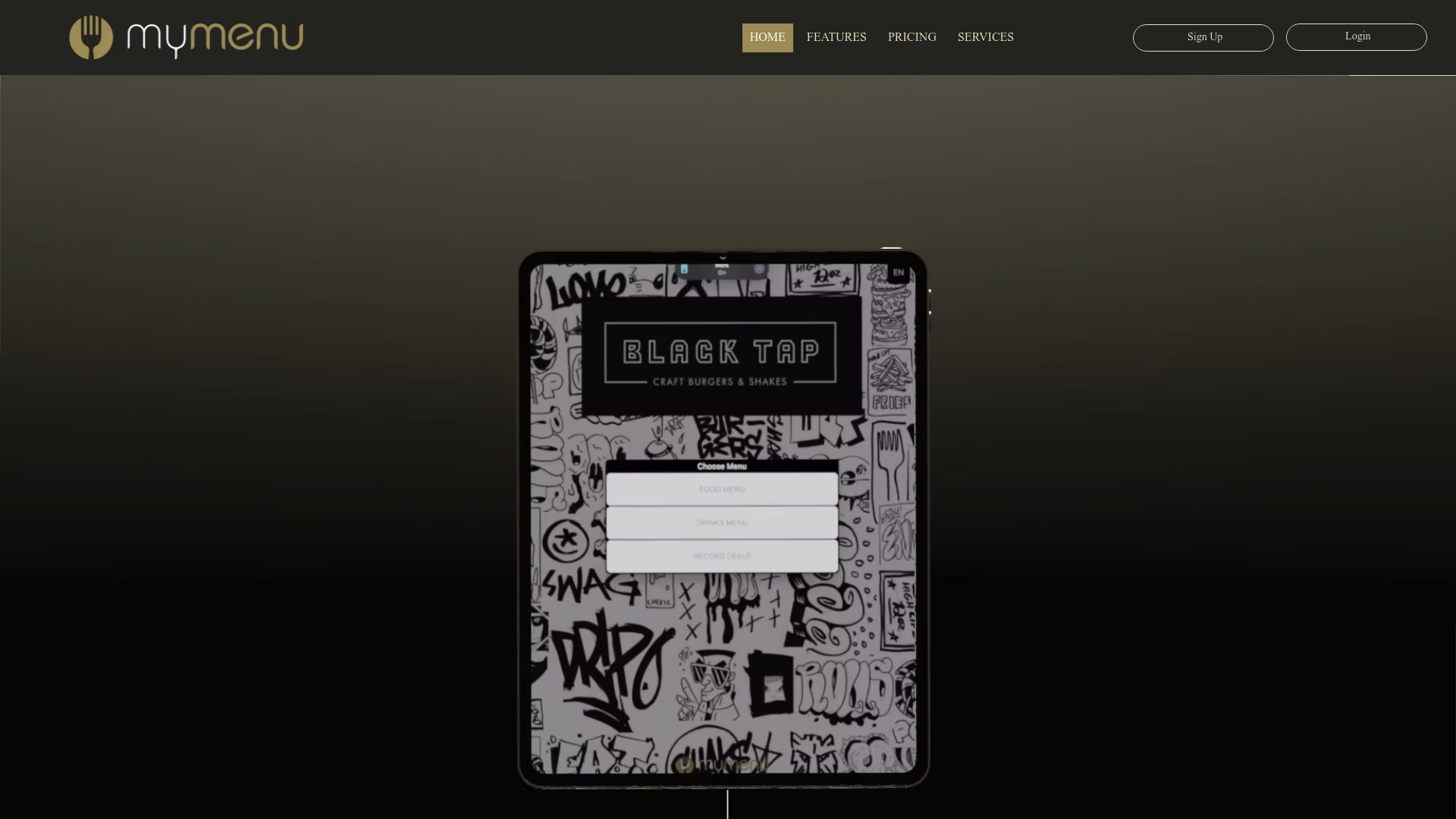
Where a patchwork of apps forces you to update your allergen list in four places every time a dish changes, Mydigimenu keeps your QR menu, tablet ordering, and reservation management synced from a single dashboard. That’s the difference between a chatbot that sounds confident and one that’s actually right. Set up your digital menu today and give your next chatbot project a foundation that won’t need fixing in week three.
Sources
Recommended
Comments