
Chain Restaurant Menu Localization Tips That Drive Sales


TL;DR:
Menu localization involves adapting a restaurant’s offerings to meet regional cultural and culinary preferences. Proper research, effective transcreation, and operational adjustments are essential for success in new markets. Digital tools help manage localized menus at scale while maintaining brand consistency and customer trust.
Menu localization is defined as the process of adapting a restaurant’s offerings, language, ingredients, and design to meet the cultural and culinary expectations of a specific regional market. For chain restaurants, getting this right is the difference between a thriving new location and a costly misfire. Product localization that includes menu adaptation and regional dietary standards significantly increases customer patronage, especially when paired with brand consistency. These chain restaurant menu localization tips draw on real-world examples from Firehouse Subs, Johnny Carino’s, and Red Lobster to give hospitality professionals a practical, research-backed framework for adapting menus without losing brand identity.
1. What are the best chain restaurant menu localization tips for researching local tastes?
Effective local menu customization starts with deep research into regional flavor preferences, not assumptions. Spice tolerance, sweetness levels, protein preferences, and traditional cooking methods vary dramatically between markets. Skipping this step produces menus that feel foreign rather than familiar.
The most reliable methods include:
Collaborate with local chefs and food experts who understand the nuances of regional cuisine and can flag cultural sensitivities before they become problems.
Run community tastings with target customers to gather direct feedback on flavor profiles, portion sizes, and ingredient combinations.
Conduct surveys and analyze sales data from comparable markets to identify dietary patterns, allergen concerns, and ingredient preferences.
Review regional dietary restrictions including religious requirements such as halal or kosher, as well as common allergens that differ by geography.
Study local competitors to understand what already resonates with the market and where gaps exist.
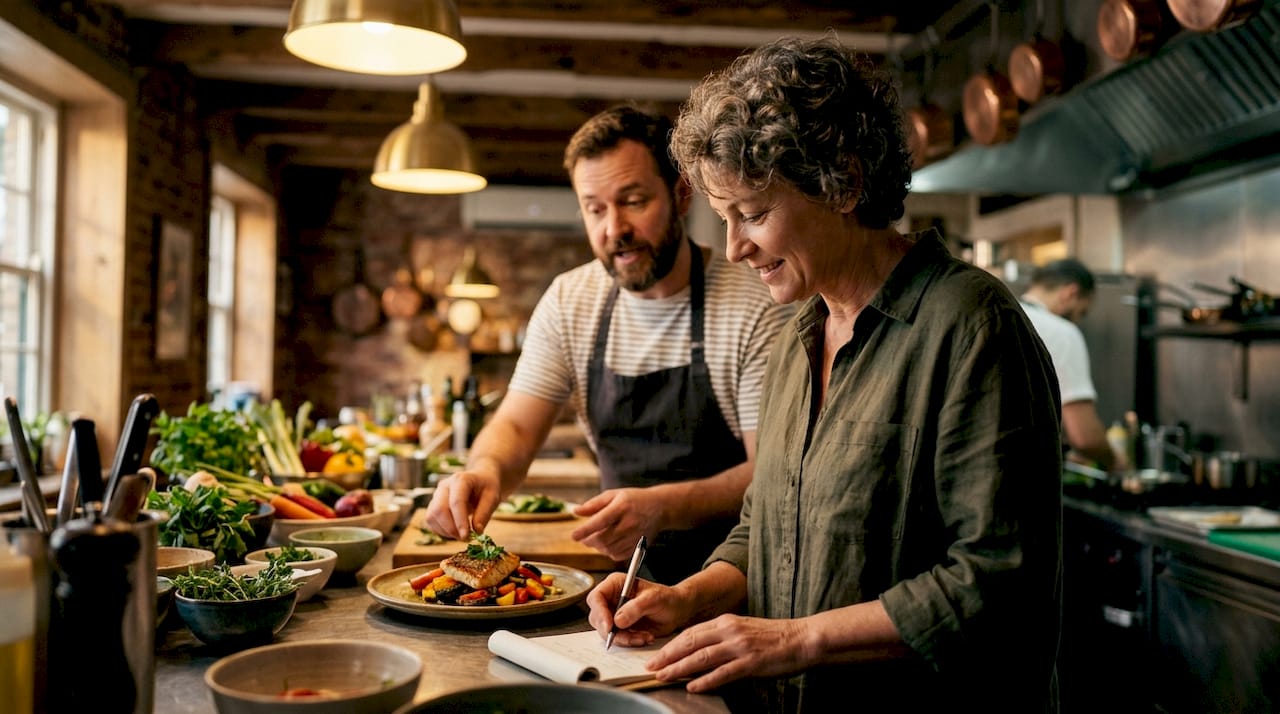
Firehouse Subs provides one of the clearest examples of this approach in action. Before launching in Australia, the brand developed 50+ localized products that included more chicken, spicier flavors, and reduced sugar to match Australian palate preferences. That level of preparation reflects a genuine commitment to understanding the market before entering it.
Pro Tip: Commission a local food anthropologist or culinary consultant for your target market before finalizing any menu changes. Their insight into food taboos and flavor nostalgia will save you from costly reformulations after launch.
2. How to adapt menu content through translation, tone, and ingredient adjustments
Menu translation is not a word-for-word exercise. The industry term for what chains actually need is transcreation, which means rewriting menu descriptions to preserve sensory appeal, cultural resonance, and brand voice in the target language. A literal translation of “smoky pulled pork with tangy slaw” may land flat or even confusing in a market where neither pulled pork nor coleslaw is familiar.
Practical steps for effective menu content adaptation:
Hire native linguists with culinary expertise. A general translator will miss the appetite-triggering language that sells dishes. You need someone who understands both the language and the food culture.
Adapt tone as well as words. Some markets respond to poetic, evocative descriptions. Others prefer direct, ingredient-focused language. Match the tone to local dining culture.
Localize measurements and units. Ounces, pounds, and Fahrenheit mean nothing in metric markets. Convert all measurements and adjust portion size language accordingly.
Create a centralized glossary. Standardize translations for core brand terms, signature items, and allergen labels across all locations. This prevents inconsistency and compliance risks.
Test with native speakers before printing. Run finalized menu copy past a panel of local diners. They will catch awkward phrasing, unintended meanings, and missed cultural cues that internal teams overlook.
Adapt allergen labeling to local regulations. Allergen disclosure requirements differ by country and region. Failing to comply creates legal exposure and erodes customer trust.
Localizing menus goes beyond words to transcreate sensory appeal and maintain brand voice in target cultures. That principle should guide every content decision, from dish names to dietary icons.
Pro Tip: Build your localized menu glossary in a shared cloud document accessible to your culinary, marketing, and operations teams simultaneously. Alignment across departments prevents conflicting terminology from reaching the printed or digital menu.
3. What operational adjustments support effective menu localization?
A localized menu only works if the kitchen can execute it consistently. Operational readiness is the most underestimated factor in chain restaurant adaptation. Reformulating a recipe for local ingredients is one thing. Training a kitchen team to prepare it at scale, with consistent quality, is another challenge entirely.
Key operational adjustments include:
Source local ingredients and suppliers to reduce cost, improve freshness, and align with regional taste expectations. Local sourcing also builds goodwill with the community.
Reformulate core recipes to account for ingredient substitutions without sacrificing the flavor profile that defines the brand. Document every change in a standardized recipe management system.
Align staff training with new menu items. Kitchen teams need hands-on training for any new preparation technique, not just a printed recipe card.
Adapt kitchen workflows to accommodate new ingredients or cooking methods. A dish that requires a different prep station or cooking time affects the entire service flow.
Modify restaurant design to reflect local dining habits. Physical environment is part of the localized experience.
Johnny Carino’s bar-forward prototype in Laredo, Texas demonstrates how physical space adaptation complements menu changes. The open-kitchen design and expanded beverage program aligned the restaurant’s environment with local social dining habits, extending dayparts and attracting new customer segments. Operational adjustments are critical in localization projects, including supply chain reforms and staff training that align with localized ingredients without sacrificing product quality.
Pro Tip: Test your localized menu in a single pilot location before rolling out to the full network. Prototype testing in secondary markets gathers measurable results and mitigates rollout risk before a national commitment.
4. How to balance brand consistency with local menu customization
Brand consistency and local customization are not opposites. The most successful chains treat them as complementary forces. The brand provides the structure; local adaptation fills it with regional character.
Approach | Brand-Only Menu | Fully Localized Menu | Balanced Glocal Menu |
Customer appeal | Low in new markets | High locally, weak globally | High in both contexts |
Brand recognition | Strong | Diluted | Maintained |
Operational complexity | Low | High | Moderate |
Trust-building | Slow in new markets | Fast locally | Fastest overall |
Customer trust significantly amplifies the effectiveness of menu localization strategies on patronage. Building that trust requires consistency in brand presentation even as individual menu items shift.
Digital menus are the most practical tool for managing this balance. Digital and cloud-based menus support flexible, real-time menu updates and localization, improving guest engagement and scaling consistency across locations. Key design principles for balanced menus include:
Keep brand colors, typography, and logo placement consistent across all regional versions.
Use multilingual menu features to serve diverse audiences within a single market without creating separate menu versions.
Structure menu sections the same way across regions so returning customers recognize the layout even when dishes differ.
Apply local imagery and food photography that reflects regional ingredients while maintaining the brand’s visual style.
5. What are the most common pitfalls in menu localization and how to avoid them?
The most damaging localization mistakes are not creative failures. They are operational and compliance failures that erode customer trust and create legal risk. Failing to localize menus accurately creates customer confusion, reduces perceived quality, and increases compliance risks.
Watch for these specific pitfalls:
Over-relying on machine translation. Automated tools produce technically accurate but culturally flat text. They miss idioms, sensory language, and cultural connotations that make menus compelling.
Ignoring allergen and dietary labeling requirements. Regulations differ significantly between the United States, the European Union, Australia, and Southeast Asian markets. Non-compliance carries financial and reputational consequences.
Changing too much at once. Customers who already know the brand expect to find familiar anchors on the menu. Removing core items entirely to accommodate local tastes can alienate loyal customers in established markets.
Skipping customer feedback loops. Localization is not a one-time project. Guest feedback after launch reveals what is working and what needs adjustment.
Underestimating the role of AI and data analytics. Red Lobster’s CEO emphasized AI to improve efficiency and adapt to market needs, signaling that data-driven menu personalization is now a competitive standard, not a luxury.
Pro Tip: Set up a quarterly menu review cycle for each localized market. Use point-of-sale data, customer feedback scores, and waste reports together to identify which localized items are performing and which need reformulation or removal.
Key takeaways
Effective chain restaurant menu localization requires integrating cultural research, precise transcreation, operational readiness, and digital tools to build customer trust and drive sales across diverse markets.
Point | Details |
Research before adapting | Study local flavor profiles, dietary restrictions, and competitor menus before changing a single item. |
Transcreate, don’t translate | Hire native culinary linguists to rewrite menu descriptions for sensory appeal, not just linguistic accuracy. |
Align operations with the menu | Retrain kitchen staff, source local ingredients, and update workflows before launching localized items. |
Use digital menus for flexibility | Cloud-based and QR menus allow real-time updates and multilingual support across all locations. |
Protect brand consistency | Keep visual identity and menu structure uniform while allowing regional variation in dishes and descriptions. |
My honest take on what most chains get wrong
Most chains treat menu localization as a marketing project. It is not. It is an operations project with a marketing surface. The brands that succeed, like Firehouse Subs in Australia, invest heavily in supply chain, staff training, and recipe testing before a single customer sees the new menu. The brands that struggle launch a translated PDF and wonder why sales are flat.
The other mistake I see repeatedly is treating localization as a one-time event. Markets evolve. Dietary trends shift. A menu that resonated in 2022 may feel dated by 2026. The chains winning in new markets have built continuous feedback loops into their operations, not just their marketing calendars.
Cross-department collaboration is non-negotiable. When culinary, operations, and marketing work in separate lanes, the localized menu ends up inconsistent. The kitchen cannot execute what the marketing team promised, and the customer feels the gap. The fix is simple but rarely practiced: put all three teams in the same room at the start of the localization process, not at the end.
For chains with limited resources, prioritize depth over breadth. Localizing five menu items exceptionally well beats adapting twenty items superficially. Customers notice authenticity. They also notice when a “local” dish tastes like it was designed by a committee in a different country.
Digital tools have genuinely changed what is possible here. The ability to update a menu in real time across fifty locations, test a new localized item in three markets simultaneously, and collect guest feedback digitally has compressed the localization cycle from months to weeks. That speed advantage belongs to the chains willing to invest in the right platforms.
— Abhi
How Mydigimenu helps chains manage localized menus at scale
Chain restaurants managing multiple regional menus need a platform that moves as fast as the market does. Static printed menus cannot keep pace with seasonal ingredient changes, regulatory updates, or new localized items.
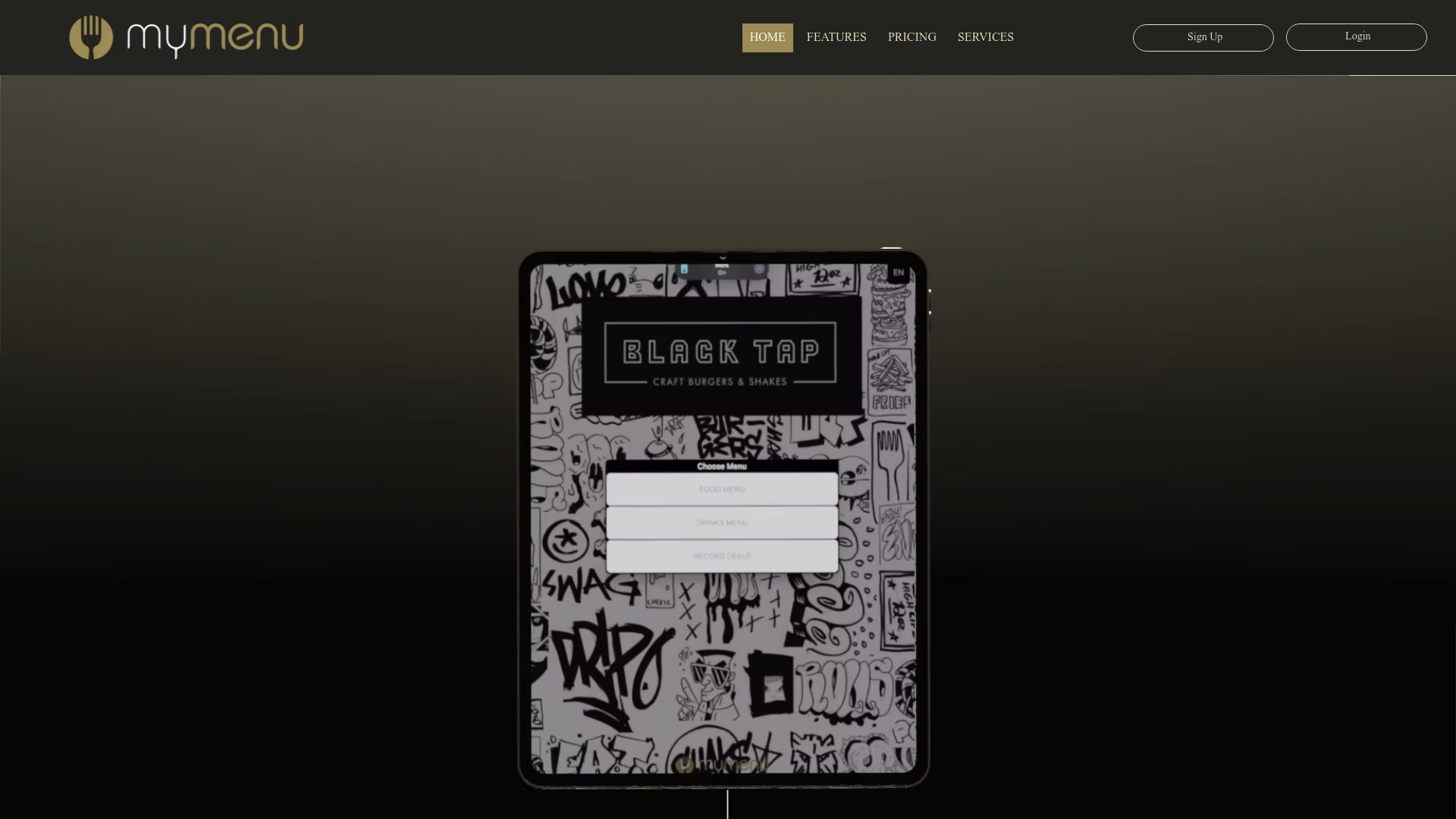
Mydigimenu’s digital tablet and iPad menu platform gives chain operators centralized control over every location’s menu from a single dashboard. Update allergen labels, swap localized dish descriptions, or launch a regional promotion in real time without reprinting a single page. The platform supports QR code menus with multilingual display, allergen tagging, and rich food photography to make every localized menu as visually compelling as the brand’s flagship location. For chains ready to scale their localization efforts, Mydigimenu’s pricing plans are built to grow with your network.
FAQ
What is menu localization in chain restaurants?
Menu localization is the process of adapting a chain’s offerings, language, ingredients, and design to match the cultural and culinary expectations of a specific regional market. It goes beyond translation to include flavor reformulation, allergen compliance, and local ingredient sourcing.
How does transcreation differ from translation for restaurant menus?
Transcreation rewrites menu descriptions to preserve sensory appeal and brand voice in the target culture, while translation simply converts words from one language to another. Native culinary linguists are the standard for effective menu transcreation.
Why does brand consistency matter during menu localization?
Customer trust amplifies the effectiveness of localization strategies on patronage. Consistent brand presentation, even as individual dishes change, builds the familiarity that converts first-time visitors into loyal regulars.
How can digital menus support chain restaurant adaptation?
Digital menus allow real-time updates, multilingual display, and allergen tagging across all locations from a single platform. Digital menu adoption post-COVID reached 85%, reflecting how central these tools have become to multi-location menu management.
What is the biggest mistake chains make when localizing menus?
The most common mistake is treating localization as a translation project rather than an operational one. Chains that skip staff retraining, supply chain adjustment, and recipe testing produce menus their kitchens cannot execute consistently.
Recommended
This was a pleasant article to read, with information presented in a logical order. The explanations are clear, and the simple wording makes the content accessible. I found the practical details helpful and enjoyed the overall discussion.
https://kolkataff.org.in/
The unpredictable nature of Infinite Craft makes it difficult to know where a single combination will lead, which adds excitement to the experience.