
Why Use Digital Stamp Cards for Hospitality Loyalty

TL;DR:
Digital stamp cards outperform paper loyalty programs by achieving higher completion rates and reducing fraud and lost cards. They leverage behavioral science and passive visibility features to increase customer engagement and provide valuable data for targeted marketing. Implementing wallet-native systems is simple, cost-effective, and enhances hygiene and operational efficiency.
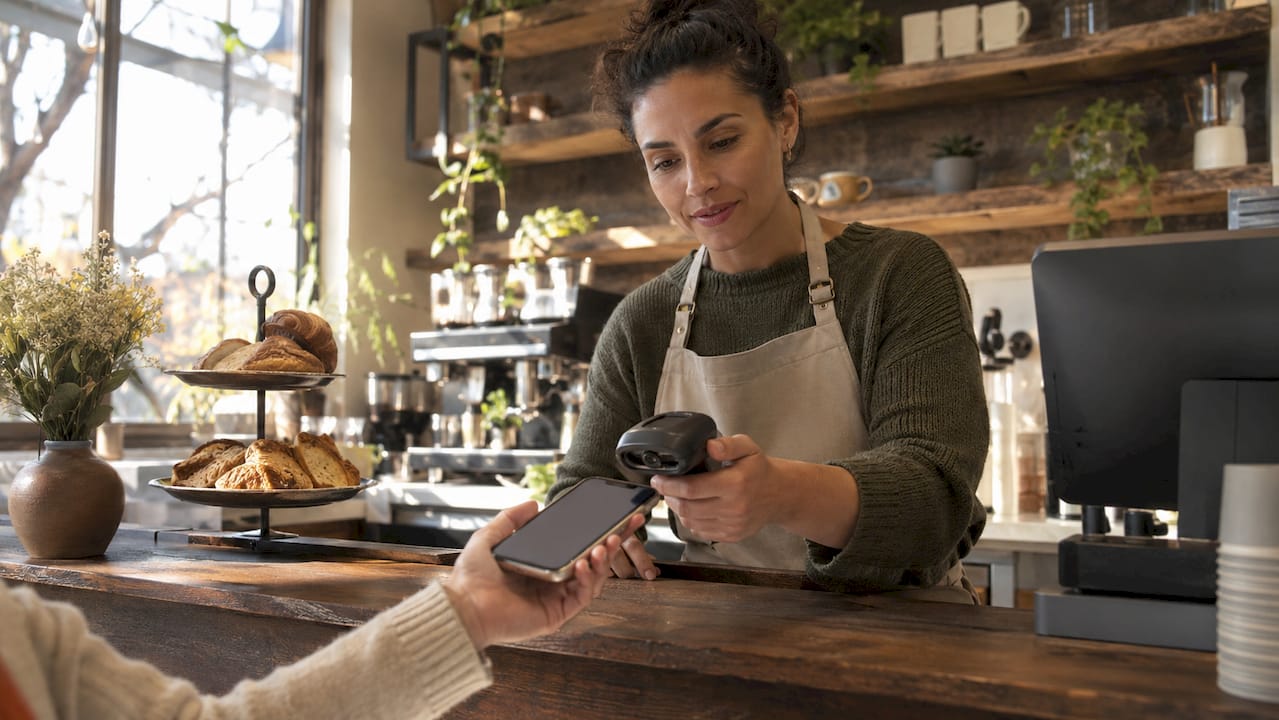
Digital stamp cards are mobile-based loyalty tools that replace paper punch cards with secure, data-driven passes stored directly in Apple Wallet or Google Wallet. Hospitality businesses that ask why use digital stamp cards are really asking a sharper question: why keep running a loyalty program that loses 39% of its participants before they ever earn a reward? The answer is in the numbers. Digital programs drive 30–40% higher visit frequency and 5x faster redemption rates than paper alternatives. That kind of performance gap does not happen by accident. It happens because digital cards are always in a customer’s pocket, always visible, and always working.
Why use digital stamp cards instead of paper punch cards?
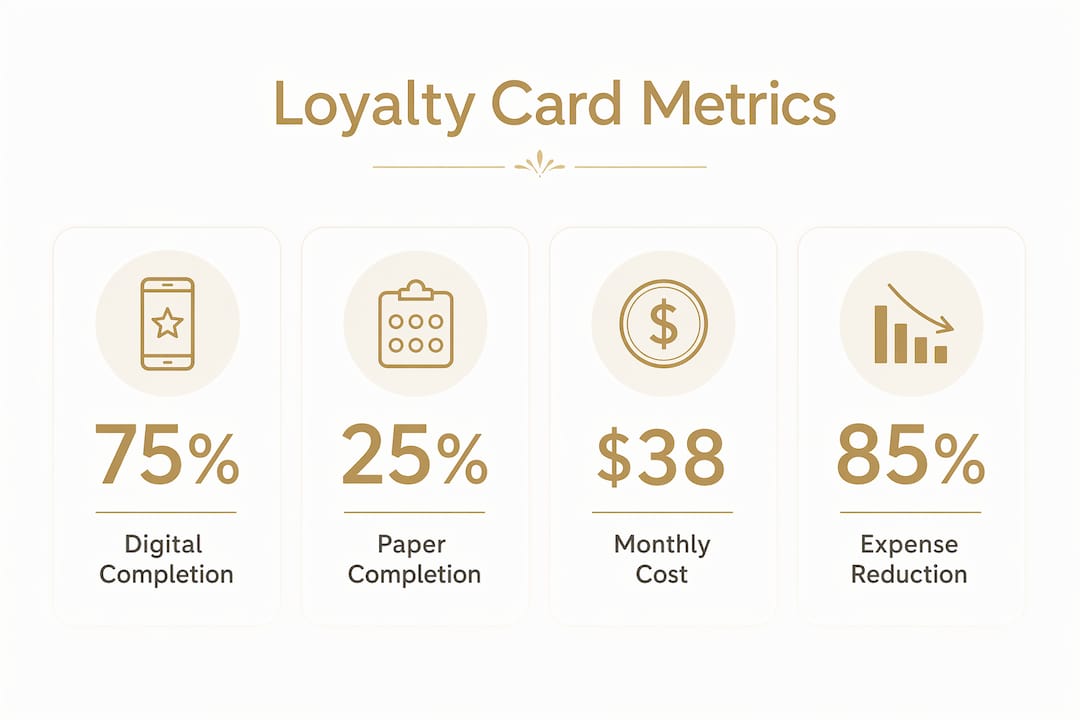
The performance difference between digital and paper loyalty cards is not marginal. Digital loyalty cards achieve 65–75% completion rates compared to 18–25% for paper cards. That is roughly a threefold improvement, and it comes down to one simple fact: a card stored in Apple Wallet or Google Wallet cannot be left on a kitchen counter or forgotten in a coat pocket.
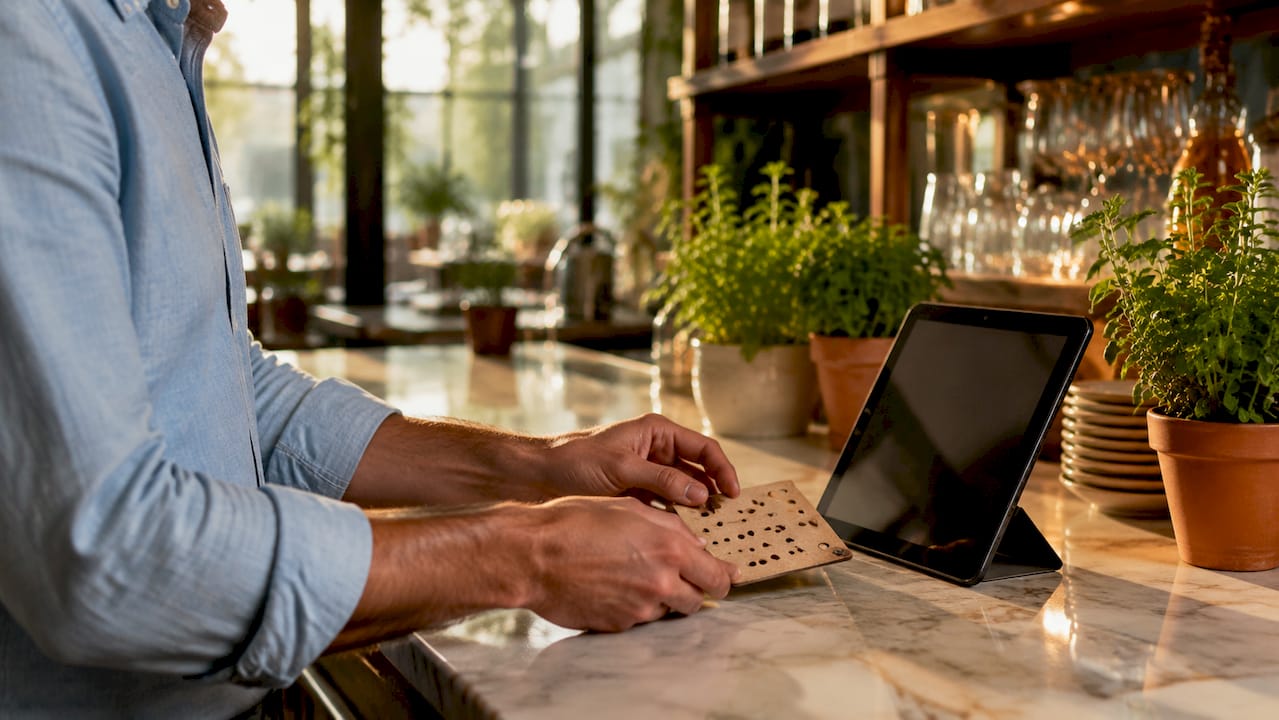
Paper cards carry what loyalty professionals call the “lost card tax.” 39% of customers abandon paper loyalty programs because they lose their card, and paper cards themselves have a 60–70% loss rate. Every lost card represents a customer who invested visits and purchases into your program and walked away with nothing. Digital cards eliminate that loss entirely.
Here is what else digital stamp cards do that paper simply cannot:
Fraud prevention. Only staff can add stamps using verified scanner apps, removing the self-stamping and counterfeit issues that plague paper programs. Every reward redeemed ties directly to a real transaction.
Contactless hygiene. Post-pandemic, customers expect tap-to-stamp experiences. Contactless digital stamping aligns with guest hygiene expectations and enhances satisfaction at the point of interaction.
Zero friction entry. Wallet-native digital passes in Apple and Google Wallet remove the app download barrier that kills adoption in app-first loyalty programs.
Operational clarity. Managers can track program performance in real time without counting paper cards or guessing at redemption rates.
Pro Tip: When launching your digital stamp card, train front-of-house staff to scan at the point of payment rather than asking customers to initiate it. That single habit change drives adoption rates significantly higher in the first 30 days.
The shift to digital is not just about convenience. It is about building a loyalty program that actually completes. A program guests abandon halfway through is not loyalty. It is a broken promise.
How do digital stamp cards use psychology to drive repeat visits?
The most underappreciated digital stamp card advantage is not the technology. It is the behavioral science baked into how these programs are designed. Two psychological principles explain why digital cards outperform paper at a fundamental level.
The first is the endowed progress effect. Digital stamp cards leverage this by pre-loading one or two stamps onto a new card before a customer earns them. Customers who start with a perceived head start show significantly higher completion rates than those who begin from zero. The psychology is straightforward: people are more motivated to finish something they have already started than to begin something new.
The second is the goal-gradient effect. Motivation accelerates as people approach a goal. Personalized push notifications sent during the final third of a stamp card journey maximize this effect. A well-timed message that says “You are two coffees away from a free breakfast” does more commercial work than any printed flyer.
Digital cards make both principles easy to apply:
Pre-load one or two stamps at sign-up to trigger the endowed progress effect immediately.
Schedule automated nudge notifications when customers reach the 60–70% completion mark.
Display visible progress in the wallet pass so customers see exactly how close they are to a reward.
Personalize messages based on visit history to make the nudge feel relevant, not generic.
The visibility factor matters more than most managers realize. A paper card buried in a wallet does not remind anyone of anything. A pass that appears on a lock screen near your restaurant is a different story entirely. That passive visibility is a form of marketing that costs nothing extra once the system is running.
Pro Tip: Set your reward threshold at a number that matches your average customer’s natural visit cadence. If most guests visit twice a week, a 10-stamp card takes five weeks to complete. That is the sweet spot between attainable and aspirational.
Paper vs. digital: what do the real numbers say?
Cost is where many hospitality managers hesitate. The assumption is that digital loyalty systems are expensive. The reality is the opposite. Digital loyalty systems cost approximately $38–$76 per month per location, replacing ongoing printing costs and reducing annual loyalty expenses by about 85%.
Paper cards look cheap until you account for design, printing, reprinting after rebrands, staff time managing physical cards, and the revenue lost to fraud and abandoned programs. Digital systems replace all of that with a single monthly fee and give you something paper never could: customer data.
Paper punch cards generate no customer data, which blocks your ability to identify your most loyal guests, send targeted reminders, or measure whether your program is actually working. Digital systems capture visit frequency, average spend, churn risk signals, and redemption patterns. That intelligence turns a loyalty program from a cost center into a retention tool.
Feature | Paper Stamp Cards | Digital Stamp Cards |
Monthly cost per location | Printing + design (variable) | $38–$76 flat fee |
Card loss rate | 60–70% | 0% (stored in wallet) |
Fraud risk | High (self-stamping possible) | Low (staff-only scanning) |
Customer data captured | None | Visit frequency, churn risk, spend |
Personalized marketing | Not possible | Automated push notifications |
Hygiene and contactless | No | Yes (tap-to-stamp) |
Program completion rate | 18–25% | 65–75% |
The data column in that table is where the real competitive advantage lives. When you know which customers are at risk of churning, you can act before they leave. When you know your busiest visit days, you can time promotions to amplify them. Paper cards leave you guessing. Digital cards give you answers.
Pro Tip: Use your digital loyalty platform’s churn risk data to trigger a “We miss you” offer after 14 days of inactivity. That single automated campaign can recover a meaningful share of guests who would otherwise drift to a competitor.
How to implement digital stamp cards in your hospitality business
Getting a digital stamp card program running does not require a technology overhaul. The right approach keeps friction low for both staff and guests.
Choose a wallet-native solution. Select a platform that issues passes directly to Apple Wallet and Google Wallet. App-first loyalty programs face high friction because mandatory downloads deter sign-ups. Wallet-native passes require no download and work on any smartphone.
Train staff on the scanning process. The stamp happens at the point of payment when a staff member scans the customer’s wallet pass. Keep the process to under 10 seconds. Guests who experience a clunky stamp process will not return to the program.
Promote the program at every touchpoint. Place QR codes on tables, receipts, and at the counter. Mention the program verbally during the transaction. The first stamp is the hardest to earn because it requires a behavioral change from the guest.
Activate geo-fencing. Digital cards can geo-fence to appear as lock screen notifications when a customer is near your location. This passive reminder increases foot traffic without any additional marketing spend.
Set a reward structure that matches your goals. A café targeting daily regulars might use a 7-stamp card for a free drink. A hotel restaurant targeting weekly guests might use a 5-stamp card for a complimentary appetizer. Match the threshold to the natural visit rhythm of your specific customer base.
Connecting your digital stamp card program to a broader restaurant CRM unlocks the full value of the data you collect. Guest profiles, visit history, and redemption behavior all become inputs for smarter marketing decisions. That is where a loyalty program stops being a perk and starts being a growth engine.
For hospitality businesses already exploring contactless dining trends, digital stamp cards fit naturally into a broader guest experience strategy. They reinforce the same values: speed, hygiene, and personalization.
Key takeaways
Digital stamp cards outperform paper loyalty programs on every measurable dimension, from completion rates and fraud prevention to cost savings and customer data intelligence.
Point | Details |
Completion rates triple | Digital cards achieve 65–75% completion vs. 18–25% for paper programs. |
Lost cards cost real revenue | 39% of customers abandon paper programs due to lost cards; digital eliminates this entirely. |
Cost savings are significant | Switching to digital reduces annual loyalty program expenses by approximately 85%. |
Psychology drives performance | Pre-loaded stamps and timed push notifications use proven behavioral science to increase redemptions. |
Data turns loyalty into strategy | Digital systems capture visit frequency and churn risk, enabling targeted retention campaigns. |
The shift i have watched happen in real time
I have spent years watching hospitality operators treat loyalty programs as an afterthought. A stack of paper cards by the register, a rubber stamp, and a vague hope that guests would come back. Most of the time, they did not. Not because the guests were disloyal, but because the program gave them no reason to stay engaged.
What changed post-pandemic was not just hygiene preferences. It was expectations. Guests who had grown comfortable with digital reservations, digital check-in workflows, and contactless payments started looking at paper loyalty cards the way they look at fax machines. The technology felt out of place.
The operators I have seen succeed with digital stamp cards share one trait: they stopped thinking about loyalty as a discount program and started thinking about it as a data program. The reward is not the point. The relationship is the point. Every stamp collected is a data point. Every redemption is a signal. Every lapsed customer is an opportunity to re-engage before they are gone for good.
My honest advice to any hospitality manager reading this: do not wait for your competitors to figure this out first. The switch from paper to digital is not complicated, and the performance gap is too wide to ignore. A program that completes at three times the rate of your current one is not a marginal improvement. It is a different category of tool entirely.
The future of hospitality loyalty is not about bigger rewards. It is about smarter relationships. Digital stamp cards are the most accessible entry point into that future available right now.
— Abhi
See how Mydigimenu brings digital loyalty to life
Mydigimenu is built for hospitality businesses that want more than a digital menu. The platform combines QR code ordering, guest profile capture, and loyalty program integration into one system designed for restaurants, cafes, bars, and hotels.
If you are ready to move beyond paper punch cards, Mydigimenu gives you the tools to launch a wallet-native digital stamp card program alongside your contactless menu. Guests scan, order, and earn rewards without downloading a single app. Explore the plans and pricing to find the right fit for your venue, or start with the QR menu platform to see how digital guest engagement works in practice. The technology is ready. Your guests are already expecting it.
FAQ
What is a digital stamp card?
A digital stamp card is a mobile loyalty pass stored in Apple Wallet or Google Wallet that replaces traditional paper punch cards. Customers collect stamps through staff-scanned transactions and redeem rewards directly from their smartphone.
How do digital stamp cards work in a restaurant or café?
A staff member scans the customer’s wallet pass at the point of payment using a verified scanner app, adding a stamp to the digital card. When the card is complete, the reward is redeemed through the same wallet pass with no paper required.
Are digital stamp cards more cost-effective than paper cards?
Digital loyalty systems cost approximately $38–$76 per month per location and reduce annual loyalty expenses by about 85% compared to ongoing paper printing and design costs.
Do customers need to download an app to use a digital stamp card?
No. Wallet-native digital stamp cards work through Apple Wallet and Google Wallet, which are pre-installed on most smartphones. No separate app download is required, which significantly reduces sign-up friction.
How do digital stamp cards help prevent loyalty program fraud?
Only staff members can add stamps using secure scanning technology, which eliminates the self-stamping and counterfeit issues common with paper cards. Every reward redeemed is tied to a verified transaction.
Recommended
Comments