
What Is Omnichannel Ordering for Restaurants in 2026

TL;DR:
Omnichannel ordering unifies all customer communication channels with backend systems to enhance operational efficiency. It enables seamless, real-time updates of inventory, orders, and guest data across platforms, reducing errors and increasing loyalty. Implementing this system involves auditing existing technology, integrating channels, and running phased rollouts to ensure smooth transition and optimal benefits.
Omnichannel ordering is defined as a unified system that synchronizes every customer-facing sales channel with backend inventory, order routing, and fulfillment operations to deliver a single, uninterrupted guest experience. Whether a diner places an order through a mobile app, a QR code at the table, a third-party delivery platform, or directly at the counter, the system treats every touchpoint as part of one connected flow. For restaurant and hospitality professionals, understanding what is omnichannel ordering means recognizing it as the operational backbone that prevents lost orders, eliminates overselling, and keeps guest data intact across every interaction. Platforms like Mydigimenu, Order Management Systems (OMS), and Point of Sale (POS) integrations are the building blocks that make this possible in 2026.
What is omnichannel ordering and how does it work technically?
Omnichannel ordering works by placing a central Order Management System at the core of all restaurant operations. The OMS acts as the command center, receiving orders from every channel simultaneously and routing them to the correct fulfillment point, whether that is the kitchen, a pickup counter, or a delivery driver. Modern OMS platforms integrate with 60+ fulfillment points to support scalability across multiple locations, which means a growing restaurant group can manage dozens of outlets from a single dashboard.
The key components that power this architecture include:
Order Management System (OMS): The central hub that captures, tracks, and routes every order regardless of origin channel.
Point of Sale (POS) integration: Connects in-person transactions with online and app-based orders so all revenue data flows into one record.
Kitchen Display Systems (KDS): Receive routed orders directly from the OMS, reducing verbal handoffs and ticket errors.
Real-time inventory synchronization: Updates stock levels across in-store, app, social media, and delivery channels the moment an item sells.
API connections: Allow third-party delivery platforms, reservation tools, and loyalty programs to exchange data with the OMS without manual input.
AI-driven order orchestration: Machine learning algorithms improve fulfillment efficiency and reduce shipping costs by dynamically allocating inventory to the closest or most efficient fulfillment point.
Pro Tip: Before selecting an OMS, audit your existing POS and KDS for API compatibility. Replacing a POS mid-rollout is far more disruptive than choosing an OMS that integrates with what you already own.
The result is a system where a guest who orders online and then calls to modify their order does not cause a data conflict. Both interactions update the same record in real time, protecting the kitchen from receiving contradictory tickets.

How omnichannel ordering differs from multichannel approaches
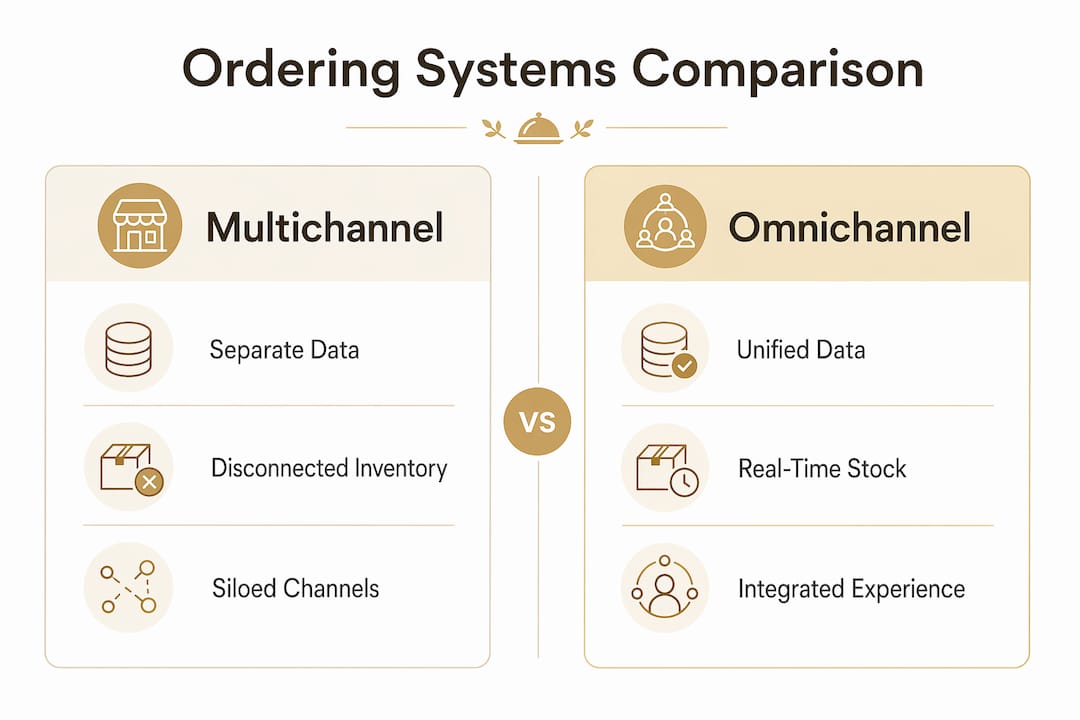
Multichannel ordering means a restaurant accepts orders from multiple sources, such as a website, a phone line, and a delivery app. Omnichannel ordering means all those sources share the same inventory pool, customer profile, and reporting layer. The distinction sounds subtle but the operational gap is enormous.
In a multichannel setup, each channel operates in its own silo. A dish marked available on the delivery app may already be sold out in the kitchen because the in-store POS and the app do not communicate. Omnichannel requires integrated data so that returns or inventory changes update instantly across all platforms, eliminating that disconnect entirely. Customers today follow non-linear purchasing paths, researching a menu online, ordering via app, and picking up in person, and multichannel systems simply cannot track that journey cohesively.
The table below captures the practical difference between the two approaches:
Feature | Multichannel ordering | Omnichannel ordering |
Inventory visibility | Per-channel, siloed | Unified, real-time across all channels |
Customer data | Fragmented by channel | Single guest profile across all touchpoints |
Order routing | Manual or channel-specific | Automated via centralized OMS |
Fulfillment flexibility | Limited to channel of origin | BOPIS, curbside, delivery, dine-in from one system |
Reporting | Separate reports per channel | Consolidated analytics and demand forecasting |
Starbucks is the most cited example of omnichannel done right in hospitality. Customers order via the Starbucks app and pick up in store, with loyalty points, order history, and payment all synchronized in one profile. That experience feels effortless to the guest precisely because the back end is anything but simple.
What are the benefits of omnichannel ordering for restaurants?
The benefits of omnichannel ordering extend from the guest-facing experience all the way to back-office cost control. Restaurants that implement a true omnichannel strategy report measurable gains across accuracy, speed, and loyalty.
Here is where the impact is most visible:
Eliminated overselling: Unified systems reduce overselling by 100% in well-integrated setups, because every channel draws from the same live inventory count.
Faster order processing: A centralized OMS removes the manual step of re-entering orders from delivery platforms into the POS, cutting ticket time and reducing human error.
Flexible fulfillment options: Buy online, pick up in store (BOPIS), ship-from-store, and same-day delivery all become manageable from one system, giving guests the freedom to choose how they receive their order.
Smarter inventory management: Real-time inventory visibility enables accurate demand forecasting and smarter replenishment, reducing both waste and stockouts during peak service.
Stronger guest loyalty: When a guest’s preferences, past orders, and loyalty points follow them across every channel, personalized engagement becomes possible. The four C’s of omnichannel customer engagement, Customer Experience, Context, Content, and Collaboration, all depend on this unified data layer.
Lower operational costs: Centralizing inventory data prevents stock imbalances and automates customer service with instant order data access, reducing the labor hours spent on manual reconciliation.
For a restaurant running online ordering platforms, the revenue upside is real. But the deeper value is operational: fewer errors, fewer refunds, and fewer frustrated guests calling to ask where their order is.
How to implement omnichannel ordering in your restaurant
Implementation is where most restaurants either succeed or stall. The technology exists; the challenge is sequencing the rollout so that operations do not break during the transition.
Follow these steps to build a working omnichannel ordering strategy:
Audit your current technology stack. Map every channel where guests currently place orders, including your POS, website, delivery apps, and any table-side ordering tools. Identify where data does not flow between systems.
Select an OMS with proven hospitality integrations. The OMS must connect natively or via API to your POS, KDS, and any third-party delivery platforms you use. Without a centralized OMS integrated with POS and kitchen systems, restaurants risk lost orders during busy periods and fragmented customer data.
Integrate your digital ordering channels. Add QR code menus, tablet menus, and app-free ordering tools that feed directly into the OMS. Mydigimenu’s platform connects with POS and OMS systems to support this layer without requiring guests to download an app.
Train your team before go-live. Staff need to understand how orders from different channels appear in the KDS and how to handle edge cases like modifications or cancellations from a delivery app. Change management is as important as the technology itself.
Run a phased rollout. Launch omnichannel ordering in one location or one channel first. Measure order accuracy, ticket time, and inventory discrepancies before expanding.
Monitor KPIs continuously. Track overselling incidents, average fulfillment time, and guest satisfaction scores. Use that data to refine routing rules and inventory thresholds.
Pro Tip: Integrate your digital ordering workflow with your loyalty program from day one. Retrofitting loyalty data into an omnichannel system after launch is significantly harder than building it in at the start.
Delivery platform integration deserves special attention. Reviewing how food delivery processes connect to restaurant systems reveals how many manual handoffs still exist in most operations. Each manual step is a potential error point that omnichannel architecture is designed to remove.
Key takeaways
Omnichannel ordering is the single most impactful operational upgrade a restaurant can make to unify guest experience, reduce errors, and future-proof service across every channel.
Point | Details |
Unified inventory is the foundation | Real-time stock synchronization across all channels eliminates overselling and stockouts. |
OMS is the central nervous system | Every channel must route orders through one OMS to prevent lost tickets and fragmented data. |
Omnichannel beats multichannel | Siloed channels fragment guest data; unified systems create one profile per guest across all touchpoints. |
Phased rollout reduces risk | Testing one location or channel before full deployment protects operations during transition. |
Loyalty and personalization depend on data unity | Guest preferences and order history must be centralized to deliver personalized engagement at scale. |
Why omnichannel ordering is the next frontier for hospitality
Having worked closely with restaurant operators across multiple markets, I have seen firsthand how the gap between knowing omnichannel ordering matters and actually building it widens every year. Most operators understand the concept. Far fewer have connected their QR code menu, their delivery app, their POS, and their loyalty program into a single data flow.
The honest challenge is not technology. It is inertia. Restaurants run on tight margins and tighter schedules, and a technology overhaul feels like a risk. But the operators who have made the shift tell a consistent story: the first month is hard, and the next twelve months are noticeably smoother. Fewer order errors means fewer comped meals. Unified inventory means fewer awkward conversations with guests about items that are “actually unavailable tonight.”
What excites me most about where omnichannel ordering is heading is the role of AI in order orchestration. AI-driven dynamic inventory allocation across multiple fulfillment points is already reducing shipping costs in retail. In hospitality, the same logic will soon predict which menu items to 86 before the dinner rush, not after. Voice-enabled ordering integrated into the same OMS layer is not far behind.
My advice to any hospitality professional reading this: do not wait for the perfect moment to start. Audit your current stack this week. Find the one channel that is most disconnected from your POS and fix that first. The guest experience improvements from even partial integration are immediate and visible.
— Abhi
How Mydigimenu supports your omnichannel ordering strategy
Mydigimenu is built for exactly this moment in hospitality technology. Its QR code menus, tablet menus, and iPad digital menu solutions connect directly with POS and OMS systems, making it a natural fit for restaurants building or expanding their omnichannel ordering stack.
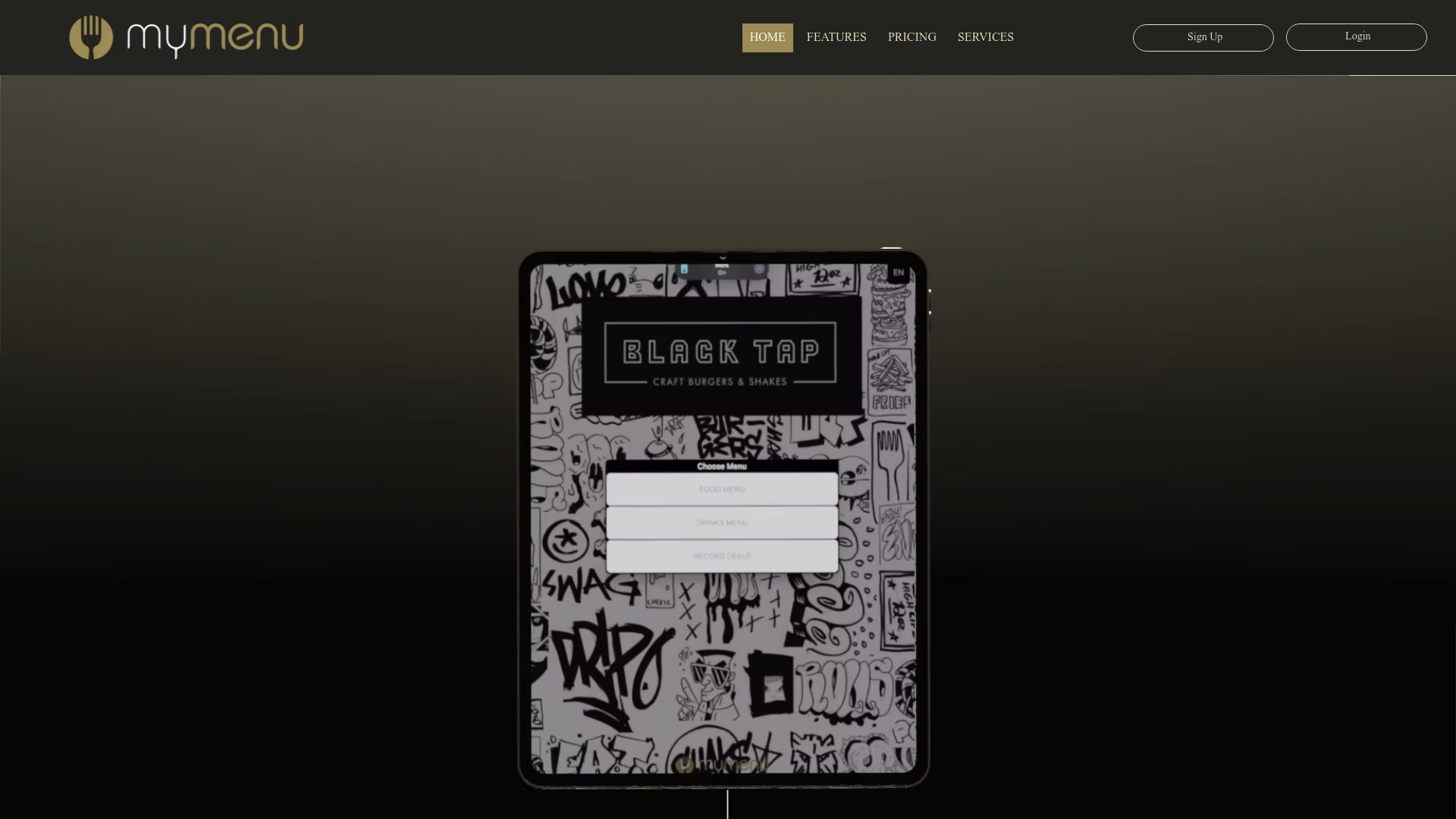
Guests order from their own device without downloading an app, and every order flows into your central system in real time. Mydigimenu supports multiple languages, multiple currencies, and integrates with loyalty programs and CRM tools so your guest data stays unified from the first interaction. Whether you run a single café or a multi-location hotel group, Mydigimenu’s flexible pricing plans make it straightforward to get started. Explore how Mydigimenu can become the guest-facing layer of your omnichannel ordering system today.
FAQ
What is omnichannel ordering in simple terms?
Omnichannel ordering is a system where every channel a guest uses to place an order, whether in-person, via app, QR code, or delivery platform, connects to the same inventory and order management backend. The guest experience feels continuous because the data behind it is unified.
How does omnichannel ordering differ from multichannel ordering?
Multichannel ordering accepts orders from multiple sources but keeps each channel’s data separate. Omnichannel ordering integrates all channels into one system, so inventory, guest profiles, and order history update in real time across every touchpoint.
What technology does omnichannel ordering require?
The core technology stack includes an Order Management System (OMS), a POS integration, Kitchen Display Systems, real-time inventory tracking, and API connections to third-party delivery and loyalty platforms. AI-driven routing tools are increasingly common in advanced setups.
What are the biggest benefits of omnichannel ordering for restaurants?
The primary benefits include eliminated overselling, faster order processing, flexible fulfillment options like BOPIS and curbside, smarter inventory forecasting, and stronger guest loyalty through unified customer profiles.
Can small restaurants implement omnichannel ordering?
Yes. A phased approach starting with one channel integration, such as connecting a QR code menu to an existing POS, is a practical entry point. Platforms like Mydigimenu offer scalable solutions designed for restaurants of all sizes, from single-location cafés to hotel groups.
Recommended
Comments