
Marketers: Define Your Golden Record, Build Unified Customer Profiles


A unified customer profile, often called a golden record, is a single, deduplicated view of a person stitched together from every system that touches them. The payoff is simple: accurate personalization, cleaner measurement, and activation that actually reaches the right person, provided identity resolution and governance are built in from the start.
TL;DR:
Define required attributes, source systems, likely conflicts, consent rules, and target use cases before choosing a vendor; this prevents architecture decisions from outrunning requirements.
Begin with exact identifier matches, then add probabilistic rules only where deterministic coverage is thin, and document thresholds and rollback rules for mistaken merges.
A warehouse based architecture offers control and auditability but requires data engineering; legacy CDPs launch faster but can lock identity logic and fragment consent records.
Treat the first activation as a diagnostic: run a small campaign and track match rate, freshness, update latency, deduplicated audience accuracy, and personalization lift.
PayPal’s Customer Graph resolved more than 1.4 billion records into roughly 700 million identities, serving them in real time through a unified customer ID.
Table of Contents
Golden record, Customer 360, and the vocabulary marketing and engineering need to share
Identity resolution, data sources, and where profiles actually live
The step-by-step playbook for building a unified customer profile
Choosing an architecture: warehouse-native, legacy CDP, or composable
Pitfalls, verification checks, and the metrics that prove it’s working
Golden record, Customer 360, and the vocabulary marketing and engineering need to share
Teams often use “profile,” “golden record,” and “Customer 360” interchangeably, but they describe different layers of the same system. A profile is the raw collection of attributes tied to a person. A golden record is the resolved, deduplicated version of that profile after identity matching. Customer 360 usually refers to the activation layer that surfaces the golden record to marketing, support, and analytics tools.
A working golden record typically holds:
Identifiers: email, phone, loyalty ID, device ID, payment token
Transactional events: purchases, refunds, subscription changes
Behavioral signals: page views, app opens, menu browsing, support tickets
Computed traits: lifetime value, churn risk, favorite category
A short glossary helps keep teams aligned: a canonical ID is the single identifier that represents a person after matching; an identity stitch is the act of linking two records as the same person; an identity graph is the network of linked identifiers and relationships that supports those stitches; computed traits are derived values like lifetime value that only work correctly once identities are stitched.
Identity resolution, data sources, and where profiles actually live
Identity resolution is the engineering core of a unified profile. Most teams use one of three approaches: deterministic matching (exact identifier matches, like email to email), probabilistic matching (weighted scoring across partial signals), or a hybrid of both. The identity resolution playbook breaks the process into preprocessing, blocking (narrowing candidate matches), matching, and clustering records into a single canonical ID with an identity graph behind it.

Common data sources to ingest include CRM records, point-of-sale transactions, web and app events, support tickets, loyalty activity, and vetted third-party enrichment. Each source needs a mapping to shared attributes so a purchase from the POS and a web session from analytics resolve to the same person.
Profiles typically live in one of three places: a warehouse-native table queried directly by marketing tools, a dedicated profile API that serves real-time lookups, or a hybrid where batch updates feed the warehouse and a thin API handles live requests. Identity stitching maps identifiers like email, phone, and payment ID to a canonical ID so traits like total revenue aggregate correctly instead of splitting across duplicate records.
Pro Tip: Start identity resolution with your highest-confidence deterministic matches, then layer probabilistic rules only where deterministic coverage runs thin.
Turning a golden record into business results
A clean golden record changes what marketing and product teams can actually do with customer data.
Personalization gets sharper: email, onsite content, in-app messaging, and paid media can target the same person consistently instead of guessing from fragmented signals.
Measurement gets more honest: deduped reach counts, accurate lifetime value, and less wasted ad spend follow naturally once duplicate records stop inflating audience size.
Operations improve: support teams see full history in one place, fraud teams catch patterns across linked accounts, and audience builders stop double counting the same shopper.
The step-by-step playbook for building a unified customer profile
Building a golden record works best as a sequence with clear checkpoints, not a single big-bang migration.
Define the golden record and target use cases first. The golden-record exercise means naming your customer, listing every data source, setting required attributes, and flagging likely conflicts before anyone evaluates vendors.
Inventory data sources and map fields. Walk through CRM, transactions, web and app events, support, and loyalty systems, and map each field to a shared attribute name.
Design identity-resolution rules. Decide which identifiers are strong enough for deterministic matches, set probabilistic thresholds, and write rollback rules for when a match turns out wrong.
Choose a storage and serving pattern. Weigh warehouse-native control against the faster time-to-value a packaged CDP offers.
Build consent capture and an audit trail. Use a Current versus Target Profile approach from the NIST Privacy Framework to translate privacy goals into concrete buying or build criteria.
Activate, measure, and iterate. Track match rate, data freshness, and lift on personalization campaigns, then refine the rules that underperform.
Pro Tip: Treat your first activation as a diagnostic, not a launch: a small, measurable campaign reveals match-rate problems faster than a full rollout.
Choosing an architecture: warehouse-native, legacy CDP, or composable
The architecture decision mostly comes down to control versus speed.
Warehouse-native gives teams control, auditability, and lower vendor lock-in, since the identity graph lives in the warehouse and supports both batch and near-real-time updates, but it demands real data engineering investment.
Legacy CDP platforms get teams to a working profile faster, though they risk locking identity logic inside a vendor and fragmenting consent records across tools.
Composable, best-of-breed stacks offer flexibility to swap components, at the cost of heavier integration work to keep everything synchronized.
Whichever pattern a team picks, consent orchestration needs to travel with the identity layer. Standards-based consent receipts and tokenized consent records, as described in work on an interoperable consent and identity layer, help reduce match errors and keep policy portable across systems rather than siloed in one platform.
Pitfalls, verification checks, and the metrics that prove it’s working
Most unified profile projects fail for a short list of predictable reasons.
Poor source hygiene: inconsistent field formats and stale records corrupt matches before resolution even starts.
Over-joining on weak keys: matching on a shared last name or zip code merges people who aren’t the same person.
Skipping consent and audit trails: without a record of why a match was made, teams can’t defend or reverse bad merges.
No clear owner: without a named team accountable for match quality, the profile degrades quietly over time.
Verification should include manual sampling of merged records, a standing match-rate dashboard, and documented rollback rules for singleton or low-confidence matches. Production systems at scale show what good resolution looks like: PayPal’s Customer Graph resolved more than 1.4 billion records into roughly 700 million identities using a unified customer ID served in real time, a useful benchmark for the kind of match discipline large-scale identity resolution requires.
The KPIs worth tracking ongoing are identity match rate, profile freshness and update latency, deduped audience accuracy, and measured lift from personalization campaigns run against the resolved profile.
How guest profiles come together in hospitality
Hospitality businesses generate the same scattered signals every other industry does: a QR code scan at the table, a social login at checkout, a reservation booked online, an order history tied to a loyalty card. Each one is a fragment of a golden record waiting to be stitched together. Our guest-profile capture tools pull these signals into one place so a restaurant or hotel can recognize a returning guest instead of treating them as new every visit.
Once that profile exists, activation follows naturally: a personalized menu that highlights a guest’s usual order, a digital loyalty stamp that updates automatically, or a targeted offer sent after a visit based on what someone actually ordered.

Where unified identity is headed next
We expect identity resolution to keep moving toward warehouse-native patterns that give teams visibility into every stitch rather than trusting a vendor’s black box. Standards for consent receipts will matter more as profiles move across more systems. Our practical advice: own your canonical ID logic internally, instrument match diagnostics from day one, and favor small, measurable wins over a single sweeping rollout.
— Abhi
Building your own golden record with MyDigiMenu
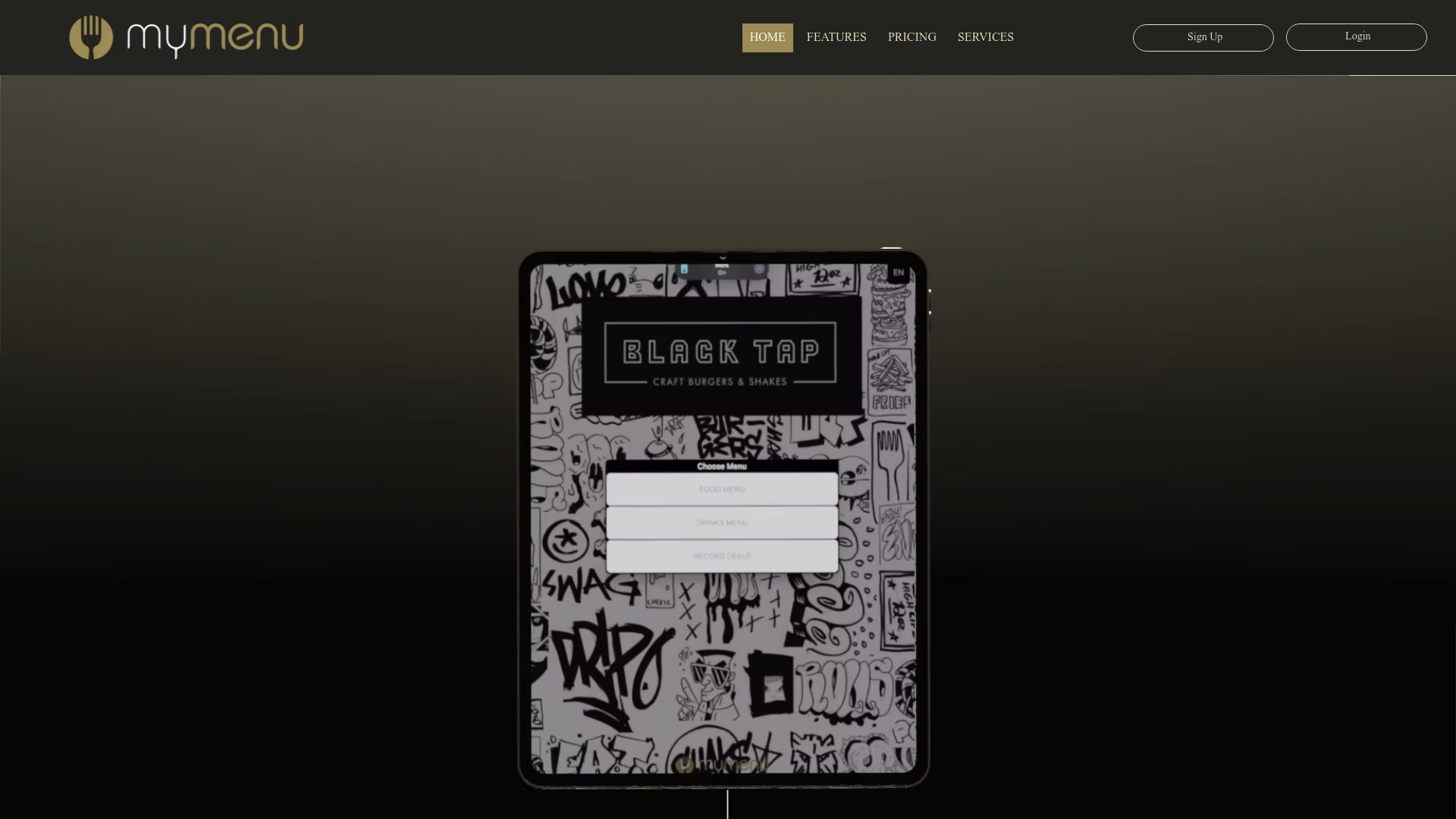
Guest data only becomes a unified profile once it’s captured consistently, and that’s where a digital menu platform earns its place in the stack. Our QR Menu captures social-login identity at the point of ordering, our reservation module adds booking history to the same record, and CRM integration syncs both into whatever system runs your campaigns.
A low-effort pilot looks like this:
Turn on social login at QR checkout for one location
Sync captured profiles to your CRM automatically
Run one targeted loyalty offer against that synced segment
Plans start with StartUp Menu at $39 per month, with tiers up through Emerald Menu at $179 per month depending on the features a location needs, all listed on our pricing page.
FAQ
What is a unified customer profile?
A unified customer profile, also called a golden record, is a single deduplicated view of a person built by stitching together identifiers and activity from every system that holds their data. It typically combines CRM records, transactions, behavioral signals, and computed traits like lifetime value into one record used for personalization and measurement.
What are the four types of customer profiling?
Customer profiling approaches vary by team, but a common grouping covers demographic profiling, behavioral profiling, transactional profiling, and psychographic profiling. Each type feeds different attributes into a unified profile rather than replacing the golden record itself.
What are examples of good CX in hospitality?
Strong customer experience in hospitality often comes from recognizing a returning guest through their order history or reservation record and tailoring the next interaction accordingly, such as a personalized menu recommendation or an automatically updated loyalty stamp. Platforms like digital menu and guest-profile tools make that recognition possible without extra staff effort.
What is the rule of 7 in B2B?
Definitions vary, but a common version holds that a prospect typically needs multiple touchpoints with a brand before they’re ready to buy or convert. It’s used informally in B2B marketing to justify sustained, multi-channel outreach rather than a single campaign push.
Sources
For teams doing the actual engineering and governance work, a few references are worth bookmarking. The NIST Privacy Framework lays out the Profiles approach for comparing current and target privacy posture. The identity resolution playbook details the preprocessing, blocking, matching, and clustering steps behind canonical IDs. PayPal’s Customer Graph writeup shows what identity resolution looks like in a production system at scale. The interoperable consent and identity paper covers consent receipts and decentralized identifiers for portable policy across platforms. For reputation and review signals as an activation input, see this partner piece on customer reviews in hospitality.
Recommended
Referring page Marvin phone number Software's data analysis tools have significantly enhanced our research capabilities in customer service. The user interface is intuitive, allowing for seamless navigation and efficient data manipulation. The analytical features provide deep insights into customer behavior, enabling us to tailor our services effectively. Overall, the experience has been highly satisfactory, as it empowers our team to make informed decisions based on robust data analysis. I would highly recommend Marvin Software to any organization seeking to improve their customer service strategies through data-driven insights.