
Stop Annual PCI Compliance Panic for Restaurants With 3 Templates


Yes, PCI DSS applies to your restaurant if you store, process, or transmit card data anywhere in your operation, whether that’s a countertop terminal or a delivery app plugged into your POS. The one thing to do this week: sketch every path a card number takes through your business, from the moment a guest taps their card to when the transaction settles, then hand that map to your acquirer and ask which SAQ you should complete. Everything else follows from that.
TL;DR:
Most restaurants must complete the appropriate PCI DSS Self-Assessment Questionnaire based on a detailed map of all payment points and connected systems, including third-party integrations.
Using validated point-to-point encryption and tokenization significantly reduces the risk of data breaches and lowers the PCI scope, especially if card data remains off your internal systems.
Hiring a knowledgeable acquirer representative before selecting an SAQ type can prevent over- or under-investing in controls and ensure proper documentation for renewal and audit purposes.
Failure to implement unique employee logins, enforce multi-factor authentication for remote access, and avoid manual card data storage are the most common reasons for PCI audit failures.
Adopting hosted digital menus and tokenized pay-at-table solutions can limit your PCI scope by preventing card data from passing through or being stored on your internal networks.
Table of Contents
What PCI Compliance Means for Restaurants and Why It Matters Now
PCI DSS is the Payment Card Industry Data Security Standard, a set of rules built by the major card brands and enforced through your processor and acquirer, not a government agency. The current version, PCI DSS v4.x, rolled a batch of future dated requirements into force on March 31, 2025, which means the compliance bar most restaurants were coasting on has already moved.
Scope creeps in faster than most operators expect. It’s not just the countertop terminal. Online ordering widgets, pay-at-table tablets, saved-card profiles for regulars, and any third-party delivery integration touching your payment flow all pull systems into scope.
The upside of taking this seriously:
Fewer systems in scope means a shorter, cheaper annual attestation
Validated encryption and tokenization cut your exposure if a laptop or POS terminal is ever stolen
Clean compliance history makes contract renewals with processors smoother, not harder
Guests trust a restaurant more when a breach headline isn’t attached to its name
Skip it, and the risk isn’t abstract. A single skimmed terminal or a compromised online-ordering plugin can trigger card reissuance costs, processor fines, and weeks of forensic review, on top of whatever it does to your reputation with regulars.
How Do You Determine Your PCI Scope and SAQ Type?
Scoping is the part restaurants botch most often, usually by guessing instead of documenting. Get it wrong and you either overinvest in controls you don’t need or, worse, underreport and fail an audit later.
Work through this sequence:
List every payment entry point. Countertop terminals, pay-at-table devices, online ordering, phone orders, gift card reload stations, and any delivery app that routes through your POS.
Inventory your point-of-interaction (POI) devices and terminals. Note the make, model, firmware version, and whether each is PCI-listed hardware.
Map connected systems. Anything touching the payment network, from the back-office server to the Wi-Fi router, counts, even if it never displays a card number.
Flag remote access paths. POS vendors, IT support contractors, and franchise head-office connections all need documented, controlled access.
Match the map to an SAQ. Restaurants using a validated point-to-point encryption (P2PE) solution can often complete the short-form SAQ P2PE, which runs a much shorter number of questions. Restaurants without validated P2PE, or with card data touching internal systems, usually land on SAQ C or the far longer SAQ D.
Pro Tip: Don’t accept “we’re PCI compliant” from a POS vendor at face value. Ask for the exact SAQ type their architecture supports and whether it changes if you add a second payment channel like online ordering.
Call your acquirer before you self-select an SAQ. Ask directly: does our current terminal setup qualify for SAQ P2PE, does adding online ordering change our category, and what documentation do you need on file each year? A five-minute call here saves weeks of rework later.
Which Technical Controls Actually Reduce Restaurant Risk?
The fastest way to shrink your compliance burden is to keep card data away from your own systems entirely. That’s the logic behind point-to-point encryption and tokenization, and it’s why both show up in nearly every serious restaurant security conversation.
A PCI-listed P2PE solution encrypts card data the instant it’s read at the terminal and keeps it unreadable until it reaches a secure decryption environment, so your POS, your network, and your staff never see raw card numbers. Verify a vendor’s claim by asking for their P2PE listing ID or P-ROV reference, not just a sales sheet.
Tokenization works alongside encryption: once a card is used, it’s replaced with a token that’s useless outside that specific merchant relationship, and the vault holding the real number should live with the processor, not on your premises.
Beyond encryption, a handful of controls do most of the heavy lifting:
Segment guest Wi-Fi from your POS network with a dedicated firewall rule, never a shared router
Patch POS firmware and OS versions on a schedule, not whenever someone remembers
Inspect terminals physically for tampering, especially at shift changes in high-traffic locations
Require unique logins for every employee, never a shared “manager” password
Enforce multi-factor authentication for any remote vendor access, no exceptions
Run quarterly ASV scans on any internet-facing system tied to your payment environment
Retain access and system logs long enough to support an investigation if something goes wrong
Human error, not sophisticated hacking, is behind most incidents. Roughly 68% of breaches involve stolen credentials, phishing, or plain user mistakes, which is exactly why MFA and unique accounts outperform almost any single piece of hardware you could buy.
What Should You Require From Payment Vendors and Third Parties?
A processor telling you they’re “PCI compliant” doesn’t make your restaurant compliant. Compliance responsibility for network design, POS segmentation, and remote access controls stays with the merchant, no matter how many badges a vendor puts on their website.
Before signing with any POS provider, delivery integration, or payment processor, request:
Their current Attestation of Compliance (AOC), not a marketing summary
The P2PE listing reference if they claim validated encryption
Documentation showing which SAQ type their architecture supports
Proof of MFA enforcement for any remote support access into your systems
A recent ASV scan report if their platform touches the internet-facing parts of your payment flow
Pro Tip: Put scope-change notification in the contract. If a vendor updates their integration in a way that pulls new systems into your PCI scope, you want a written obligation for them to tell you before it happens, not after an audit flags it.
Push for contract language covering incident response timelines, who eats the cost of card reissuance after a shared breach, and what happens if the vendor’s own compliance status lapses mid-contract.
How Do You Validate Compliance and What Should You Keep on File?
Validation isn’t a one-time event, it’s a document trail you rebuild every year. Here’s the sequence:
Complete your SAQ based on the scope map from your acquirer conversation, answering every question against actual evidence, not assumptions.
Run ASV scans quarterly if any part of your environment is internet-facing, using an Approved Scanning Vendor from the PCI SSC registry.
Sign the Attestation of Compliance (AOC) once your SAQ and scans confirm you meet the requirements.
Bring in a Qualified Security Assessor (QSA) if you’re a Level 1 merchant by transaction volume, or if your environment is too complex for self-assessment to cover honestly.
Keep your SAQ, AOC, ASV reports, network diagrams, supplier attestations, and a change log of any POS or integration updates in one folder. When renewal season hits, or a processor asks for proof, you want to hand over a file, not scramble to rebuild one.
What Mistakes Cause Restaurants to Fail PCI Audits?
Three mistakes account for most of the failures: shared admin logins across shifts, remote vendor access without MFA, and staff saving card numbers in a spreadsheet “just for regulars.” All three are cheap to fix and expensive to ignore.
Kill shared logins. Every employee gets a unique credential, even if it adds five minutes to onboarding.
Require MFA on every remote access path, including your POS vendor’s support tunnel.
Ban manual card storage anywhere outside your validated payment system, no spreadsheets, no sticky notes.
Pro Tip: Removing card data from a system entirely, rather than trying to secure it in place, is almost always the cheaper fix. A locked-down spreadsheet still has to be audited; a deleted one doesn’t.
A simple weekly check on terminal tampering, a monthly access-log review, and an annual full scope remap will catch most drift before it becomes an audit finding.
Can Hosted Digital Menus Reduce Your PCI Scope?
Hosted checkout pages and redirect-based payment flows keep card numbers off your internal systems entirely, which is the single most effective scope reducer available to a small restaurant. QR ordering, app-free contactless ordering, and tokenized pay-at-table checkouts all follow this same principle: the guest’s card data never routes through your POS or your network.
Before adopting any digital menu or QR ordering system, confirm three things:
The vendor’s AOC and P2PE listing reference are current and cover the exact integration you’re deploying
The token vault sits with the processor, not on hardware you manage
Rollout includes a documented check that guest Wi-Fi and payment traffic stay segmented, not just plugged into the same router out of convenience
What Does a Breach or Failed Attestation Actually Cost?
The bill after a breach rarely arrives as one line item. Expect forensic investigation fees, card reissuance costs charged back by issuing banks, a mandatory follow-up assessment, and in some cases card-brand fines layered on top of whatever it takes to rebuild guest trust.
Processors also charge ongoing noncompliance fees, often monthly, until your SAQ is filed and current, so a lapsed attestation quietly drains money even without a breach attached. Ask your processor directly what their noncompliance fee schedule looks like and whether it drops once you’re validated.
Forensics and investigation after any suspected card data exposure
Card reissuance costs passed through from issuing banks
Follow-up assessments required to regain good standing
Brand remediation, the intangible cost of a breach headline in a small market
Vendor AOCs and any breach-cost coverage clauses in your contracts matter here. A vendor who won’t put breach-cost sharing in writing is telling you something about how confident they are in their own security.
How Should You Train Staff on PCI Compliance?
Technology controls only work if the people using them understand why. Training doesn’t need to be a compliance lecture. It needs to be short, specific, and repeated often enough that new hires absorb it during onboarding, not six months later.
Cover four things in every session: never key in a card number manually unless the terminal fails, never write down or photograph a guest’s card, always log out of the POS at shift change, and report a lost or suspicious device immediately rather than waiting for a manager to notice.
Run a five-minute refresher quarterly, tied to a real scenario. Ask your team what they’d do if a guest asked them to text a photo of their card for a phone order, or if a delivery courier asked to swipe a card on their personal phone. These are the situations that actually happen in a busy service, and staff need a rehearsed answer, not a policy binder they’ve never opened.
Tie training to your onboarding checklist so it’s not optional. New hires in front-of-house roles, especially anyone handling pay-at-table devices, should complete PCI basics before their first solo shift, not after. Document who’s completed training and when. That log becomes part of your audit evidence, and it’s one of the easier things to show a QSA if your environment ever needs one.

How Do You Plan for a Breach or Notify Guests?
An incident response plan for a restaurant doesn’t need to be complicated, but it does need to exist before you need it. Waiting until a terminal is flagged as compromised to figure out who to call is how a manageable incident turns into a week of chaos.
Write down, in advance, who gets called first: your processor’s fraud line, your POS vendor’s support line, and whoever owns your PCI documentation internally. Include the exact steps for isolating a suspected compromised terminal, unplug it, don’t wipe it, and preserve logs rather than restarting the system, since forensic investigators need that data intact.

Card brand rules and your processor agreement typically set the notification timeline once a breach is confirmed, and your acquirer will guide you through the specific reporting requirements for your situation. Build a simple guest communication template in advance too, even a short, honest statement is better than silence while you’re still investigating.
Keep a printed copy of this plan somewhere other than the compromised system itself. A binder in the office or a document on a personal phone works better than a file sitting on the same network that just went down.
How Often Should You Audit Your Own Compliance?
PCI compliance decays quietly between annual attestations if nobody’s watching. A POS update, a new delivery integration, or a staffing change can each shift your scope without anyone noticing until the next SAQ cycle catches it, or worse, until an incident does.
Build a simple internal rhythm: a monthly review of who has access to what, a quarterly check that your ASV scans are current if you’re required to run them, and a full scope remap any time you add a payment channel, change POS vendors, or open a new location. Treat each of those triggers as a mini compliance event, not something that waits for the annual renewal.
Assign one person, even in a small operation, to own this calendar. It doesn’t need to be a dedicated compliance role, but it does need to be someone’s job, written down, with a specific date each month they check it. That’s the difference between compliance that holds up and compliance that quietly expires.
Make PCI an Operational Rhythm, Not a Once-a-Year Scramble
Every remodel, new POS rollout, or delivery integration is a PCI event whether you treat it that way or not. Build three simple templates now, a device inventory, an access log, and a supplier matrix, and updating them becomes a five-minute task instead of an annual fire drill.
— Abhi
Lowering Your PCI Footprint With MyDigiMenu
A hosted digital menu platform can be an alternative to managing multiple POS add-ons and third-party checkout plugins that expand PCI scope. By routing orders through hosted QR and app-free ordering instead of card data touching your internal network, you keep fewer systems in scope and fewer things to document at attestation time.
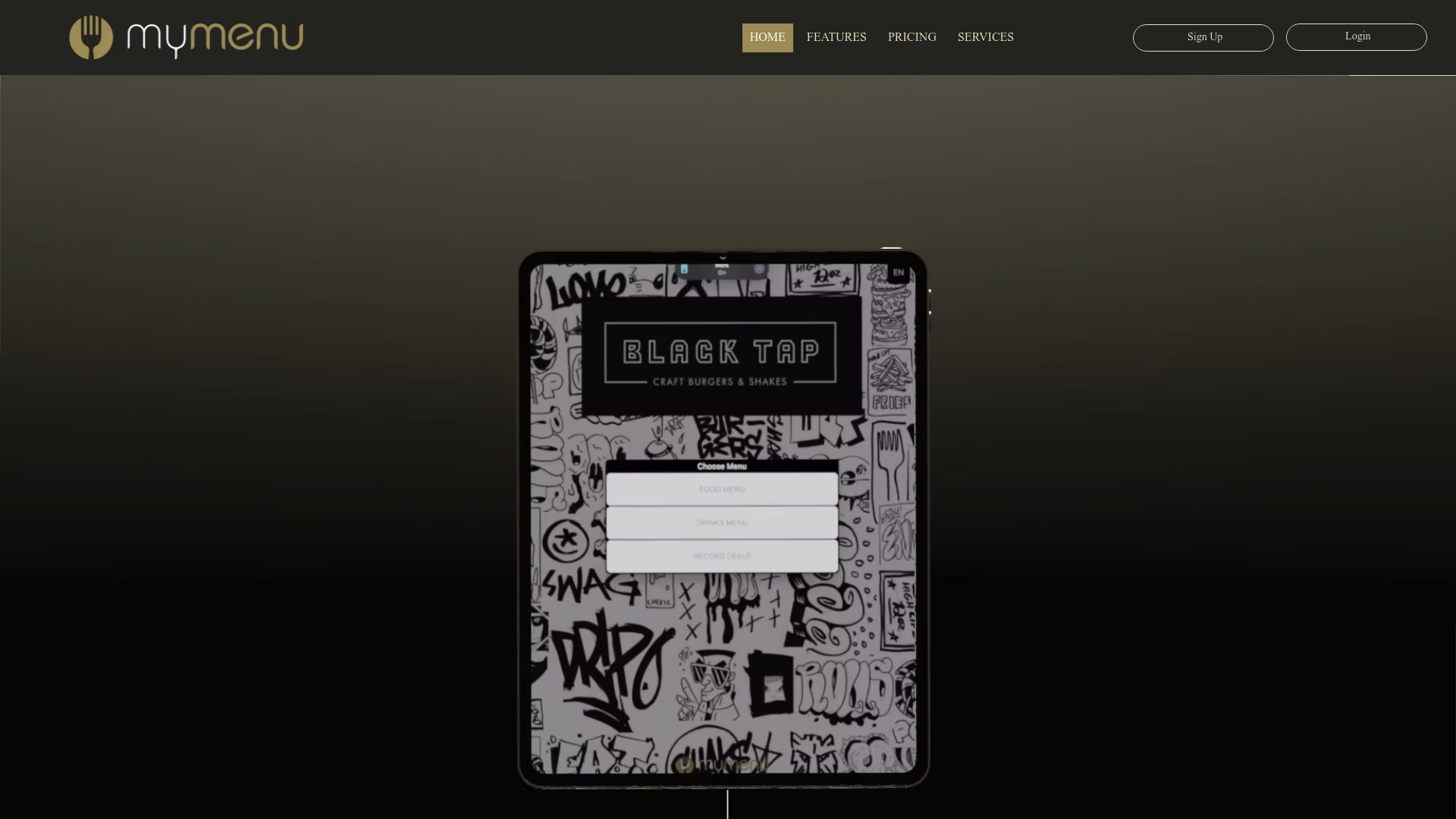
Tokenized checkout and pay-at-table workflows through the Tablet Menu mean card numbers never sit on hardware you manage directly. During procurement, ask for the same things this article recommends asking any vendor: the current AOC, P2PE listing references, and documentation on where token vaults live. A vendor confident in their security posture will hand these over without hesitation.
Compare the StartUp Menu, Silver Menu, and other plans to see which tier fits your current payment setup, then request the security documentation before you commit to a rollout date.
Sources
FAQ
Is PCI Compliance Legally Required?
PCI DSS isn’t a federal or state law, it’s a contractual requirement enforced by the card brands through your processor and acquirer agreement. Failing to comply can still trigger real consequences, including processor fines and liability for breach costs, even without a government agency involved.
How Serious Is PCI Compliance for a Small Restaurant?
It’s serious enough to affect your bottom line directly, not just your risk exposure. Beyond breach costs like forensics and card reissuance, processors often charge ongoing monthly noncompliance fees until your SAQ is current. Since human error drives roughly 68% of breaches, staff training matters as much as hardware.
What Are the 12 Requirements for PCI Compliance?
PCI DSS requirements include building secure networks, protecting stored card data, encrypting transmission, using updated anti-malware, restricting access on a need-to-know basis, monitoring and testing networks regularly, and maintaining a documented security policy. Restaurants using a validated P2PE solution can often satisfy many of these through the shorter SAQ P2PE path rather than answering every requirement individually.
Do I Have to Pay a PCI Compliance Fee?
Most processors charge a recurring PCI compliance or noncompliance fee separate from your standard processing rates, and that fee often increases or continues indefinitely if your SAQ lapses. Ask your processor directly for their fee schedule and whether completing your SAQ on time reduces or removes it.
Can a Digital Menu Platform Help With PCI Compliance?
A hosted, tokenized ordering system keeps card data off your internal POS and network, which reduces the systems that fall inside your PCI scope. Mydigimenu’s QR Menu and tablet ordering tools are built around this hosted checkout approach, though you should still request current AOC and P2PE documentation from any vendor you evaluate.
Recommended
Great post! PCI compliance can feel overwhelming, especially when hitting a ragdoll hit moment in our restaurants. I remember struggling with documentation until implementing simple templates helped streamline things. Your suggested templates could really ease the annual panic for many!
dordle may look simple at first, but solving two puzzles at the same time can quickly become a real brain workout.