
Printable POS Integration Worksheet for Hospitality Demos and Pilots


A reliable POS integration comes down to three checks: a documented data catalog that names the system of record for every field, a failure-handling plan with retries and manual fallback, and end-to-end testing under real conditions like weak networks and split-tender refunds. Skip any one of these, and you’re running blind the day volume spikes. The checklist below turns those three checks into a worksheet you can carry into vendor demos, pilots, and contract review.
TL;DR:
Ensure the POS system has a documented data catalog, failure-handling plan, and is tested under real-world network and transaction conditions before deployment.
Confirm each integration domain’s data ownership, transfer direction, update frequency, required fields, and canonical identifiers are precisely defined and signed off as part of the scope.
Verify API access is public and self-service or confirm certification requirements, sandbox availability, transaction granularity, webhook support, and offline behavior details.
Establish clear failure semantics, retry policies, manual fallback procedures, and logging protocols with all partners to avoid mismatched expectations and data mishandling.
Use a scoring worksheet to objectively evaluate vendor responses, and only proceed if they provide signed documentation on catalogs, failure plans, and SLAs with guaranteed support terms.
Table of Contents
How to use this POS integration checklist during demos and pilots
A checklist only works if you fill it out live, not after the vendor call ends and memory gets fuzzy. Run each item during the demo itself, and require the vendor to point to documentation, not just describe features verbally.
Assign an owner from IT, operations, and finance to each checklist section before the first call.
Capture written evidence: screenshots, doc URLs, or exported API responses, not verbal promises.
Attach the completed checklist to the statement of work so vendor claims become contractual language.
Convert every “yes, we support that” into a pass/fail acceptance criterion with a measurable SLA attached.
Run a short pilot with production-like data (real menu items, real store network conditions) before any multi-location rollout.
Treating the checklist as a contract exhibit rather than internal notes gives you leverage later if the vendor’s live behavior doesn’t match their sales deck.
Define the integration scope with a per-domain data catalog
Vague scope statements like “sync inventory and orders” are where most POS integration guide advice falls apart in practice. You need a catalog that names, for every domain, exactly who owns the data and how it moves.
List the domains you’re integrating: inventory, pricing, orders, payments, loyalty, customer profiles, accounting, and ecommerce.
Name the system of record for each domain — is the POS authoritative for pricing, or does that live in your digital menu platform?
Document direction and frequency: push, pull, or bidirectional, and whether updates happen in real time, on a batch schedule, or on demand.
Specify required fields and formats for each domain, including data types and validation rules.
Define canonical identifiers for SKUs, store IDs, and order IDs, with normalization rules for formatting differences like leading zeros or delimiters.
Table and location identifier mismatches are one of the most common failure points in restaurant integrations, according to OpenTable’s integration setup guidance — a difference as small as a leading zero can silently break reconciliation. Treating the integration catalog as background documentation rather than a signed deliverable is how scope creep sneaks into month three.
Pro Tip: Attach the finished data catalog to the SOW as a numbered exhibit. If the vendor doesn’t commit to it in writing, that’s your answer about how seriously they take the integration.
What API access model does your POS vendor actually offer?
Not every POS vendor gives you the same door into their system, and the difference changes your entire timeline. Some expose public, documented APIs anyone can build against; others gate access behind partner certification programs with fees and review queues.
Ask whether API access is public and self-service, or partner-gated with certification requirements and a timeline.
Confirm sandbox availability and published rate limits before you commit engineering hours.
Verify transaction granularity: does the API expose line items, timestamps, and unique order IDs, or only daily summary totals?
Ask about webhook support for real-time order and payment events versus polling-only access.
Clarify authentication method, credential rotation policy, and how tokens get stored securely.
Get specifics on offline behavior: how many transactions can the terminal queue locally, and how often does it export for reconciliation?
Pin down support SLAs, certification fees, and how the vendor governs future API version upgrades.
A public, documented API generally avoids vendor-dependent timelines and gives you granular data for loyalty and analytics, while a partner-gated API can introduce certification delays that stretch a planned six-week build into a quarter.
Do your integration partners define failure semantics the same way?
Loyalty platforms, delivery aggregators, and accounting software each bring their own assumptions about how data moves, and mismatched assumptions are where cross-vendor incidents start. A POS integration steps involving three or four partners needs every one of them answering the same questions.
Confirm exact field names, formats, and required identifiers each partner expects on inbound and outbound data.
Ask how retries and acknowledgments work: does the partner resend on failure, and how do you avoid duplicate orders during a retry?
Get a clear answer on how refunds, reversals, and split-tender transactions get represented in their data model.
Establish who owns escalation when an incident spans two vendors and neither wants first-call responsibility.
Failure handling, retries, and manual fallback you need in writing
Treat integration as an operating system with predictable failure states, not a one-time connection that either works or doesn’t, as POSZEO’s deployment playbook frames it. Every vendor will tell you their system is reliable. What you need is what happens the moment it isn’t.
Get the retry policy in writing: intervals, maximum retry count, and what gets queued versus silently dropped after retries exhaust.
Require idempotency keys and a defined deduplication window so a retried request can’t create a duplicate order or double-charge a guest.
Confirm the manual fallback process for cashiers when the integration goes down, and how those offline transactions reconcile once connectivity returns.
Verify logging, alerting, and escalation steps for failures that don’t self-resolve within a defined window.
Failure handling tells you more about a vendor’s maturity than any demo feature, because how a system fails under pressure is harder to fake than how it performs on a good day.
Pro Tip: Ask the vendor to walk through an actual failed transaction from their own incident history. A team that can’t produce one either hasn’t had enough production traffic to learn, or isn’t being candid.
What testing scenarios actually surface pilot risk?
Happy-path demos tell you almost nothing about how an integration behaves at 7 p.m. on a Friday with three servers slamming orders through simultaneously. Your test matrix needs to include the conditions that break systems, not just the ones that showcase them.
Simulate peak-hour throughput with concurrent orders across multiple terminals.
Test weak-network conditions and confirm resync behavior once connectivity returns.
Run split-tender transactions, partial refunds, and simultaneous refunds and reversals.
Test peripherals directly: multiple printer models, card terminal firmware versions, and kitchen display system behavior under load.
Set acceptable variance thresholds for reconciliation checks, and staff a hypercare team for the first live week.
Multi-store rollouts routinely surface mapping, network, and peripheral failures that a single pilot location never revealed, according to research on retail POS integration issues, which is exactly why a pilot needs to run across at least two different store types and network conditions before you scale. Pilot failures also tend to cluster around split tenders and refunds attempted during API downtime rather than clean, isolated transactions, so build those exact edge cases into your order flow testing instead of assuming the happy path covers you.
Build a vendor answer worksheet you can score
A worksheet format keeps every vendor call comparable, instead of relying on notes scattered across three different people’s memory of the meeting.
Columns to include: question, vendor’s answer, documentation evidence, live demo result, assigned owner, and the resulting acceptance criterion.
Score each answer: strong (documented and demonstrated live), partial (claimed but not shown), or weak (vague or contradicted by the demo).
A “partial” score on transaction-level API access, for example, becomes a written acceptance criterion in the SOW rather than a verbal assumption you carry into production.
This mirrors the category-based approach in Shift4 Dine’s POS buying checklist, which scores vendors across pricing, features, hardware, support, and reporting rather than taking a single glossy pitch at face value.
Before you sign: the final go/no-go checklist
Certain deliverables need to exist in hand, not in promise, before a contract gets a signature.
Confirm you have a completed integration catalog, a written failure-mode runbook, a monitoring configuration, and a pilot acceptance report.
Verify the contract includes an uptime SLA, guaranteed data access terms, a documented rollback plan, and a firm certification timeline.
Treat undocumented APIs, no offline reconciliation plan, or partner-gated access with no committed certification date as reasons to pause, not proceed.
Review the full cost breakdown for POS integration alongside this list, since certification fees and upgrade governance terms often hide the real long-term price of a “free” integration.
What years of hospitality tech deployments actually teach you
Most integration failures Mydigimenu has observed across restaurant, cafe, and hotel rollouts trace back to one root cause: teams treated the POS connection as a one-time technical task instead of an ongoing operational relationship. The businesses that get it right build a small first-response script for hypercare, checking network status, sync timestamps, and queue depth within minutes of any reported issue, rather than escalating blind. Structured menu data, consistent identifiers, and a documented catalog from day one make every downstream connector easier to certify and maintain.
— Abhi
Get a head start on your POS integration with Mydigimenu
Every catalog, mapping table, and canonical identifier you just read about takes real hours to build from scratch. Mydigimenu shortens that timeline by starting you from structured, pre-mapped menu data instead of a blank spreadsheet: your inventory, pricing, and order fields already follow a consistent format designed to plug into third-party POS and payment systems with far less manual mapping work.
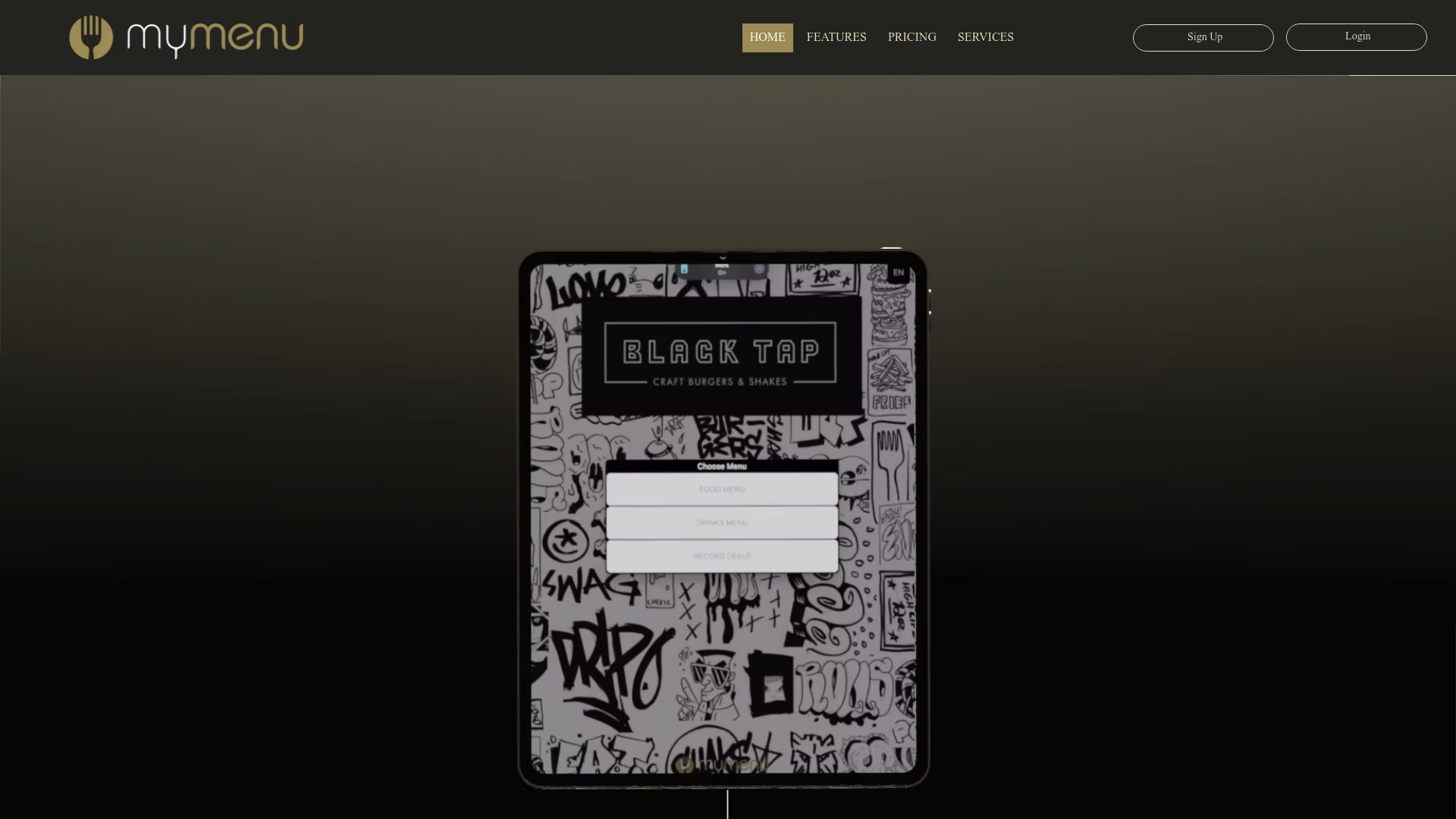
That structure matters most in the exact places this checklist flagged as risky: order injection, split-tender handling, and reconciliation. Because Mydigimenu’s digital menu platform was built for restaurants, cafes, bars, and hotels specifically, the connectors are designed around real hospitality transaction patterns rather than generic retail logic. If you’re running a contactless rollout, the QR menu ordering system gives you a lower-friction entry point that still feeds the same structured order data into your POS. Schedule a demo to see how your menu and POS data would map together before you commit to a vendor contract.
A few more resources worth bookmarking
For deeper technical reference, review POS Hub’s integration flow documentation for catalog sync and webhook patterns, and Dotcode’s step-by-step integration guide for comparing direct API, middleware, and native connector approaches. For delivery-channel order flows specifically, Wild Foodz’s overview of online food ordering is a useful companion read.
Sources
Recommended
One of the appealing aspects of hole io is its ability to transform an ordinary city into a chaotic playground, where parked cars, lush green trees, high-rise buildings, and countless familiar objects can all become targets for a voracious black hole.