
Manage restaurant reservations effectively: proven methods
- Abhi Bose
- Apr 14
- 8 min read


TL;DR:
Effective reservation systems reduce no-shows, increase revenue, and enhance guest experiences.
Personalization through guest profiles enables targeted marketing and smoother service.
Balancing technology with genuine hospitality creates resilient, memorable restaurant operations.
An empty table at peak service is more than a missed meal. It represents lost revenue, wasted prep, and a guest experience that never happened. No-show rates average 8 to 15% across the industry, with costs ranging from $28 to $120 per cover. At the same time, 66% of bookings now happen the same day, which means your reservation system needs to be as agile as your kitchen. This guide walks you through the essential tools, personalization strategies, execution best practices, and analytics frameworks that transform reservation chaos into a smooth, revenue-generating operation.
Table of Contents
Key Takeaways
Point | Details |
Choose the right system | Selecting an integrated reservation platform is the foundation for efficient operations. |
Leverage guest data | Personalized CRM profiles help boost guest satisfaction and streamline seating. |
Prevent costly no-shows | Using reminders, deposits, and dynamic booking policies minimizes revenue loss. |
Analyze and optimize | Tracking key reservation metrics enables continuous improvement and success. |
Balance tech with hospitality | Digital tools enhance efficiency but genuine guest experience always matters most. |
Essential tools and system setup
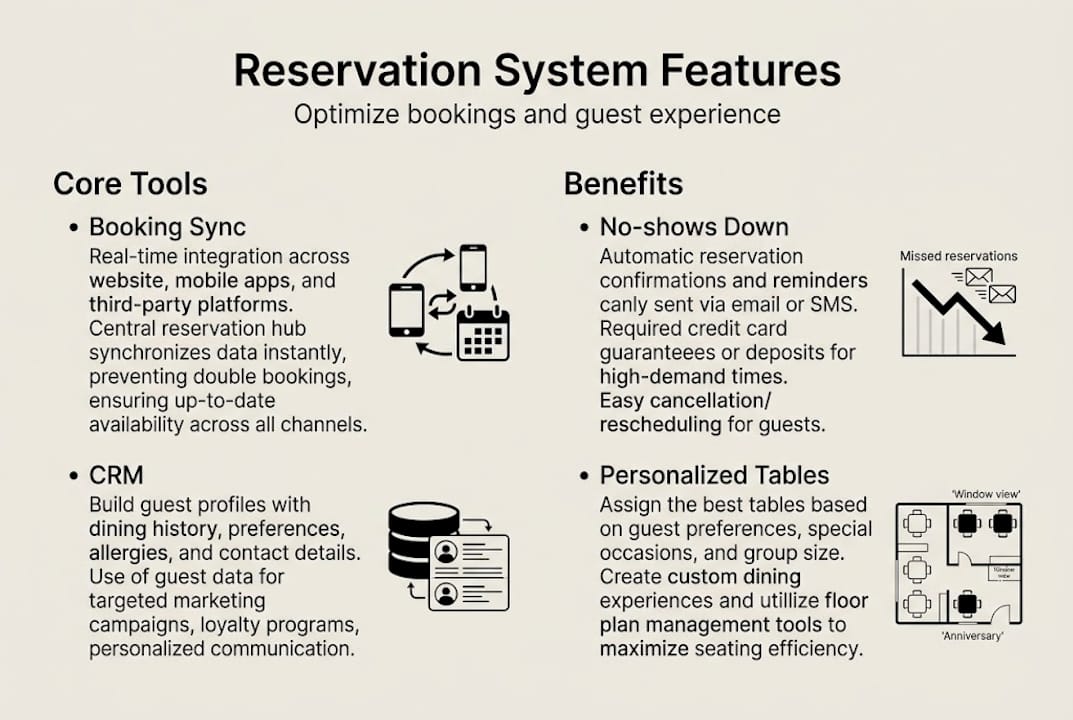
Choosing the right reservation platform is the single most impactful decision you can make before your doors open each evening. The market offers several strong contenders, each with distinct strengths depending on your venue size, budget, and operational goals. To boost reservation efficiency, you need a system that centralizes bookings from every channel and talks directly to your point-of-sale (POS).
Integrated digital reservation systems like OpenTable, Resy, Toast, and SevenRooms centralize bookings from your website, phone, and third-party apps, providing real-time availability and syncing with your POS for table management and waitlists. That kind of connectivity eliminates double-bookings and reduces front-of-house stress considerably.
Platform | Starting price/mo | CRM | POS integration | No-show protection |
OpenTable | $149+ | Yes | Yes | Yes |
Resy | $189+ | Yes | Yes | Yes |
SevenRooms | $199+ | Advanced | Yes | Yes |
Toast | Varies | Basic | Native | Yes |
Yelp | $99+ | Basic | Limited | Partial |
Beyond pricing, the features that separate good platforms from great ones include automated confirmation messaging, guest history access at the host stand, and dynamic table assignment. Prepaid experiences increase guest spend by 30%, and Google integration alone drives 16.5% of first-time bookings, which means platform connectivity is a direct revenue lever.
Here is a practical setup checklist to get your system running correctly from day one:
Hardware: Confirm tablet or terminal compatibility with your chosen platform
Software: Enable two-way POS sync and activate all booking channels
Channel integration: Connect your website widget, Google Reserve, and any third-party apps
Staff training: Run at least two full-service simulations before going live
Policies: Configure deposit rules, cancellation windows, and party-size limits upfront
Following reservation best practices during setup prevents the kind of downstream errors that frustrate both guests and staff. A well-configured system is the foundation everything else builds on.
Building and leveraging guest profiles for personalization
With foundational systems in place, personalization can become a key differentiator that sets your restaurant apart from the competition. Digital reservation platforms do far more than hold a date and time. They quietly gather rich guest data with every interaction, and smart operators use that data to create experiences that feel genuinely tailored.
Building CRM profiles with guest preferences, dietary restrictions, VIP tags, and visit history empowers your team to deliver targeted marketing and smarter seating decisions. Imagine greeting a returning guest by name, already knowing they prefer a corner booth and have a shellfish allergy. That kind of detail transforms a routine dinner into a memorable occasion.
Here is how guest profile data can be applied across your operation:
Targeted marketing: Send personalized offers based on visit frequency, favorite dishes, or upcoming anniversaries
VIP handling: Flag high-value guests so hosts can prioritize seating and notify the manager on duty
Allergy management: Surface dietary restrictions automatically during table assignment to reduce kitchen errors
Loyalty integration: Connect profile data to digital stamp cards and reward programs that keep guests coming back
Feedback loops: Track satisfaction scores per guest segment to identify service gaps early
To enhance guest engagement, the goal is to make every visit feel like the guest is your most important one. That is not about scripted service. It is about having the right information at the right moment.
Pro Tip: Use social login at booking to capture accurate guest data without friction. Guests are far more likely to complete a profile when they can sign in with Google or Facebook rather than filling out a long form.
Personalization also feeds directly into your reservation workflow optimization, allowing you to assign tables based on party preferences, pace the dining room more effectively, and reduce the awkward moments that come from mismatched expectations. The data you collect today becomes the competitive advantage you leverage tomorrow.
Executing reservations: Best practices and avoiding common pitfalls
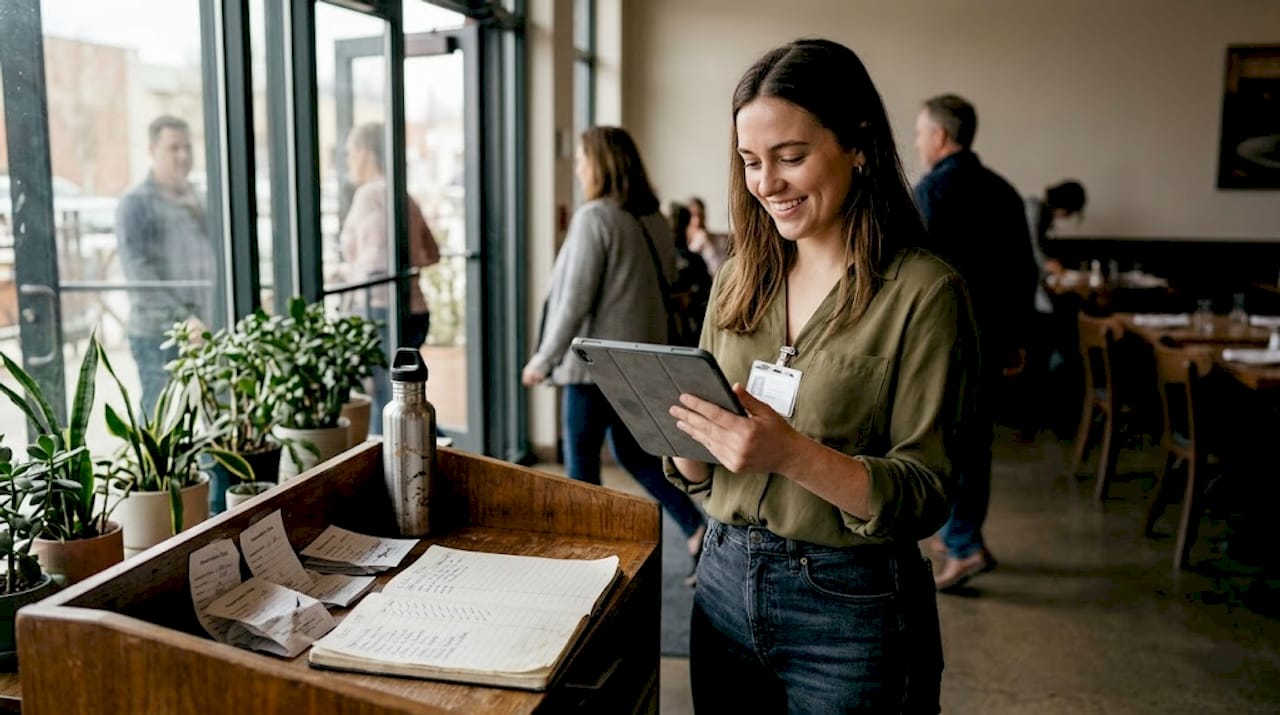
Knowing how to gather guest insights is only half the equation. Reliable execution is where the real work happens, and where most restaurants leave money on the table.
Here is a step-by-step framework for managing reservations from intake to seating:
Intake: Capture party size, special requests, and contact details at the point of booking
Confirmation: Send an automated confirmation immediately via SMS or email
Reminder: Trigger a reminder 24 hours before and again 2 hours before the reservation
Pre-arrival prep: Brief the host team on VIP guests, allergies, and special occasions
Seating assignment: Finalize table assignments 30 minutes before service based on confirmed bookings
No-show protocol: Mark no-shows in the system within 15 minutes of the reservation time and release the table
No-show rates average 8 to 15%, and each unclaimed cover can cost up to $120 in lost revenue. That is not a rounding error. It is a structural problem that requires a structural solution.
“Reservation hoarding and no-shows are not just an inconvenience. They are an existential threat to the economics of a dining room running on tight margins.”
Large parties and special events require deposits and protection policies, while walk-ins can be managed through QR code waitlists and dynamic table rules that flex between peak and slow periods. Bot-driven reservation hoarding and third-party resale platforms make the problem worse, so platforms with bot detection and strict cancellation enforcement are worth the premium.
Pro Tip: Set dynamic booking rules that tighten cancellation windows on Friday and Saturday nights while staying flexible mid-week. This protects your highest-revenue shifts without alienating guests who book during slower periods.
For reservation execution tips that cover edge cases, the key is building policies before you need them rather than improvising under pressure during a busy Saturday service.
Measuring and improving reservation success
To ensure lasting results, verification, analysis, and improvement are essential. Tracking the right metrics turns your reservation system from a booking tool into a genuine business intelligence asset.
Here are the key performance indicators (KPIs) every restaurant should monitor:
No-show rate: Target below 8%; anything above 15% signals a policy or communication problem
Same-day booking rate: 66% of bookings happen same-day, so your system must handle real-time availability without friction
Revenue per cover: Measure average spend against reservation type to identify your most valuable booking segments
Cancellation lead time: Longer lead times give you more opportunity to rebook the table
Guest return rate: A rising return rate signals that your personalization and service quality are working
Metric | Industry benchmark | Action threshold |
No-show rate | 8 to 15% | Investigate above 15% |
Same-day bookings | ~66% | Optimize real-time availability |
Revenue per cover | Varies by segment | Track monthly trends |
YoY reservation growth | +21% | Benchmark against local market |
Reservations are growing 21% year over year, which means the volume of data available to operators is expanding rapidly. Platforms like SevenRooms and OpenTable offer built-in analytics dashboards that surface trends by day part, party size, and booking channel.
Prepaid experiences boost guest spend by 30%, and Google integration drives 16.5% of first-time bookings, so tracking which channels produce your highest-value guests helps you allocate marketing spend more intelligently. Use your workflow analytics to identify patterns, test changes, and measure the impact of every policy adjustment.
Review your KPIs weekly during the first three months after any system change. Small adjustments compounded over time produce significant improvements in both guest satisfaction and bottom-line performance.
Our take: Balancing technology and hospitality in reservation management
Looking beyond the numbers, the real-world balance between technology and genuine guest engagement is where the most interesting conversations happen. Some experts argue that reservations create inequity and slow table turnover, advocating for walk-in-only models. Others champion hybrid approaches that reserve a portion of tables while keeping the rest open for spontaneous guests.
Our perspective is that hybrid and flexible models are the most resilient, because they serve the broadest range of guest behaviors without sacrificing operational control. Digital tools empower your team to work smarter, but they cannot replicate the warmth of a host who remembers a guest’s name or the intuition of a server who senses a table needs more time.
The uncomfortable truth is that technology amplifies whatever hospitality culture already exists in your restaurant. A great team with great tools becomes exceptional. A disengaged team with the same tools sees minimal gains. Invest in both. For reservation management insights that bridge the human and digital sides of the equation, the most successful operators treat their platform as a partner, not a replacement for genuine hospitality.
Next steps: Enhance your restaurant’s reservation experience with digital solutions
You have seen how the right systems, guest data, and execution strategies can transform your reservation operation from a source of stress into a genuine competitive advantage. The next step is putting those tools to work in your own dining room.
MyDigiMenu.com brings together digital menu solutions, a powerful QR menu generator, and a purpose-built table management app that integrate seamlessly with your reservation workflow. From contactless ordering to guest profile capture and loyalty programs, the platform is designed to help you reduce no-shows, increase per-cover spend, and deliver the kind of personalized experience that keeps guests coming back. Explore the tools today and see how a dash of digital can turn everyday service into extraordinary memories.
Frequently asked questions
Which reservation platform suits small restaurants best?
Yelp and Toast offer affordable options for small restaurants, with pricing starting at $99 per month and key features like channel integration and basic CRM that cover the essentials without overcomplicating your operation.
How can I reduce reservation no-shows?
Implement automated reminders, no-show protection policies, and consider deposits for large parties or special events, since deposits and dynamic rules for peak days significantly reduce the financial impact of unclaimed tables.
Can digital reservation systems handle walk-in guests?
Most modern platforms let you manage walk-ins with QR code waitlists and dynamic seating rules that integrate directly with your existing reservation workflow, keeping service smooth even on your busiest nights.
Are prepaid experiences effective for boosting restaurant revenue?
Prepaid experiences typically increase guest spend by 30%, especially when paired with targeted marketing campaigns and special event programming that give guests a compelling reason to commit in advance.
What metrics should I track for reservation success?
Monitor your no-show rate, same-day bookings, and average revenue per cover to evaluate performance and identify the specific areas where operational adjustments will have the greatest impact.
Recommended
Comments